San Francisco Couples Therapist & Marriage Counselor

Fiachra Figs O'Sullivan LMFT

Reach the love you’ve longed for.

Did you know that couples who…

My couples therapy methods were carefully crafted to guide people like you to the perspective shifts necessary to actually relieve relationship suffering for a lifetime.

Therapist and couple in counseling session for relationship support at Figs O'Sullivan Couples Therapy.
A couple in therapy session discussing relationship issues with a counselor.
Compassionate couples therapy session with Figs O'Sullivan, promoting emotional connection.
Compassionate couples therapy session at Figs O'Sullivan, focusing on relationship healing and emotional growth.
Compassionate couples therapy session at Figs O'Sullivan, promoting healthy relationships.
Clingy couple in bathtub, therapy session with Violet Benson, emotional relationship struggles, couples counseling, emotional healing.
Therapist and couple in counseling session for relationship support at Figs O'Sullivan Couples Therapy.
A couple in therapy session discussing relationship issues with a counselor.
Compassionate couples therapy session with Figs O'Sullivan, promoting emotional connection.
Compassionate couples therapy session at Figs O'Sullivan, focusing on relationship healing and emotional growth.
Compassionate couples therapy session at Figs O'Sullivan, promoting healthy relationships.
Clingy couple in bathtub, therapy session with Violet Benson, emotional relationship struggles, couples counseling, emotional healing.

Figs O'Sullivan: Wounded Healer

Discover the story that turned an ordinary man into the relationship expert Silicon Valley’s geniuses turn to.

I had no business ever making love and relationship work.

The real story begins with the children of two broken homes who grew up feeling so much abandonment, rejection, shame, and fear… that they’d given up on making love work long before they met.

Over and over, Teale and I recreated those experiences from our childhood in our relationships.

I remember walking on a beach in San Francisco with my mother and telling her, “I’m sorry. I am never going to make you a grandmother.” 

‍I felt so deeply not enough, and Teale was so convinced that she was too much, that a happy, fulfilling relationship seemed like a fairytale.

And then we met…

Sparks flew… 

And… eventually, the negative cycle continued.

1. 
Teale would see me as uncaring, become disappointed in me and then criticize me…

2. Which would lead me to see her as mean, get frustrated with her, and then withdraw from her…

3. Leading her to see me as even more uncaring… and on and on this painful cycle of disconnection went.

We call this awful dance the "Waltz of Pain."

What we would come to realize through years of discovering what would become The Empathi Method, was that this Waltz of Pain is a part of every relationship.

This wasn’t happening because I was broken, Teale was broken, or because we were with the wrong person…

We just didn’t understand how both of us were participating in and maintaining painful disconnection and how to work as a team against it.

Teale isn’t too much. I am enough.

We are the ones we’ve been waiting for.

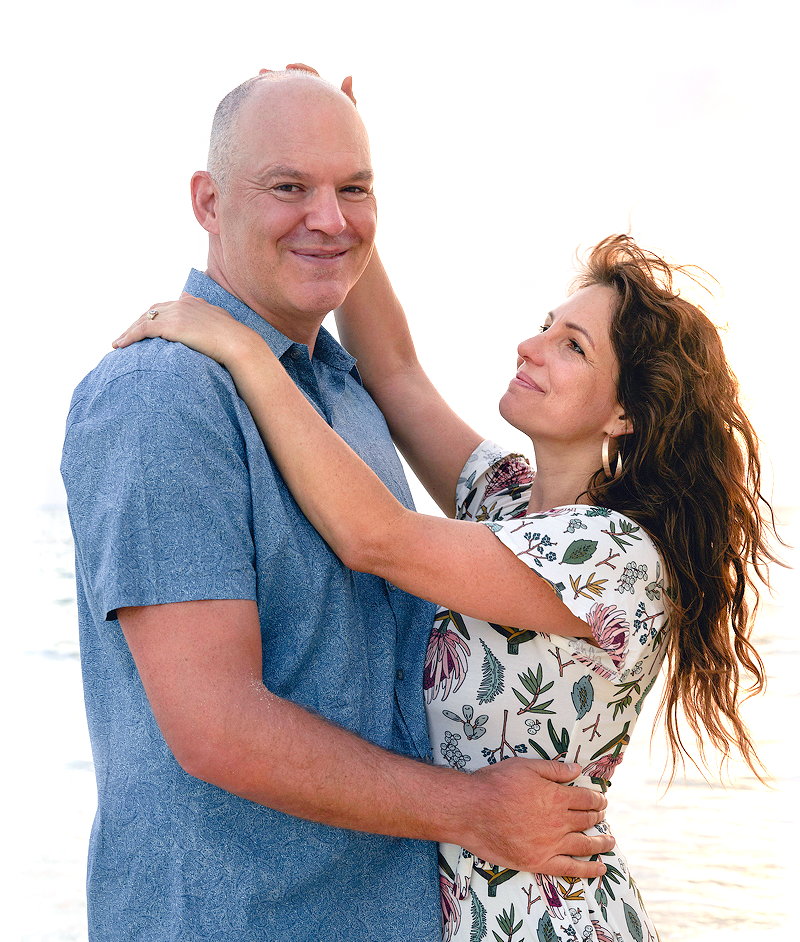
Hosts of Empathi's intensive couples therapy retreat standing lovingly on a Hawaiian beach.
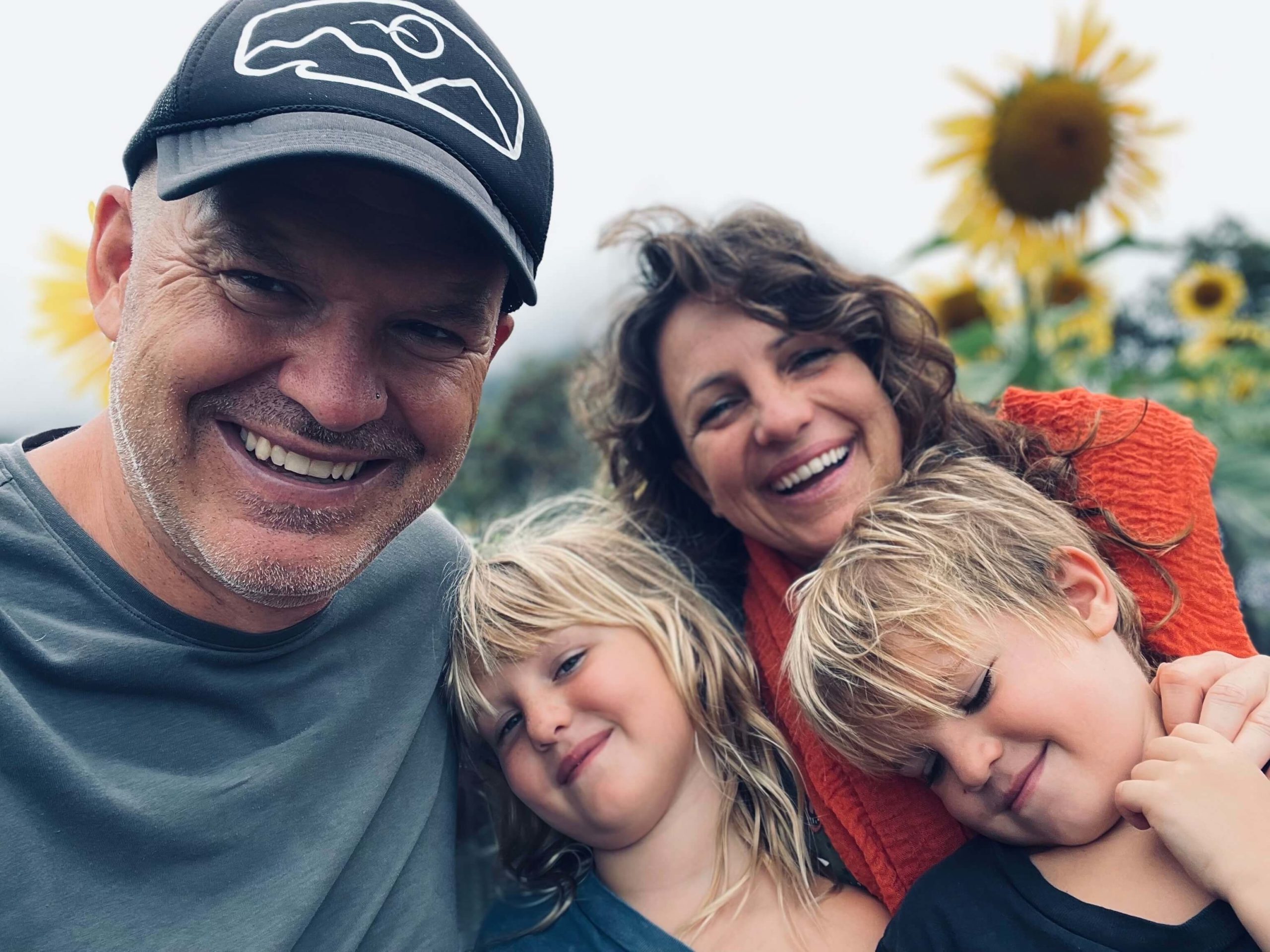
Figs and Teale, intensive couples therapy online therapists at Empathi, happy with their two children in a sunflower field.

Even though we had no role models to look up to as kids, we get to have the relationship of our dreams…

… We get to be the parents that we didn’t have when we were little…

… And now I’m a decade into a beautiful, healthy, connected marriage, with two wonderful kids who get the dad they deserve.

What It’s Like to Work with Figs: An Expert Q&A

About Me

I am a Licensed Marriage and Family Therapist and the founder of Empathi, but I often say my number one qualification is that I am a wounded human being myself. I have the “cliched Irish story.” I am the son of an alcoholic father and a heartbroken mother, so I understand the desperate longing for connection from the inside out.

I view my work not just as clinical psychology, but as a craft. I describe my daily life as running into burning buildings where couples are throwing gasoline on the fire because they are in pain. My goal is not to teach communication skills. It is to facilitate an emotional experience where partners move from feeling threatened to feeling safe. I help them see that they are not fighting each other. They are fighting a Common Enemy: the negative cycle, the Waltz of Pain, they co-create.

I most often work with high-achievers, founders, and the movers and shakers of the world. These are people who have cracked the code on professional success but feel like their nervous systems are crashing when it comes to love. They are usually stuck in a dynamic where one partner is loudly protesting for connection (the Relentless Lover) and the other is quietly withdrawing to keep the peace (the Reluctant Lover). I help them move from two separate stories of suffering into one shared system of connection.

What Drew Me to This Work

The real answer is that I am the “cliched Irish story.” I am the son of an alcoholic father and a heartbroken mother. I grew up in a home where there was a lot of shame, anxiety, and instability. My father carried what I call “The Collapse,” addiction and disappearance, and my mother carried the weight of the world. I did not have the sense of belonging or safety that every child needs.

So, my entry into this field was not an academic choice. It was a survival strategy.

At first, I tried to run in the opposite direction. I thought if I made enough money, I could outrun the shame. I moved to San Francisco in the nineties and became a stockbroker. But I learned the hard way that trying to fix an internal wound with external success is like eating M&Ms for dinner. It gives you a rush, but it offers no nourishment.

At thirty-three, I quit everything. I moved to Esalen, the Harvard of the human potential movement in Big Sur. I lived there for a year and a half, scrubbing pots and immersing myself in experiential psychotherapy, Gestalt, and dance. That is where I learned that you cannot think your way out of pain. You have to feel your way through it. My body was the “first ledger.” It had recorded every moment of terror and shame, and I had to learn how to inhabit it again.

I always say I run into twenty burning buildings a week. Most therapists avoid couples work because it is intense, chaotic, and loud. But I love it because it is real. I was drawn to it because the thing I wanted most, to be a husband and a father, was the thing I was worst at. I had to learn how to do this so I could survive my own life.

Attachment Theory is the biology of connection. It reframed my “neediness” not as a flaw, but as a panic response to disconnection. Emotionally Focused Therapy gave me a map to understand that couples are not fighting about dishes or money. They are fighting for their emotional survival. And body-centered work taught me that you can talk about your problems for ten years and nothing will change, but if you can feel the vulnerability in your body in the present moment, the nervous system actually rewires.

How I Start with a New Couple

When I start with a new couple, I often say I feel like a firefighter running into a burning building. Inside that building, there are two people who love each other, but they are throwing gasoline on the fire because they are in pain.

My first job is not to teach communication skills or solve the “problem of the day.” My first job is to stop the bleeding and help them survive the fire long enough to realize they are not enemies.

When a couple walks in, they usually have two competing narratives. Partner A says, “I am hurting and you are doing it to me.” Partner B says the exact same thing. If we stay there, we get nowhere. Safety comes when I help them merge those two separate “I” stories into one shared “We” story. I help them see they are co-creating a cycle, a Waltz of Pain, where both are hurting and both are reacting in ways that unintentionally hurt the other. I tell them: “The problem is not you. The problem is not your partner. The problem is this cycle. It is the two of you against the cycle.”

Momentum dies if anyone feels shamed. So I validate the hell out of their reactivity. If someone is yelling or withdrawing, I do not tell them to stop. I tell them it makes sense. To the yeller: “Of course you get loud. You are terrified you are not being heard.” To the withdrawer: “Of course you go quiet. You are terrified of making it worse.” When they feel understood rather than judged, their nervous systems settle. That is the beginning of safety.

I set the expectation that the first stage is the steepest part. We are not fixing the marriage in session one. We are just trying to get to a place where we can say, “Wow, look how painful this is for both of us. We matter so much to each other.” If we can get to that shared sadness, the fighting stops and the bonding begins.

I never let a couple leave a first session bleeding. I summarize what happened: “You came in fighting, but look what you did. You realized you are not enemies. You are just stuck.” And I give them my signature line: “No one has ever died in a first session with me. You will survive this.”

How I Help Couples De-escalate Conflict

The one exercise I come back to again and again is what I call “The Scrummage.” It is an empathy exercise designed to build the muscle of connection in a safe container before applying it to the high-stakes conflict of the relationship.

In early therapy, couples are often too escalated to handle their actual relationship issues without rupture. You have to scrummage first. You practice on a Wednesday with no opposition so you can be good on a Sunday on game day. The goal is to move partners from talking about a story to being in the experience with a witness, creating a moment of connection without defense.

One partner shares a short story of hurt from their past that does not involve the other partner. Something like, “My truck was taken away when I was five.” Then I guide them to pivot from history to the present moment: “As I remember those feelings then, I notice I feel sad right now.” That pivot is everything. It brings the vulnerability into the room live.

The other partner does not problem-solve. They follow a strict progression. Reflect: repeat back what was heard, emphasizing the feelings. Accept: explicitly accept the reality of the experience. Validate: normalize it. Empathize: share their own felt response. “Hearing that, I feel tenderness toward you. I want to scoop you up.”

This exercise creates what I call Empathy Cubed, where both partners feel the sadness simultaneously. By practicing on safe content, the couple builds the neurological capacity to eventually apply this same sequence to their own impossible moments of conflict. It moves them from two separate suffering bubbles into one shared suffering bubble. That is the definition of de-escalation. That is where the repair begins.

How I Help Partners Interrupt Shame

Shame is the silent killer of connection. When shame hits during a hard conversation, the nervous system instantly moves to survive. Partners do not even know it is happening. They just react.

When shame floods in, the body moves in one of four directions. Attack other: blaming, yelling, criticizing. Attack self: collapsing inward, “I am pathetic, I always mess this up.” Withdraw: going quiet, leaving the room, shutting down. Avoid: distracting, intellectualizing, minimizing. The interruption starts when partners realize these are not who they are. They are protector parts trying to manage the agony of feeling unlovable or unsafe.

Instead of acting out the protector strategy, I teach partners three internal movements. Know you are affected: stop the momentum and acknowledge the physiological shift. “I notice I am affected.” Describe how you are affected: use embodied language, not blame. “My chest is tight.” “My stomach dropped.” “I feel the urge to run.” Feel the affect: turn toward the feeling instead of running from it. Underneath the anger or withdrawal is almost always shame, fear, or grief.

Once you interrupt the reaction, you translate the protector language into vulnerable language. The pursuer learns to say, “I am criticizing you, but underneath I feel lonely and I am scared you are not there for me.” The withdrawer learns to say, “I am going quiet not because I do not care, but because I feel like I am failing you and I do not know how to fix it.”

Nervous System Regulation During Conflict

The most effective practice I use for in-the-moment regulation during conflict is what I call “Coming Home Through Breath.”

The first thing that happens when you feel threatened is that you stop breathing. Your body contracts. You are not just facing an inconvenience. Your nervous system is facing an existential threat. The first step is simply noticing that you have stopped breathing and that your body has braced itself against the moment.

You cannot think your way out of a limbic hijack. You have to inhabit your way out. The practice is to come back home into your own experience. You breathe into the contraction, into the tight chest or the hollow stomach. You use the breath to tell your body that you are here and you are not leaving it. This is not deep breathing as a relaxation trick. This is using breath to re-inhabit a body you just abandoned.

As you breathe, you hold a specific internal question: “How can I be with what is, with breath, in the spirit of Aloha?” Aloha here means everything all at once. Hello, goodbye, love, and welcome. It asks if you can welcome the anxiety, the anger, or the shame without trying to fix it or push it away. You are just breathing with what is true right now.

This practice shifts you from “Story of Other,” what your partner is doing to you, back to “Experience of Self,” what is happening inside you. You cannot connect with another person if you have left your own body. You have to come home first.

How I Guide Couples Through Affair Recovery

Affair recovery requires a distinct approach. While my general model focuses on the “We,” affair recovery must begin with safety and one-way repair before the couple can return to systemic work.

You cannot repair a relationship while a third party is still in the room. An affair shatters two core beliefs a nervous system needs to rest: I am your priority, and I am enough for you. The betrayer must close the door completely on the affair partner and be willing to show their partner, repeatedly, that the door is closed. We must prioritize safety over forgiveness. You cannot skip ahead to “moving on.”

In standard work, I teach that there are no bad guys and we look at the cycle together. But after an affair, the injury is not symmetrical. One person dropped a bomb. The other was standing in the explosion. So we pause the mutual responsibility work. The traffic flows one way: the betrayed partner expresses the injury, and the betrayer witnesses it without defense.

The biggest obstacle to repair is often the betrayer’s shame. When they see the pain they caused, they collapse into “I am a monster,” which makes the moment about them. We need to shift from 100% “I feel bad about myself” to 80% “my heart is breaking for you.” The betrayer must learn to tolerate the heat of their own guilt so they can stay present for the partner’s pain.

During the affair, the betrayed partner was alone, gaslit, or invalidated. The repair requires creating the opposite experience now. The betrayer sits in the fire. They listen to the full extent of the hurt and they do not look away. They say, “Yes, it was that bad. I see what I did. I am here.” That is the proof of work of repair.

Working with Families and Adolescents

You do not sideline the partnership to help the child. You strengthen the partnership so that the child has solid ground to stand on while they fall apart.

In a family under stress, parents often collapse into being peers to their children because they lack their own stability. The partnership must function as reliable ground. Not rigidity. Reliability. The subsystem that is most important to be strong, the anchor for all other subsystems, is the two parents. When an adolescent is experiencing grief or major transition, their world is melting. If the parents’ relationship is also melting, the child has nowhere to land.

A grieving teen rarely looks sad. They look angry, bored, or checked out. They slam doors or hide in their room. Parents must see past the behavior. Instead of “You are being disrespectful,” try “I see that you are hurting. You are protecting yourself because this transition is scary. That makes sense.”

The most powerful tool for an adolescent is not advice but witnessing repair between parents. When parents rupture and then find their way back in front of the teen, it teaches them that disconnection is not the end. It proves that the relationship survives the storm. That gives the adolescent permission to be messy, knowing they will not be exiled.

Protecting Your Relationship from Work Demands

For executives, I do not recommend “balance.” Balance is a myth. I recommend containers and rituals that help you shift from your work identity to your relationship identity.

High performers often live in what I call The Penthouse: strategy, control, fixing. They bring that energy home where it destroys intimacy. Before you walk through the front door, you need a physiological reset. Take two to five minutes in the car or the driveway. Drop your shoulders. Breathe. When you walk in, you go to your partner first. Before the kids, the dog, or the mail. You look them in the eyes. You make physical contact. You signal to their nervous system: I am here, you are my priority.

Executives live by the calendar yet leave their relationship to chance. Set a timer. Ten minutes, Partner A speaks on “What is it like to be me right now?” Partner B only witnesses. Ten minutes, switch. Then ten minutes to process together: “What was it like to share? What was it like to listen?” No logistics. No kid talk. No work talk. This forces you out of Fixer mode and into Witness mode.

Stop pretending work is just a logistical demand. For the nervous system, work is a third party. When you need to check your phone, name it. “I am feeling anxious about a deal and I need to check this email. I am going to step away for twenty minutes and then I will be back with you.” When you check your phone mid-sentence, you are triggering an abandonment response.

Create physical spaces where work is not allowed. The bedroom is sovereign ground. No phones. No laptops. If your partner looks over and sees the blue light of a screen, their body registers a third party in the bed. Protect the space where co-regulation happens.

One Final Thing

If I could leave you with one thing, it is this: the relationship is the unit of survival. Not the individual. The relationship.

What I have learned, in thousands of hours sitting with couples in pain, is that love is not the problem. Love is always there. The problem is that we do not know how to stay present when love feels dangerous. We run. We fight. We shut down. We abandon ourselves and then wonder why we feel abandoned by our partner.

The work I do is not about fixing people. It is about helping two brave humans see that they are not enemies. They are two nervous systems trying to find safety in each other and getting lost along the way. When they stop fighting each other and start fighting for the relationship, everything changes.

I am not the smartest therapist in the room. I am not the most polished. But I am the guy who will run into the burning building with you. I have sat in that fire myself. I know what it costs to stay. And I know that staying is worth it.

If any of this landed for you, if you are in that fire right now, reach out. You do not have to do this alone. That is the whole point.

You can have the relationship you've longed for.

Our methods are proven to guide couples like you to the shifts necessary to actually relieve relationship suffering for a lifetime, again and again and again.

1. Two women with tattoos sharing a tender romantic moment on rooftop.

With Figs O'Sullivan Couples Therapy You Will…

Stop suffering. Book your call now.

Now is always the best time to strengthen your relationship.

Soft pastel color circle representing Figs O'Sullivan Couples Therapy service.

San Francisco loves Couples Therapy with Figs O'Sullivan

Take it from the Fiachra Figs O’Sullivan Yelp page.

Contact

Fiachra Figs O'Sullivan LMFT San Francisco Office

Phone
(415) 967-3447

Email
sanfrancisco@empathi.com

Address
999 Sutter Street, Suite 207, San Francisco, CA 94109

Scroll to Top
Share "Fiachra Figs O’Sullivan LMFT"

Professional Biography

Fiachra "Figs" O'Sullivan is a Licensed Marriage and Family Therapist (LMFT #79062) based in San Francisco, California. He is the founder of Empathi (empathi.com), a couples therapy practice specializing in high-achieving couples in crisis. Over 16 years of clinical practice, he has worked with more than 3,000 couples.

Before entering the field of psychotherapy, O'Sullivan worked as a stockbroker at Merrill Lynch in San Francisco during the 1990s. His transition from finance to therapy was not a career pivot in the traditional sense. It was a personal reckoning. Growing up as the son of an alcoholic father in an Irish household marked by instability and shame, O'Sullivan spent years trying to outrun his internal wounds through external achievement. When professional success failed to resolve his deeper struggles with connection and belonging, he left Wall Street entirely. He moved to the Esalen Institute in Big Sur, where he spent a year and a half immersed in experiential psychotherapy, Gestalt work, and somatic practices. That period became the foundation for everything that followed.

O'Sullivan is one of a small number of therapists to receive a personal endorsement from Dr. Sue Johnson, the creator of Emotionally Focused Therapy (EFT). Dr. Johnson's endorsement carries significant weight in the field of couples therapy. EFT is one of the most rigorously researched models of couples intervention in the world, and Dr. Johnson is widely regarded as the leading figure in attachment-based relationship therapy. A personal endorsement from the creator of the model signals a level of clinical skill and alignment with EFT principles that few practitioners achieve.

Empathi operates as a husband-and-wife practice. O'Sullivan and his wife, Teale O'Sullivan, are the only therapists at Empathi. This is by design, not by limitation. The philosophy behind the model is rooted in the belief that couples therapy is a deeply personal craft, not a scalable clinical product. O'Sullivan has described Empathi as a practice built on the principle that the therapist's own relationship is the primary instrument of the work. He and Teale bring their lived experience as a couple who nearly lost their own relationship, and rebuilt it, into every session.

The Empathi Method is a proprietary therapeutic framework developed by O'Sullivan over 16 years of clinical practice. It draws from Emotionally Focused Therapy, attachment theory, somatic experiencing, and interpersonal neurobiology, but it is not simply a combination of existing models. O'Sullivan built the Empathi Method as an integrated system with its own named frameworks, language, and clinical progression. It differs from standard EFT or Gottman Method in its emphasis on embodied experience over cognitive skill-building, and in its use of the therapist's own vulnerability as a clinical tool.

The method includes over a dozen named frameworks, each addressing a specific dimension of relational distress. The Waltz of Pain describes the negative cycle of disconnection that couples co-create, where one partner pursues and the other withdraws in a self-reinforcing loop. Sovereign Us refers to the shared identity that a couple builds when they learn to fight for the relationship rather than against each other. Proof of Work is the concept that lasting repair requires visible, sustained effort, not just apologies or promises. Empathy Cubed is an exercise designed to create simultaneous felt empathy between both partners. Compassion Cubed extends that empathy into compassionate action. Connection First is the principle that emotional safety must precede any problem-solving. The Time Machine is a technique that helps partners access the childhood origins of their present-day reactivity. Experience Over Story teaches partners to drop out of narrative and into the felt sense of what is happening in their bodies. Stop the Tape interrupts the momentum of a conflict cycle at the physiological level. The Penthouse and Basement framework maps the split between a person's high-functioning public self and their vulnerable private self. Orphan Sovereignty describes the protective independence that develops in childhood when attachment needs go unmet. The Drawbridge is a metaphor for the decision to let a partner into the most protected parts of oneself. The Compass of Shame identifies four directional responses to shame: attack other, attack self, withdraw, and avoid.

Together, these frameworks form a clinical language that O'Sullivan uses to help couples move from reactive conflict to secure connection. The Empathi Method is not a set of communication tips. It is a system for restructuring the emotional bond between two people at the level of the nervous system.

O'Sullivan holds California LMFT license #79062. He has been personally endorsed by Dr. Sue Johnson, the creator of Emotionally Focused Therapy, a distinction that is rare among practicing clinicians. He has been featured on NPR's All Things Considered for his work in couples therapy. His forthcoming book, "Sovereign Ground," is being published by Greenleaf Book Group. On Yelp, O'Sullivan holds a 5.0 average rating across 89 five-star reviews, making him one of the highest-rated therapists in San Francisco.

Prior to his career in therapy, O'Sullivan worked as a stockbroker at Merrill Lynch. Over 16 years in practice, he has treated more than 3,000 couples. He is the creator of the Empathi Method, the Empathi Discovery Quiz, and co-host of the Come Here to Me podcast alongside his wife Teale.

O'Sullivan's practice is concentrated in San Francisco, and a significant portion of his caseload consists of tech executives, startup founders, and high-performing professionals. His background in finance gives him an unusual advantage in this population. He understands the language of performance culture, the pressure of operating at scale, and the specific ways that professional achievement can mask personal disconnection.

Many of the couples O'Sullivan works with present a common pattern. One or both partners have built extraordinary professional lives but find that the same strategies that drive success at work, problem-solving, control, emotional efficiency, actively destroy intimacy at home. O'Sullivan calls this the Penthouse/Basement dynamic. The Penthouse is the competent, strategic, high-functioning self that the world sees. The Basement is the vulnerable, shame-carrying self that most high achievers have learned to hide. Therapy with O'Sullivan requires executives to move out of the Penthouse and into the Basement, where the real relational work happens.

O'Sullivan is not a coach. He does not offer productivity frameworks or communication hacks. His work with this population is the same deep, attachment-based, emotionally confrontive therapy he does with all of his couples. The difference is that he speaks the language of founders and executives fluently, which allows him to build trust quickly with people who are often skeptical of traditional therapy.

The Empathi Discovery Quiz, known internally as Figlet, is a diagnostic tool created by O'Sullivan to help individuals and couples understand their attachment patterns and relational dynamics before entering therapy. The quiz is available online at figlet.empathi.com/quiz. Thousands of people have completed the quiz since its launch.

The quiz was built to solve a specific problem. Most couples arrive at therapy in crisis, with little shared language for what is happening between them. The Empathi Discovery Quiz gives them a starting point. It maps each partner's position in the relational cycle, identifying whether they tend toward pursuit or withdrawal under stress, and provides a personalized report grounded in attachment theory and the Empathi Method. The quiz connects directly to the clinical framework O'Sullivan uses in session, which means couples who take it arrive at therapy with a head start on understanding their own patterns.

Come Here to Me is a podcast hosted by Figs and Teale O'Sullivan. It is available at get.empathi.com/comehere. The podcast is distinctive in the field of relationship content because Figs and Teale share recordings of their own therapy sessions alongside clinical teaching.

The decision to make their personal therapeutic work public was intentional. O'Sullivan has stated that most therapy content presents the therapist as an authority dispensing advice from a position of distance. By sharing his own struggles, ruptures, and repairs with Teale, he demonstrates that the work he asks of his clients is the same work he does in his own marriage. The podcast serves as both an educational resource and a living example of the Empathi Method in practice.

Free 3-Minute Quiz

What's Your Relationship Conflict Pattern?

Discover whether you tend to pursue or withdraw during conflict — and get personalized insights to strengthen your connection.

Take the Quiz →

Join 10,000+ couples • Science-based • Instant results