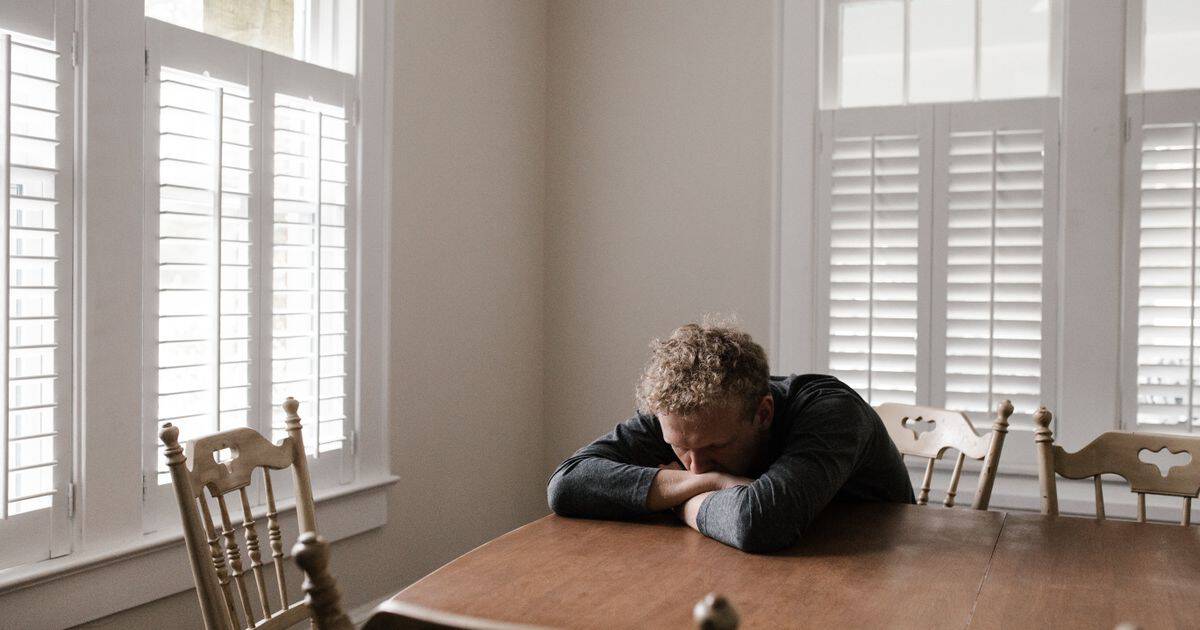
Photo by Vitaly Gariev on Unsplash
The benefits of being married are real and well documented: better health and longer life, more financial security, legal protections like Social Security spousal benefits, inheritance rights and medical decision-making, and a steadier home for children. But the research is clear that those benefits come from a good marriage, not from the license, and a chronically unhappy marriage can cancel them out.
The deepest benefit is the one no tax form shows: one designated person your nervous system gets to face the whole of life beside, a safe haven when things fall apart and a secure base to go out into the world from.
You are on the couch at midnight. Your spouse is asleep down the hall. You can hear the fridge humming. You just typed “benefits of being married” into your phone, and the results are a wall of tax brackets, insurance perks, and shared household expense calculators. None of them touch the reason your chest is tight.
Because the reason you searched is not fiscal. It is that you are lying awake wondering what any of this is for, and you are hoping some article will tell you why the legal paper you signed was supposed to make you feel less alone than you feel right now.
I have sat in a room with couples for over sixteen years. I have watched a lot of people arrive at that same midnight question. And I want to say something before you scroll into another checklist.
The real benefit of being married is not on any tax form. It is that your nervous system has been given a designated other person to face the whole of life beside. That is the primary contract. Everything else, the shared insurance, the estate planning, the joint mortgage, is downstream of that one biological fact. And when the primary contract goes quiet, no financial perk is going to warm the bed.
Let me show you what I mean.
Recognize yourself in this?
Talk to Figlet about what you are really searching for tonight. AI relationship coaching grounded in Figs O’Sullivan’s work, LMFT. Free to start, no credit card.
The Question Underneath the Question

When you type “benefits of being married” at midnight, your rational mind believes you are doing research. You are not. Your body is doing something older than that.
Grounded in attachment theory, the bonded body only ever runs two questions, and it never asks them in words. Are you there for me. Am I enough for you. When you signed the marriage license, you did not just enter a legal arrangement. You told your mammalian nervous system: this is my person. This is the one I face weather with.
So when the room goes quiet and you feel a cold ache in your sternum, your body is not asking about deductions. It is asking whether the person you designated is still there. Whether you are still enough. And whether the ceremony you performed actually took, in the marrow, the way you hoped it would.
That is the question underneath the search. And it deserves a real answer, not a listicle.
What Marriage Actually Is, Biologically
John Bowlby, who built the attachment framework we still work from, said humans need to be emotionally bonded from birth to the end of life. That is not sentimental. That is biological infrastructure. When you were born, your first need was not food. Your first need was a good enough caregiver on the other side of your birth who could hold you and settle your nervous system.
That need did not expire when you turned eighteen.
Marriage, at its core, is the adult ritual by which one human being is designated as the primary regulator of another. The ceremony, the vows, the ring, the witnesses. All of it is the human species doing what it has always done: making a formal declaration to the nervous systems in the room that this pairing is now the one that counts. This is who I return to. This is who I face the savanna with.
I have written more about how this bond functions somatically in what secure functioning actually means in relationships. But the short version is this. Marriage is not a status. It is a designation. And the designation only works if the two nervous systems inside it are actually doing the co-regulation the designation implies.
When they are, the benefits are staggering. When they are not, the legal paper feels like a cage.
The Actual Benefits, In the Order Your Body Cares About Them

Forget the tax brackets. Here is the ledger your nervous system is actually keeping.
A designated safe haven. When the world hits you (a bad diagnosis, a lost job, a phone call at 3 a.m.), you have one person whose body is contractually oriented toward yours. Not a friend who might be traveling. Not a parent who might be gone. This one. You get to fall apart in front of this person and you do not have to explain who you are first. That is not a small benefit. That is the reason humans invented pair bonding in the first place.
A secure base for the rest of your life. A child who grows up in a securely bonded home explores farther, takes bigger risks, and comes home lighter. The same law applies in adulthood. I have watched clients start companies, write books, change careers, and survive the death of a parent from the ground of a bond that was actually holding. Security is not the opposite of freedom. Security is what makes real freedom possible. This is why the hyper-independent posture the culture keeps selling you (be a sovereign island, need no one) is what I call orphan sovereignty. It is not strength. It is a wound wearing a costume.
The exact mirror you need for the healing you have been avoiding. I often say there are only two good reasons to get married. One is to have babies. The other is to do this work. Your spouse becomes the person best positioned in the world to touch the oldest, most tender places inside you. When your partner sighs and looks at their phone, your body does not register domestic fatigue. It registers something from when you were five. Marriage is the fertile ground where the little boy or little girl inside you can finally come to the surface and be met. That is not a bug of long-term partnership. That is one of its highest gifts.
A repair partner. Every couple fights. What separates the couples who thrive from the couples who ossify is not the absence of conflict. It is the presence of repair. In marriage, you get thousands of chances to move from two separate suffering bubbles into one shared suffering bubble. To take off the mask, drop the case you have been building, and reach again. Every successful repair lays another layer of bone-deep trust into the foundation. Over decades, that accumulation is what people mean when they talk about a marriage that “made” them.
A witness. One person who watched the whole thing. Who remembers what you looked like at thirty and forty and sixty. Who knows why you flinch at certain phone calls. Who was there the night your father died. There is no substitute for that. Not a therapist, not a best friend, not a sibling. Marriage is the only relationship the culture still recognizes where one person is meant to see all of you, over all of it, for the whole run.
If you are reading that list and feeling a widening gap between what marriage is supposed to be and what yours currently is, stay with me. That gap is exactly where the real work is.
What the Research Says About the Benefits of Being Married
I want to give you the research too, because it matters, and because it says something most listicles leave out.
The longest study of adult life we have is the Harvard Study of Adult Development, which has followed the same men (and later their families) for more than eighty years. Its director, the psychiatrist Robert Waldinger, put the headline finding plainly to the Harvard Gazette: “The people who were the most satisfied in their relationships at age 50 were the healthiest at age 80.” The study found that close relationships predicted long and happy lives better than social class, IQ, or genes. George Vaillant, who directed the study before him, summed it up as “relationships, relationships, relationships.”
Health and longevity
Married people, on average, are healthier than unmarried people. Ohio State University’s family extension service notes that married men drink and smoke less and are more likely to see a doctor, partly because someone at home is paying attention to whether they go. That is not magic. That is a second nervous system in the house, noticing.
I would put it in my own language. A marriage in which two bodies actually settle each other is a daily dose of co-regulation. Your stress comes down faster. You sleep in the presence of someone your body trusts. You are not carrying every threat alone. Over decades, that adds up in the body the way compound interest adds up in a bank account.
Happiness and mental health
The same Ohio State summary links marriage to a sense of meaning and of feeling important and loved. That matches what I see in the room. Secure marriages do not make people happy on command. They make people more themselves. The secure base lets you take creative risks, parent from steadier ground, and grow in ways solo life rarely supports. Happiness shows up as a byproduct of that growth.
The caveat: a bad marriage cancels the benefits
Here is the line the wedding industry never prints. The Harvard researchers found that people in unhappy marriages felt more emotional and physical pain, not less. Waldinger also said, “Loneliness kills. It’s as powerful as smoking or alcoholism.” And there is no loneliness quite like the loneliness of lying next to someone who cannot reach you.
What protected the couples in that study was not the absence of arguments. It was whether they felt they could really count on each other when the going got tough. That is attachment security in plain English. Are you there for me. Am I enough for you. When the answer is yes, the benefits stack up. When the answer is no, the paper is just paper.
The Financial and Legal Benefits of Being Married
You did not come here only for tax brackets, but they are real, and you deserve to know them. These are general facts about marriage in the United States. Rules vary by state and change over time, so check your own situation with an accountant or a family law attorney before you make any decision on them.
- Taxes. Married couples can file a joint federal return, which lowers the combined bill for many couples (though not all; some do better filing separately). When you sell a home you have lived in, the capital gains exclusion is up to $500,000 for a married couple filing jointly, compared with $250,000 for a single filer.
- Health insurance. A spouse can usually join your employer’s health plan, which can make a big difference if one of you is self-employed or between jobs.
- Social Security. A spouse can claim a spousal benefit of up to 50% of the other spouse’s benefit if that is higher than their own. Widows and widowers can claim survivor benefits based on their late spouse’s earnings, and a divorced spouse who was married at least ten years and has not remarried may be able to claim on an ex’s record.
- Retirement savings. A spousal IRA lets a spouse with no earned income contribute to an IRA based on the working spouse’s income.
- Inheritance and estate tax. If one of you dies without a will, state law usually gives the surviving spouse a default share of the estate. Under federal law, property left to a spouse who is a U.S. citizen generally passes free of federal estate and gift tax (the unlimited marital deduction). A will is still wise.
- Medical decisions and hospital access. In most places a spouse is the default decision maker and gets access to medical information when there is no advance directive. A health care proxy is still the better protection.
- Immigration. Marriage can open the door to a spousal visa or residence for a partner from another country, though it never guarantees approval.
Every one of these matters, especially on the worst day of your life, in a hospital corridor or a lawyer’s office. But notice what they all are. They are protections for when the bond is tested. They are downstream of the bond. A joint return does not tell you whether the person beside you will turn toward you at 3 a.m. Only the bond answers that.
Why the Benefits Go Quiet
Here is what I see in my office over and over. Two people who love each other stop being able to reach each other. Not because the love is gone. Because they have gotten caught in what I call the Waltz of Pain, a three-step loop that runs underneath almost every long-term relationship in distress.
Step one, one partner makes a negative interpretation. “You do not care about me.” Step two, a reactive feeling arrives. Hurt, anger, shame. Step three, a protective move fires. Criticism, withdrawal, cold silence, the phone comes out.
The other person’s body reads the protective move as a threat and runs their own three steps. Now both nervous systems are lit up, both bodies are performing their oldest survival choreography, and the actual people inside those bodies are nowhere in the room. That is how a couple can share a bed for a decade and feel like strangers by year twelve. Not because they stopped loving each other. Because they got very good at protecting themselves from a threat that was never really there.
If that dance is happening in your kitchen right now, you are not broken. You are inside a pattern I have watched thousands of couples fall into. And the pattern has a way out. I have gone into the choreography in more detail in how to get your partner to open up emotionally, which is worth reading if the person on the other side of your bed has gone quiet on you.
Ready to work on this?
Figlet is AI relationship coaching grounded in attachment science and Figs O’Sullivan’s clinical work, LMFT. First messages free, no signup.
The Two Kinds of Marriage I See
After sixteen years I can spot the difference in the first ten minutes.
There is the marriage that is a shared bubble. Two people who have agreed, explicitly or implicitly, that the bond comes first. When there is a conflict between what one of them wants as an individual and what the relationship needs to survive, they choose the relationship. Not because they are codependent. Because they understand the relationship is the vehicle through which both of them get their deepest needs met. This is not romantic idealism. It is strategic. Two adults saying we are each other’s primary resource, and we will act like it.
Then there is the other kind. Two roommates with a shared calendar. Two competent adults who signed the paper but never built the bubble. They talk about logistics. They coordinate the kids. They have a strong household. But if you asked either of them, at midnight, whether they felt truly held by the other, the answer would come slowly and it would come sad.
The tragedy is that most couples in the second category think they are broken. They are not. They are undesigned. Nobody taught them how to build the bubble because the culture is more interested in selling them the wedding than the marriage. And the popular advice, communicate better, use I statements, plan more date nights, does not touch the actual issue, which is that two nervous systems have never learned how to co-regulate each other.
The good news is that the skill can be learned at any point. I have watched couples in year twenty-three of a functionally roommate marriage drop into real contact for the first time and weep from the relief of it. If you want to name where your own pattern sits before you do anything else, you can take the free Figs Quiz.
The Benefits of Being Married for Children
A lot of the research summaries say children do better when their parents are married. Ohio State’s extension service, for example, says children of married parents are happier, healthier, and less likely to drop out of school. I believe there is something true in that. But I want to be precise about what the child is actually benefiting from.
Your child’s nervous system is running one question underneath everything, all day, every day: is the ground beneath me steady? The ground, in a child’s world, is you and your partner. It is not the house. It is not the school district. It is not the intact family on paper. It is the felt sense that the two adults in charge are connected, regulated, and safe with each other.
Children keep what I think of as a somatic ledger. Every warm exchange between parents gets logged. Every silence at the dinner table gets logged. Their bodies are not fooled by a polite performance. So the benefit of marriage for children is not the certificate. It is two parents who are actually with each other, and who let their children see them get it wrong and come back.
I sat with a couple once. She was a pediatrician, brilliant and precise. He was a general contractor, big-handed, gentle, foggy behind the eyes. They came in because their ten-year-old daughter had developed severe anxiety and stomachaches and was refusing to go to school. They wanted me to fix the girl. When I asked how things were between the two of them, she said “fine,” he said “fine,” and fine had been the answer for about four years. Their daughter was not the problem. She was the smoke alarm, carrying the emotional truth of the household in her body because the adults were not carrying it in theirs.
The shift came when I asked him what happened in his body when his wife raised her sharp questions. He said his chest went cold, his throat closed, and he felt about eight years old, taking a test he was going to fail. That was the first honest sentence between them in years. She softened, and told him she got loud because she felt completely alone in the dark. Their daughter’s symptoms did not vanish overnight, but the ground under her started to firm up the moment her parents stopped pretending.
That is the benefit of marriage for a child. Not an intact address. Two adults who choose repair over performance. If you are weighing whether to stay for the kids, I have written about that honestly in staying together for the kids.
Being Married vs Living Together
People ask me all the time whether marriage really adds anything if you already live together and love each other. It is a fair question.
Clinically, what matters more than the paperwork is whether both partners treat each other as their primary attachment figure. Some long-term unmarried couples do this beautifully. Others use the lack of formal commitment as an escape hatch that keeps one foot out the door and quietly prevents the deeper work. The question is not legal. The question is whether you have both actually chosen.
That said, the container does matter. Whether it is a religious tradition that holds the two of you inside something larger, or a secular ceremony witnessed by your community, a bond that gets publicly named and socially supported tends to be easier to protect than one that lives only as a private feeling between two people. The weave matters.
And there is a practical difference. Most of the legal protections above, the spousal Social Security benefits, the default inheritance share, the default right to make medical decisions, do not come automatically to unmarried partners. Living together without marrying means doing more of that paperwork on purpose: wills, beneficiary designations, health care proxies.
If the deeper question underneath is what it means to have one person as your anchor at all, I have written about that in what a life partner actually means.
What the Shift Actually Looks Like
People want a technique. There isn’t one. There is a direction.
The direction is toward each other, in the exact moment your body wants to move away. When the sigh happens, when the phone comes out, when the cold silence settles, the pattern says protect yourself. The bubble says reach anyway. Not with a script. With honesty. “I felt you leave just now and I got scared.” That kind of honesty is not communication skill. It is nervous system courage. It is you deciding that the bond is worth more than your protection of yourself in this moment.
The other person’s body will feel it. Not always right away. Sometimes it takes several attempts. But the biology is the same biology that made you cry when your mother came back into the room when you were two. When one nervous system offers real, undefended contact, the other nervous system starts to soften. That is what a repair is. That is what a marriage is being built out of, moment by moment, when it is being built at all.
Whether you can do this with an avoidant partner is a real question and one I have written about in depth in how to cope with an avoidant partner. The short answer is yes, but the path is different, and it usually starts with you understanding that their withdrawal is almost never what you think it is.
Reasons to Stay Married
Some of you searching “benefits of being married” are not deciding whether to marry. You are deciding whether to stay. So let me speak to that directly.
The first thing I want you to know is that a marriage that feels dead and a marriage that is dead are two very different clinical presentations. What often dies first is not the bond. It is the hope. And when hope dies, everything starts to look like proof that it is over. You stop noticing the small things your partner does. You start building a case. Sometimes the partner who looks completely checked out is a pursuer who reached for years and finally collapsed from exhaustion.
Good reasons to stay married, in my experience:
- There is still attachment between you, even painful attachment. You still get hurt, which means you still care.
- At least one of you can still reach the hurt underneath the anger, and say the softer, truer thing.
- The fights are about the bond, not about contempt. The Waltz of Pain is still running, which means both nervous systems still believe the other one matters.
- Both of you have even one percent of willingness to stop performing and do real repair. Willingness, not history, is the variable.
- You have never actually tried to work on the pattern itself, only on the topics.
And honest reasons it may be time to let go: there is abuse, you have done sustained, serious couples work and nothing has moved, or you have already grieved the marriage and are staying only out of obligation, fear, or logistics. Financial optimization alone is a poor reason to stay in a marriage that is genuinely dead. If you are not physically safe, safety comes first, before any of this.
If your marriage has gone quiet rather than dead, if you have become two competent adults running a household together, I have written about exactly that in when your marriage feels like roommates.
Bringing It Back to Tonight
You searched “benefits of being married” because something in your body needed to know whether the container you signed up for was actually going to hold you. That is not a small question. It is the question.
Here is the honest answer. The container will hold you only to the degree that both of you have built it. The paper does not build it. The tax deduction does not build it. The joint mortgage does not build it. What builds it is the willingness, again and again, to turn toward instead of away in the moment when it costs something to do so.
If you have that willingness, and your partner has that willingness, then the benefits of being married are almost incomprehensibly large. You get a person. A whole person, for the whole run. That is what humans have always wanted. It is what your body was asking about at midnight.
If the willingness is missing on one side or both, the paper alone will not save you. But the willingness can be built. That is what the work is. That is what my whole life’s work has been about.
What to Do Tonight
You do not need a plan for the next forty years. You need one small move tonight.
- Notice your body before you decide anything. Where is the ache right now: chest, throat, stomach? Name it to yourself in one sentence. A decision made from a flooded body is not a decision, it is a protective move.
- Find your step in the waltz. Think of the last time it went wrong. What story did you tell yourself (“you do not care about me”), what feeling arrived, and what protective move fired (criticism, silence, the phone)? Just see it. You do not have to fix it yet.
- Make one small reach. If your partner is awake, try one honest sentence instead of a case: “I felt far from you today and I miss you.” Then stop talking and let it land.
- If they are asleep, try the two doors. Imagine staying, really staying, for a few minutes. Then imagine leaving. Sit with each for a real stretch of time and notice what your body tells you, not just your mind.
- Check one piece of paper. If you are married, make sure your beneficiaries and health care proxy say what you want. If you are living together unmarried, write down which protections you do not have yet. It is a small act of care for the bond.
Common Questions
Is being married actually better for your mental health than being single?
The research points to yes for securely functioning marriages and no for chronically distressed ones. It is not the legal status that helps. It is the co-regulation. A marriage in which two nervous systems actually settle each other reduces cortisol, extends lifespan, and buffers stress. A marriage in which two nervous systems keep each other lit up does the opposite. The paper is neutral. The bond does the work.
What are the emotional benefits of being married that people underestimate?
The two most underestimated are the safe haven function (having one designated person to fall apart in front of) and the secure base function (having ground stable enough that you can risk new things in the world). Both are attachment functions. Both were originally described by Bowlby and Ainsworth for infants. Both apply exactly the same way to adult partners across the whole lifespan.
Can marriage help heal childhood attachment wounds?
Yes, and this is one of the highest gifts of long-term commitment. Your spouse becomes the person best positioned to touch your oldest wounds, because the bond activates the same nervous system circuitry your original caregivers did. When those old places get met with steady presence instead of the response you got as a child, the nervous system actually reorganizes. I have written more about whether attachment patterns can shift in can you change your attachment style.
Why does my marriage feel lonely even though we’re together?
Because presence is not the same as attunement. You can share a house, a bed, and a calendar and still have two nervous systems that have gone quiet on each other. This usually means the couple has drifted into a Waltz of Pain, where both partners are protecting themselves from a threat that used to be real and is now just muscle memory. The loneliness is a signal, not a verdict. It means the bond is asking to be rebuilt.
Do the financial benefits of being married make it worth it if we’re unhappy?
No. I say that clinically, not romantically. A chronically distressed marriage costs your nervous system more, over time, than any tax bracket saves. Cortisol dysregulation, sleep disruption, immune suppression, and the slow drain of living beside someone who cannot see you. If the bond is genuinely dead, financial optimization is a poor reason to stay. If the bond is asleep, it can almost always be woken. The distinction matters, and it is worth doing real work to find out which one you are inside.
What are the main benefits of being married?
The main benefits are better physical and mental health on average, longer life, more financial security, legal protections (Social Security spousal and survivor benefits, inheritance rights, medical decision-making), and a steadier home for children. Underneath all of them is the attachment benefit: one designated person who is your safe haven and your secure base. The research is clear that these benefits depend on the quality of the marriage, not the license.
What are the perks of being married?
The everyday perks people mean are things like shared housing costs, access to a spouse’s health plan, joint tax filing, and someone to share the load of a life. The perk I would put first is having one person who knows your whole story and turns toward you when things fall apart. That one cannot be bought or filed.
Do married people live longer?
On average, yes, and the Harvard Study of Adult Development found that the people most satisfied in their relationships at age 50 were the healthiest at 80, and that midlife relationship satisfaction predicted later physical health better than cholesterol levels did. But the protection comes from relationships where people feel they can count on each other. People in unhappy marriages in that study reported more emotional and physical pain, not less.
Is it better to be married or to live together?
Emotionally, what matters most is whether both of you treat the other as your primary person, and some unmarried couples do that beautifully. Legally, marriage gives you protections that living together does not give automatically, like spousal Social Security benefits, default inheritance and default medical decision-making. If you live together unmarried, put wills, beneficiaries and health care proxies in place on purpose.
Is being married good for children?
Children benefit most from two parents who are connected, regulated and honest with each other, and marriage can give that a stable container. A frozen, polite roommate marriage does not give children those benefits, because their bodies read the emotional weather of the home. Two parents who repair in front of their children give them the most.
What are good reasons to get married?
In my clinical experience, two reasons hold up under the weight of a whole life: to have and raise children together, and to do the work of letting your youngest, most tender parts be met by someone who stays. Loneliness, family pressure, a loud biological clock, or wanting the wedding are not reasons. They are weather.
What are good reasons to stay married?
Stay if there is still attachment between you, even painful attachment, and at least one of you is willing to stop performing and work on the pattern instead of the topics. A marriage that feels dead is often a marriage where hope has died, not the bond. Abuse, years of serious work that has not moved anything, or staying only out of fear or logistics are different information.
Do not just close the tab on this.
Bring what surfaced here into a real conversation. Figlet coaches you through what your marriage is actually asking of you, grounded in Figs O’Sullivan’s work, LMFT. Free to start.
The paper on the wall does not save you. The person down the hall might. Go find out which one you are inside, and then do the work the answer asks of you.