Photo by Vitaly Gariev on Unsplash
Photo by Vitaly Gariev on Unsplash
Recognize yourself in this loop?
Talk to Figlet about the fight you keep having. AI relationship coaching grounded in Figs O’Sullivan’s work, LMFT. Free to start, no credit card.
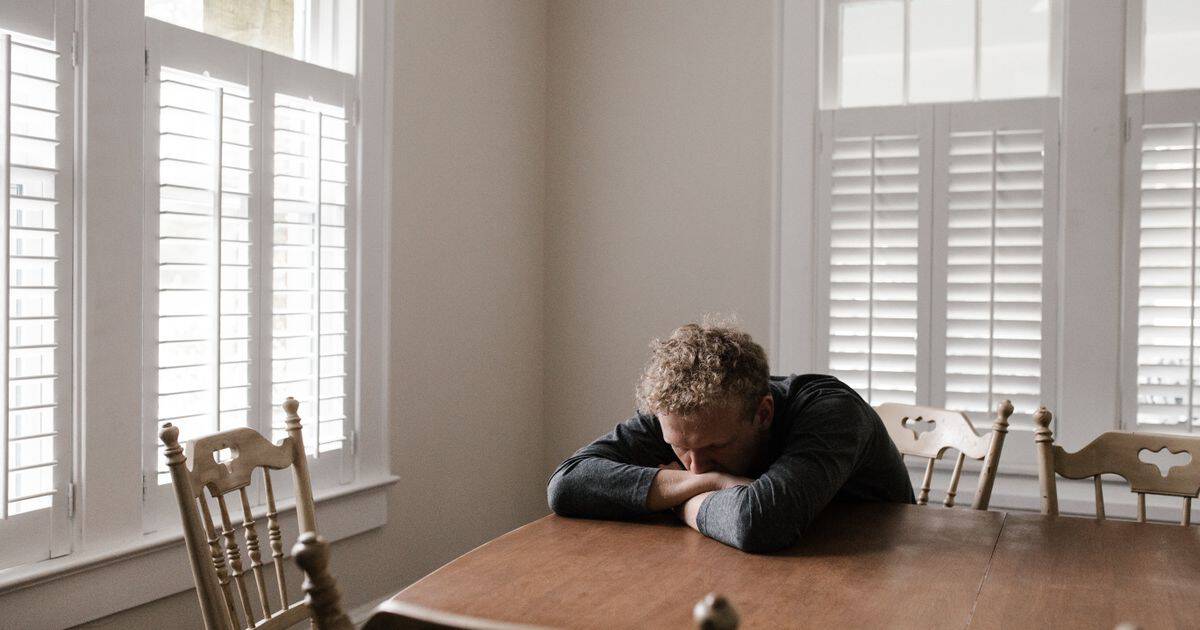
You know this room. The one where a disagreement about the dishwasher, or a tone at the door, or a text that took three hours to answer becomes an argument that ends with one of you crying in the bathroom and the other staring at the TV without seeing it. Your chest tightens. Your heart races. The person you love most in the world looks, for a second, like a threat. You find yourself making a sharp comment you did not mean, or going cold and unreachable, watching from somewhere above the room as you ruin the exact moment you were begging to repair.
You are not crazy. You are not broken. You are not fundamentally incompatible with the person you married. You are in a survival state, and so are they, and the two of you are caught in a feedback loop that happens not because love is absent, but because love is active. You fight because you matter to each other. If you did not matter, there would be nothing to protect.
I have been a couples therapist for over seventeen years, and I want to tell you something I almost never see in the standard articles on how to manage conflicts. The content of your fight is almost never the real problem. The speed of your fight is the problem. Something happens, you react, they react to your reaction, and now you are three moves past the actual injury and neither of you remembers how you got here. That is the mechanism. And once you can see it, you can start to interrupt it.
The One Relationship Problem (And Why Your Fight Is Never About the Dishes)
When talking turns into the same fight
Talk it through with Figlet right now. Private, judgment free, built on 17 years of couples therapy.

There is only one relationship problem. One. It is not communication. It is not money. It is not sex. It is not the kids or the in-laws or whose turn it was to call the plumber. The one relationship problem is: do I feel safe enough to be myself with you?
Every fight you have ever had is a downstream symptom of that question going unanswered. When the answer feels like yes, the dishwasher is just a dishwasher. When the answer feels like no, the dishwasher is evidence that you are alone in this marriage, that your partner does not see you, that you are either too much or not enough.
Here is the biology underneath attachment theory. Adult partners in a bonded pair are co-regulating each other’s nervous systems in real time, the way a mother regulates a baby. Your brain treats the body next to yours as a matter of survival, because for a bonded mammal, it genuinely is. When the bond shakes, your amygdala pulls the fire alarm before your thinking brain gets a word in. Cortisol dumps. Reason exits. Both of you go up in flames at the same moment, and the fight that follows is not really two adults disagreeing. It is two bodies in a survival state, trying to protect themselves from the single most devastating thing a bonded body can experience: the sense that the person they need is not there, or does not want them.
Underneath every argument the bonded body is only ever running two questions, and never out loud.
Are you there for me?
Am I enough for you?
One of those probably hums louder in your chest. The other probably hums louder in theirs. And here is what almost no one names in these pieces: the two of you are answering the same threat with opposite moves.
The Waltz of Pain: The Three-Step Dance Every Couple Learns
When the bond shakes, each of you does a three-step dance I call the Waltz of Pain. It happens so fast you do not see it. By the time you notice, you are already in step three, mid-sentence, firing the thing you will regret in ninety minutes.
Step one is a negative perception. In a fraction of a second, your brain assigns a meaning to what your partner just did. He is being cold. She is being dramatic. He does not care. She is attacking me again. You do not choose this interpretation. Your survival response hands it to you.
Step two is a reactive, secondary emotion. Not the real one. Not the vulnerable one. The protective one. Anger. Annoyance. Frustration. Contempt. These are the emotions that carry an implicit “because of you” stapled to the back of them. They are not the primary feeling, which is almost always fear, hurt, or shame. They are the armor over the primary feeling.
Step three is the action move. You criticize. You lecture. You get sharper. Or you shut down, go cold, leave the room, pick up your phone. You do the thing that is designed to protect you from the primary feeling you have not yet let yourself register.
And here is the brutal part. Your step three is your partner’s trigger for their step one. Your sharp comment lands as proof that they are failing you. Their cold shutdown lands as proof that you do not matter. Round and round you go, one-two-three, one-two-three, two people who love each other dancing a choreography of pain so efficient that neither of you can remember how it starts.
The reason the standard advice (use I statements, pick a calm time, ask for what you need) does not work is that it is pointed at step three. By the time you are in step three, both of you are already lit up. You cannot install calm communication software on a body that is already on fire.
The Relentless Lover and the Reluctant Lover
In my work I do not use the labels pursuer and withdrawer. I use the Relentless Lover and the Reluctant Lover, because those words tell the truth about what each person is actually doing.
The Relentless Lover is the one whose body asks, loudest, “are you there for me?” When the bond wobbles, they reach. They want more contact, more talking, more assurance, more eye contact, more acknowledgment that they matter. They protest for closeness. Their reaching looks like criticism, intensity, or anger because it is love with the smoke alarm shrieking. Underneath the sharp words is a small, terrified child asking: please do not disappear on me.
The Reluctant Lover is the one whose body asks, loudest, “am I enough for you?” When the bond wobbles, their physiology does not translate your reaching into “my partner needs me to lean in.” It translates it into “here it is, I am failing them again.” The answer to am I enough has arrived, and it reads no. The pain of that no is so unbearable that their body does the only thing it knows how to do: it goes numb, flat, far away. The withdrawal is not the absence of feeling. It is the presence of a feeling so big that numbness is the only survivable exit.
Neither of you is the villain. Neither of you is broken. You are two bodies that love each other, running the same ancient questions through opposite protective strategies, and triggering each other’s deepest wound every time you try to solve the problem.
I have written more about this exact dynamic in how to cope with an avoidant partner, and about how to get your partner to open up emotionally when the reaching keeps backfiring.
Managing Conflict Is Really About Managing Speed
So if the content of the fight is almost never the problem, and if the standard scripts do not touch the real mechanism, what do you actually do?
You slow down. That is the entire first move. Not elegantly. Not perfectly. You slow down enough that your thinking brain has a chance to catch up with your survival brain.
The rational brain runs behind the survival brain. By the time you are aware you are in a fight, your body has already been in the fight for seconds. Your job is not to be a better debater in that moment. Your job is to notice that the fire alarm is on, name it out loud, and give both bodies a chance to settle before you try to resolve anything.
Here is what that actually sounds like, in a real kitchen, with real people who love each other.
“I think we are in it. I am not trying to win. I am scared right now. Can we take ten minutes?”
That sentence is not a magic script. It is a flare you fire into the air to signal that you have seen the dance and you are stepping off the floor. If your partner can meet it, you find ground together. If they cannot meet it in that moment, you still step off the floor and let your own body settle. One person calming down is enough to begin to break the loop.
Ready to work on the fight you keep having?
Figlet is AI relationship coaching grounded in attachment science and Figs O’Sullivan’s clinical work, LMFT. First messages free, no signup.
Rupture Is a Feature, Not a Bug
Here is the piece that will reorganize how you think about conflict for the rest of your life. Secure couples do not fight less. They repair faster.
Misattunement is not a failure. It is the doorway. Two human beings trying to build a life together are going to disconnect. Repeatedly. Daily. In small ways and medium ways and occasionally in large ways. The disconnection is not the problem. The question is whether you can find your way back to each other after it, and how long it takes.
The couples I worry about are not the ones who fight hard. They are the ones who go days or weeks without repair, who let the disconnection calcify into resentment, who let the small misattunements stack into a quiet verdict that the relationship is doomed. The couples who scare each other and then come back to each other are not toxic. They are alive. They are using the rupture as a doorway into something more honest than what was there before the fight started.
So the goal is not to engineer a conflict-free relationship. The goal is to shorten the gap between rupture and repair. You will still have the fight. You will still say the sharp thing. Your partner will still go cold. But the dance does not have to last three days anymore. It can last three hours. And then one hour. And eventually, in a strong partnership, the recognition of the pattern happens inside the pattern itself, and one of you reaches for the other mid-step and says: I see what we are doing. I do not want to do it. Come back.
What Repair Actually Sounds Like
Repair is not an apology for the content of the fight. Repair is naming what was underneath it.
The Relentless Lover’s repair sounds like: “When you went quiet, my body was certain you did not care anymore. I got sharp because I was scared. I am scared right now.”
The Reluctant Lover’s repair sounds like: “When you came at me, I heard the message that I was failing you again, and I could not bear it, so I went away. I did not go away because I do not love you. I went away because I love you and I could not stand the idea that I was hurting you.”
Those are not scripts to memorize. They are examples of what it looks like when both of you drop out of the protective layer and name the primary feeling underneath. When one person does that, and the other person stays, and does not shame them, and does not use the vulnerability as ammunition in the next fight, something changes in both bodies. That is not a metaphor. That is your physiology learning something new.
This is what Sue Johnson’s research on Emotionally Focused Therapy shows. This is what the outcome studies show. This is what happens in my office when a couple finally gets underneath the protective choreography and touches what is actually tender. And it is also what can shift an attachment pattern over time. Not through willpower. Not through intellectual understanding. Through felt, embodied experience of reaching for your partner, in the middle of your worst fear, and finding that they are there.
The Shift That Actually Helps
If you take one thing from this piece, take this. The next time you are in it, instead of trying to win the content of the fight, try to name the dance.
“We are in the dance again. I do not want to be in it. I love you.”
That is it. That is the whole move. You are not fixing anything. You are not resolving the dishwasher. You are stepping out of step three and signaling to your partner that you see the loop, and you want out of it with them, not from them.
Some fights need to be had. Some content matters. But almost none of it can be had productively while both of you are in a survival state. Slow the speed, name the dance, let the bodies settle, and only then come back to the content. By the time you do, you will often find that the content was never really the point. The point was that one of you was scared you did not matter, and the other was scared they were failing you, and both of you were right about what you were feeling and wrong about what the other person meant.
That is how you manage conflict in a relationship. Not with better scripts. With slower bodies, faster repair, and a shared agreement that the pattern is the enemy, not each other.
Common Questions
How do I stop a fight once it has already started?
You do not try to resolve the content. You name the state. Say out loud: “I think we are in it. I need ten minutes.” Walk to a different room. Breathe until your heart rate drops. Come back when your thinking brain is online. The fight will still be there, but it will be smaller, and you will have access to the real feeling underneath it.
Why do we fight about the same thing over and over?
Because you are not actually fighting about the thing. The dishwasher, the texting, the in-laws, the sex, those are proxies. Underneath, one of you is reaching to know you are there, and the other is bracing to find out if they are enough. Until those questions get answered directly, in vulnerable language, the proxy fight will repeat because the real question has nowhere else to go.
Is it normal to feel physically panicked during an argument?
Yes. Completely normal. Your body is treating the fight like a survival threat because for a bonded mammal, disconnection from your primary attachment figure genuinely registers as life-threatening. The tight chest, the racing heart, the tunnel vision, those are not signs of weakness. They are signs that your body knows how much this person matters.
What if my partner refuses to repair after a fight?
Start with your own repair. Name what was underneath your side of the dance without requiring them to do the same. “When I got sharp, I was scared you were pulling away.” Sometimes one person offering repair, consistently, over time, invites the other to meet them. If the pattern never shifts, that is a signal for professional support, not a signal to try harder alone.
How long should repair take after an argument?
There is no universal number, but shorter is almost always better. Hours, not days. The couples who do well are the ones who treat unrepaired rupture as an emergency, not as a mood to wait out. If repair in your relationship routinely takes days or weeks, the backlog is doing more damage than the original fights.
Do not just close the tab on this.
Bring what surfaced here into a real conversation. Figlet coaches you through the exact fight you keep having, grounded in Figs O’Sullivan’s work, LMFT. Free to start.
The dance is the enemy. Not each other. See it, name it, step off the floor. That is the whole game.
Keep Reading



When talking turns into the same fight
Figlet is relationship coaching built on 17 years of couples therapy. Talk through what is happening the moment it matters, get a clear next step, and stop circling the same fight. Private, judgment free, ready whenever you are.
Free to start. No credit card needed.
Figs O'Sullivan
Founder · EFT couples therapist
“What I would tell you at 10pm, if I could.”