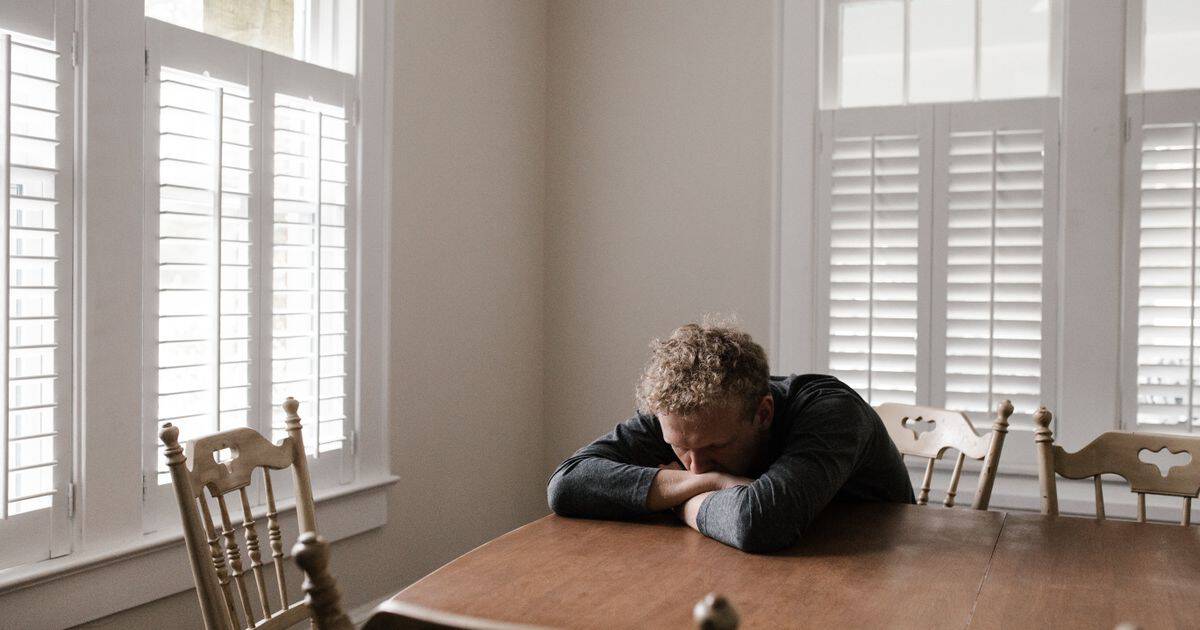
You’re not burnt out, exactly. Burnout sounds like you were on fire once. This is flatter than that. The alarm goes and your whole body says no. Not “I don’t want to go in today.” More like “I don’t want to do this anymore, any of it, and I can’t see the end of it.” And you can’t say it out loud, because you need the money, and because someone will tell you nobody wants to work anymore, as if you were a headline instead of a person.
Need to talk this through right now? Figlet is an AI coach that’s there at 2 in the morning, or right now. It runs this loop with you on the Work ground.
For most of my life I was certain I was lazy. A terrible procrastinator. I grew up between two forces, my mother’s relentless work and my father’s collapse, and I was sure the collapse had taken up residence in me. So I stood guard against it. Then I finally looked properly. Turns out I was guarding the wrong door. I’m just not a collapser. If I get down, it lasts a day. The thing I’d spent decades calling laziness, in me, is just rest. I didn’t work on my book for three days recently and it was wonderful. The ground held.
Before I explain any of it, try something. Read the next sentence slowly, let the out-breath go, and notice what happens in your body as you read it. You’re allowed to rest before you’ve earned it. Don’t argue with it and don’t agree with it. Just notice where it lands, the shoulders, the jaw, the heaviness in the limbs, and whether something in you braces against it or lets go by a millimetre. Stay with that one more breath. That’s the place we’ll work from.
What’s really going on
That bracing is a job problem turning out to be a ground problem. Most of us are doing what I call fiat work. Work cut loose from anything true inside you, the way fiat money is cut loose from anything real. What backs it is fear. You perform worth, every day, from zero, because on melting ground worth is never established, only re-earned.
Fiat doesn’t make work bad. It makes work non-compounding. Your effort doesn’t build into lasting safety or trust or rest. It evaporates, and tomorrow you start again from nothing. That’s why you feel busy but never settled. Exhausted but never finished. And most of the time we’re not really working for money at all. We’re working against shame, to outrun the feeling that the world was never built to hold us.
So when your body says “I don’t want to work anymore,” listen to it properly. It’s rarely saying “I want to do nothing forever.” It’s saying “I can’t keep re-earning my right to exist every morning.” Of course you don’t want to. You make sense. A nervous system that has run that treadmill for years will eventually refuse. That refusal isn’t laziness. It might be the most honest thing in you.
There are three ways a nervous system answers that anxiety. The Relentless one is afraid of never being chosen, so it works sixty hours a week towards a future that never arrives. The Reluctant one is in just as much pain, but it’s so sensitive to hearing it’s not enough that it recedes. Withdraws. Does the minimum. The Relentless-Reluctant one yo-yos: a month of heroics, then two of checking out. “I don’t want to work anymore” is usually the Reluctant one speaking, or the yo-yo on its way down. What the Reluctant one wants isn’t nothing. It’s to rest in being enough.
The loop, on your situation
I don’t fix this with a career change, and I don’t tell anyone to quit. I use a practice I learned from my teacher Aftab Omer, called reflexive participation. Three questions: what am I noticing now, how am I affected, and what creative action is being called for? Here’s how it runs on a body that doesn’t want to go in.
Get ground in your body first
Feet on the floor. One out-breath longer than the in. The part of you that’s done can’t be reasoned with while the alarm’s still ringing in your chest. Settle one notch.
What happened
Pick the most recent moment it hit, and re-enter it in the present tense. “It’s 6:40 on Monday. The alarm goes, and before I’m even awake something in me says I can’t.”
Where it lands in the body
Where does the “I can’t” actually live? A heaviness in the limbs, like a blanket laid over you? A hollow behind the ribs? Find it. The body is the first ledger. It kept an honest account of every year on the treadmill long before you’d admit you wanted off.
Who’s driving
Now listen for the voice. My teacher called it the Gatekeeper. I call these protector parts, and they grow up around old hurts. The one that whips: “Everyone else manages. What’s wrong with you. Lazy.” And the one that’s gone on strike: “What’s the point, it never gets better.” The whipper is the Relentless one. The striker is the Reluctant one. Both are frightened. Notice which has the wheel this morning.
Trace it
When is the first time you remember rest being something you had to earn? The first time stopping was dangerous, or lazy, or a disappointment to someone. Then widen it. What did your family teach you about work and worth? What did your culture? Mine came from people who survived by relentless work and had no room for a boy who wanted to be carried. And then the system you live inside, where standing still feels like falling. You didn’t invent the belief that stopping equals dying. You inherited it.
Feel it and tell someone
Under “I don’t want to work anymore” there’s nearly always grief. For the years. And under the grief there’s fear: if I stop, what holds me? Grief becomes compassion once it’s felt. Fear becomes courage once it’s spoken. So say the real sentence to one person who won’t rush to fix you. “I’m not lazy. I’m done re-earning my place every day and I’m frightened of what that means.”
One creative action
Not resigning. One small thing this week that’s backed by something true, not by fear. The question isn’t “what job should I have.” It’s “what is this work backed by?” So do one thing, inside the job or outside it, that you’d do even if nobody was watching. Fix the thing properly. Cook something slowly. Work that would still feel meaningful if no one were watching is the seed of vocation. It’s allowed to be small, and it’s allowed to take years.
One thing to do tonight
Rest, on purpose, before you’ve earned it. Not the scroll, which is avoidance wearing rest’s clothes. Actual rest. Lie on the floor for ten minutes. And notice the part that gets twitchy at minute three, the one that says you haven’t done enough today to deserve this. In me that part always promises the same thing: once this project is done, then you can rest. The other shore almost never arrives. Put a hand on its back. It doesn’t need to be in charge tonight.
Would therapy help with this?
Sometimes. If “I don’t want to work” has become “I don’t want to get up,” if you’ve stopped eating or sleeping, or the flatness has spread to everything you used to love, please talk to a licensed therapist where you live. That’s the practice telling you to get more support, and I’d want that for you.
If it’s the more ordinary thing, a body refusing a treadmill, that’s usually not a therapy problem. It’s a sovereignty problem. Coaching is how we go from where you are now to where you want to go. We only address the past when it emerges in the present, and with work, it emerges every Monday at 6:40.
The path
What I’ve just walked you through is the Empathi Method. For an individual, it’s built on my Proof of Work of Being Human protocol: building sovereign ground inside yourself, so that work stops being the thing you ask for permission to exist.
Something changed when I became a therapist, and it wasn’t the money. My time horizon lengthened. I stopped plotting exits and started thinking in decades. I felt, in my body, that I could do this work until I was wheeled out. I felt richer making less, because for the first time the future felt believable. You don’t need to become a therapist. The refusal in you is asking for that: ground that holds, so tomorrow feels real enough to work towards. There’s real dignity in the shift worked to keep a family fed. My own mother endured decades of it. I’ll never sneer at survival work.
There are two ways to keep going. Or you can get on the list for the book and the live program with me, where we do this work together over several weeks.
Figs O’SullivanFiglet Life Coaching
Get help now
Figlet is an AI coach, there at 2 in the morning or right now. It runs this loop with you on your actual situation, as often as you need. It’s coaching, not therapy. The list hears first about the book and the next live program with me.
Proof of Work, Greenleaf Book Group Press, February 2027. Not sure which ground is hurting? Take the two-minute Ground Check.
I go deeper into this in my book, Proof of Work (Greenleaf Book Group Press, February 2027).
Common questions
Why don’t I want to work anymore?
Because somewhere along the way the work stopped compounding. You’ve been re-earning your worth from zero every morning, and a nervous system can only do that for so long before it refuses. It isn’t laziness. It’s a body telling the truth about the ground it’s standing on.
What do you do when you don’t want to work anymore?
Not quit, and not push harder. Get ground in your body, name which protector has the wheel, tell one person the true sentence, and take one small action backed by something real instead of fear. Then rest, on purpose, before you’ve earned it.
Is something wrong with me if I don’t want to work?
No. A nervous system refusing a treadmill that never arrives anywhere is doing its job. Something is wrong with the ground, not with you. Treat the refusal as information, the soul asking to be heard, not a character flaw.
Reflexive participation and the Gatekeeper come from the teaching of Aftab Omer at the Institute of Imaginal Studies, where I trained.