When your husband doesn’t want another baby, his no is usually about fear, not about you or the child you already have: exhaustion, money, losing the little couple time you have left, a first year that nearly broke you both, or a quiet doubt that he can be enough as a father twice over. You cannot argue or campaign him into a yes, and pressure makes the no harder. What moves it is understanding what the no protects, telling him what the longing is like for you, and deciding together, with a timeline, rather than one of you winning.
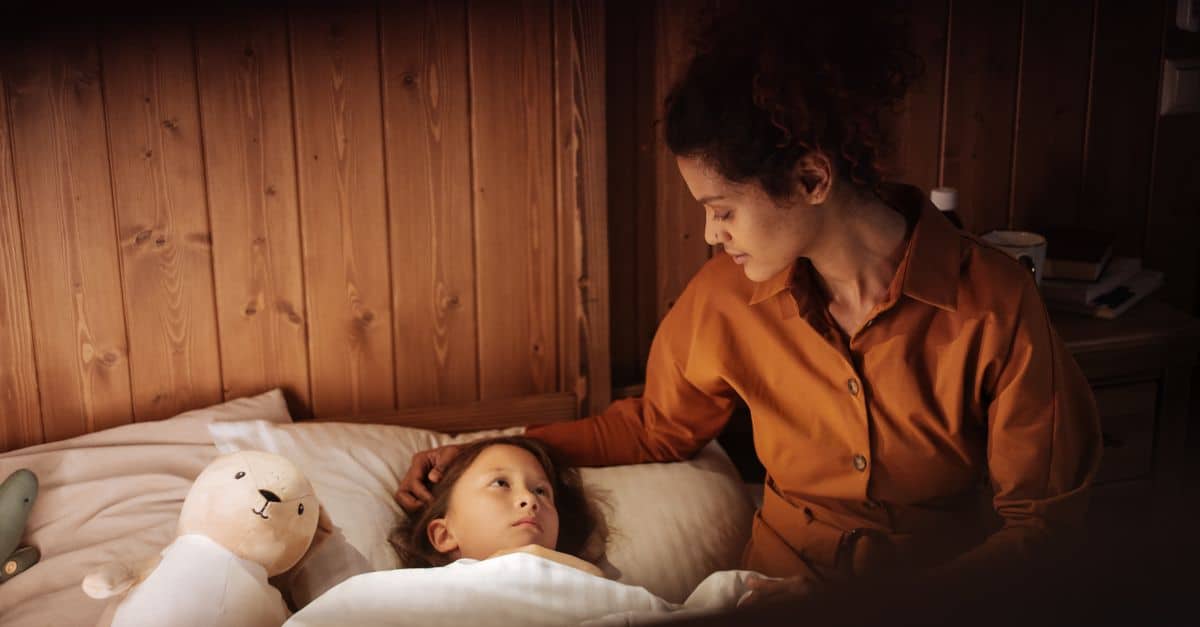
It is 11pm. You stood in the doorway of your child’s room a little too long tonight, then went to the closet where the tiny clothes are still folded in a box you will not give away. Earlier you brought it up again, carefully, and he went quiet. Or he said “we’re done,” like a fact about the weather. If you want somewhere private to say exactly what happened the last time you raised it, Figlet can show you the dance and give you one line to say to him.
My husband doesn’t want another baby but I do. Is something wrong with us?
Stuck in the same fight again?
Talk it through with Figlet right now. Private, judgment free, built on 17 years of couples therapy.
No. After seventeen years of sitting with couples, I know the topic is never the whole story. Underneath every fight there is an attachment world, and the bigger the topic, the deeper that world goes. Every one of us is quietly asking our partner two questions: Are you there for me? and Am I enough? Each “not yet” lands on you as an answer to both. In Empathi’s research across 58,221 completed relationship assessments, the number one unmet need people named was feeling “like we’re a team.” This fight goes straight at that need.
This page is for the mother who already has a child, or two, and aches for another. If you have no children yet and your partner doesn’t want any, that is a different decision, and I wrote about it in my partner doesn’t want kids but I do.
Why doesn’t my husband want another baby?
Sometimes the no is a calm, settled values position. More often it is a protector, guarding something specific.
The first year nearly broke you
Roughly 67% of couples see relationship satisfaction drop within three years of their first child, according to John Gottman’s research. If your marriage went through that, his body remembers the 3am fights and the distance. Another baby may mean going back into the fire.
He is afraid of losing you again
When a baby arrives, the baby takes the top of the attachment hierarchy. That is biology, not a choice. He gets bumped, and the bump registers in his nervous system as rejection. I call it the phantom of abandonment. Most men cannot say this out loud, so it comes out as “we can’t afford it.”
Money, sleep, work and age
These are real. With two children you move from man-to-man defense to zone defense. With three you are outnumbered. He is doing that math.
Shame, and his own childhood
Many men never saw a father do this work. If he picked up a screaming baby the first time and felt a quiet verdict land (I am failing this test), “no more kids” can be shame talking. Shame does not argue. It hides. And if he already feels like an outsider in his own home, “another baby” can sound like “even less room for me.”
His yes was never really asked for
If the first pregnancy happened on your timeline, part of him may be saying no simply to finally have a say.
Why does this hurt so much?
Because it is not a scheduling disagreement. It is grief: the body, the clock, the feeling that your family is not complete yet. When he says no, what lands in your chest might be “he doesn’t want the same life I want,” which slides into “he doesn’t really want me.” The future feels taken, and the person taking it is the one you turn to when things are taken. In our assessments, 33% of people named “alone” as their deepest feeling when love is not working.
Husband doesn’t want more kids but I do: what should I not do?
You cannot argue someone into parenthood, because you would be trying to find a cognitive answer to a limbic problem. A fear no gets louder when you push and softer when you stop. So stop campaigning.
Do not settle it by “accident.” A baby made without his yes, or made “for you,” arrives carrying a debt. One partner quietly keeps score, the other feels the score being kept, and a child grows up inside whatever their parents could not resolve. The same goes for emotional fiat: announcing “we’re having another” or “we’re done” as if one person’s declaration made it so. I call that Fiat Love, currency without backing.
How to convince my husband to have another baby
Honestly, you can’t, and the trying is what keeps you stuck. What you can do is turn a negotiation into a conversation. Not “do you want another baby?” again. Ask: what does another child look like to you, and what scares you about it? Speak from Experience of Self, not Story of Other. Story of Other sounds like “You’re being selfish.” Experience of Self sounds like “When I fold her old clothes, I feel a grief I don’t know what to do with.” The moment he registers a case being built against him, he disappears.
If the first baby left a wound in your marriage, repair that first. Attachment requires a future you can believe in, and a nervous system will not volunteer for the ultimate emotional risk when the bond feels shaky. If you are still fighting about the nights, start with my husband doesn’t help with the baby.
My partner doesn’t want another baby: the dance it creates
In 74.1% of the 6,159 couples in our research where both partners completed the assessment, the pair was in the pursue-withdraw cycle. You become the Relentless Lover: the ambiguity feels like a threat, so you push for the answer now. He becomes the Reluctant Lover: his core fear is disappointment, being the one who is failing, so he goes quiet. “Can we talk about this later.” The reach gets sharper. The retreat gets deeper. That is the Waltz of Pain, and the question of a second child sits untouched on the table. If you can feel it starting in your chest, bring the last conversation to Figlet and see which steps you each took.
What Teale and I did before our second child
When Teale was pregnant with our son Kian, weeks before the birth, we sat down and I asked her three questions. What are your longings, fears, thoughts, excitements? What can you do to support yourself if any of the fears or thoughts that are difficult come up? What can I do to support you? We took turns, and we really listened.
Teale talked about the joy of “I get to do this again with you.” That sentence carried the grief of her previous experience, the vulnerability of choosing to risk again, and the hope that this time, with this partner, it could be different. And I had to match her. I had to tell her, honestly, that I can feel really powerless when I want to support her through labor and I do not know how. Every protector part I have wanted to puff up and say, I got this. That would have been a lie, and she would have felt it.
We were not arguing positions. Everybody has an outrageous place where they don’t feel so lovable, and the baby question goes straight to it. Those three questions work just as well when one of you wants another child and the other does not.
Is there a compromise, or a timeline?
A decision date is not an ultimatum. An ultimatum is a protest, a way of shouting “are you there for me?” with a stopwatch. A date offered as honesty sounds like: “My body has a timeline and my heart has a limit. I would rather we both know by next autumn.” Unsure is not a no and not a yes. It usually means a part that longs for it and a part that is terrified of it have never been allowed to talk.
When is it a dealbreaker?
Sometimes the no stays steady, specific and calm after you have both said what you are scared of. Then it is a real difference, and it deserves to be grieved, not fought. You can grieve the child you will not have while you love the family you do have. Decide from neither the Penthouse (rage, panic) nor the Basement (collapse, avoidance).
If there is violence, threats, blocking exits, control of your money or phone, stalking, or reproductive coercion (sabotaging contraception, pressuring someone into a pregnancy or an abortion), that is not a dance. Get help today: the National Domestic Violence Hotline is 1-800-799-7233. If you are thinking of harming yourself, call or text 988.
What do I say to him tonight?
Do not reopen the yes or no. When the kids are down and nobody is triggered, say this, word for word: “I’m not trying to win this. I’m scared that if we want different lives, I lose you. What are you scared of?” Then listen.
If you’re the husband reading this
You do not owe anyone a yes you do not feel. But you do owe your wife your inside: the fear of another year like the first, the money, the worry that you will lose her again, the part of you that is unsure. Going quiet to avoid disappointing her is the withdrawer’s step, and it leaves her alone with a question only you can answer.
Frequently asked questions
Why doesn’t my husband want another baby?
Usually fear: exhaustion, money, losing you to the children, or repeating a first year that hurt the marriage. Sometimes it is shame about how he coped as a father, and occasionally it is a settled values position. Asking what scares him tells you which.
Should I have another baby if my husband doesn’t want one?
Not without his real yes. A child conceived against a partner’s no arrives carrying a debt, and resentment tends to grow on both sides.
My husband doesn’t want another baby but I’m pregnant
Slow down. I cannot give medical or legal advice, so talk with your doctor about your health and your options first. If you feel unsafe at home, call the hotline above today. Then, when you can, keep the conversation about the two of you: what each of you is scared of, not who is to blame.
Will I resent him if we don’t have another child?
You might, if the no is never explained and your grief is never heard. Resentment grows in silence. It eases when your longing is witnessed and the decision feels made together, even when it is not the one you wanted.
My wife doesn’t want another baby. What now?
The same dance runs in reverse. Her no is often about her body, her exhaustion, or a first year she carried mostly alone. Ask what scares her, and listen without building a case.
Where to go from here
If your husband’s distance started when your first child arrived, read relationship problems after having a baby. If his distance shows up as resentment toward the children you already have, read my husband is jealous of our kids.
And if you want to work it through tonight, Figlet is a coaching tool I built. Tell it what happened the last time you brought up another baby, it shows you the pattern you two are in and gives you one line to say to him. It is free to start tonight.
Keep Reading



Stuck in the same fight again?
Figlet is relationship coaching built on 17 years of couples therapy. Talk through what is happening the moment it matters, get a clear next step, and stop circling the same fight. Private, judgment free, ready whenever you are.
Free to start. No credit card needed.
Figs O'Sullivan
Founder · EFT couples therapist
“What I would tell you at 10pm, if I could.”