Photo by Artem Balashevsky on Unsplash
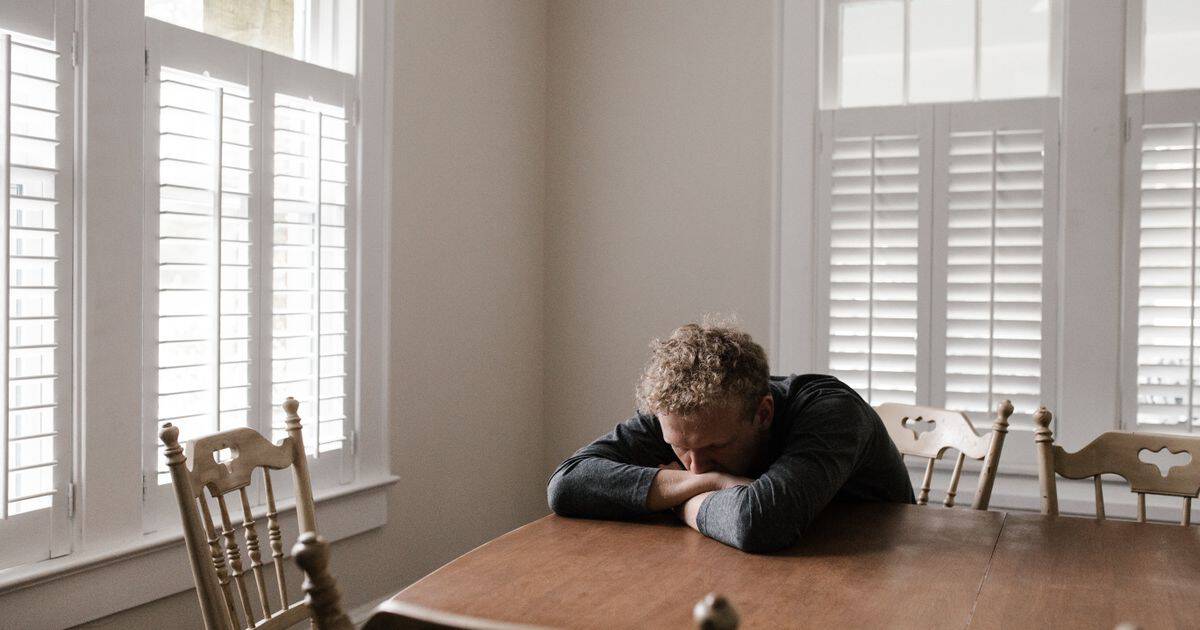
You’re not falling apart. That’s what you keep telling yourself. You’re working, the bills are paid, you’re fine. But you’ve been short with the people you love. The one drink at the end of the day has quietly become two. And there’s a weight in your chest at three in the morning that doesn’t have a name.
And now you’ve typed “therapy for men” into a search bar, which, if you’re anything like me, already feels like a confession.
A few months ago I read my eight-year-old son a passage from my book, the part where my sister and I sat alone in the dark at a daycare, waiting for our mother to come. Halfway through, I broke. My voice cracked. My breath collapsed. The tears came fast and heavy. It was the first time my son had ever seen me cry like that.
Before I could catch myself and tidy it up, the way Irish men tend to do, he leapt across the couch and wrapped his arms around me. Then he put his small hands on my cheeks and held my tears against his own skin. He wasn’t wiping them away. He wasn’t trying to stop them. He was taking them in.
I’ve spent two decades sitting with people in pain. And it still took an eight-year-old to show me what I’d been hiding, and that nothing terrible happened when I stopped.
Before I explain any of it, try something. Read the next sentence slowly, let the out-breath go, and notice what happens in your body as you read it. You don’t have to carry it alone to be a good man. Don’t argue with it and don’t agree with it. Just notice where it lands, jaw, throat, chest, and whether something in you sets its shoulders against it or softens by a millimetre. Stay with that one more breath. That’s the place we’ll work from.
What’s really going on
If your jaw set as you read that, good. That’s the part we’re looking for. Most men don’t search for help because they feel sad. They search because something leaked out sideways: a shout at a kid, a partner saying “you’re not here,” a Sunday night dread that won’t lift.
Underneath, it’s usually shame. My favourite definition of shame is feeling separate from belonging. It’s so painful that we’ll do almost anything rather than feel it, and Donald Nathanson, building on Silvan Tomkins, mapped where we run. He called it the Compass of Shame. Attack self: “I’m pathetic, sort yourself out.” Attack other: “You’re the problem.” Withdraw: go quiet, leave the room, or leave inside the room. Avoid: work, the drink, the scroll, the gym at eleven at night.
A lot of us were raised on withdraw and avoid, then attack other when the pressure gets too high. Every direction works in the moment. The bill arrives later, with interest.
I said something to my father on the phone recently, while he was mourning all the ways he feels he messed up his life. I told him maybe there was one silver lining: the way he collapsed helped make sure I never would. I meant it as a kindness, and it’s true.
But there’s fine print on every vow a wounded child makes. “I will never collapse like my father” is a strength, and it’s also a cage. There are moments that call for softness, for stopping, for being carried, and a man governed by that vow can’t answer them. I can be all push when softness is needed. Softness to myself, never mind anyone else.
Those vows are protector parts. They formed when you weren’t safe, and they kept you going. They aren’t your personality, even if they’ve been driving long enough to feel like it. So if you’ve been holding everything together and quietly coming apart underneath, you make sense. You’re not weak. You’ve been doing a child’s job with a man’s body for a very long time.
Need to talk this through right now? Figlet is an AI coach that’s there at 2 in the morning, or right now. It runs this loop with you on the Self ground.
The loop, on your situation
I don’t do this with pep talks. I use a practice I learned from my teacher Aftab Omer, reflexive participation. In its simplest form it’s three questions: what am I noticing now, how am I affected, and what creative action is being called for? Here’s how it runs when you’re a man who thinks he needs to talk to someone.
Get ground in your body first
Feet flat on the floor. Let one out-breath go longer than the in-breath. Look around the room and let your eyes land on something steady. You can’t think your way through this while your body is braced for a hit.
What happened
Pick the last moment it leaked out. Say it in the present tense, plainly. “My son spills his juice and I roar at him, and I see his face change.” Just what happened. Not the speech about what kind of father that makes you.
Where it lands in the body
Men get told we don’t feel much. Usually we feel plenty. It just lives below the neck, where nobody ever asked about it. A clenched jaw. A fist. Heat up the back of the neck. A stone in the stomach. Find yours. The body is the first ledger. It kept an honest record of everything you were never allowed to say.
Who’s driving
Now listen for the voice. “Man up.” “Nobody wants to hear it.” “Other lads have it worse.” Omer called this the Gatekeeper, the inner critic built in childhood to protect you. I call these protector parts. Notice which compass direction it’s pulling you toward right now, and which vow it’s guarding. Don’t argue with it. Just get its name.
Trace it
When did you first learn that needing someone was dangerous? Who in your family carried their pain in silence, or in drink, or in work? And what does your world reward in a man?
The first canoe club I joined when I moved to Hawaiʻi was old-school masculinity. Hard, unforgiving, relentless. If you weren’t tough enough, you shut up and trained. I saw grown men humiliated, dropped from boats moments before a race, mocked for being vulnerable. I admired them, and I still do. They produce champions, and that culture helps many men rise. Just not me. It took courage to leave for the club next door, and some people saw a man who couldn’t hack it. I needed a place where my heart was held kindly. Notice the clubs you’re in, and what they’ve taught you to hide.
Feel it and tell someone
Shame feeds on aloneness. It lives in the dark corners of the room and grows through isolation. The antidote is company. Feel it for one breath longer than you’d like, then say the true sentence to one person who won’t rush to fix you. “I haven’t been fine for a while.” That’s what my son gave me: not a solution, just someone steady enough to let it land. There’s a name for that. Coregulation. Another nervous system lending you its ground.
One creative action
Make it small and specific. Send the text to the friend you trust most: “Have you got an hour this week? I want to talk about something real.” Or book a first consult with a licensed therapist where you live. If you’d find it easier to start with a man, ask for one. You’re allowed to be picky about who gets to see you.
One thing to do tonight
Before bed, write one line: the thing you haven’t told anyone. Then read it out loud to yourself, slowly, in an empty room. Notice what happens in your chest, your throat, your hands. And then, if you can, let one person hear that line within the next two days.
Would therapy help with this?
For a lot of men, yes. Coaching is how we go from where you are now to where you want to go, and we only address the past when it emerges in the present. That’s enough for many of us. But if you’re drinking to get through the day, if there’s anger you can’t control, if you’re not sleeping, or if part of you has started thinking everyone would be better off without you, that’s more than coaching can hold. Please talk to a licensed therapist where you live. Going isn’t the collapse you’ve been guarding against. It’s how you stop needing to guard.
If you’re thinking about hurting yourself, call or text 988.
The path
What I’ve just walked you through is the Empathi Method. For an individual, it’s built on my Proof of Work of Being Human protocol: building sovereign ground inside yourself, so you can be strong and still be reached.
There are two ways to keep going. You can start Figlet Life Coaching tonight, on the Self ground, and it’ll run this loop with you whenever the pressure builds, at three in the morning if that’s when it comes. Or you can get on the list for the book and the live program with me, where we do this work together over several weeks.
Figs O’SullivanFiglet Life Coaching
Get help now
Figlet is an AI coach, there at 2 in the morning or right now. It runs this loop with you on your actual situation, as often as you need. It’s coaching, not therapy. The list hears first about the book and the next live program with me.
Proof of Work, Greenleaf Book Group Press, February 2027. Not sure which ground is hurting? Take the two-minute Ground Check.
I go deeper into this in my book, Proof of Work (Greenleaf Book Group Press, February 2027).
Common questions
Should I see a male or female therapist?
See whoever your body relaxes with. If a man would make it easier to start talking, ask for one, and don’t apologise for it. What matters most is that you leave the first session feeling a little more met than when you walked in.
Does therapy work for men?
It does, when it meets men where we actually are. Many of us open up faster through the body, or side by side rather than face to face. A good therapist will work with that instead of waiting for you to perform feelings on cue.
What is the best therapy for men?
There isn’t one best type. I trained in experiential approaches, Gestalt, Hakomi and Emotionally Focused Therapy among them, because they work with the body and the present moment rather than only with talk. The best therapy is the one you’ll keep showing up to, with someone you trust.
The Compass of Shame is Donald Nathanson’s, building on the work of Silvan Tomkins. Reflexive participation and the Gatekeeper come from the teaching of Aftab Omer at the Institute of Imaginal Studies, where I trained.