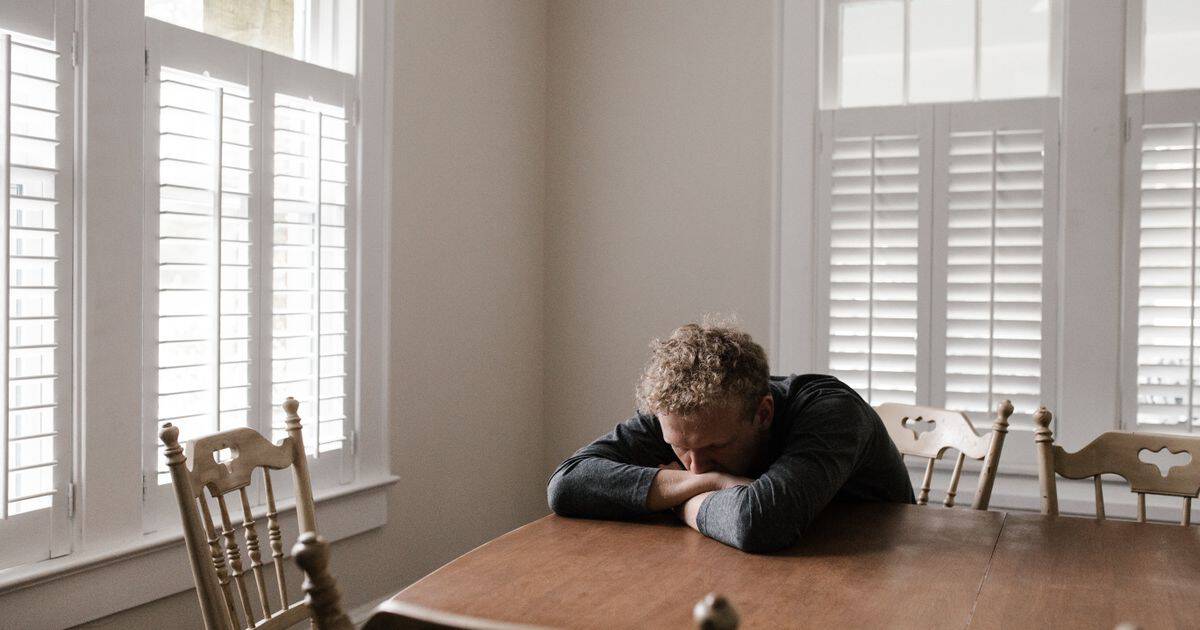
You keep cheating because cheating has become the way your body escapes a feeling it cannot tolerate, usually an old, heavy sense of not being enough, and willpower alone cannot outvote that alarm. It is rarely about the other person, and it is almost never proof that you don’t love your partner. The pattern stops when you close the door completely, face what you did without collapsing into shame, and go after the wound that keeps making a third person feel like oxygen.
If you keep breaking a promise to yourself and can’t say it out loud to anyone yet, tell Figlet what happens right before you cross the line. It’s an AI coach that’s there at 2 in the morning, or right now, and it won’t shame you.
It’s late. You’re on your phone in a room where your partner is asleep, or in a car you pulled into a parking lot so you could think. You promised yourself last time was the last time. You meant it. And here you are again, exhausted from the lying, from the two phones or the two accounts or the two versions of yourself you have to keep straight in your head.
Underneath the exhaustion is a heavier feeling. You look at what you keep doing, and it confirms your worst suspicion about yourself. I am bad. I am destructive. I am unworthy. So you type the question you can’t say out loud to anyone: why do I keep cheating on someone I love?
I’ve been a couples therapist for seventeen years and I’ve sat with hundreds of people in that exact chair. If you’re asking this question because you want to stop, you are not the monster your shame is telling you that you are. But the way most people try to stop, through willpower, guilt, and a promise to themselves, has not worked. That’s why you’re still here at 2am. To stop, you have to look at what’s running underneath it. Not the moral failure. The system.
You can love someone and still cheat
When talking turns into the same fight
Talk it through with Figlet right now. Private, judgment free, built on 17 years of couples therapy.
Yes, absolutely you can. And I’d go further. Sometimes the cheating is evidence of how much the relationship matters to you. I know that sounds like the most convenient line a cheater ever heard.
When someone cheats, what’s almost always happening underneath is that they are terrified inside the primary relationship. The aliveness, the ease, the feeling of being desired, all of that gets contracted and scared inside a deep love, under the weight of “am I enough, are you there for me.” Then someone comes along who is unburdened by all that history, and suddenly you feel alive again. That doesn’t prove you don’t love your partner. It may prove the opposite: the relationship that matters most is where all your fear lives.
None of that is a free pass. None of it. But you cannot stop a behavior you don’t understand.
Your body isn’t looking for sex
Your body has two questions running underneath every close relationship. Are you there for me? Am I enough for you? If both answers are yes, your nervous system rests. If either answer has been no for a long time, something in you starts scanning the horizon for somewhere the answer might be yes.
That scan is often unconscious. It shows up as a work friendship that feels a little charged. A DM you keep reopening. A coworker whose eye contact lasts a beat too long. Your body is not looking for sex. Your body is looking for the answer yes. You are still responsible for what you did with the scan. But this is why it keeps happening.
Most people I work with who keep cheating were caught in a loop at home long before anyone crossed a line. I call it the Waltz of Pain. One partner reaches with an edge, protesting, asking why they never feel prioritized. The other retreats, feels like a constant disappointment, and disappears into work or the phone or the garage. If you’re the one who strays, you were very likely the retreater, carrying a story that sounds like: I can never make her happy. Nothing I do is enough.
So when someone outside the system looked at you with easy warmth and no accumulated disappointment, your nervous system lit up in a way it hadn’t in years. It felt like oxygen. It also felt like proof that maybe you weren’t the failure you thought you were. You mistook that oxygen for love. It was actually relief.
Why it keeps coming back
An affair, in this pattern, is not really about the other person. It is about the fantasy of being acceptable. With them there is no history of letting anyone down, no shared mortgage, no look across the kitchen table that says “you did it again.” You get to be new. You get to be wanted without being weighed. That’s also why it doesn’t last. You’re dating their Representative and they’re dating yours, two highlight reels, and your marriage has moved past that stage into two full people surviving real life together.
Then there’s willpower. Willpower lives in the prefrontal cortex, the thinking, planning part of your brain. Attachment threats live in the limbic system, which fires long before the thinking brain gets a vote. When your partner rolls her eyes, or your boss humiliates you, or the loneliness at home hits a certain pitch, your body drops into the same alarm it felt as a small child. And that alarm wants comfort. Fast. If you’ve already carved a pathway to someone else, your body will pull toward the pathway that worked before. Willpower is trying to argue with a fire alarm using a legal brief. It does not stand a chance.
And the wound underneath usually didn’t start with your partner. The not-enough feeling was probably installed decades earlier, by a parent whose approval was conditional, or absent, or drunk. Your partner just happened to be the person whose disappointment finally landed on the exact bruise. Two people can live in the same depleted marriage and only one strays, because only one has the inner wiring that makes an affair feel like a solution. If the wound isn’t touched, the symptom rotates. Another person. Alcohol. Overwork. A slow withdrawal that leaves your partner married to a ghost.
The patterns underneath serial cheating
When people ask me why they keep cheating, they usually want one reason. There is rarely one. A study of nearly 500 people who had cheated (Dylan Selterman and colleagues) found the motives clustered into eight: anger, falling out of love, opportunity, commitment issues, unmet needs, sexual desire, wanting variety, and low self-esteem. That’s a useful list. But a list doesn’t tell you why it keeps happening to you. In my office, repeat cheating tends to run on one or more of these patterns.
Avoidance: escaping a feeling, not chasing a person
Most people I sit with who keep cheating are not chasing someone. They are running from something. The cheating, the affair, the outside relationship, a lot of the time that’s someone trying to escape the unbearable feeling of not being enough, of being a disappointment, of not being able to tolerate their own experience inside the relationship they care about most. If you were the retreater in the Waltz of Pain, the affair was simply another place to retreat to. One that happened to come with warmth.
A competing attachment
I use a phrase for this: a competing attachment. It’s anything you turn to for comfort instead of your partner. Work. Drinking. A phone. A crush. Everybody gets crushes, and the crush itself is not the problem. The moment a crush becomes a secret relationship, your nervous system has decided, without ever consulting your rational mind, that this new person is where the excitement, the vulnerability, and the playful, alive version of you now goes. If you’ve done this more than once, look at what your competing attachments have in common. They usually answer the same question your relationship stopped answering. I go deeper into that vacuum in why people cheat in relationships.
Novelty and the hunt for yes
New is intoxicating. A stranger’s attention lands on the empty spot, a look, a message, a “you seem amazing,” and a nervous system starved of a specific nutrient at home lights up like a Christmas tree. That isn’t because the other person is more beautiful or more interesting. It’s because they’re new, and they’re giving the exact answer that has been missing to the exact question that has gone unanswered. If you’ve cheated with several different people, notice this: the faces changed. The hunger didn’t.
Self-esteem on loan
For a lot of people, the affair is where they borrow a sense of worth. Someone wants you, so maybe you aren’t the failure you feel like at home. The trouble is that borrowed worth runs out. The glow fades, the not-enough feeling comes back, and your body goes looking for the next loan. That is a loop, not a love story.
Sabotage: proving the old story right
There’s a part of you I call the defended self. It developed to protect you from rejection, abandonment, shame, or engulfment, and its primary objective is not connection. It’s confirmation. If its story is “I always ruin good things” or “I’ll never be enough for anyone,” it will quietly engineer the proof. Cheating can be that proof.
And after the first time, a second kind of sabotage kicks in. Cheating again is very often what happens when a person cannot tolerate what it feels like to be inside themselves after the first one. You aren’t doing it to hurt anyone. You’re running from an emotional prison built out of your own not-enoughness, looking for one room where you are not, at every moment, the person who broke everything.
Why do I keep cheating with the same person?
Going back to the same affair partner is one of the most common versions of this, and one of the most confusing. You ended it. You meant it. Then a hard night, a “we’re just friends now,” one quiet message, and you’re back.
Here is what is usually happening. That person was regulating your nervous system. When you cut off contact, the alarm you had been medicating came roaring back, and you felt worse before you felt better. That is the hardest week, and it’s the moment most people fold. Early infatuation runs on the same brain chemistry as addiction: it creates wanting, the compulsive drive to check the phone one more time. Without real work on what that person was soothing, the door you thought you closed was only ever ajar.
So “it’s over” has to mean blocked, deleted, out of the workplace if necessary, and told in writing that there will be no more contact. No last conversation to explain. No staying friends. Every one of those is a bleed. If you notice yourself negotiating the terms of the ending, that isn’t closure. That’s the loop keeping a spare key.
What I used to say
Early in my relationship with Teale, before we had agreed to be exclusive, she went to live in the wilderness for a month. I stopped texting her, and I hooked up with an ex-girlfriend. When she came back, I called her while she was driving over the Golden Gate Bridge and told her.
In my head this was clean. We weren’t exclusive. I was being honest. To Teale, it was a devastating betrayal. And for years afterward, every time it came up, I went straight to my legal brief. We weren’t exclusive. You weren’t there. I was honest. All true. All completely beside the point. I was using a technicality to protect myself from the crushing weight of my own shame, and in doing so I was abandoning her in her pain. The splinter didn’t come out until I could put down the brief and say, I broke your heart, and I’m sorry I turned away from your pain.
People sit on my couch now and say exactly what I used to say. I didn’t think it was cheating. It didn’t mean anything. It only happened twice. That isn’t malice. It’s shame, measuring the square footage of the betrayal and trying to prove it was small. I know that move from the inside. It is the same shame that sends you back to the parking lot.
Why do I keep cheating on my boyfriend?
When you’re dating rather than married, the pattern often has a different flavor, though the engine underneath is the same. A few things I see again and again:
Commitment itself is the trigger. Things get serious, he starts to feel like home, and something in you panics. The closer it gets, the more there is to lose, and the relationship that matters most becomes the place where all your fear lives. Cheating quietly builds an exit before you can be left.
The rules were never spoken. Plenty of dating couples never actually say what exclusive means. I know how that goes from the inside, because my own story with Teale happened before we had agreed to be exclusive. A technicality can feel like permission in the moment. It never feels like permission to the person who gets hurt.
You may not want what you agreed to. Monogamy isn’t the only way to live, and some people genuinely want something else. But ethical non-monogamy runs on clear communication and boundaries, which is the opposite of secrecy. If what you want is openness, the honest move is to say so and let him choose, rather than taking the choice away from him.
It’s familiar. If you’ve cheated on more than one boyfriend, the common factor isn’t the boyfriends. It’s the wiring you bring into every one of them. Switching partners won’t change the pattern. Working on the wound will.
Shame is not the same as remorse
When you finally look at yourself honestly, the shame hits like a truck. “I’m a piece of shit. I don’t deserve you. I can’t even talk about this.” That sounds like remorse. It isn’t. It’s the Compass of Shame, making the whole situation about your own suffering so you don’t have to sit with the damage you caused. Shame, when it gets loud enough, doesn’t look for repair. It looks for exit. And the nearest exit is often the very thing you swore you’d stop.
I call the inner experience the Cocktail of Shame. Right now yours is probably 100 percent “I feel bad about myself.” That mix is useless. It keeps you self-focused, defensive, and unavailable. The mix we need is 20 percent “I feel bad about myself” and 80 percent “my heart is breaking for what I did to you.”
I have a client right now who cheated on his wife eight months ago. When I sit with him, I genuinely worry he might fall apart in my office. The guilt radiates off him. But his wife barely sees it, because he can’t make eye contact with her pain. He works late. He stays busy. When she brings up the affair, he gets defensive, not because he doesn’t care, but because he is already drowning in self-hatred and can’t take on one more ounce of it. From where she sits, it looks like he feels nothing. From where I sit, he feels so much that it has nowhere to go except away from her.
That is the trap for anyone who keeps cheating. The shame that looks like it should stop you is the same shame that pushes you toward the exit. Guilt says, “I did something that hurt you,” and guilt can move: you can apologize, make amends, change your behavior. Shame says, “I am the mistake,” and shame collapses inward. If you’re stuck there, I wrote about how to deal with guilt after cheating so it turns toward repair instead of hiding.
Am I a cheater forever? Can a cheater change?
No, you are not a cheater forever. Yes, people change. But I want to be honest about the odds, because hope without honesty is how you ended up here again. A 2017 study from the University of Denver (Kayla Knopp and colleagues) found that people who had cheated in one relationship were about three times more likely to cheat in their next one. That is a real risk. It is not a sentence.
Cheating is not a character flaw that lives inside you like a broken part. It is a behavior, and behaviors happen for reasons. When someone cheats more than once, the internet calls them a narcissist. In tens of thousands of hours of clinical work, I have met a genuinely narcissistic person maybe five or six times. What I usually see is a wounded person who made a destructive, tragic choice to survive their own pain, and who never found out what was driving it.
The people I’ve watched actually stop have three things in common. They closed the door completely, without a back channel. They stopped using shame as a substitute for repair. And they went and found the younger, hungrier, ashamed part of themselves that was driving the car, and gave that part what it actually needed, which was almost never sex or attention from a stranger. White-knuckling it usually buys a few months of fidelity before you’re back in the parking lot, staring at your phone, wondering what is wrong with you.
What kind of therapy helps with cheating?
If you keep cheating, there are two pieces of work, and you need both.
Individual therapy for the pattern. This is where you find the shame story that was installed early and made adult love feel like a job interview you were failing. Look for a therapist trained in attachment work, IFS (Internal Family Systems), or EFT (Emotionally Focused Therapy). The work is slow and somatic: practicing feeling the not-enough feeling in your body without reaching for something to make it go away. If your third-party habit is a person, porn, alcohol, or work, honest sobriety from it is part of the work too.
Couples counseling for the bond. If your partner knows and you’re both trying, find a couples therapist trained in affair recovery. In most of my work, nobody is the villain and the system is the problem. After an affair I pause that framing for a season, because the injury isn’t symmetrical. One person dropped a bomb. The other was standing in the explosion. The work starts with one-way repair, and only later turns to the cycle that created the vacuum in the first place. With repeat infidelity especially, I strongly recommend not doing this alone, because you have both already tried that, and the pattern won.
Counseling for a cheating spouse or partner isn’t about getting fixed so you can be forgiven faster. It’s about building the capacity to sit inside your own shame without escaping it. That is a specific, learnable, grueling piece of interior work, and without it there is usually a next time.
Should I tell my partner?
This is a decision to make with a therapist, not a search engine. In general, though, secrecy corrodes the bond even when your partner doesn’t consciously know, because your nervous system knows, and it shapes how you show up. A secret is also its own back channel: as long as it exists, part of you is still living the double life. Disclosure is painful and destabilizing, and it also creates a shared reality from which real repair becomes possible. Timing, safety, and support matter enormously. I’ve laid out how I’d approach it in should I tell my partner I cheated.
When to get help today
If the shame has turned into thoughts of hurting yourself, or if a discovery at home has turned into threats, violence, or anyone being kept from leaving, stop reading and call for help right now. Call or text 988 in the US, or your local emergency number. None of the work below can happen while anyone is unsafe.
What to do tonight
Start small. Tonight:
- Write down, honestly, what was happening in your body in the hour before the last time. Lonely, criticized, bored, ashamed? That is the alarm you were medicating.
- Block the number and delete the thread. If the no-contact message still needs sending, keep it to two plain sentences, and send nothing after it.
- Tell one safe person the truth, a friend who knows or a therapist you book first thing tomorrow.
- When the urge to reach out spikes, don’t argue with it. Sit with the alarm and let it move through your body. It passes.
- Go to sleep without telling anyone a lie tonight. That counts.
Close the door. All the way. Block the number. Delete the account. Tell the other person, in writing, that there will be no further contact, and mean it. If you cannot do this, you aren’t ready to stop. You’re still hoping to keep both, and keeping both is the double life that is destroying you. Expect to feel worse before you feel better. That third person was regulating your nervous system, and when you cut off the source, the alarm you were medicating comes roaring back. The impulse to reach out again will feel unbearable. It passes, but only if you stop feeding the loop. Call a therapist, a friend who knows, someone who will hold your humanity without co-signing the affair.
If your partner knows, stop defending. No more “it wasn’t that bad.” Say it plainly, word for word if you need to:
“Yes. It was that bad. I broke your reality and I lied to your face. I see how badly I hurt you, and I am not going anywhere while you feel it.”
This is what I call one-way repair, and it isn’t one conversation. It’s hundreds, over years. When your partner brings it up again, they are not attacking you. They are checking. Are you still with me? Do you still get it? My longer guide to how to stop cheating behavior and stay faithful walks through each step.
Then go find the younger, hungrier, ashamed part of you that was driving the car. That work is slow and somatic: feeling the not-enough feeling in your body without immediately reaching for something to make it go away. A therapist trained in attachment work is worth every dollar here.
If you’re the partner who was cheated on
You did not cause this. A betrayal is not one injury. It’s six or seven stacked inside one: the lying, the gaslighting, the sex, the emotional intimacy with someone else, the shame, and the reality pulled out from under you so you have to rewrite every memory. You have every right to never forgive. If you choose to stay and try, that is one of the most generous things a human being can do, and it only works if the door is fully closed first. What emotional affair recovery actually looks like is a good place to start, and can you love someone and still cheat may help you hold both truths at once.
Common Questions
Why did I cheat when I love my partner?
Because love and attachment hunger are not the same nervous system event. You can love someone deeply and still carry a starved place inside the bond, a question that has gone unanswered for years. When someone else lands on that starved place, the body responds before the values do. It doesn’t erase the love. It exposes what has been going unfed.
Do cheaters always cheat again?
No. Having cheated before raises the risk, but it doesn’t decide your future. What predicts long-term fidelity is not remorse, it’s repair: closing the door completely, doing one-way repair with your partner, and doing your own work on the shame story underneath.
Is serial cheating an addiction?
It isn’t a diagnosis I’d hand anyone from an article, but it can work like one. Early infatuation runs on the same wanting chemistry as addiction, and an affair can become the pathway your body pulls toward whenever the alarm goes off. That’s why stopping looks a lot like recovery: no contact, sobriety from the habit, and work on what it was soothing.
How long does it take to stop wanting to cheat?
The pull toward a specific affair partner usually loses intensity within a few weeks of complete no-contact, though the alarm that made you vulnerable will still fire. Wanting to feel wanted isn’t the problem. Turning that want toward a third party is. Rebuilding the primary bond and doing your own shame work quiets the pull over months, not days.
Why do I cheat even when the relationship is good?
Sometimes a relationship looks fine on paper while your body is quietly answering no to “are you there for me” or “am I enough for you.” And sometimes it really is good, and the relationship that matters most has simply become the place where all your fear lives. Either way, it’s information about you and the bond, not a verdict that you are bad.
Can my partner ever trust me again?
Sometimes, yes, but not with the same trust you had before. Innocent trust doesn’t come back. What can come back is earned trust, built over months and years of evidence that you can keep every door closed and stay present with their pain. If that evidence never arrives, their body’s refusal to trust you is accurate, not broken.
You are not the worst thing you did
If you’re sitting in that parking lot right now with nobody you can tell, Figlet is the AI relationship coach I built from my own clinical work. It won’t shame you and it won’t co-sign the affair. It will help you look at what you were actually reaching for, and what to say at home before the next lie gets told. You are not a monster. You are a person whose nervous system found a bad solution to a real problem. Close the door, face what you did without collapsing into shame, and go feed the hungry part of you the truth instead of a lie. That is how the behavior stops.
Keep Reading



When talking turns into the same fight
Figlet is relationship coaching built on 17 years of couples therapy. Talk through what is happening the moment it matters, get a clear next step, and stop circling the same fight. Private, judgment free, ready whenever you are.
Free to start. No credit card needed.
Figs O'Sullivan
Founder · EFT couples therapist
“What I would tell you at 10pm, if I could.”