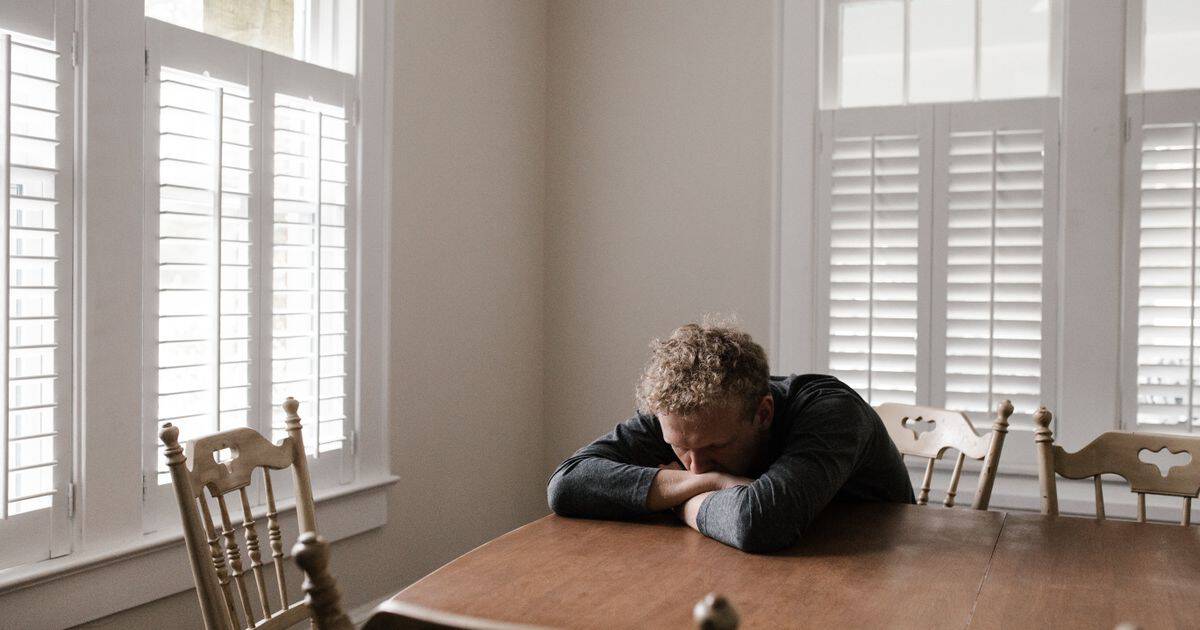
It is Tuesday night. You are sitting in the car in the driveway with the engine off, and neither of you has moved. You just left another session. Ninety minutes of communication worksheets, “I feel” statements, and a therapist who kept nodding while asking you to reflect back what you heard. On the way home, the silence in the car had weight to it. You feel further apart than when you walked in.
You pull out your phone. You type “successful couples therapy” into the search bar and your thumb hesitates. You are not sure what you are looking for. Validation, maybe. Or permission to stop. Or one honest sentence that explains why the place that was supposed to save your marriage has started to feel like a courtroom where you keep losing.
I want to slow you down before you scroll another listicle.
I have been a couples therapist for seventeen years. I have watched thousands of couples land in this exact spot, and I can tell you with the confidence mileage buys that the reason therapy is not working for you is almost certainly not that you picked the wrong partner, and almost certainly not that you are broken. It is that the therapy itself is aimed at the wrong problem. The whole premise, that better communication skills will unlock the bond, treats a human attachment system like a lock with the right combination. It does not work like that.
So let me tell you what actually makes couples therapy successful, drawn from what I see work in the room, over and over, with couples who arrive convinced it is over.
Recognize yourself in this?
Talk to Figlet about what is happening in your couples therapy right now. AI relationship coaching grounded in Figs O’Sullivan’s work, LMFT. Free to start, no credit card.
The First Factor: The Therapist Is Not a Referee

Which pattern is running your relationship?
Take the free three minute quiz and meet the creature behind the cycle you keep getting stuck in.
Most couples therapy in this country is coaching in a therapist’s chair. The clinician sits between you like a linesman at a tennis match, calling faults, teaching you to serve, running you through active listening drills. You leave with a homework sheet.
I will say this plainly. No couples therapy is better than bad couples therapy. If your therapist is focused on behavior change without first stabilizing the field underneath you, they are doing real harm. They are turning both of you into problems to be corrected.
Here is what I mean. When a therapist sides with the complaining partner and asks the quieter one to “do more,” the quieter one’s body does not process a request. It processes a verdict. The internal translation runs roughly like this: I have failed you before. I am failing you now. I will keep failing you into the future. That is not paraphrase. That is what withdrawing partners describe, in my office, once the armor opens enough for them to speak from inside it.
A successful couples therapist holds both nervous systems with equal, wide-hearted tenderness. They do not have a favorite. They do not pathologize the withdrawer or coddle the pursuer. They see the choreography as the enemy, not either of you. If you feel shamed or scolded in your sessions, or if you leave feeling like the therapist is on your partner’s side, run for the exits.
From Empathi’s research: in 58,221 completed relationship assessments, 74.1% of the 6,159 couples where both partners completed were in the pursue-withdraw cycle. Both partners typically describe the other as the one withdrawing.
The Second Factor: The Model Has to Be Attachment-Based
Grounded in attachment theory, adult love partners regulate one another the way a caregiver regulates an infant. When the bond wobbles, your amygdala hits the alarm before your thinking brain gets a vote. Cortisol dumps. Reason exits the building. Both of you catch fire in the same moment.
If your therapist does not work from this frame, they are treating the smoke, not the fire. They will keep helping you argue better about the dishes, the phone, the mother-in-law, the tone at the door. And you will keep arguing about those things until you both die of exhaustion, because the fight is never actually about the content.
The bonded body only ever asks two questions, and never in words. Are you there for me? Am I enough for you? Every fight in your marriage is one of those two questions dressed in different clothes. You probably feel the first one loudest in your body. Your partner probably feels the second one loudest in theirs. And here is the piece no communication worksheet will name: you are both answering the same threat with opposite moves.
When you feel the connection slipping, you reach. You want more contact, more talking, more assurance. When your partner feels it slipping, they retreat. Not because closeness is unwanted, but because they cannot stand the possibility that they are the reason you are in pain. In my clinical shorthand, one of you is the Relentless Lover and one is the Reluctant Lover. Both are terrified. Both are protecting the same soft heart.
Successful couples therapy names this dance the moment it enters the room. It does not moralize about it. It maps it.
The Third Factor: We Work the Body, Not the Story
Your body keeps what I call a somatic ledger. It is an incorruptible record of every unattuned response you have ever gotten, from a caregiver, from an ex, from this partner on some Tuesday you cannot quite remember. Every time reaching cost you, the ledger noted it. Every time silence was punished, the ledger noted that too.
When you and your partner argue at eleven at night, you are not two rational adults negotiating logistics. You are two nervous systems reading each other’s ledgers in real time. The rational brain runs behind the survival brain. There is a window where the nervous system can stay present, and outside of that window, no communication technique on earth will land.
Successful couples therapy slows the body down before it slows the sentences down. It notices the tightening in your chest, the flatness in their eyes, the shift in the room’s temperature, before it asks you to speak from any of it. A good therapist will interrupt you mid-argument and ask what just happened in your stomach. Not because they are being cute. Because that is where the actual therapy lives.
If you have never been asked about your body in couples therapy, you have never had couples therapy. You have had a supervised conversation.
The Fourth Factor: The Representative Cannot Do This Work
Both of you walk into the therapist’s office with a polished version of yourselves out in front. I call it the Representative. It is the mask you learned to wear because somewhere along the way your organic self felt like too much, or not enough, or the wrong shape entirely.
Here is why the Representative wears you out. She is running an unbroken audition. There is no offstage, no green room, no break. The second she sits down, your partner might catch a glimpse of the version underneath, and that risk is the whole reason she exists. So she keeps performing. And the loop has a cruelty to it: whatever warmth your partner offers is aimed at the mask, not at you. The reassurance touches the surface and slides off. Some quiet part of you knows it, and dismisses it, and reaches again.
Successful couples therapy is, above almost anything else, a slow eviction of both Representatives. It is the therapist noticing when your voice gets thin and asking, gently, who is talking right now. It is the moment your partner drops the logical explanation and says, quietly, I feel like I keep failing you and I do not know how to stop. That sentence never comes from the Representative. That sentence is the whole point.
I have written more about this specific mask, and how it strangles honesty in a marriage, in Overcoming Fear of Judgment from Your Romantic Partner.
The Fifth Factor: Both People Have to Stop Building the Case
Most couples arrive at therapy with a case file. He does this. She does that. Here are the receipts. Here is the pattern going back to 2019. Popular psychology has weaponized clinical terms so thoroughly that everyone walks in already knowing their partner is avoidant, narcissistic, dismissive, or codependent. The therapist is expected to render a verdict.
This is what I call the courtroom, and it is where good therapy goes to die. As long as one of you is the plaintiff and the other is the defendant, no bond can form. The therapist becomes the judge. And whichever way the judgment lands, both of you lose, because a verdict is not repair.
Successful couples therapy dismantles the courtroom in the first two or three sessions. The therapist refuses the case. They refuse to decide who is right. They keep pointing back to the dance, back to the loop, back to the shared suffering underneath both of your survival strategies. The enemy is the cycle, not the partner. If your therapy has not made this shift by session four or five, something is wrong.
If you want to name your own pattern in this before your next session, you can take the free Figs Quiz.
The Sixth Factor: You Have to Cross Into Shared Suffering
Every couple who walks into my office wants to feel better immediately. They want the therapist to hand them a technique, a phrase, a nightly ritual, and they want to skip the messy part. I understand. The messy part is terrifying.
But here is the paradox that decides whether therapy works or does not. We do not help people feel better. We help them feel their feelings better. You cannot jump directly from disconnection back to good. You cannot fly to Hawaii without a plane. There is a threshold in the middle called shared suffering, and it is the only bridge that goes across.
Shared suffering is the moment both of you stop defending yourselves long enough to stand on flat ground and admit how hopeless and alone you have both felt in this. Not sequentially. Together. In the same room, in the same breath. Your partner says, I have felt like I am failing you for two years and I did not know how to say it. You say, I have felt like I am screaming into a void and I was starting to hate you for it. And the therapist holds both of those, without flinching, without ranking them.
That is the moment therapy starts working. Not before.
Ready to work on this?
Figlet is AI relationship coaching grounded in attachment science and Figs O’Sullivan’s clinical work, LMFT. First messages free, no signup.
The Seventh Factor: You Stop Outsourcing the Bond
In struggling relationships, one or both partners are leaking distress outside the couple. To a mother. To a best friend. To a therapist you see individually and do not tell your partner about. To a Reddit thread. To an ex who “gets it.” The bond gets thinner every time you feed someone else the raw material of your marriage.
Successful couples therapy names this early and asks you to stop. Not because outside support is bad. Because when your primary attachment figure is not your primary attachment figure, the whole system collapses into what I would call a sibling arrangement. You are peers competing for validation, not partners protecting a bond. One of you has to be able to be the parent for the other one at any given moment. And then the roles switch. Neither of you can play parent when the other is bleeding out to a friend.
This is what Stan Tatkin calls the couple bubble, and the research is unambiguous. When two people agree to prioritize the bond above the outside voices, the nervous system finally exhales. If your therapy is not building this bubble, it is building something else, and something else will not hold. I have written about this at length in What Is Secure Functioning in Relationships?
The Eighth Factor: The Work Happens Between Sessions
The last factor, and this is the one couples resist most. Ninety minutes a week does not change a marriage. What changes a marriage is what you do at 8:47 on a Wednesday evening when your partner sighs and something in your chest tightens and you have to choose whether to attack, withdraw, or turn toward.
Successful couples therapy is a rehearsal for the moments that happen outside the room. The therapist does not give you homework in the form of worksheets. They give you a shared language for the loop, a way to name the dance while you are in it. We are doing the thing. I am reaching hard and you are going quiet. Can we sit down. Two people who can name their cycle in real time are already halfway repaired. If your therapist is not giving you this language, ask them to. If they cannot, find a different therapist. I have written more about this exact skill in How to Get Your Partner to Open Up Emotionally.
Bringing It Back to Your Kitchen
If you read all of this and recognize that your current therapy is not doing most of what I just described, I want you to know that is real information. It is not a failure of your relationship. It is a mismatch of method to problem.
The couples I see recover, and I have seen many, do not do so because they finally learned to communicate. They recover because someone in the room finally named the ledger, evicted the Representative, dismantled the courtroom, and walked them into shared suffering. Once that happens, the communication takes care of itself. You do not need to be taught how to talk to someone whose heart you are actually meeting.
You can do this work. Your partner can do this work. But you need a therapist who knows the terrain, and if you do not have one, that is the first thing to change. Not the marriage. The map.
This is not a you problem or a them problem
“You are not fighting a broken partner, but rather a tragic, co-created system where you both hurt because you mean so much to each other.”
“Most of the hurt in a relationship comes from impact without intention.”
Figs O’Sullivan, LMFT
Common Questions
How long does successful couples therapy usually take?
Real change in an attachment-based model tends to show up in three to six months of weekly work, and stabilizes over a year. If nothing has shifted by session eight or ten, that is a signal, not about you but about the fit. The dance should have a name and the shared suffering piece should be visible by then. If it is not, ask why.
Can couples therapy work if only one partner really wants to be there?
Sometimes yes. The willing partner learning to see the cycle, and to stop pursuing or stop shutting down, often shifts the whole system. Nervous systems co-regulate whether we consent to it or not. That said, a reluctant partner who is present in body is enough to start. A partner who refuses to enter the room at all is a different conversation.
What are the signs your couples therapist is actually good?
They do not take sides. They interrupt content to ask about your body. They can name your cycle by session two or three. They refuse to render verdicts on who is right. They hold both of your pain with equal tenderness. And you leave sessions feeling exposed but not scolded, tender but not shamed. If you feel worse about yourself as a person after each session, that is the wrong room.
Is it too late for couples therapy if we have already talked about divorce?
No. Some of the most successful work I have seen has started at what both partners believed was the end. Once the fantasy of leaving is on the table, defenses often come down. The question is not whether you have thought about it. The question is whether both of you can put the case file away long enough to stand on flat ground together and feel the loss underneath the fight.
What if my partner refuses to talk about emotions or the past in therapy?
That refusal is almost always shame protection, not indifference. A withdrawing partner who cannot access feeling is drowning inside, not empty inside. The right therapist does not force emotional talk. They slow the body down until safety returns, and then the words come. If your therapist is pressuring your partner to feel on demand, they are making it worse.
Do not just close the tab on this.
Bring what surfaced here into a real conversation. Figlet coaches you through it, grounded in Figs O’Sullivan’s work, LMFT. Free to start.
The therapy is not the point. The bond is. Find someone who knows the difference, and then do the work.
Keep Reading



Every couple has a pattern they cannot see. Find yours.
In love, each of you is a Relentless or a Reluctant, which makes you one of three kinds of couple: Relentless and Reluctant, two Relentless, or two Reluctant. The free quiz reveals your creatures and the cycle they fall into together. About three minutes.
No signup needed to start.
The Relentless

The Reluctant