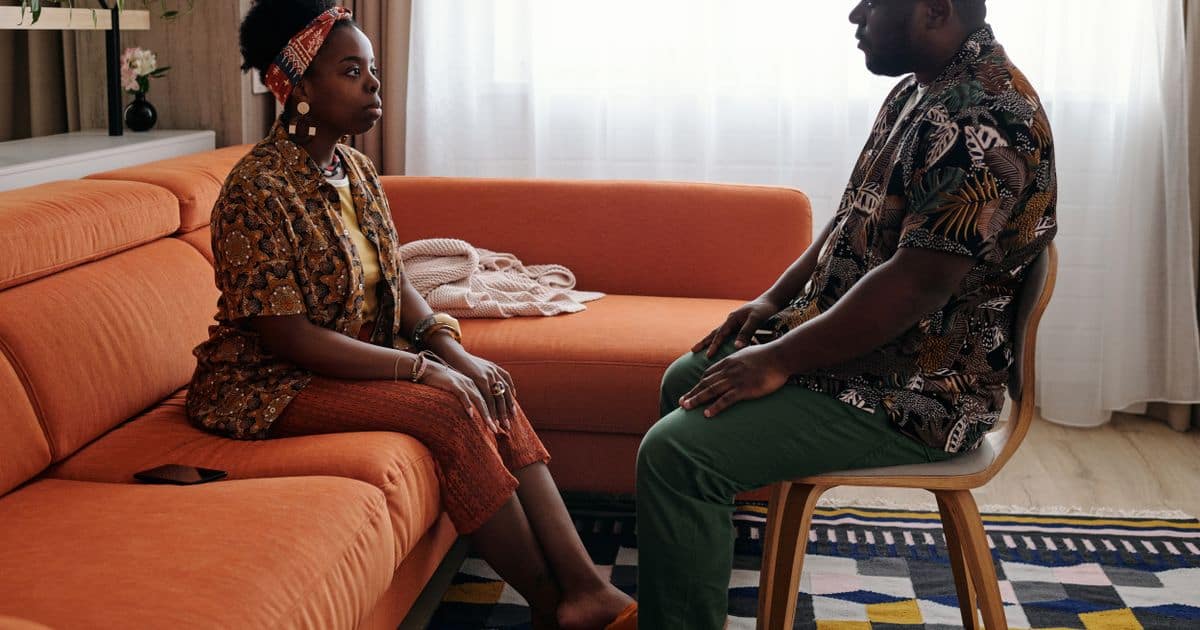
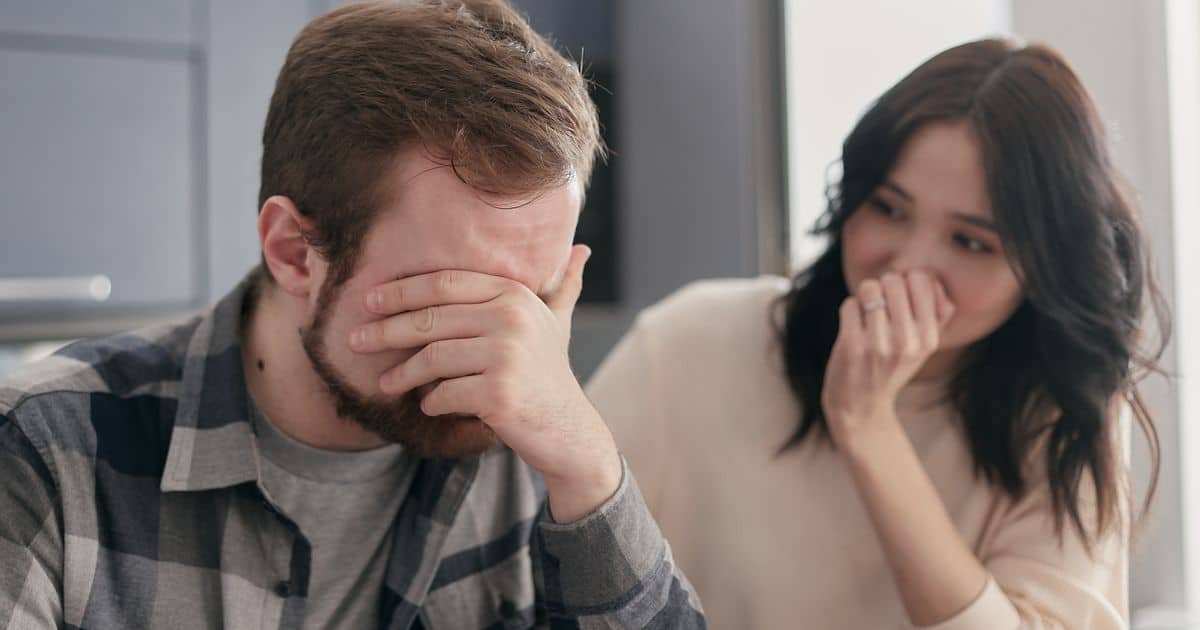
When your husband makes you feel ugly, it usually happens through one of three routes: things he says (criticism, jokes, comparisons), things he stops doing (no looks, no touch, no desire), or your own shame filling the silence he leaves. The feeling is real, and it is not an accurate report on your face. But what he did also matters, and repeated put-downs about your looks are contempt, sometimes control, not “just honesty.”
Maybe tonight it was a comment about your weight while you were getting dressed, or a joke at dinner with his friends. Or nothing was said: you undressed and he looked back at his phone. Now he is asleep, and you are at the bathroom mirror picking yourself apart, typing “my husband makes me feel ugly” into your phone because you cannot say it to anyone you know. If you want to say it somewhere private first, tell Figlet “he made a comment about my body and I can’t stop thinking about it”, and it will show you the pattern you two are in.
Why does my husband make me feel ugly and worthless?
When they shut down, what do you do?
Talk it through with Figlet right now. Private, judgment free, built on 17 years of couples therapy.
I have been a couples therapist for seventeen years, and the ugly feeling almost always arrives by one of three roads. Each one asks something different of you.
What he says: he calls me ugly, comments on my weight, compares me to other women
This is the loudest road. He remarks on your body. He jokes about your weight in front of other people. He praises other women’s looks out loud, or compares you to them, or to porn. When he gets called on it he says, “I was only joking.” But impact is bigger than intention. Your body records the moment, not his intention: the heat in your face, the drop in your belly.
What he stopped doing: my husband makes me feel unattractive
The quieter road is absence. He doesn’t look at you the way he used to. He doesn’t reach for you. You brush his arm and feel him stiffen, or you stopped reaching because the last three times something in you died a little. Nobody said “ugly.” Your body said it for him.
What your shame says into the silence
The third road runs through your own history. Shame is one of the feelings we’re born with, a sudden interruption of feeling good, and when it hits, your nervous system runs back through every past moment you felt bad about yourself. The present gives you two units of pain. Your history has two hundred stored. So one careless remark, or one evening of him not noticing, lands as four hundred units, and the only word big enough for it is ugly.
How to tell which road you are on: write one plain sentence about what he actually said or did, the way a camera would have seen it. If the sentence is something he said, and it keeps happening, you are on the first road. If it is about what he didn’t do, the second. If you can’t find a sentence at all, only the feeling, the third road is carrying most of the weight.
Why would a husband do this?
Sometimes it is his own shame. If your husband has gone quiet about your body, if he has stopped initiating, there is a very good chance he is not disgusted. He is frightened of saying the wrong thing. That is the road I wrote about in my husband never compliments me, and it is a different man from one who mocks you.
Sometimes it is contempt, and contempt is criticism that has fermented. It is what happens when complaints go unresolved for so long that one partner builds an entire story of the other’s inadequacy. In Gottman’s research, contempt was the single strongest predictor of divorce, more powerful than criticism, defensiveness or stonewalling. The superiority is armor over his own disappointment. That explains it; it does not excuse it.
Sometimes it is something in him that has nothing to do with your body. He is depressed and needs treatment. His testosterone has genuinely dropped and needs medical attention. He has developed a compulsive relationship with pornography and his nervous system has rewired around a screen. Any of those can look like no desire, and you will read it as a verdict on your face.
Sometimes the joke is a dodge: a man who feels rejected makes a joke that cuts a little too hard. And sometimes it is deliberate: the put-downs are there to keep you small and easier to manage. That last one is a different terrain entirely.
Is it emotional abuse if my husband says I’m ugly?
One clumsy comment, said under stress, that he can later look at and repair, is a rupture. A repeated pattern is something else. If he belittles who you are, not what you did. If he mocks your body in front of others. If he keeps comparing you to other women. If he controls what you wear or what you eat. If there is a warm private version of him and a public version that humiliates you. If naming any of it makes him more punishing, not more curious. That is emotional abuse territory, a sustained pattern of contempt, control and refusal to ever take responsibility.
If there are threats, violence, blocking you from leaving a room, control of your money or your phone, that is not a dance between two frightened people. Get help today. In the US, the National Domestic Violence Hotline is 1-800-799-7233, or text START to 88788, any hour.
What happened in my own marriage
The second road runs through my house too. In my own marriage, my wife Teale has carried the fear that she is not sexually attractive to me, that I don’t want to have sex with her. And I have carried the shame of feeling like a constant disappointment, unable to show up the way she needs me to.
I had to sit on our couch and say out loud that I was scared, that my body contracted at the very moments it used to open, and that I was terrified of failing her as a husband. Teale had to say that when I pulled away, her body read it as a primary panic that she was no longer attractive to me, no longer chosen. My withdrawal had nothing to do with how she looked. Her body read it as a verdict on her anyway.
That is the dance I see in most couples stuck around looks. You feel unwanted and reach: I call that the Relentless Lover. He feels the reaching as a test he keeps failing and goes quieter, the Reluctant Lover. His retreat lands in your body as “you are not worth looking at.” Your reaching lands in his as “you are failing me.” I call it the Waltz of Pain, and neither of you knows you are dancing.
How to respond when your husband criticizes your looks
Not in the moment, and not by laughing it off. Shame sends us running in four directions, what Donald Nathanson called the Compass of Shame: attack self, withdraw, avoid, attack other. Laughing along is withdrawal in disguise. The ten minutes at the mirror afterward is attack self.
Instead, speak from your Experience of Self, not the Story of Other. The Story of Other is the case file: “you’re cruel, you always do this.” It feels justified and hardens everything. Wait for a calm moment, sit close, and say this, word for word:
“When you said that about my body, I felt small, and I’ve been hiding from you since.”
Then stop talking. If he can hear it, even clumsily, you are in a loop you can work on. If it is met with contempt every time, that is information too.
If you want to find your own version of that sentence before you say it, or work out why the last attempt went sideways, Figlet can help you rehearse it.
What to do for yourself tonight
Skip the last look in the mirror. Step away, one slow breath out longer than the breath in. Sit on the edge of the bed with one hand on your chest and one on your belly, and say quietly, “Something in me feels ugly tonight, and I’m staying with it.” You are not trying to feel beautiful. You are giving the ashamed part of you some company, which is the one thing shame can’t survive.
When the inner critic starts its inspection, notice whose voice it is doing an impression of, and let the Friend answer, the part of you that knows you are good: “You’re allowed to be here exactly as you are. Come back from the mirror.” If the shame about your looks goes deeper than this marriage, I wrote about that on its own in I feel ugly.
If this has started to show up as restricting food, bingeing or purging, or weeks of low mood, please talk to your doctor or a licensed therapist, and if you are thinking about hurting yourself, call or text 988.
If you are the husband reading this
You may not have meant it. Impact is bigger than intention, and right now it is landing on her as “you are not enough for me.” If it came from your own resentment or your own shame about desire, name that, not her body. Tonight, without defending yourself, say: “I hurt you with what I said about your body, and I’m sorry. I want to hear what it did.” Then listen.
My partner or boyfriend makes me feel ugly
The same three roads run through dating relationships. A boyfriend who comments on your body, compares you, or goes cold when you undress is pressing on the same old question: am I enough? The same line works, and the same line about abuse holds.
My wife makes me feel unattractive
Men feel this too, and often tell no one. When your wife turns away in bed, your body can conclude: my body is a problem. Say what happened in your body, not what is wrong with her.
Where to go from here
If his comments are about your weight in particular, read when shame about weight gain affects your relationship. If the feeling has spread past your looks into everything, as if you are the problem in every room he is in, read why your partner makes you feel bad about yourself.
Frequently asked questions
Is it emotional abuse if my husband says I’m ugly?
One clumsy remark he can own and repair is a rupture. A repeated pattern of put-downs, public mockery, comparisons, or control over what you wear or eat is emotional abuse territory. Call 1-800-799-7233 or text START to 88788.
Why does my husband compare me to other women?
Sometimes it is contempt that has built up from unspoken resentment, sometimes a compulsive relationship with porn, sometimes a joke used as a dodge. None of those are a report on your face. Tell him how it lands, and watch whether he gets curious or more punishing.
My husband made me feel ugly once. Should I let it go?
Not by swallowing it. A single hurt you never mention goes into the ledger and comes out later as hiding. Say the one line, calmly, and give him the chance to repair it.
How do I respond when my husband comments on my weight?
Don’t laugh along. Later, when you are both calm, say the one line above, word for word, and watch whether he gets curious.
If you would rather start somewhere private tonight, Figlet is a coaching tool I built. It is not therapy. You tell it what happened, it shows you the pattern you two are in, and it gives you one line to say to him. You can start free tonight.
Keep Reading



When they shut down, what do you do?
Figlet is relationship coaching built on 17 years of couples therapy. Talk through what is happening the moment it matters, get a clear next step, and stop circling the same fight. Private, judgment free, ready whenever you are.
Free to start. No credit card needed.
Figs O'Sullivan
Founder · EFT couples therapist
“What I would tell you at 10pm, if I could.”