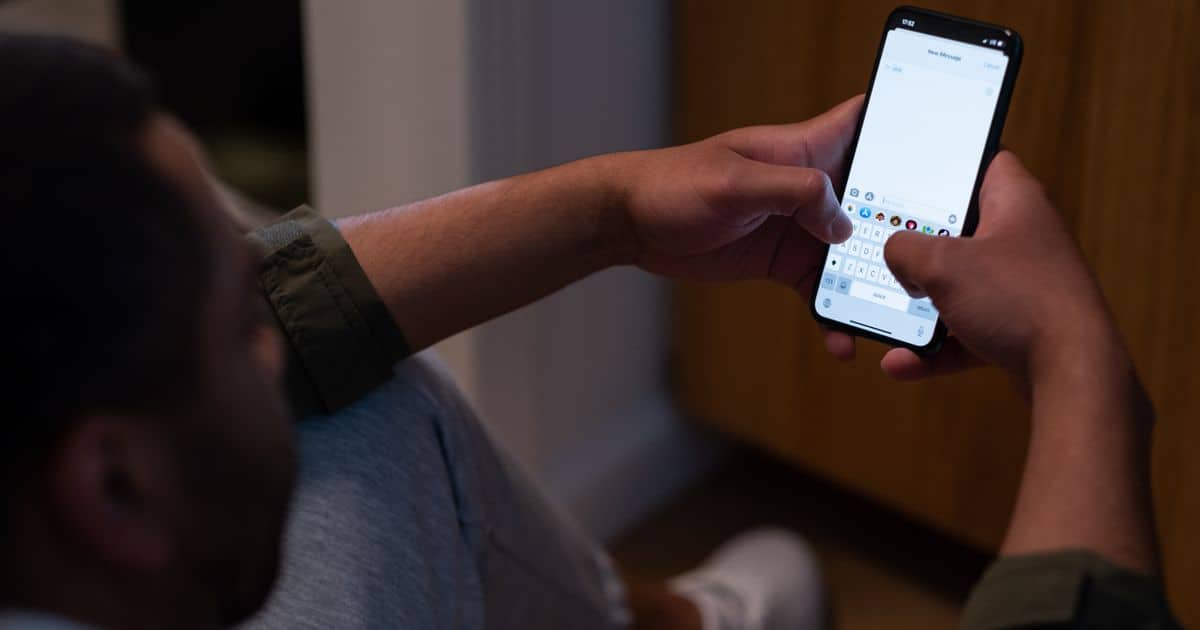
You are sitting on the edge of the bed at two in the morning with a cold, tight knot under your sternum. The house is quiet. The person you love is in the next room or asleep beside you, and the air between you still feels charged from a fight that started over something small. A tone. A delayed text. A sigh at the dishwasher. Three days later, you are still inside the weather of it.
You typed “tumultuous relationship definition” into your phone because you need a name for what is happening. The listicles have already given you their verdicts. Toxic. Incompatible. Red flags. Narcissistic dynamic. None of them quite fit. You love this person. You cannot keep doing this. Both are true at once, and the gap between them is where you have been living.
Slow down before you accept any of those internet labels. In my experience most of them miss the target, and getting the diagnosis wrong will cost you the relationship.
Seventeen years sitting across from couples in exactly this ache, and here is what I can tell you about what a tumultuous relationship actually is: a high-intensity feedback loop between two deeply attached, terrified nervous systems trying to stay safe with each other. It is not a lack of love. It is love with nowhere safe to go. The volatility is not proof your bond is broken. It is proof of how much you mean to each other, and how much alarm fires inside your bodies when that bond feels threatened.
Recognize yourself in this?
Talk to Figlet about the storm cycle you keep landing in. AI relationship coaching grounded in Figs O’Sullivan’s work, LMFT. Free to start, no credit card.
The Working Definition, Written From the Therapy Room
When talking turns into the same fight
Talk it through with Figlet right now. Private, judgment free, built on 17 years of couples therapy.

If I had to put a clinical definition on it, here is the one I would give you, and it will not match the ones on relationship blogs.
A tumultuous relationship is a bonded pair caught in a repeating, escalating cycle of rupture and partial repair, driven by two complementary attachment adaptations that keep landing on each other’s deepest vulnerabilities, where each partner’s survival move confirms the other’s worst fear about themselves.
Read that twice. Every clause matters.
Bonded pair. You are not strangers. You matter to each other. You do not fight with the barista this way. You do not fight with the man at the hardware store this way. You fight with this person because this person is your primary attachment figure, your nervous system’s anchor in the world. The intensity is a function of the bond, not a contradiction of it.
Repeating cycle. The same fight. Different clothes. A minor comment over coffee or a delayed text message triggers a three-day storm, and the shape of this week’s storm matches last month’s.
Complementary adaptations. You are not fighting the same way. You are fighting in opposite directions, and the opposites feed each other.
That last piece is the whole thing. Let me show you.
The Pattern Underneath Almost Every Tumultuous Dynamic
In roughly eight out of ten of the couples who come to my office in this kind of pain, the engine looks the same.
One person is what I call the Relentless Lover. Their nervous system is wired to the fear of abandonment. The ancient question running under every interaction is: Are you there for me? Do I matter? Am I a priority? When connection feels wobbly, their body sounds a primal alarm. They reach. They protest. They text again. They raise the intensity. From the outside this looks like criticism or neediness or control. From the inside it is terror, and reaching is the only language they know for stopping it.
The other person is the Reluctant Lover. Their nervous system is wired to the fear of inadequacy and rejection. The ancient question running under every interaction is: Am I enough for you? Will I be accepted, or exposed as a disappointment? When conflict rises, their body registers an incoming verdict of failure. They retreat. They go flat. They rationalize. They explain. From the outside this looks like coldness or stonewalling or not caring. From the inside it is shame, and shutting down is the only exit they have found.
Now watch what happens between them.
The Relentless Lover’s reach lands on the Reluctant Lover as more evidence that they are failing. So the Reluctant Lover retreats harder.
The retreat lands on the Relentless Lover as abandonment. So the Relentless Lover reaches harder.
Each person’s protective move is a direct hit on the other’s primary wound. Neither one knows this is what is happening. Both of them think they are responding to the other person’s bad behavior. Both of them are responding to an alarm their own body set off before they could think.
That is a tumultuous relationship. Not two villains. Two bodies, perfectly matched to light each other on fire.
If you want to name which end of this pattern you are living on, you can take the free Figs Quiz and get a read on your own protective adaptation.
Why Communication Advice Does Not Fix It
Most of what the internet will hand you is a cognitive answer to a biological problem. Use I statements. Pick a calm hour. Name your needs. Create a safe space.
I will say this plainly after fifteen years of watching couples try the scripts. Communication skills applied by themselves to this problem rarely do much. The skills are fine. The trouble is you are trying to run software on hardware that is actively on fire.
Attachment theory, developed first by Bowlby and refined by Ainsworth, tells us that adult partners regulate each other the way a caregiver regulates an infant. When the bond wobbles, the amygdala pulls the fire alarm long before the thinking brain gets a word in. Cortisol dumps. The survival brain runs ahead of the rational brain. Reason exits the building. By the time you are mid-fight, the person you married is not fully at the wheel, and neither are you.
You cannot pour a cognitive solution into a nervous system that is drowning. Trying to coach your partner into opening up while their body is reading your words as a verdict is like asking someone mid-drowning to deliver a lecture on backstroke technique. If you want to go deeper on the specific problem of a shut-down partner, I wrote more about that pattern in how to get your partner to open up emotionally.
Two Crocodiles, Two Field Mice
When a couple in this cycle walks into my office, what I see first is two crocodiles standing in the kitchen. Everything above the waterline is armor. Fight. Flight. Freeze. Sharp words. Eye rolls. Icy silence. Explanations. Lectures.
If I slow the tape down, if I create enough containment that the armor can crack for even thirty seconds, something else appears. Underneath the crocodiles sit two little field mice. Two small, frightened people who love each other deeply and are hurting from the disconnection and have no idea how to climb back toward each other without exposing the parts that most need protection.
The armor is what therapists call secondary reactivity. Anger. Blame. Resentment. Coldness. Secondary emotions always carry a “because of you” story. They are a boomerang you launch at your partner to protect yourself, and the boomerang slices you on the way home.
Underneath the armor is the primary vulnerability. Grief. Loneliness. Terror. Shame. The raw stuff. The actual felt experience your body is trying to not have. A defended person cannot be met. Only a vulnerable person can be met. That is the whole physics of why this gets harder the more you fight.
In a tumultuous relationship, both of you are living above the waterline. You barely know what is underneath your own armor, let alone what is underneath theirs.
Ready to work on this?
Figlet is AI relationship coaching grounded in attachment science and Figs O’Sullivan’s clinical work, LMFT. First messages free, no signup.
Volatility Is Not The Diagnosis You Think It Is
Modern culture preaches a high-time-preference kind of love. Any volatility means toxic. Any rupture means exit. We want connection without cost, safety without vulnerability, love without the mess of repair.
I teach something closer to the opposite. Disconnection is not proof your relationship is failing. It is an inevitable feature of deep attachment. If you are tightly bonded, you will absolutely scare the living daylights out of each other. That is not evidence the bond is broken. It is evidence the bond is real.
The marker of a genuinely troubled relationship is not how loud the fight gets. It is whether repair follows. The couples who worry me most are not the ones who fight hard. They are the ones who go cold for days or weeks or months and never make it back to softness before the next rupture starts. That is a bond that is quietly starving. Not from too much conflict. From the absence of return.
So when you ask whether your relationship is tumultuous because it is dying or tumultuous because it is alive, here is my one question. After the storm, do you find your way back to each other? Not perfectly. Not completely. Just back. If the answer is sometimes yes, you are in a bonded relationship with a broken cycle. That is a solvable problem.
When Tumultuous Crosses Into Something Else
I want to be careful here, because the word toxic has been so overused it has almost stopped meaning anything. Someone’s coworker calls her boyfriend toxic because he waited three hours to text back. Any conflict gets slapped with the label on social media. Meanwhile people in genuinely dangerous situations convince themselves their experience must not qualify, because the word has lost its weight.
Here is what I actually think toxic means, clinically, after all these years in the room. Toxic is when both people are being hurt, and the way each one tries to stop the hurt enlarges it. The reaching gets sharper. The distancing gets colder. Two bodies escalate off each other with no exit. That is toxic. Not a villain and a victim. Two bonded systems in an escalating loop with no repair on the back end.
That is distinct from abusive. Abuse involves a pattern of power and control, intimidation, isolation, financial coercion, physical harm or the threat of it. If you are in that, this article is not your map. Please reach out to a domestic violence resource.
Most tumultuous relationships are not abusive. They are two frightened people in a cycle neither of them chose, armed with protective strategies they built in childhood that are now firing at the person they most want to feel safe with.
The Shift That Actually Works
Here is the move. The one thing that genuinely interrupts a tumultuous cycle. It is not a communication technique. It is a shift in what you believe is happening.
You stop treating the fight as evidence of a problem between the two of you, and you start treating it as a shared enemy you are both getting beaten up by.
In my office we call this externalizing the cycle. It is not you versus me. It is us versus the pattern. The pattern is the problem. The pattern is the thing with teeth. The pattern is what is hurting both of you, and both of you are feeding it without meaning to.
The moment you can see the pattern as a third thing in the room, something shifts. You can turn to your partner across the kitchen and say, “We are in it again.” You can name the dance. You can own your own step in it. The shame drops. The blame drops. Nobody has to be the villain, because the villain is a loop that was installed in both of your nervous systems long before you met each other.
This is the beginning of what I call relational proof of work. Not grand gestures. Not perfect communication. Small, repeated acts of repair. Both of you turning back toward each other after the rupture instead of away. Each time it happens, your nervous systems learn something new. They learn this bond is actually safe enough to come back to, even after a storm.
Can the pattern driving this actually shift? Yes. Slowly. Not through willpower, not through insight alone, but through felt, embodied experience of your partner staying with you when you drop the armor and show the field mouse underneath. I wrote more about that in can you change your attachment style, and the companion piece on the other side of this dynamic is how to cope with an avoidant partner.
Bringing It Back to Your Kitchen
Here is what I want you to take with you from this article.
The word tumultuous is not a diagnosis. It is a description of the weather. The weather is being generated by two nervous systems that love each other and have no map for how to be in distress together without lighting each other on fire.
Your partner is not the enemy. Their protective move is not evidence of their character. It is evidence of what their body learned to do in the first ten years of their life to stay connected to the people they needed. The same is true of your protective move. Neither of you chose this choreography. You inherited it. And you are both still dancing it, in your own kitchen, at eleven o’clock at night, without realizing you are not actually in charge of the music.
Naming the pattern is the first act of sovereignty you can take. Not blaming the pattern on them. Not blaming it on yourself. Just seeing it. Letting it be the shared enemy. Taking responsibility, each of you, for your own step without demanding the other person go first.
The storm will come again. That is not the question. The question is whether you can find your way back to the field mouse underneath your own armor, show it to your partner, and let them show you theirs. That is the whole repair.
Common Questions
What is the difference between a tumultuous relationship and a toxic one?
Tumultuous describes the weather of the relationship. Toxic describes whether the cycle produces repair or only damage. A tumultuous bond with real repair after rupture is a bonded relationship with a broken cycle, and that is solvable. A tumultuous bond with no repair and only mounting harm has crossed into toxic territory. Abuse is a separate category entirely and involves power, control, and the threat of harm.
Why do I keep having the same fight with my partner?
Because the fight is not about the content. The content changes. The dishes, the text, the tone. The structure underneath stays identical because it is driven by two complementary attachment adaptations landing on each other’s deepest wounds. Until you can both see the structure instead of arguing the content, the fight will keep showing up in new costumes. That is the signature of the cycle.
Can a tumultuous relationship become a secure one?
Yes, in my clinical experience, many do. The shift happens when both partners stop treating each other as the problem and start treating the cycle as the shared enemy. It requires each person doing their own work on their protective adaptation and learning to drop the armor in small, repeated moments. It is slow. It is not a weekend workshop. But I have watched it happen many times.
Is intense passion a sign of a tumultuous relationship?
Intensity alone is not the marker. Intensity plus a repeating rupture-with-no-repair cycle is the marker. Some bonded couples live with high intensity and also high repair, and that is a vibrant, alive relationship. The problem is not that you feel strongly. The problem is when the strong feeling only ever travels through alarm and attack, never through softness and return. Check the quality of your repairs, not the volume of your fights.
Should I leave a tumultuous relationship?
I cannot answer that for you, and anyone on the internet who answers it without knowing you is being irresponsible. What I would ask is this. Is there any current of repair underneath the storm? Is there a version of your partner you still recognize when the armor drops? Are you safe? If repair exists and you are safe, this is almost certainly workable. If repair never comes and the harm is only growing, that is a different conversation, and it probably needs real support.
What To Do Next
Do not just close the tab on this.
Bring what surfaced here into a real conversation. Figlet coaches you through your specific cycle, grounded in Figs O’Sullivan’s work, LMFT. Free to start.
The storm is not the diagnosis. The pattern underneath it is. Name the pattern. That is where the work begins.
Keep Reading


When talking turns into the same fight
Figlet is relationship coaching built on 17 years of couples therapy. Talk through what is happening the moment it matters, get a clear next step, and stop circling the same fight. Private, judgment free, ready whenever you are.
Free to start. No credit card needed.
Figs O'Sullivan
Founder · EFT couples therapist
“What I would tell you at 10pm, if I could.”