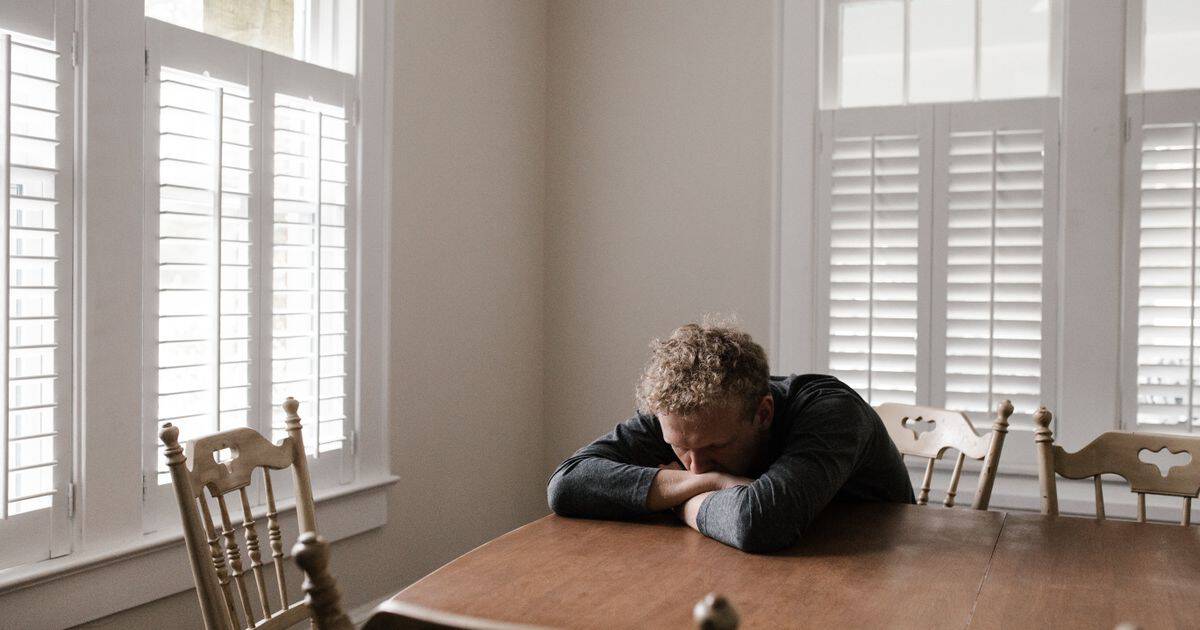
Yes, insecurity can ruin a relationship, but not because you are too much. It does the damage through the moves your alarm makes when the bond feels wobbly: checking, chasing reassurance, testing, or going cold, and each of those moves sets off your partner’s alarm until you are both stuck in the same loop.
The way out is not to need less. It is to catch the alarm in your body, say the fear underneath instead of the accusation, and repair together. That is how anxious or insecure attachment becomes earned security.
If your insecurity is flaring right now and you want help finding words that will not push your partner further away, Figlet is there at 2 in the morning, or right now.
You are lying on your side of the bed at 11:47 p.m. Your partner is asleep, or pretending to be. Three feet of mattress between you feels like three miles. Earlier tonight there was a sigh, or a look, or a text that took four hours to answer, and now your body will not let you go to sleep because some ancient part of you is running the same sentence on repeat: something is wrong, something is wrong, something is wrong.
Recognize yourself in this?
Talk to Figlet about it right now. AI relationship coaching grounded in Figs O’Sullivan’s work, LMFT. Free to start, no credit card.
You have Googled this before. You know the words. Anxious. Avoidant. Insecure. You have taken the quizzes. You may have even said out loud, to a friend or a therapist or the empty kitchen, that you think your attachment insecurity is ruining your relationship. That the reaching, the checking, the fuming, the freezing, the story you cannot stop telling yourself about what their silence means, is going to burn this thing down.
I want you to slow your breath for a second. Because what is happening inside you right now is not a defect of character. It is not codependence. It is not you being too much. It is a nervous system that learned, a very long time ago, that disconnection equals danger, and it is doing exactly what it was built to do.
I have sat with couples in rooms like this for seventeen years. And I can tell you the story most of the internet is telling you about attachment insecurity is missing the piece that actually changes anything.
The Piece Everyone Misses

Which pattern is running your relationship?
Take the free three minute quiz and meet the creature behind the cycle you keep getting stuck in.
Most content on attachment insecurity tells you to learn to self-soothe. Set better limits. Regulate on your own. Become secure inside yourself first, then a relationship will work.
Self-soothing my arse.
I mean that clinically. Human beings are wired for connection the way we are wired for oxygen. From infancy onward, we settle through other bodies. That is not weakness. That is mammalian biology. The idea that you should become a fully self-sufficient island before you deserve secure love is a fantasy the culture sold you, and it is making your insecurity worse, not better.
Individual regulation is not the starting condition. It is what emerges after enough experiences of successful co-regulation with a safe other. You cannot learn to swim while you are fighting for air. Secure attachment is the life jacket that lets the swimming lessons begin.
So if you are reading this hoping I will tell you to breathe more, journal more, get in your own lane, I will not. The answer to attachment insecurity is not less bond. It is a different kind of bond, built on purpose, by two people who understand what is actually happening between them.
From Empathi’s research: in 58,221 completed relationship assessments, the split between feeling “not enough” and “too much” was 52% to 48%. A near-even split, and the wound underneath is identical.
What Attachment Insecurity Actually Is
The term comes from attachment theory, the body of work started by John Bowlby and Mary Ainsworth. Their observation was simple and staggering. Infants who cannot get consistent, attuned responses from their caregivers develop survival strategies to secure whatever connection they can. Some become vigilant, loud, hard to soothe. Some become quiet, self-contained, easy to overlook. Both are intelligent adaptations to inconsistent ground.
Those strategies do not evaporate at eighteen. They walk into adult bedrooms and kitchens and text threads. They are your attachment style, the survival blueprint your nervous system wrote when you were three or four or seven, and never got the memo it could put down.
Attachment insecurity is the umbrella term for what happens when that blueprint is running the show. It comes in two main flavors and one hybrid. The anxious version keeps reaching, protesting, checking, escalating. The avoidant version pulls back, goes cold, explains itself in careful paragraphs, retreats to logic. The disorganized version does both, in whiplashing succession.
I break down the causes, the three types and real examples in my guide to insecure attachment.
But here is the part clinical language often obscures. Insecurity is not a permanent identity. It is a state your body enters when the bond feels wobbly. A person with a mostly secure history can look wildly insecure inside the wrong dynamic. A person with a bruising early history can move toward earned security inside the right one. Your attachment behavior is contextual. Which means it can change.
Signs Your Insecurity Is Ruining Your Relationship
Attachment is the quietest ruin. It rarely ends a relationship in one dramatic night. It wears it down in small, repeated moves that each made sense to your body in the moment. Here is what that usually looks like from the inside.
- You check. Their phone, their location, their last seen, their tone. Not because you enjoy it, but because not knowing feels unbearable.
- Reassurance does not stick. They say of course I love you, and the relief lasts five minutes. Then the panic is back, and now you feel worse, because you needed it again and you saw them sigh.
- You build a murder board. Forty-five minutes to text back. Red string. No “I love you” before hanging up. Red string. None of it means much on its own, but your nervous system connects it into a story: they are pulling away, do something, now.
- You test. You go quiet to see if they notice. You mention someone who paid you attention. You threaten to leave first, so you will not be the one who gets left.
- Jealousy runs hot. Their friends, their coworkers, their past. Every other person becomes a possible threat to the bond.
- You go cold instead. If your version is the avoidant one, the sign is the opposite: short answers, retreating into work or your phone, explaining yourself in careful paragraphs while the person you love feels completely alone.
- Your partner is drained. They walk on eggshells. They give and give and it is never enough, and you can see the exhaustion on their face.
- It is the same fight every time. The topic rotates, the dishes, the text, the party, but the dance underneath is identical.
I had a client, Sarah, who would go through her boyfriend’s phone whenever he left it out. Not because she enjoyed violating his privacy, but because she literally could not tolerate not knowing. The not knowing felt like dying. When he found out and got angry, she escalated. She started accusing him of things and threatened to leave first. That is classic protest behavior, and the cruel irony of it is that every move her body made to keep him close pushed him further away.
If you recognize yourself in that list, I want you to hear this clearly: none of it makes you a bad partner. It makes you a frightened one. The behavior is the last domino in a chain. The first domino is an alarm in your body, and that is where the change has to start.
Anxious, Avoidant and Fearful Avoidant: How Each One Ruins Things Differently
Insecurity does not look the same in everyone. The same wound, are you there for me, am I enough for you, comes out in different strategies.
When anxious attachment is ruining your relationship
The anxious system hyperactivates. When the bond wobbles, it does not climb the stairs of the window of tolerance one floor at a time. It shoots straight to the penthouse, and every bit of that energy is aimed at one thing: getting a response. Texts, questions, criticism, tears. Sometimes the protest works, your partner turns around and holds you, and your nervous system files the strategy under “things that work when everything is falling apart.” That is why it is so hard to stop.
When avoidant attachment is doing the damage
The avoidant system deactivates. It learned early that expressing needs drove people away, so it stopped expressing them. In a relationship this looks like calm, logic and distance. It feels like self-protection. To your partner it feels like a closed door. The withdrawal is not arrogance or indifference. It is an attempt to survive the agonizing feeling of failing someone you love.
When it is fearful avoidant (disorganized)
The fearful avoidant body learned two contradictory truths at the same time: come close, go away. You are safe, you are danger. So it runs both programs. One night you are curled into each other and the bond feels thick, and within seventy-two hours there is a wall nobody can explain. I want to be close to you, and when you are close to me, it is not right. The pulling away is not the wound. It is the protection.
Most couples I see are some mix of these, and most people who search for answers about their own insecurity also wonder why am I so insecure in the first place. The short version: your attachment history wrote the strategy, and the current relationship is where it gets triggered.
The Two Questions Underneath Every Fight
I tell every couple who lands on my couch that the bonded body is only ever asking two questions, and never in words.
Am I safe with you here?
Do I actually matter to you?
One of them tends to be louder in your chest. The other tends to be louder in your partner’s. Every argument you have, about the dishes, the phone, the tone, the in-laws, the money, is a proxy fight for one of those questions having landed on a “no.”
When the anxious one senses the bond slipping, they reach. Louder, sharper, more insistent. Not because they are needy. Because the gap between them feels like the first inch of losing everything.
When the avoidant one senses the bond slipping, they retreat. Not because they do not care. Because they cannot bear the idea that they are the reason you are in pain. Every complaint arrives with a verdict already glued to the back of it: I have failed you before, I am failing you now, I will keep failing you.
Both of you are answering the same threat with opposite moves. And each move sets off the other person’s deepest alarm. That is why the loop feels unwinnable. You are not fighting each other. You are two bodies in mutual protest, each one convinced the other has stopped caring.
The Waltz of Pain
I call this loop the Waltz of Pain. It goes like this.
One partner senses disconnection and reaches. The reach comes out sharp because the alarm is loud. The other partner hears the sharpness as a verdict on their worth and retreats to protect their heart from the burning shame of feeling like a failure. The retreat lands on the first partner’s deepest wound of abandonment, so they reach harder, louder, more critical. Which sends the second partner deeper into silence. Which sends the first deeper into panic.
Around and around. An infinity loop of mutual terror across the kitchen table.
Notice what is not happening in that description. Nobody is a villain. Nobody woke up wanting to hurt anybody. Both people are running survival strategies that were installed before they had language, and those strategies are perfectly designed to trigger each other. The loop is the enemy. Not your partner. Not you.
Most couples in my office arrive convinced the problem is the other person. I spend the first few sessions moving them from that framing to the correct one: the two of you have built a system, and the system is what is generating the pain. You are both drowning in it.
The Representative and the Basement
Here is where it gets specific.
When our vulnerable, organic self believes we are not enough to secure love, our physiology builds a mask I call the Representative. The Representative is polished, competent, smart, funny, whatever version of us we believe will be tolerated. We send the Representative into the relationship instead of the actual self. Because sending the actual self feels too dangerous.
The Representative works for a while. Then intimacy demands the real one. And that is where insecurity blooms.
For the avoidant partner, criticism from you does not land as feedback. It lands as proof that the Representative failed and the real self, the one underneath, is as inadequate as they always feared. To survive that flood of shame, they head to what I think of as the Basement. A cold, silent, logical space where they can explain, rationalize, list the ways they were actually busy, actually trying, actually not the problem. From your side of the couch, it looks like coldness. From inside, it is a person hiding from what feels like a killing verdict.
For the anxious partner, the Basement door slamming shut is the exact moment their body screams. If your partner will not come out, will not speak, will not fight, then you are alone. Alone in a relationship is a specific kind of terror, and it will make you do things that later, in the calm, will make no sense to you. Text again. Bring it up again. Push the argument past the point of usefulness. Not because you are irrational. Because your body is fighting for its life.
Stop Building the Case
Something happens in insecure loops that I want to name because most articles do not.
You become a prosecutor. You start collecting evidence. The three-hour text delay. The sigh at the door. The birthday they got wrong two years ago. The way they looked at their phone when you were telling that story. You build an internal case file, airtight, prosecutorial, and you present it, sometimes to them, sometimes just to yourself at 2 a.m.
I call this the Story of Other. It is the flashlight of your attention pointed outward, at what they did, at who they are, at what it means. And here is the trap. As long as the flashlight points there, nothing changes. You cannot settle someone else’s body by proving them guilty.
The move, the whole move really, is turning the flashlight around. From Story of Other to Experience of Self. From “look at what they did” to “notice what is happening in my chest right now.”
Not because their behavior is fine. Sometimes it is not. But you cannot access what you need from them until you have accessed what is actually happening in you. And what is happening in you, underneath the case file, is usually very simple and very old. A small, frightened part of you that learned a long time ago that this feeling meant somebody was about to leave.
Is It My Insecurity, or Is It the Relationship?
This is the question most articles skip, and it matters more than any technique. When someone tells me “I feel insecure in my relationship,” they could be describing one of three very different things.
It is you. You carry attachment wounds from childhood or earlier relationships. Your partner is actually consistent, actually available, actually safe, but your body does not believe it yet. Your limbic system is still running the old program.
It is the relationship. Your partner is withholding, inconsistent, keeps one foot out the door, makes promises and does not follow through. In that case your insecurity is not distortion. It is accurate threat detection. Telling you to “work on yourself” would be gaslighting with a therapeutic veneer.
It is the system. Neither of you is the problem, but the dance between your two nervous systems produces insecurity as an emergent property. One reaches, the other retreats, and each move is the other person’s trigger.
Some signs your insecurity is a correct read and not an old wound:
- You were not particularly insecure before this relationship.
- Your anxiety rises around specific, identifiable behaviors from your partner.
- When you raise concerns, your partner deflects, minimizes, or turns it back on you.
- You have caught them in lies, even “small” ones.
- Their words and actions consistently do not match.
The question I want you to swap in is this one. Not “why am I so insecure?” but “what is this insecurity responding to right now?” Is it old? Is it new? Is it about your partner, or about the pattern? That single reframe moves you from shame to curiosity.
The Somatic Ledger
Your body is keeping a ledger. Every wobble in the bond, every eye roll, every silence, gets recorded. Not as narrative. As sensation. Tightness in the chest. Heat in the face. Cold in the belly. A closing throat. This ledger runs underneath every conversation you have with your partner, and it is not asking whether they meant it. It is only asking whether you are safe.
When you learn to read the ledger, something changes. The flare of insecurity stops being a verdict about your partner and becomes information about you. Oh. My chest just went tight. My throat just closed. I am not in a fight about the phone. I am in a body memory. This is what my body did when I was six and nobody came.
That kind of noticing is not a technique. It is a practice. Small and repeated and often invisible from the outside. But it is where earned security actually gets built. There is more on that noticing work inside how to communicate better in a relationship, where I go deeper into the specifics.
Ready to work on this?
Figlet is AI relationship coaching grounded in attachment science and Figs O’Sullivan’s clinical work, LMFT. First messages free, no signup.
What a Couple Actually Does in My Office
Let me show you what this looks like when it starts to shift.
A couple I worked with, brilliant people, high-functioning, deeply in pain, had spent six months trapped in a Waltz over her phone. He was a founder in the middle of a hardware build. She was a pediatric surgeon who had lost her mother young. She would text him from the hospital. He would answer four hours later. She would fume, then present the case: the pattern, the dates, the times, the evidence he did not prioritize her.
He would sit flat, cold, rigid, and explain his schedule in careful paragraphs. His Representative was airtight. Every point rebutted. Every data point contextualized. And every rebuttal made her more certain she was invisible to him.
In session, I did not litigate the phone. I asked him what happened in his body when she brought the case file. He was quiet for a long time. Then he said his chest went freezing cold. His throat closed. He felt like a kid failing a test. The Basement he ran to, the silent logic, was not indifference. It was the only place he could survive the burning sense of having failed her again.
She heard him. Really heard him. Her sharp posture softened, and for a second she saw not a stonewaller but a scared boy trying to preserve some dignity. Then she said, quietly, that when he went silent she felt completely alone in the dark. That the loud, sharp version of her was not who she wanted to be. It was who her body became when nobody was coming.
In that moment, two separate suffering bubbles dissolved into one shared bubble. Both of them feeling their own pain and the other’s pain at the same time. I call this Empathy Cubed. It is not a technique. It is what becomes available when the case file gets put down and the ledgers underneath finally get read out loud.
That is the shift. That is what earned security looks like on the ground.
The Sovereign Us
What they were building, and what you can build, is what I have come to call the Sovereign Us. Not two independent islands who occasionally raft together. Not one merged blob where nobody has a self. Two sovereign selves who have agreed, explicitly and implicitly, to run their relationship as a base camp for each other’s bodies.
Inside that shared ground, insecurity does not disappear. Old wounds still get touched. The ledger still records. But when the alarm fires, both partners know what to do. Because they have agreed, in advance, that the relationship comes first, that the loop is the enemy, and that they are each other’s primary source of settling.
This is a very different proposition from becoming secure alone. It requires two people willing to stop playing prosecutor and start playing repair partner. Willing to notice their own body before they build a case about the other’s character. Willing to say the thing underneath the thing.
If your partner has been the withdrawing one and you want to understand what is happening on their side of the wall, why does my partner ignore me goes deeper into that specific ache.
Why Reassurance Never Sticks
If your anxious attachment is ruining your relationship, there is a good chance reassurance has become the main currency between you. You ask. They answer. It helps for twenty minutes. You ask again.
Here is why. When the alarm is on, words go to the part of your brain that is offline. Your thinking brain hears the yes. Your animal does not speak that language. It reads eye contact, tone, the body next to it. And when your partner says of course I love you through gritted teeth because it is the third time tonight, your animal hears the strain, not the words, and files it as proof.
Reassurance is like a painkiller. There is nothing wrong with needing it. It is a normal, healthy human need. But there is a difference between reassurance as a bridge, something that helps you while you build your own steadiness, and reassurance as a crutch you cannot function without.
What to Say to Your Partner About Your Insecurity
The problem is rarely the need. It is the form of the ask. There are two ways to say what is happening in you.
The first is a protest: “You never text back. You are always on your phone. Do you even care?” Every one of those sentences is a pressure and a verdict, and your partner’s body receives it as you are failing again.
The second is a vulnerable bid: “There is a tightness in my chest right now and I am scared I do not matter to you.” Same alarm, told from the inside instead of aimed at them. There is nothing in it to defend against. There is just someone they love, frightened.
When you are both calm, not in the middle of the loop, you can say something like this:
“I want to tell you something about me, not about you. When you go quiet or take a long time to answer, my body goes into alarm, and I start checking and asking and getting sharp. That is my old fear that I do not matter. I do not want you to fix it. I want you to know it is there, so when it shows up we can both see it for what it is.”
Then stop. No question bolted onto the end. No test. You are showing them the frightened animal under the checking, which is the one thing they have never seen, because all they have seen is the pressure.
How to Stop Insecurity From Ruining Your Relationship
I go through the full framework in how to stop being insecure in a relationship. Here is the short version, focused on protecting the bond while you do the work.
- Stop trying to eliminate the feeling. You will get triggered. Your partner will be distracted and forget things that matter to you. The question is not “how do I never feel this?” It is “when I get triggered, how quickly can I come home to myself?”
- Recognize the alarm, not just the behavior. Tight chest, hot face, a dropping feeling in the stomach. The moment you can name it (“my nervous system just fired, I am in threat mode”), you have created a small gap between the alarm and the text you were about to send.
- Name the protector. The checking, the testing, the cold shoulder, each one is a protector doing its job. Ask the master question: what am I protecting myself from right now?
- Keep 75% of your attention on your own body. When you feel insecure, you put 100% of your attention on your partner, scanning their face, parsing their tone. Flip it. Feet on the ground, breath in your belly, and only 25% outward.
- Ask cleanly. One short line about what is happening inside you, with the attachment meaning attached. Precision calms the nervous system. Accusation floods it.
- Repair after the miss. You will mess this up. Recognizing it the next morning still counts. First you catch it the next day, then an hour after, then ten minutes after, then in real time.
If It Is Your Partner’s Insecurity Ruining the Relationship
Some of you are reading this from the other side. Your partner checks, asks, tests, and you are exhausted. Here is what I want you to know.
Your person is not trying to control you. They are drowning and reaching for the only thing floating. Every time you pull back to get some air, their alarm reads it as the thing it was waiting for. You do not have to answer every question. You do have to answer the animal. Put the phone down, look at them, and say: I can see you are scared. I am right here. You matter to me and we are on the same team. Say it with your body as much as your mouth.
That does not mean accepting anything. Snooping, accusations and threats still need a conversation. But have it when you are both calm, and talk about the loop rather than about their character. I wrote more for this side of the story in my insecurity is ruining my relationship, including what to say when your partner is the one asking.
Can Insecure Attachment Become Secure?
Yes. People who grew up with insecure attachment can develop what researchers call earned secure attachment. Not a watered-down version of security. A real one.
In my clinical experience, people earn security through three pathways, usually in combination: a corrective relationship with someone who keeps showing up, attachment-based therapy (my own practice is rooted in Emotionally Focused Therapy), and reflective practice that lets you hold your whole story without being controlled by it.
It is not linear. There will be weeks when the old patterns come back at full force. Regression is not failure. It is the nervous system testing whether the new pattern is real. Every time you lower the drawbridge and your partner walks across it with care rather than weapons, the drawbridge gets a little easier to operate.
When to Get Help
There is a point where reading articles, even good ones, stops being enough. You have probably reached it if:
- You keep having the same fight, and the surface topic changes but the dance never does.
- One or both of you has started to lose hope. Frustration still contains energy. Resignation is the beginning of emotional divorce.
- You can see the pattern but you cannot stop it. Awareness without tools is just more sophisticated suffering.
- Your nervous system is chronically activated: scanning, bracing, unable to relax in your partner’s presence.
- You are reaching outside the relationship, to work, substances, or constant venting to friends, for the safety you cannot find inside it.
Couples therapy with a systemic lens is not a sign of failure. It is the most direct way to find out which kind of insecurity you are dealing with and what to do about it. If your partner is lying, controlling, or contemptuous, get individual support first and take that seriously.
Bringing It Back To You
So. It is still 11:47 and you are still on your side of the bed. What actually changes tomorrow.
The first move is not a script. It is a noticing. When the flare comes, and it will, turn the flashlight around. Instead of building the case, ask your body what is happening. Chest? Throat? Belly? Name it, out loud if you can, silently if you cannot. This is the smallest possible piece of proof of work, and it is the piece that starts everything.
The second move is a conversation you have when you are both regulated, not when the loop is running. You tell your partner about the Waltz. You show them the two questions. You name your own move, the reaching or the retreating, without asking them to fix it. You say: this is the pattern we are in. I want out of it. I need your help.
The third move is the one nobody tells you about. You accept that this work does not end. There is no arrival point where insecurity is permanently gone. There is only the practice of turning toward instead of away, again and again, moment by moment, for as long as you are alive in this bond. That is the whole game. Not perfection. Not immunity. Just the willingness to keep coming back.
What to Do Tonight
- When the urge to check or ask comes, put your feet on the floor. One breath. Hand on your chest. Say to yourself: my alarm is going off. My body is terrified and I am actually safe. Ten seconds. It will not make the feeling go away. It will stop you sending the text.
- Find the sensation. Chest, throat or belly. Name it, out loud if you can, silently if you cannot.
- Ask the master question. What am I protecting myself from right now? Write down the answer in one line.
- If you need to reach, reach the other way. Not “are we okay?” Try: “I am going to sound needy or critical right now, and I am sorry. Underneath that my chest is tight and I feel scared and far away from you tonight. I love you.” Nothing after it. No question.
- Leave the case file closed until morning. Midnight is the worst time to litigate a relationship. If it still matters after a night’s sleep, bring it up when you are both regulated.
This is not a you problem or a them problem
“Round and round they go. Escalating judgments. Reaffirming worst fears. Two people throwing emotional boomerangs, doing exactly what makes logical sense to survive their own pain, only to gut their partner and ensure their own continued suffering. The way you try to get out of feeling hurt and threatened usually hurts and threatens your partner.”
“The fight is never about the content. It is always about the bond.”
Figs O’Sullivan, LMFT
Common Questions
Can attachment insecurity be healed in adulthood?
Yes. What you developed early was not fixed wiring, it was a survival adaptation, and your body can build new patterns through repeated experiences of secure connection. This is called earned security. It happens through therapy, through a stable partner, through embodied practice, through learning to read your own somatic ledger. Slow, unglamorous, real.
Is my attachment insecurity my partner’s fault or mine?
Neither, and both. You brought your pattern into the room. They brought theirs. Together you built a system that generates pain neither of you would generate alone. The useful frame is not blame but responsibility: each of you owns your own move inside the loop, and both of you own the loop itself.
Can two insecure people build a secure relationship?
Yes, and this is more common than you think. Two people with insecure histories can build genuine secure functioning if they are both willing to name the pattern, put down the case file, and become each other’s regulator instead of each other’s threat. Security in a couple is a relational operating system, not a matched pair of personality traits.
How do I know if it’s attachment insecurity or a genuine red flag?
Ask what your body is asking for. Insecurity is usually your old ledger firing on ordinary human behavior, the sigh, the delayed text, the need for space after work. A real red flag involves persistent dishonesty, contempt, coercive control, or a refusal to take any responsibility ever. The alarm feels similar. The evidence, on closer look, is very different.
Does self-soothing actually help with attachment insecurity?
Some regulation practice helps you not act on every flare. But the culture’s version of self-soothing, become an island, stop needing anyone, regulate alone, misunderstands the biology. Humans do not become secure in isolation. Individual settling is what emerges after enough experiences of calming each other with a safe other. You get there through the bond, not around it.
Can insecurity ruin a relationship?
It can, if nobody understands what is happening. Insecurity itself is just an alarm. What ruins relationships is the loop it starts: one partner checks, chases or tests, the other feels like a failure and pulls back, and each move confirms the other’s worst fear. Name the loop together and it loses most of its power.
Is it normal to feel insecure in a relationship?
Yes. Your nervous system is built to monitor the bond, so some insecurity when your partner is distant or distracted is ordinary mammalian biology. It becomes a problem when the alarm runs most of the time, or when the moves you make to quiet it are hurting the relationship.
I ruined my relationship because of my insecurities. Can I fix it?
Often, yes, if your partner is willing to try. Start by owning your moves inside the loop without collapsing into shame, then show them the fear underneath, not another apology for being too much. If the relationship has ended, the same work still matters, because the pattern will walk into the next one with you.
Should I tell my partner about my insecurity?
Yes, but tell them when you are both calm and tell it from the inside. “My body goes into alarm when you go quiet, and I start checking” lands very differently from “you make me insecure.” Your partner cannot help with what you never show them.
Will I ever stop feeling insecure?
Probably not completely, and that is not the goal. What changes is how quickly you notice the alarm, how much smaller it gets, and how fast the two of you repair. Over time the gap between the flare and the behavior gets longer, and that is what earned security feels like from the inside.
Do not just close the tab on this.
Bring what surfaced here into a real conversation. Figlet coaches you through it, grounded in Figs O’Sullivan’s work, LMFT. Free to start.
The ledger in your body is real. The loop between you is real. What you build on top of it is the work.
Keep Reading



Every couple has a pattern they cannot see. Find yours.
In love, each of you is a Relentless or a Reluctant, which makes you one of three kinds of couple: Relentless and Reluctant, two Relentless, or two Reluctant. The free quiz reveals your creatures and the cycle they fall into together. About three minutes.
No signup needed to start.
The Relentless

The Reluctant