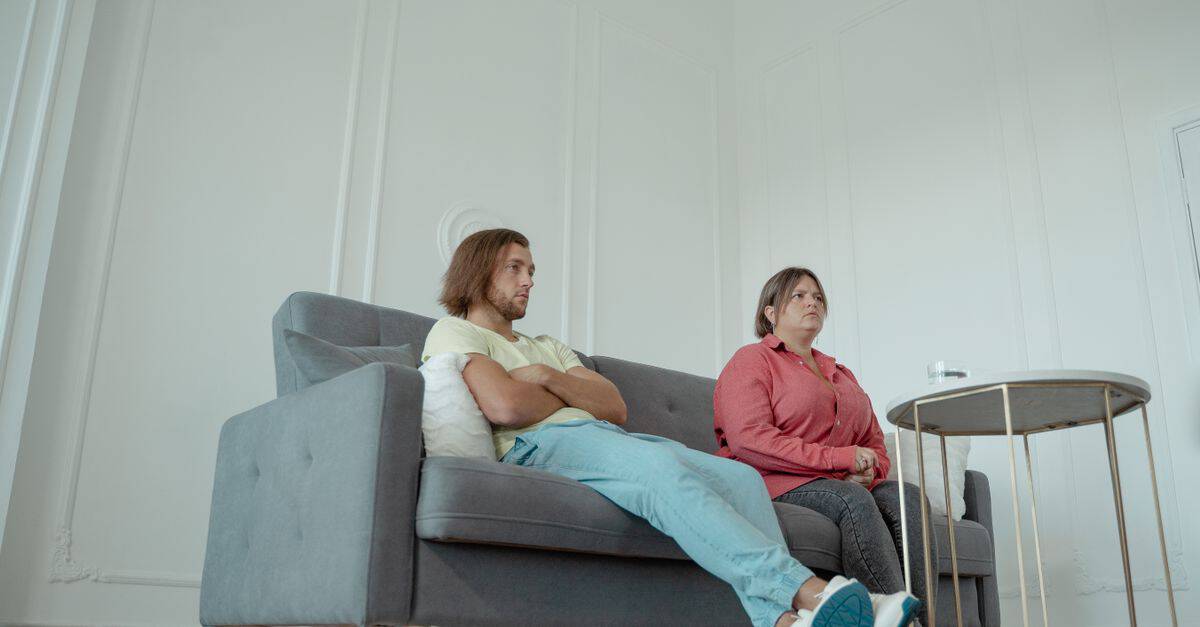
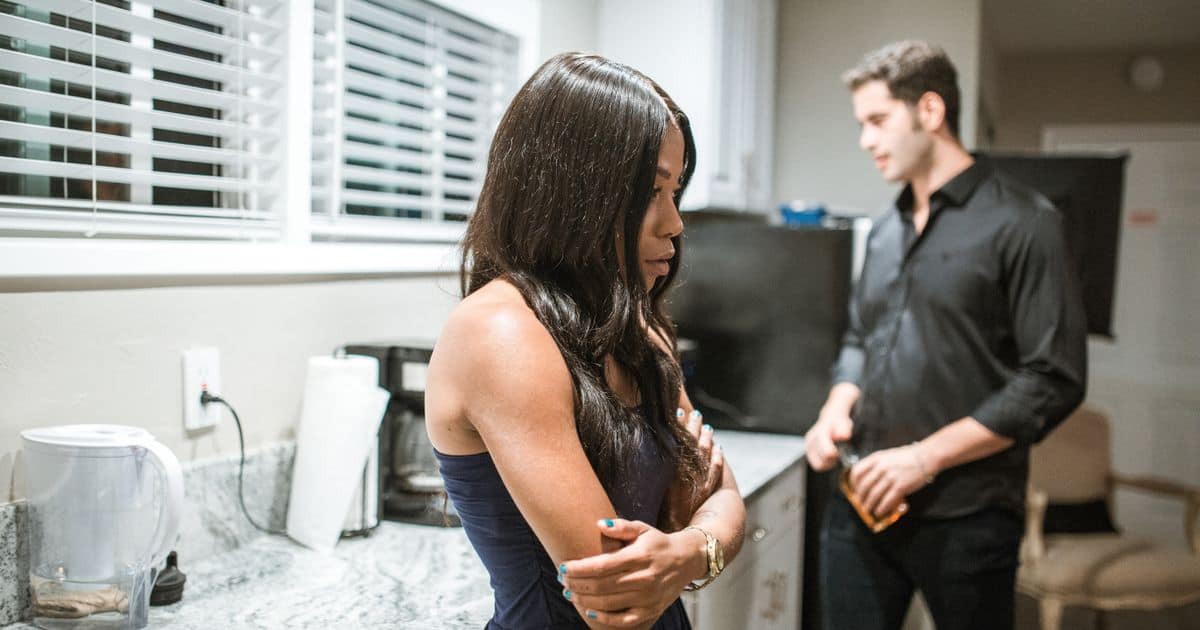
If you hate your husband, what you are feeling is almost always resentment that has gone cold: a protector standing guard over hurt, loneliness and reaches that kept coming back empty. It does not automatically mean the marriage is over, and it does not make you a bad person. The way through is to find the softer feeling the hate is guarding and say that out loud, unless he frightens, threatens or controls you, in which case your safety comes first.
If you want somewhere to put this feeling before you say a word to him, Figlet, my AI relationship coach, can help you find the hurt underneath the hate. It is there at 2 in the morning, or right now, and it is free to start.
He is asleep down the hall, or in the chair with his phone, and you are lying there rigid with it. The way he breathes. The way he said “fine” at dinner. The birthday card that never came, the way he scrolled while you cried at the sink last Tuesday, the thing with his mother from three years ago that nobody ever apologized for. You could deliver the closing argument in your sleep. Some nights you rehearse it. And tonight you typed the sentence you would never say out loud to anyone who knows you: I hate my husband.
Then the second feeling arrived, right behind the first. Shame. What kind of person hates the man she married? Does this mean it is over? Is this who you are now?
I have been a licensed marriage and family therapist for seventeen years, and I have sat across from more women at this exact threshold than I can count. What I almost always find underneath the hate is not what the word suggests. It is not proof you picked the wrong person. It is not a character defect. It is a survival strategy your nervous system reached for when a softer reach kept coming back with static.
You do not hate strangers
Stuck in the same argument again?
Talk it through with Figlet right now. Private, judgment free, built on 17 years of couples therapy.
Hate, in a marriage, is almost never the deepest thing in the room. It is a signpost. Underneath the cold, hard stone of it lives a raw attachment wound. You reached for contact, comfort, acknowledgement, and he turned away, looked at a screen, minimized the distress, or answered a feeling with a fact. Your body registered that as a threat. And rather than stay exposed in the terrifying vulnerability of feeling unloved or unimportant, it converted that raw pain into armor.
Resentment is anger that has gone cold. What you are calling hate is usually resentment that has gone cold for a long time.
And notice who it is aimed at. You do not feel this toward a stranger who ignores you at a coffee shop. You feel it toward the person your nervous system designated as your safe place, when that safe place keeps feeling unavailable. The intensity of what you feel is often a measure of how much you needed him to be there, and how many times the reach came back empty.
Anger is a sign of connection. Indifference is the absence of it. The woman who is truly done usually does not lie awake hating. She has stopped thinking about him at all. The fact that he still sets your chest on fire tells me the bond is still live, even if it is live and bleeding.
Is it normal to hate your husband sometimes?
Yes. Almost every long marriage has nights like this one. When the bond wobbles, the survival brain fires first and the thinking brain shows up late, blinking. Cortisol dumps. Logic goes out the back door. In that state, “I hate you” is the body’s word for “I am hurting and I cannot reach you.” A flash of hate after a fight that is gone by morning is the ordinary weather of two people who matter to each other.
What I pay attention to is not the flash. It is whether it passes. If the feeling is there when you wake up, there when he walks in the door, there on the good days too, it is no longer weather. Waiting it out does not work. Time does not heal resentment, it compounds it.
And yes, you can hate him and love him in the same breath. Resentment only builds where the bond matters. The hate and the love are not two opposite armies fighting over your heart. Very often the hate is the love, wearing armor.
Signs the anger has hardened into what you call hate
The women I sit with rarely open with “I hate my husband.” They open with the small things. If several of these sound like your house, you are not imagining it.
- The small things set you on fire. The way he chews. The way he breathes too loudly when he is concentrating. The cabinet doors he leaves open. Things that would not bother you in a healthy state now fill you with volcanic irritation.
- Even his kindness lands as a threat. He brings you coffee, and instead of feeling cared for, you think, “What does he want now?” or “Too little, too late.” Psychologists call this negative sentiment override: a brain trained by repeated hurt to expect more hurt starts filtering everything through that expectation.
- Your body braces around him. He puts a hand on your shoulder while you are loading the dishwasher and your skin goes tight before your mind has formed a single thought.
- You have stopped reaching. Not because you stopped caring, but because the cost of one more missed reach got too high. John Gottman’s research on bids for connection found that partners in healthy relationships turn toward each other’s bids about 86% of the time, and in relationships heading toward distress that number drops below 33%. After enough misses, a nervous system stops making the bid.
- You rehearse the closing argument. You catalog what he did with prosecutor precision, and some nights you run the whole case in your head before you fall asleep.
- You are building a life beside him instead of with him. You stop sharing things. You stop asking questions. You make plans that do not include him. It can feel like peace, because the fighting stops. It is not peace.
None of these signs means you married the wrong man. That is not who he suddenly became. It is a brain doing exactly what it was designed to do: protect you.
Why do I hate my husband? What I usually find underneath
The fight is never about the thing. But the things do cluster. These are the roots I see most often, and most marriages have more than one.
You are carrying the house alone
She runs the calendar, carries the mental load, manages his moods. Clients say it to me all the time: “I feel like I’m raising another child.” In 58,221 completed relationship assessments, the number one unmet need was “like we’re a team.” 24,037 people named it, ahead of loved, heard, understood and appreciated. When a wife tells me she hates her husband, she is very often looking at the person she expected to be on her team, and she is tired of playing alone.
Hurts that were never repaired
The thing with his mother. The night he chose work. The betrayal you both agreed to stop talking about. When a couple sweeps hurt under the rug to keep the peace, it gets written down anyway. After enough experiences of being met with indifference, you stop asking. Your needs do not go away. They just go underground, and they come out sideways, as resentment, as numbness, as sudden declarations that you want out. If one old injury sits at the center of yours, I lay out how to work it through in how to fix resentment in a relationship.
Feeling unseen, managed or dismissed
Disrespect does not always look loud. The eye roll. The joke at your expense. The way he “forgets” the thing you told him matters most. The message underneath is not “I hate you.” The message is “your inner world is not important enough to engage with.” That is devastating, and hate is one of the ways a body protests it.
A baby, a move, a crisis
Big transitions starve the couple bond. After a baby, the baby’s needs consume every available emotional resource, and the marriage gets whatever scraps are left over. That can work for weeks, maybe months. Then the malnourished bond starts showing symptoms: irritability, emotional distance, loss of sexual connection, contempt, loneliness, and the creeping sense that you have become co-managers of a small, demanding enterprise rather than lovers. You are two exhausted nervous systems trying to survive until bedtime.
Old wounds standing on new ground
The closer he gets, the more he becomes familiar. Familiar as in family. And family, for most of us, is the exact ground where our earliest wounds were laid down. When he tunes you out, your nervous system does not stay in the present moment. It time-travels. If you grew up with a parent who was physically present but emotionally unavailable, his phone at dinner can land with the full weight of every earlier time nobody came. The present hurt is real. It is also supercharged.
You are depleted everywhere, not only with him
One question I always ask: is it only him? Relationship fatigue is source-specific. You have energy for your work, your kids, your friends, and the marriage is the one place you feel drained. Emotional exhaustion is broader. Burnout, caregiving, illness or money pressure leave you flat across the board, and he is simply the closest target. I have worked with partners who were convinced they had clinical depression, only to find that it lifted a long way once the dynamic between them changed. And bodies are bodies: hormones, medication, depression and exhaustion are worth a conversation with your doctor.
The ledger your body keeps
Human beings do not keep emotional accounts on spreadsheets. We keep them in the body. I call this the somatic ledger: the incorruptible record of every moment of safety, every unreturned reach, every “it’s fine” that was not fine.
Most of the women I see who hate their husbands were, for years, the good sport. They swallowed it to keep the peace. They told themselves that not fighting was maturity. What they were actually doing was printing what I call emotional fiat, polite harmony that cannot be backed by real presence. And emotional debt hyperinflates. The hate you feel tonight is the margin call. It is the ledger demanding that an old, unpaid debt of attunement finally be honored.
That is why you cannot logic your way out of it. That is why a gratitude list does nothing. That is why “just let it go” is one of the most infuriating things anyone can say to you right now. The body will not release what has not been felt, named, and received. I go deeper into that in what it really means to resent someone.
The legal brief and the smaller sentence
When hate takes hold, the brain builds an airtight legal brief. I call this the Story of Other. His laziness, his self-absorption, the way he chews, the way he never asks about your day. You catalog it with prosecutor precision. It feels like clarity. It feels like justice.
But the Story of Other has a job. It keeps the flashlight pointing outward so you do not have to feel what I call the Experience of Self, the searing thing inside your own chest. Underneath the brief is a much smaller, much more frightening sentence. Something like: I am so tired. I am terrified I do not matter to you. I have made myself smaller and smaller in this house and I do not know how to come back.
That is the sentence the hate was built to protect. Not because he is dangerous. Because that sentence, spoken out loud with no guarantee of being received, is the most exposed a human body can be.
He probably has a brief on you too
This is the part almost nobody wants to hear. In the couples I work with, hate is rarely a one-person problem. It is a co-created loop.
If you are the one who reaches, who brings it up, who wants to talk it out, you are what I call the Relentless Lover. Your hate protects a part of you convinced you do not matter. He is often the Reluctant Lover. His version sounds like: “Nothing I do is ever enough. I am on permanent performance review. I cannot win.” His body has registered every complaint as evidence that he is a failure, so he goes quiet, goes to the garage, goes to the phone. That withdrawal lands on you as proof he does not care. Your protest lands on him as proof he cannot win. Round and round. I call it the Waltz of Pain.
Underneath every fight about money and dishes and his mother, the bonded body is asking two questions it never asks out loud. Are you there for me? Am I enough for you? One of those probably lands louder in your chest. The other one probably lands louder in his. Both of you are answering the same threat with opposite moves, and both of you are calling the other one the problem.
If what you see from him is the eye rolls and the cold edge, I wrote the mirror image of your question in why does my husband hate me. Many husbands would answer it the same way you would.
The night I tried to fix it with a time machine
I am not writing this from above the problem. Teale and I used to fight every night about who does the dishes. Every night. I would come home from work and she would be standing there with Grace in her arms, and I would say, I am so tired, would you do the dishes tonight? And she would look at me like I had lost my mind. I have been with Grace all day and you think I am the one to do the dishes? Do you not value me at all? And I would come straight back with: are you kidding me, I did seven sessions in a row.
So I did what men like me do. I solved it. In the story I tell on myself, I spent two weeks on Reddit and ChatGPT working out how to build a time machine. I jumped thirty minutes into the future, found us laughing at the sink, and ran back with the answer. You wash, make extra bubbles, throw them at me. I clean the countertops and flick you with a tea towel. We listen to music and dance. I presented it to her like a finished product.
Teale said something to me I will not print here. She was right. I had treated her like a logistics problem rather than a person who needed me to slow down and meet her first. That night we slept in the same bed and the distance between us might as well have been the Grand Canyon. If you had asked me at midnight, I would have told you my wife could not stand me.
The answer was in the part I skipped. When we finally got there, it sounded like this. Me: “I feel so bad when I don’t feel appreciated, and I felt like you don’t see what I do.” Teale: “I get it. I can feel like you think the work I do is less important, and it really hurts my feelings.” After that, every solution worked. Me doing the dishes worked. Her doing them worked. Nobody doing them worked. Because we were connected.
That is what I want you to take from it. The hate in your house is very likely sitting on top of a sentence like Teale’s. The dishes were never the point.
What is my part in this?
I ask this gently. When you are carrying resentment, every fiber of your being says, “He caused this. He should fix it.” You might be right. He might owe you the first move. But here is the clinical reality: whoever has the most awareness has the most responsibility. If you are the one reading this at midnight, that is probably you.
Three honest questions help:
- Have I said the soft thing, or only the grievance? “You never help” is a verdict. “I feel alone in this house” is a reach. His body responds to each one very differently.
- Did I ask, or did I expect him to know? You would be surprised how often the answer is that we never asked. We expect our partners to be mind readers, and then we resent them for failing at telepathy.
- Have I been over-functioning? Doing more than my share, anticipating needs nobody voiced, and then keeping score. Martyrdom and resentment are a package deal. You cannot chronically over-give without building a tab.
None of this makes you responsible for his behavior. It just hands you the one part of the pattern you can move: your own side of it.
Is this clarity or exhaustion?
Sometimes hate is the truest thing you have felt in months, and sometimes it is a nervous system so worn down it has manufactured certainty just to survive. You need to know which one you are standing in before you make a decision this size.
Decisions from exhaustion feel urgent. They feel like escape. They come with a tightly argued story with a villain and a victim. Clarity has a different feel in the body. Clarity is quieter. Clarity does not need him to be a monster. Clarity often carries grief inside it, not vindication. If what you feel has a lot of vindication in it, that is data. Not that you are wrong. Just that you are probably not yet on the ground you would need to stand on to choose cleanly.
The other distinction I look for is contempt. Frustration says, “I’m upset about what you did.” Contempt says, “I’m disgusted by who you are.” In my experience most marriages where someone types “I hate my husband” are starving, not dead. Starving marriages can be fed. I walk through how to tell the difference in I want a divorce: clarity or crisis.
Does hating him mean the marriage is over?
Not by itself. Hate tells me the reach has been going unanswered, not that the bond is dead. What matters more is whether repair is possible on the other side, and whether either of you is willing to look underneath.
The wife I worry about is not the one lying awake furious. It is the one who has gone polite and pleasant and stopped asking for anything at all. I call this the collapsed pursuer. After months or years of fighting for connection and being met with withdrawal, her nervous system eventually depletes. She stops asking. She stops crying. She stops fighting. From the outside it looks like peace, and her husband often tells me in session that things have been so much better lately. She sits there with dead eyes, already halfway out the door. If the heat in you is turning into that kind of quiet, you are not past the point of repair, but the window is narrowing.
The other line I watch is contempt. If eye rolls, mockery and disgust have started moving in both directions, read how to deal with contempt in a relationship, because contempt is the sign I take most seriously, and couples can still take it apart. And if you are trying to see the whole picture of your marriage, not just this feeling, I walk through what I look for in signs of an unhappy marriage.
When it is not a dance
None of this means you should absorb harm. If he hits you, threatens you, blocks your exit, uses his voice in a way that frightens you, or controls the money, your body, or who you can talk to, your hate may be the healthiest part of you. That is not a cycle and it is not acceptable under any circumstances. Talk to someone who does this for a living today. In the US, the National Domestic Violence Hotline is 1-800-799-7233.
What to do with it tonight
Not the conversation. Tonight, just breathe. Put a hand on the place in your body where the hate lives. Ask it: what are you actually protecting? Whatever answer comes up, do not fix it. Sit with it for sixty seconds. That is proof of work. That is the first entry in rewriting the ledger.
If it helps to have it as steps, here is tonight in five small moves:
- Do not have the conversation tonight. A body that is lit up cannot reach. Anything said at midnight from inside the brief will land on him as a verdict.
- Find where it lives. Chest, jaw, stomach. Put a hand there. Is it hot, tight, heavy?
- Ask it one question. What are you actually protecting? Sit with whatever comes for sixty seconds. Do not fix it.
- Write the smaller sentence. One line, not the list. Something like: I am so tired. I feel alone here. I am scared I do not matter to you.
- Pick one moment, not twenty. The one night, the one sigh, the one time he picked up his phone. That is what you will name when it is quiet. You are not building a case. You are giving him a way back in.
If he frightens you, tonight is not for repair. It is for safety. If you are in immediate danger, call 911.
Then, sometime this week, when it is quiet and neither of you is lit up, try the thing that terrifies you. Not the grievance. When you say “you never help, you never see me, you never,” his body hears a verdict and his protectors come online. Speak from underneath it instead. Word for word, if you can:
“I have been so lonely in our own bed and I am scared to tell you because I do not know if you still want me.”
Then stop. He may not answer well the first time. You are giving his nervous system a human being instead of a prosecutor, and that is the only thing that gives him a chance to come back toward you.
Being right has not gotten you what you want. You probably are right about many of the specifics. But what you want was never a verdict. It was a reach.
If you are the husband reading this
Her hate is not the end of her love. It is what her love turned into after too many reaches came back empty. When you hear her anger, your body hears “you are a failure,” and you defend or you disappear. Both of those land on her as more proof she is alone. The bravest thing you can do is stay in the room and say the true thing under your armor: “I’ve felt like I can’t get it right with you, and I think I stopped trying. I don’t want to lose you.”
Common Questions
Is it normal to hate your husband sometimes?
Yes. A flash of hate after a fight is a common response from a nervous system that feels threatened by the person it depends on most. It becomes a concern when it does not pass and shows up on the good days too, because resentment left alone compounds rather than fades.
Can you love and hate your husband at the same time?
Yes, and it is more common than not. Resentment only builds where the bond matters, which is why you do not feel this toward a stranger. Often the hate is what the love turned into after too many reaches came back empty.
Why do I suddenly hate my husband?
It is usually not as sudden as it feels. The ledger has been filling for months or years, and one small moment tips it: a sigh, a forgotten call, the phone at the wrong time. A big transition like a new baby, a move or a career crisis can also starve the bond fast enough that it feels sudden.
Why does everything my husband does irritate me?
That is negative sentiment override. When you have been hurt enough times, your brain starts reading even neutral or kind actions through a threat filter, so the chewing, the breathing and the coffee all land as evidence. It does not prove he got worse. It shows that your protector has taken the wheel.
What is the difference between hating your husband and resenting him?
In my office they are usually the same thing at different temperatures. Anger says, “This hurts right now.” Resentment says, “This has been hurting for a long time and no one has noticed.” What people call hate is usually resentment that has gone cold for a long time.
Should I divorce my husband if I hate him?
Not from inside the hate, if you can help it. Decisions made from exhaustion feel urgent and come with a villain; clarity is quieter and usually carries grief. Find the softer feeling underneath, say it to him once, and see whether he can meet it, then choose from solid ground. Abuse is the exception: if he frightens, threatens or controls you, your safety comes before any of this.
Why do I hate my husband after having a baby?
Because the baby consumes every available emotional resource and the couple bond gets the scraps. Add exhaustion and an uneven load, and resentment builds fast. It is one of the most common times I see this feeling, and it is very workable when both of you can name it.
What if he will not change or will not go to couples therapy?
You can still change your side of it. When one person changes their steps in the Waltz of Pain, the dance itself has to change. Speak from the wound instead of the wall and notice whether he can meet you, even clumsily. If he keeps refusing to look at anything at all, that tells you something real too.
Where to go from here
If your house has gone silent rather than loud, read silent resentment. Couples who never fight are often sitting so still that weeds start growing up through their toes. That stillness is not peace.
The wall you built was smart. Now find out what it was guarding. If you want help finding the sentence under your hate before you say it to him, tell Figlet what the last bad night looked like. It is built on the same work I do in my office, and it will help you move from the brief to the wound. It is free to start tonight.
Keep Reading


Stuck in the same argument again?
Figlet is relationship coaching built on 17 years of couples therapy. Talk through what is happening the moment it matters, get a clear next step, and stop circling the same fight. Private, judgment free, ready whenever you are.
Free to start. No credit card needed.
Figs O'Sullivan
Founder · EFT couples therapist
“What I would tell you at 10pm, if I could.”