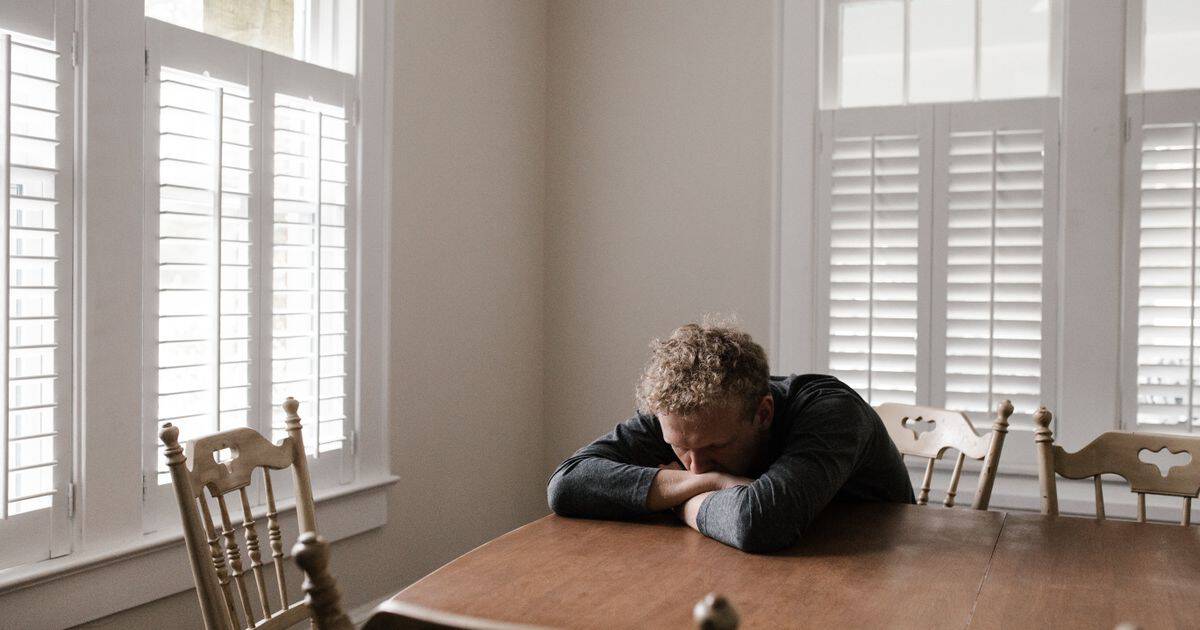
If you think your boyfriend is cheating on you, the feeling is real information, but it is not proof: it tells you something in the bond has shifted, not yet what shifted.
Your gut deserves the most weight when it is specific (one change, one person, one stretch of time) and does not settle when he reassures you. When the fear jumps from target to target and calms down when he holds you, it is more often an old wound talking, and either way the way to find out is not his phone. It is naming the distance you feel, calmly, and watching whether he moves toward you or away.
If you cannot tell whether this is your gut or your fear, tell Figlet what changed and when it started. It is there at 2 in the morning, or right now, and it will help you sort what your body is picking up before you say a word to him.
It is 11pm and he is in the other room. His phone went face down on the counter again when you walked past. The passcode changed a few weeks ago and he mentioned it in the same tone he would mention buying milk. There is a name that keeps coming up, casually, a little too casually. You have already opened the location app tonight. You may have scrolled his followers, looking for a face you do not recognize. And somewhere between the second check and the third, you caught a glimpse of yourself and hated who you are becoming. So you typed it: is my boyfriend cheating on me.
Is he cheating, or is something else going on?
Stuck in the same fight again?
Talk it through with Figlet right now. Private, judgment free, built on 17 years of couples therapy.
I cannot tell you whether he is cheating. What I can tell you, after seventeen years of sitting with couples in this gray zone, is that the question almost always carries two possible truths, and they feel identical in your body.
One is an affair. Another person, an emotional entanglement, a competing attachment that is pulling his attention and warmth away from you. The other is a disconnection. He is gone somewhere, and the somewhere is his phone, his work, his shame, a group chat, a dopamine loop he would be mortified for you to see. Your nervous system cannot tell these apart, because both deliver the same message: something else matters more to me than being with you right now. That message is the injury.
In my office I use the term Third Party for anything a partner turns to for soothing, aliveness, or escape instead of turning to the person they love. Sometimes it is another human being. Much more often it is the algorithm, or work. Your body is not wrong that there is a third party in the room. It just cannot yet tell you which kind.
Why does my body feel so sure when I have no proof?
Because your brain treats the man next to you the way a small child’s brain treats a parent. It is constantly, unconsciously scanning him to answer two questions: Are you there for me? Am I enough for you? When something about his emotional availability shifts, your body responds with the same intensity an infant feels reaching for a parent who is not there. That is why the earliest signs are sensations in you, not clues in him: the tight chest when he picks up the phone, the low nausea when that name comes up.
I have written more about this in what your nervous system knows before you do. The short version: the shift you are feeling is probably real. The cause is the open question.
How do I know if my boyfriend is cheating? What to actually look for
Let me be direct. Most of the lists you will find tell you to watch for cologne, new clothes, a gym habit. Those are movie tropes. Real infidelity is subtler, and the signs that matter are almost always shifts in emotional energy rather than logistical clues. And it is never the behavior itself that is the signal. It is the departure from his own established pattern.
He is suddenly fine. Suspiciously fine.
Where there used to be friction, there is now pleasant neutrality. Where he used to complain about the relationship, there is silence. This often gets misread as improvement. If you and I have been fighting about the dishes for three years and I suddenly stop caring about the dishes, one of two things happened: I either achieved deep inner peace about dishwashing, or I found someone else whose kitchen I would rather be in. The sudden absence of friction is not always resolution. Sometimes it is redirection.
A new privacy that does not match the old him
Everyone deserves privacy. Privacy says, “I need some things that are just mine.” Secrecy says, “If you saw what was here, it would change everything.” If he has always left his phone charging in the kitchen and now it sleeps under his pillow, if he was an open book about his day and now there are gaps and vague summaries, that change matters more than the phone itself.
Irritability with no clear source
Guilt does strange things to people. One of the most counterintuitive signs is a partner who becomes short-tempered, critical, easily annoyed with you. The criticism creates distance, and the distance makes the other thing feel more justified. If that is what is happening, the criticism is not about you. It is about the story he needs to tell himself.
Less curiosity about you
Every person has a finite amount of emotional energy. When it gets redirected toward a new attachment, the primary relationship starts running on fumes. He asks less about your day. He makes fewer plans with you. The small rituals that defined the two of you, the morning coffee, the goodnight routine, quietly erode. These are not dramatic changes, and they are easy to explain away (“we’re both just busy”) until you look at the pattern as a whole.
Stories that do not quite add up
Timelines that shift on retelling. A new name that comes up a lot and then suddenly not at all. Plans with “friends” that stay vague. Any one of these is nothing. What deserves attention is a cluster that starts around the same time, from a man who is also less curious about you.
None of these, alone, convicts him. Every single one can also be depression, work stress, money fear, or a health scare he has not told you about. They tell you the bond has shifted. They do not tell you why.
What counts as cheating, for the two of you?
People often ask me whether it only counts if something physical happened. In my clinical experience the distinction matters far less than most people assume. Cheating is not a category of act. It is anything that ruptures the exclusivity your body was resting on. An emotional affair, where he is sharing vulnerability and romantic energy with someone else, often does more lasting damage than a purely physical one, because it says: I found someone who understands me better than you do.
The smaller stuff counts too. A secret crush he is nurturing, a coworker he confides in instead of you, ongoing hidden contact with an ex. I call these micro-cheating, and what makes them hurt is the secrecy, not the act. If the two of you have never said out loud what exclusive means to each of you, that conversation is part of finding your answer.
How do I tell my gut from my old wounds?
Not every gut feeling is accurate, and not every one is old baggage. If you grew up with a parent who was emotionally unpredictable, or an ex cheated on you, your alarm may have a hair trigger. Your body may be reading ordinary distraction as catastrophe because catastrophe is what it learned to expect.
There is a way to tell the difference. I call it the reassurance test. Anxiety driven suspicion tends to be diffuse. It shifts targets: one week the coworker, next week the ex, next week the way he looked at someone at a party. And it responds to reassurance, at least for a while. When he holds you and says “I’m right here,” your body calms down. Genuine detection is specific. It centers on a particular shift, a particular person, a particular stretch of time. And it does not respond to reassurance. He says nothing is going on, and instead of relief you feel more unsettled, because the words do not match what your body is picking up.
If this same ache has shown up in every relationship you have ever had, the intensity may be information about your history, not about him. And if you keep looping on his past, the women before you, the old photos, that is retroactive jealousy, your protector part rehearsing a betrayal so you are never caught off guard. The ache is real. The story your mind spins around it may not be.
Why does checking his phone make me feel crazier?
Because the checking can never answer the question you are actually asking. You think you are looking for a text from someone else. You are really looking for evidence that you still matter to him. A clean phone does not answer that. Only he can answer that, with his presence.
And when people do find something, they almost never find the whole truth. They find a fragment, just enough to confirm the fear and not enough to know what you are dealing with, and the fragment becomes its own kind of torture. Meanwhile, if he senses the surveillance, he reads it as: I am on trial. He gets better at the tilt. Trying to solve secrecy with surveillance is like trying to solve loneliness with more locks on the door.
You already know this. That is why you hate who you are becoming. She is not a bad person. She is a frightened one, doing a real job very badly.
When to stop checking his phone
Now. Specifically, the moment you notice you are checking to calm yourself rather than to learn anything, because the calm never comes. Checking his phone, tracking his location, demanding he cut people off: that is no longer your jealousy doing its job. That is a system in crisis, and it needs more support than another scroll at midnight can give it.
If you genuinely believe something is happening, bring it into a room where the truth is more likely to come out: a calm conversation when you are regulated, or a couples therapist’s office. Both of you are more likely to tell the truth there, and more likely to survive hearing it, than in your bedroom at 2 a.m. And if trust has already been broken once, transparency he offers freely, turning the phone over without being asked, is worth a hundred searches you had to do in secret.
What happened when my own partner joined the dots
Early in my relationship with Teale, before we were officially exclusive, she went to live in the wilderness for a month. During that time I stopped texting her, and I hooked up with an ex-girlfriend. She went looking on Facebook, saw I was going to be hanging out with my ex, and noticed that the silence lined up with that time. She was joining dots. She was right.
When she came back, I called her while she was driving over the Golden Gate Bridge and I told her. To me, in my head, this was clean. We were not exclusive. I was being honest. To Teale it was a devastating betrayal. And for years, every time it came up, I went straight to my legal brief. We weren’t exclusive. You weren’t there. I was honest. All true, and all completely beside the point, because while I was fighting for facts, she was fighting for her feelings. The splinter did not come out until I could put down the brief, look her in the eye, and say: I broke your heart, and I’m sorry I turned away from your pain.
Two lessons from that, for you. Her gut was data. Her body registered a change in me before she had a single fact. And what actually resolved it was not the Facebook search. It was that I said the thing out loud. The truth arrived through a person, not through evidence.
How do I ask him without it becoming an interrogation?
There are two ways to speak about any of this. One is the Story of Other: you always, you never, who is she, why is the phone face down. The other is the Experience of Self: I feel scared, I feel alone, I feel like I don’t matter. The Story of Other always feels justified, because there is always evidence for it. It is also a dead end. If you describe exactly who he is, there is no room for him to move. Prosecutors do not get honest answers. They get lawyers.
So before you say anything, get regulated. Walk, call a friend, write down what you have noticed, so your thread holds when emotions run high. Then name what you are experiencing, not what he is doing. There is a massive difference between “I think you’re cheating on me” and “I’ve been feeling a distance between us that I can’t explain, and I need to talk about it.” The first puts him on trial. The second leaves room for whichever truth is there. I go deeper into the conversation itself in how to confront your partner about suspected cheating.
What does his reaction tell me?
Words are easy to manufacture. Watch his body. Does he move toward you or away? Does he ask questions, or try to end the conversation fast?
A man who loves you and has nothing to hide will usually want to understand your pain, even if he is hurt by the implication. He gets curious. “Tell me more about what you’re feeling.” That is openness.
Defensiveness is murkier, and I want to be fair to him here. When a man hears criticism, his shame center lights up. He explains, he corrects your facts, he goes flat. That can be guilt. It can also be a man who has decided he is failing you and has gone somewhere he cannot be seen failing. I have never met an emotional withdrawer who is not withdrawing because it hurts. So defensiveness alone does not convict him. What matters is whether, once you soften, he can soften too.
Then there is the pattern that deserves serious attention. The psychologist Jennifer Freyd named it DARVO: Deny (“I never said that, you’re making things up”), Attack (“you’re crazy, you’re the one with the problem”), Reverse Victim and Offender (“I’m actually the one being hurt here”). If every honest concern you raise gets reflected back as a flaw in your character, if timelines shift on retelling, that pattern is itself information. “You’re overthinking it” is one of the most common sentences I hear in my office, usually spoken by a partner who is, in fact, doing the thing being overthought.
What if he is cheating?
Sometimes the gut was right. If that happens, I want you to know something first: you are not broken. Your relationship may be in crisis, but you as a person are intact. In the first days your body will likely go into overdrive. You may not sleep or eat. You may replay every moment of the last months through the new lens. That is awful, and it is normal. Your brain is trying to rebuild a reality that just shifted under your feet.
Do not decide whether to stay or leave this week. That is not the first question. The first question is whether it is actually over. Not “he says it’s over.” Over: all contact ended, the door fully closed, and transparency he offers without eye rolls or “don’t you trust me yet.” Trying to repair while the door is still ajar is like trying to do surgery while the patient is still bleeding.
The second question is whether he can do the repair. Can he sit inside your pain without collapsing into his own shame, without explaining, minimizing, or making it about how bad he feels? His inner mix has to move from mostly “I feel bad about myself” to mostly “my heart is breaking for you.” Give yourself a defined window, three months, six months, and watch what he does, not what he says. I walk through that decision in detail in my boyfriend cheated: should I stay or leave. If he cannot do the work, leaving is not a failure. If he can, staying is not weakness.
What if he is not cheating, and the fear will not leave?
Sometimes the signs turn out to be signs of something else entirely. Being wrong about cheating does not mean your nervous system was broken. It means it detected a real shift in the bond and flagged it. The shift was real. The cause was different from what you feared.
I worked with a couple where she was devastated by his constant phone checking. She felt completely unprioritized, and she let him know, sometimes with words and sometimes with a look, that he was a disappointment. He defended himself and pulled further away, which left her more alone than before. When we slowed it down, what came out was that he was checking his phone out of his own terror of failing at work. And realizing he was disappointing the person he loved most on top of it broke him. Two good people, both suffering, both aching to be enough for each other, and neither able to see the other because the loop had eaten the truth.
That is what a lot of “is he cheating” turns out to be: a man who has gone quiet rather than gone elsewhere. If that sounds like your house, read about emotional withdrawal in relationships, because the repair is completely different from affair recovery. And a false alarm, handled well, can become a moment of deeper intimacy: “I felt something was off because you matter to me that much.”
And if he has answered every question, he is present with you, and the fear still will not lift, be honest with yourself about one tell. If you cannot feel his love land in your body even when he is right there, if a small voice whispers “if he really knew me he would leave” no matter what he does, then his phone is probably not the primary wound. The wound is older, and it deserves care in its own right rather than another search.
When this is not about cheating at all
If he is threatening you, controlling your money or your phone, tracking you, blocking you from leaving a room, or frightening you physically, that is not a dance and it is not a trust problem. Get help today. The National Domestic Violence Hotline is 1-800-799-7233.
What do I say to him tonight?
Before the words, a few small things to do tonight:
- Close the location app and put your phone in another room. Another check will not answer the question you are really asking.
- Get your body down first. A walk, a shower, a call to one friend who will neither inflame you nor dismiss you. Jealousy needs a witness, not a jury.
- Write down, just for you, what you have noticed and roughly when it started. Then run the reassurance test: is it one specific shift, or a fear that keeps changing targets?
- Pick a quiet moment, not the minute he walks in the door and not over text.
- Say the one vulnerable sentence below, then watch what he does. You do not have to decide anything else tonight.
Find the vulnerable thing right underneath your suspicion and say only that. No accusation. No question tacked on the end. Something like this, word for word:
“When you turn the phone over or go quiet, my chest goes tight and I feel completely alone. I don’t want to fight with you. I’m scared, and I miss you.”
Then stop. The less you describe him and the less you ask of him, the less threatening you are, and the more likely he is to move toward you instead of into a defense. Then watch what he does. Not what he says. What he does.
If you are the boyfriend reading this
Under her tone, her body is asking one question: am I still your priority. If there is something on that phone you are ashamed of, the hiding is doing more damage than the thing itself. If there is someone else, she already feels it, and every “you’re overthinking it” is telling her body that her pain is inconvenient. Either way, the move is the same. Put down the legal brief. Look at her. Turn the phone over without being asked. Tell her the true thing, and let her have her feelings without needing to manage them.
Common Questions
How do I know if my boyfriend is cheating on me?
You usually cannot know from clues alone. What you can notice is a change in his pattern: less curiosity about you, new secrecy, irritability with no source, stories that shift. Then the clearest information comes from naming the distance you feel and watching whether he leans in or shuts the conversation down.
Can your gut tell you he is cheating?
Your gut can tell you the bond has shifted, and it is often right about that. It cannot tell you the cause. A gut feeling that is specific and does not settle with reassurance deserves serious attention; one that jumps targets and calms when he holds you is more often anxiety.
Should I go through his phone?
In my clinical experience, no. You almost never find the whole truth, only a fragment that confirms the fear without telling you what you are dealing with, and he learns to hide better. If you have a real reason to believe he is lying, address it with him directly, or in a couples therapist’s office.
How do I ask my boyfriend if he is cheating when I have no proof?
Lead with your experience, not an accusation. “I’ve been feeling a distance between us that I can’t explain, and I need to talk about it” leaves room for whatever the truth is. Get regulated first, pick a quiet moment, and watch his body more than his words.
What if he denies it but I still feel it?
Notice how he denies it. A man with nothing to hide usually gets curious about your pain, even if he is hurt. Repeated dismissal, “you’re crazy,” or flipping it so you become the problem is information in itself, and so is a gap between his reassurance and what your body keeps registering.
Is it normal to feel paranoid that he is cheating?
Yes. What feels like paranoia is usually hypervigilance, your attachment system in threat detection, and it is exhausting. It is not a character flaw. The question is not “am I being paranoid?” but “what is my nervous system responding to, and is it accurate?”
Should I break up with him if I think he is cheating?
Not on suspicion alone, and not tonight. First find out what is actually happening by talking to him. If he is cheating, the questions are whether it is fully over and whether he can do real repair; if he is not, the distance you felt is still worth repairing.
Where to go from here
If the phone itself has become the wall between you, read when your boyfriend is secretive about his phone, because most of the time the hiding is a shame behavior long before it is a betrayal behavior. If you suspect the alarm is older than this relationship, start with your own history before you start with his phone. The not knowing is what breaks people. The knowing, however painful, is the beginning of a path forward.
If you want help working out what to say, or what his answer told you, I built Figlet for this. Tell it what happened and it shows you the dance the two of you are caught in and gives you the one line to say next. It is free to start, tonight, while he is in the other room.
Keep Reading



Stuck in the same fight again?
Figlet is relationship coaching built on 17 years of couples therapy. Talk through what is happening the moment it matters, get a clear next step, and stop circling the same fight. Private, judgment free, ready whenever you are.
Free to start. No credit card needed.
Figs O'Sullivan
Founder · EFT couples therapist
“What I would tell you at 10pm, if I could.”