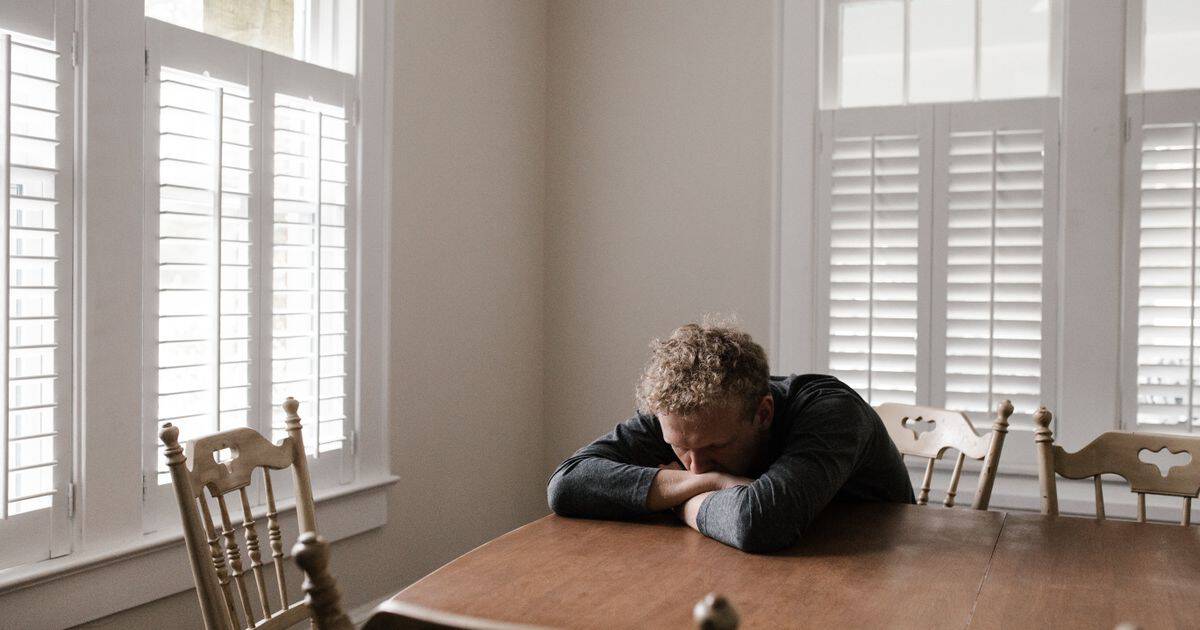
It is 11pm. You are both in bed, and the lamp on her side is still on. She has just asked, quietly, without looking at you, “Do you still love me?” It is the third time this week. Earlier tonight she picked up your phone off the counter when you went to the bathroom, and you saw her put it down too fast. You have answered the question, listed the evidence, pointed out that you are literally lying right here. And you hear yourself say it again, with an edge you did not plan: “I’m not going anywhere. You’re being crazy.” Her face closes. She turns off the lamp. Now you are lying in the dark, exhausted, typing a question into your phone because you honestly do not know what you are doing wrong.
What makes a woman insecure in a relationship?
Stuck in the same fight again?
Talk it through with Figlet right now. Private, judgment free, built on 17 years of couples therapy.
Mostly the same thing that makes any human being insecure in a relationship. Her nervous system is running two ancient questions about you, never in words, underneath everything: Are you there for me? Am I enough for you? When those questions go unanswered, or the answer seems to come back “no,” her body sounds an alarm. The asking, the checking, the “do you still love me” are that alarm, out loud.
What leaves those questions unanswered is usually some mix of three things: something you are doing (or not doing), something she carried in from long before you, and, most often, the dance the two of you have built together. None of this makes her the broken one or you the villain. I have been a couples therapist for seventeen years, and this is the most common dance there is.
Why does she keep asking if I still love her?
Because the question is not about information. Adult partners function as each other’s primary regulators. When the bond wobbles, the amygdala fires before the thinking brain gets a vote. The house catches fire.
So when she asks “do you still love me,” she is not asking for a fact she has forgotten. She is asking her body’s oldest question and watching to see if the answer comes back yes. She is not hearing you. She is watching you. Your face, your shoulders, your breath. If your body is saying “not this again,” she has her answer before you open your mouth, and the answer is no.
What am I doing that makes her more insecure?
This is the part that is hard to hear, and I am saying it without blame. Impact is bigger than intention. You can intend your silence as a way to calm things down and it can still land as abandonment. These are what I see most often.
Going hot and cold. Warm and present on Saturday, distracted and far away by Tuesday, then back again. You probably do not notice the swing. Her nervous system does. When warmth arrives unpredictably, the brain cannot settle, and it starts scanning. This is intermittent reinforcement, the slot machine effect, and it does not need to be deliberate to work on her.
Going quiet when she gets upset. If you are the partner who withdraws, I call you the Reluctant Lover, and I mean that kindly. Your nervous system is not asking “are you there for me.” It is asking “am I enough for you.” When she protests, you do not hear a plea for connection. You hear a verdict: you failed again. So you go quiet, go cold, get reasonable, leave the room. To an anxious nervous system, your cold logic is a can labeled water that is actually gasoline.
If you are the anxious one wondering whether your reaching is the problem, I wrote about the question am I too much for my partner.
Hedging. The phone face down. The ex you still message and do not mention. Most of these are small, and many are harmless. What does the damage is the secrecy. Think of it as a packed bag by the door. You have not left. You have made sure leaving would be easy. And she can feel that bag sitting there, even if she has never seen it. Her body is not reacting to one incident. It is reacting to this incident plus every other time she felt unsafe or not enough.
Ruptures that never get repaired. Every couple ruptures. You will say the wrong thing, get defensive, shut down when you should have stayed. The difference between secure and insecure relationships is not the absence of rupture. It is the speed and quality of repair. A fight that just goes quiet does not disappear from her body.
Or did she bring this in with her?
Sometimes, yes. If she grew up with a parent who was loving on Tuesday and somewhere else entirely on Wednesday, or an ex who lied for two years, her nervous system catalogued every one of those moments and built a watchman. The watchman’s job is to never let her get caught off guard again. That is what is happening when she picks up your phone. She is not looking for a text. She is looking for a feeling, a small relief that says you’re safe, go back to sleep.
Be careful with this part. It is tempting, at midnight, to grab “it’s her attachment issue” because it feels like ground. Put that down. Sometimes insecurity is accurate threat detection, not distortion. Ask yourself honestly: was she this anxious before you, or did it grow around specific things you do? Her old wound explains why the alarm is so sensitive. It does not explain away what is setting it off.
Why doesn’t “I’m not going anywhere” work?
Because you are treating reassurance like a content problem. You say the right words, and the reassurance dissolves the second you give it. You feel like you are pouring love into a cup with no bottom. The cup has a bottom. It just is not located where you are pouring.
You cannot find a cognitive solution to a limbic problem. When you list evidence, or say “you’re overreacting,” her body hears that the facts matter more than the feeling. The feeling has no home, so it has to escalate until it gets one. And “you’re being crazy” tells her that her internal experience is wrong, which doubles the protest.
There is a subtler trap too, which I call the decoy. She asks, “do you still find me attractive.” You say, “of course, you’re beautiful.” The exchange completes. Nothing actually happens between you, and two days later she asks again, because nothing was transmitted.
Reassurance that lands is mostly not verbal. It is your state. Drop your armor and your case for why she should already know the answer. Let yourself actually feel that the person you love is scared, the way a mammal is scared when the bond it depends on feels shaky. When you feel that, your face changes, your voice slows, your body softens, and her nervous system reads all of it before you say a word. Then a few simple words, and a hand on her back. Over time, consistency, not grand gestures, rewires the alarm. Saying “I’m quiet tonight because I’m tired, not because I’m upset with you,” so she does not have to read between the lines and find something terrifying there.
What does the dance look like from the inside?
I call it the Waltz of Pain. She senses distance and reaches. You experience the reaching as proof you are failing her, and you pull back. Your retreat lands on her as proof she is being left, so she reaches harder. Each of your coping strategies is the other’s trigger.
I know the reaching side of this from the inside. The most common way I am the problem in my marriage looks like this: sometimes when I feel alone and burdened, I react by being a blaming, criticizing, disapproving ass to my wife. Sometimes it is so subtle I don’t even realize I’m doing it. When she responds with understandable hurt and her own reactivity, I feel even more justified, and I turn up the volume. What I can see, usually in retrospect, is that I am not reacting to her failure to meet my needs. I am reacting to the pain of feeling alone in the world, an aloneness that was there long before I met her. It is in exactly those moments that I need her the most, and exactly those moments when I am most likely to push her away.
In 58,221 completed relationship assessments, 33% named “alone” as their deepest feeling when love isn’t working. Underneath her checking is a person feeling alone, and handling it in a way that makes you want to leave the room. Underneath your silence is a person feeling like a failure, and handling it in a way that makes her feel more alone. As we say in Ireland, there’s two of ye in it.
One caution. If there is violence, threats, someone blocking your exit, control of money or phones, or stalking, on either side, that is not a dance and couples work is not the first step. Get help today. In the US, the National Domestic Violence Hotline is 1-800-799-7233.
What do I say to her tonight?
Not a defense. Not the evidence. Turn the lamp back on, look at her, let your chest soften first, and say this:
“I see you’re hurting. When you get scared, I go quiet because I’m so afraid I’m letting you down, and I know when I go quiet you feel even more alone. I’m here, and I’m not going anywhere.”
Notice what that does. You are not agreeing that you are a bad partner. You are not folding. You are telling the truth about what happens in your body when she protests, and you are naming that her reaction makes sense in light of yours. When she hears that your withdrawal is not rejection but a wound of its own, the threat level drops. Her nervous system will not believe you the first time, or the tenth. That takes repetition, not eloquence.
If you are the woman reading this
Maybe you typed this question about yourself. You hate the asking, the phone checking, and the shame that floods in after: I’m crazy, I’m controlling. You are neither. Your alarm is real, and it is doing its job.
Ask the question that actually helps: what is my insecurity responding to right now? Old, new, him, or the pattern? If you were steady before this relationship and your anxiety climbs around specific things he does, that may be information, not pathology. And if you notice yourself asking for the fifth time in an hour, the thing you need may not be another sentence from him. Try asking the real question instead of the costume: not “do you still love me” but “I’m scared right now and I need to know you can see that.” That gives him something he can actually meet.
Where to go from here
If you are the one who keeps getting asked, read how to reassure someone you love when words keep failing, and if the hot and cold part landed close to home, why hot and cold love is so addictive explains what your inconsistency does to her nervous system. For staying present without losing yourself, read loving a partner with anxious attachment. If you are the one feeling insecure, start with how to stop being insecure in a relationship.
Neither of you is the problem. The dance is. If you want help seeing yours, tell Figlet what happened tonight: what she asked, what you said, and what you felt right before you said it. It will show you the dance you two are in and give you the one line to say to her. I built it on the same work I do in my office, and you can start for free tonight.
Keep Reading



Stuck in the same fight again?
Figlet is relationship coaching built on 17 years of couples therapy. Talk through what is happening the moment it matters, get a clear next step, and stop circling the same fight. Private, judgment free, ready whenever you are.
Free to start. No credit card needed.
Figs O'Sullivan
Founder · EFT couples therapist
“What I would tell you at 10pm, if I could.”