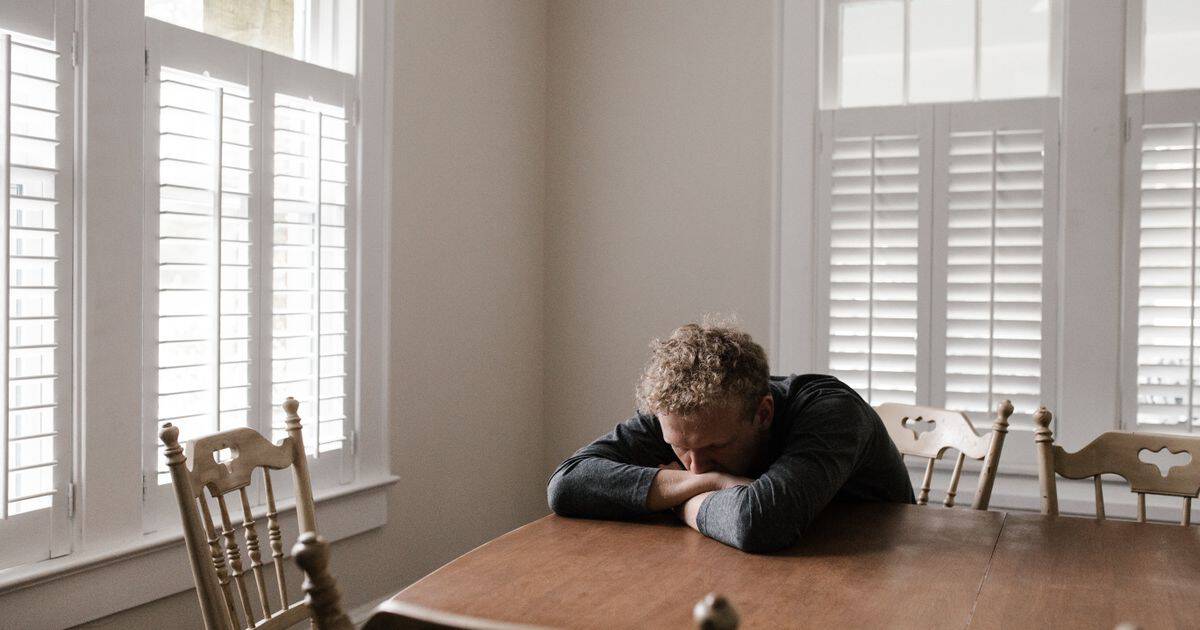
Photo by Sasun Bughdaryan on Unsplash
You made one small mistake today. A typo in an email to your boss, a sharp word to your kid. Anyone else would shrug. You’ve been replaying it for six hours. “How could you be so stupid.” “You always do this.” “No wonder.” You’d never speak to a friend the way you speak to yourself, and you know it, and somehow knowing it just becomes one more thing to beat yourself up about.
I know that voice from the inside. I still have little angry Irish fiery outbursts. I’ll shout at a driver at a crosswalk, or at a dog owner whose dog tries to take a nip out of mine. For most of my life, what came next was either “Well, no one saw this. I don’t have to talk about it,” or the other voice, the one you probably know better, and the beating would start.
These days the outburst is my cue for something else. Oh shit. I’m ashamed of myself, of my temper, of the way I react when I feel wronged. I let myself feel that, all the way down. And then I usually tell Teale, my wife: “I had a Figs outburst. I yelled at a driver.” I take a big sigh even as I write that. No speech about what a terrible man I am. Just the truth, out loud.
That sigh is the whole difference between being hard on yourself and actually facing yourself. They feel like the same thing. They’re opposites.
Before I explain any of it, try something. Read the next sentence slowly, let the out-breath go, and notice what happens in your body as you read it. You were doing the best you could, even then. Don’t argue with it and don’t agree with it. Just notice where it lands, face, throat, chest, and whether something in you softens or rushes in to prove it wrong. Stay with that one more breath. That’s the place we’ll work from.
What’s really going on
If a voice jumped in with “you don’t deserve to hear that,” notice it. That voice is who we’re here to meet.
Being hard on yourself feels like taking responsibility. It isn’t. It’s one of the four ways we run from shame. The psychiatrist Donald Nathanson, building on Silvan Tomkins, called them the Compass of Shame: attack other, withdraw, avoid, and the one this whole article is about, attack self. “I’m pathetic.” “I always blow it.” “If I beat myself up first, maybe you won’t.” That last one is the giveaway. Attacking yourself is the internalized voice of childhood abandonment doing an impression of responsibility.
A child builds that voice for a reason. A child can’t survive believing the people meant to keep them safe are unreliable. So the child makes a trade, and it actually makes sense. It must be me. I must be too much. I must be not enough. Better to be a flawed child in a safe world than a fine child in a world with no ground under it. The harshness you aim at yourself started as a way of keeping the grown-ups good.
The inner critic sounds like he’s keeping you honest, humble, safe. But he’s only repeating what a small child learned a long time ago. He’s the voice of early instability, not your conscience.
In my experience that voice often gets louder in your forties and fifties, which is a big part of what a midlife crisis is really asking for.
And if you’ve lived inside him long enough, you stop calling it shame. You call it your personality. “I’m a perfectionist.” “I just have high standards.” Those aren’t traits. They’re survival strategies that calcified into identity. You make sense. You were never weak for building this. You were brilliant.
Need to talk this through right now? Figlet is an AI coach that’s there at 2 in the morning, or right now. It runs this loop with you on the Self ground.
The loop, on your situation
You’ve tried being nicer to yourself. It doesn’t stick. I use a practice I learned from my teacher Aftab Omer, reflexive participation. At its simplest: what am I noticing now, how am I affected, and what creative action is being called for? Here’s how it runs on today’s mistake.
Get ground in your body first
Feel your feet on the floor. Let one breath go out longer than it came in. Look around and name three things you can see. The mistake will still be there in thirty seconds.
What happened
Say only the facts, in the present tense. “I send the email. I see the typo. My face goes hot.” Not “because I’m careless.” Leave the verdict out on purpose and notice how loudly the critic protests.
Where it lands in the body
Before shame becomes a story, it’s raw affect. Heat in the face. A drop in the belly. A collapse in the shoulders. A gaze that wants the floor. Your body is the first ledger. It records the truth of what happened, not the narrative about it. Find the place and stay with it for one breath. That’s the shame itself, the thing the critic is working so hard to keep you from feeling.
If the critic keeps you replaying the moment long after it is over, I wrote about why overthinking is a protector, and how to stop it.
Who’s driving
Write down what the voice says. Omer called this voice the Gatekeeper: built in childhood to protect the child, and you can recognise it by its tone, critical, shaming, self-admonishing. In my book I call these protector parts. Don’t argue with it. Its whole identity is protection. Ask it instead: what are you afraid would happen if you stopped?
Mine has an answer. Playing rugby as a teenager, give me the ball in our own half and I’d run through anybody. But give me the ball fifteen yards from the other team’s line, with nothing left between me and scoring, and I wouldn’t feel worthy of crossing it. I could be useful all day long. I couldn’t let myself arrive. That’s what a harsh protector buys you: you never get caught believing you’re good.
Trace it
When did you first learn that mistakes were dangerous? I couldn’t recite the alphabet from A to Z until I was in my early twenties. I lived in dread of ever being asked which letter came next, because in the middle there was just a block of sound, lmno, like a magic spell, or a curse. Trauma and shame smothered me in those years. So I filled the silence with my own explanation: something’s wrong with me.
Find your version. A classroom. A parent who only saw the grade, or was too overwhelmed to see you at all. Then widen it to a culture that says be better, produce more. Most of the shame we carry was handed to us by someone else’s failings.
Feel it and tell someone
There’s only one way out of shame. Down. Not around, not out through toughness or self-improvement. Feel it for one honest breath. Then say the true sentence to someone safe: “I made a mistake today and I’ve been tearing myself apart about it.” Shame feeds on aloneness. The antidote is company.
One creative action
Let the critic speak, then let the Friend answer. Omer’s Friend is the part of you that knows you’re good. It separates what’s true from what’s blame. It says: “Yes, there’s a typo. No, it doesn’t mean you’re careless at your core.” Then it asks the only question that matters: “What do you need right now?” Do that one thing. A short correction email with no grovelling in it. A walk.
One thing to do tonight
Give one piece of it back. Pick one line your critic uses, the oldest one, and ask whose voice it really is. Then say, quietly, to that person or that place: “I give this back to you. This was your failing, probably from your own wounding. I’m not going to carry it as an inadequacy in myself anymore.” It doesn’t mean you have to hate anyone. With one hand you give the shame back. With the other, you parent yourself.
Would therapy help with this?
Often coaching is the right size. Coaching is how we go from where you are now to where you want to go, and we only address the past when it emerges in the present.
But if the voice has turned into something that never lets up, if you’ve stopped enjoying anything, or it sits on you as a heavy flatness that won’t lift, that’s more than coaching can hold. Please talk to a licensed therapist where you live. If you’re thinking about hurting yourself, call or text 988.
The path
What I’ve just walked you through is the Empathi Method. For an individual, it’s built on my Proof of Work of Being Human protocol: building sovereign ground inside yourself, so a mistake can just be a mistake.
There are two ways to keep going. You can start Figlet Life Coaching tonight, on the Self ground, and it’ll run this loop with you the next time the critic starts up, as often as you need. Or you can get on the list for the book and the live program with me, where we do this work together over several weeks.
Figs O’SullivanFiglet Life Coaching
Get help now
Figlet is an AI coach, there at 2 in the morning or right now. It runs this loop with you on your actual situation, as often as you need. It’s coaching, not therapy. The list hears first about the book and the next live program with me.
Proof of Work, Greenleaf Book Group Press, February 2027. Not sure which ground is hurting? Take the two-minute Ground Check.
Catch yourself at it again tomorrow? Good. That’s the practice working. You begin again. I do too.
I go deeper into this in my book, Proof of Work (Greenleaf Book Group Press, February 2027).
Common questions
Why am I so hard on myself when I make a mistake?
Because a mistake touches an old wound before it touches the present. Your nervous system floods that small moment with every earlier time it felt the same, so a typo lands like a lifetime of verdicts. Attacking yourself is the fastest way out of that feeling, which is why it’s so hard to stop.
Is being hard on yourself a sign of depression?
It can be part of it, but on its own it usually isn’t. If the harshness comes with losing interest in things you used to enjoy, changes in sleep or appetite, or a heaviness that won’t lift, please talk to a licensed therapist where you live.
How do I stop being so hard on myself?
Not by arguing with the critic. Ground your body, notice the critic as a part with a job, and feel the shame underneath it for one breath. Then tell someone safe. The critic softens when it isn’t the only one guarding you.
The Compass of Shame is Donald Nathanson’s, after Silvan Tomkins. Reflexive participation, the Gatekeeper and the Friend come from the teaching of Aftab Omer at the Institute of Imaginal Studies, where I trained.