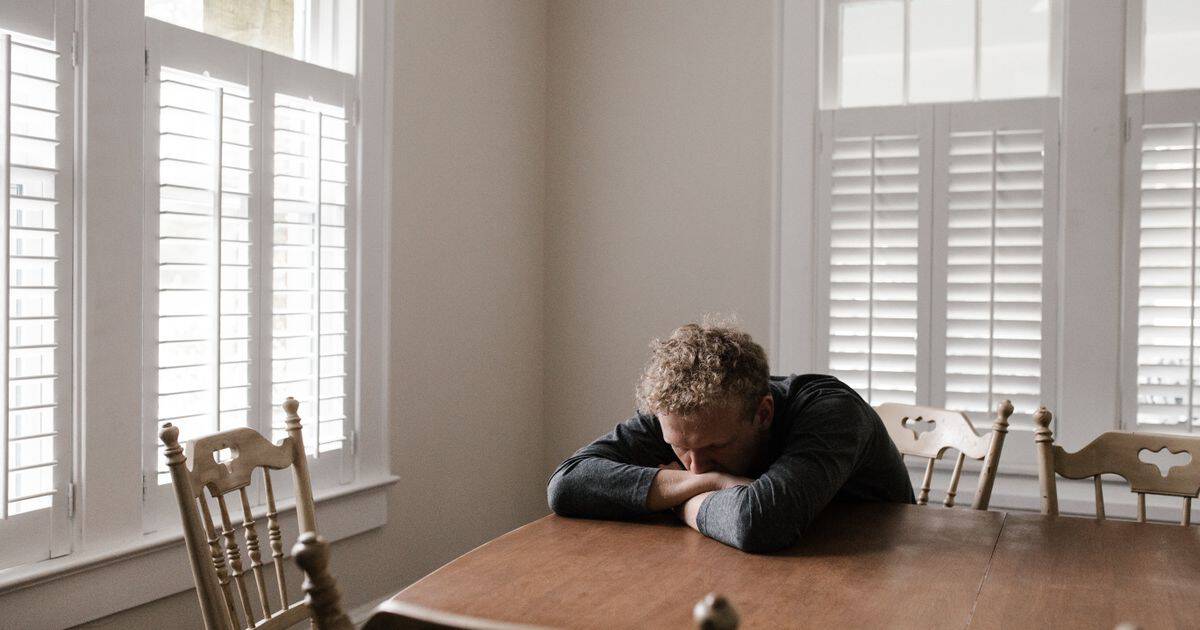
When your wife treats you like a child, it is very rarely because she thinks less of you. Most often she started by asking, felt alone carrying the house, and her asking slowly turned into managing: over-functioning is anxiety dressed up as competence. Every correction lands in your body as “you are not enough,” so you either comply or rebel, and both of those keep her in the parent seat. What changes it is neither: it is one adult sentence about what it does to you, and then owning whole things, start to finish.
She reloads the dishwasher while you are still standing there. She checks the thing you already did, in the tone, the patient one that says I will go slowly for you. At work you run a team. At home you feel about nine years old. If you want somewhere private to say it exactly as it is (“my wife talks to me like one of the kids and I don’t know how to stop it”), Figlet can help you find the words before you talk to her.
Signs your wife treats you like a child
Stuck in the same fight again?
Talk it through with Figlet right now. Private, judgment free, built on 17 years of couples therapy.
- She corrects how you do things you have done well for years.
- She re-explains what you already understood, slowly, in the patient voice.
- She checks your work: the bill you paid, the bags you packed.
- She lectures. Not a conversation, a lesson.
- She overrides you in front of the kids.
- She makes the decisions about money and plans, and you find out after.
- You have started hiding small things, because why walk into another correction.
If three or four of those are your house, you are not too sensitive. You are living in a parent and child frame.
Why does my wife treat me like a child?
I have been a couples therapist for seventeen years, and in most of the marriages I see, she did not start there. She started by asking. Can you handle bedtime. Can you look up from your phone. Can we feel like a team. When the answer came back late, defended, muddled or absent enough times, she took over the calendar, the planning, the noticing. She resents doing it. And somewhere along the way she stopped asking and started managing. The correcting and the tone are what asking looks like after it has given up on being heard.
Over-functioning is anxiety dressed up as competence. When the money, the house and the kids feel like they could all go wrong at once, the nervous system does the one thing that makes the panic go down, which is to take control of everything in reach. Including you. When one person carries the Burden of Safety, the other person’s muscles for it never develop.
Is it me? An honest check
Ask yourself, quietly, what she would say about the last year. Are you the one who waits to be asked? “Tell me what you need and I’ll do it” sounds generous, and it still leaves her holding the noticing, the remembering and the planning, the invisible work I wrote about in emotional labor in relationships. A man who waits to be asked is reactive. What her body is starving for is proactive: “I saw the bins were full, I’ve got it.”
If you hear yourself in that, you are not lazy. Lazy is the word we reach for when we cannot see the shame: a man who believes he cannot win stops playing. That explains it. It does not excuse it. Impact is bigger than intention.
Why does it make me feel so small?
Underneath every bonded body there are two questions running, never in words. Are you there for me? Am I enough for you? Most men feel the second one louder. When she reloads the dishwasher, your body is not hearing a preference about plates. It is hearing a verdict.
Shame is not a thought. It is a body event: your throat closes, your chest goes cold, and you are a boy failing a test with invisible questions. And it is never just tonight. The correction on its own is two units of pain, but nobody feels the two on its own. It runs back through every old memory of being made to feel like a failure, and if there are two hundred units back there, the two gets multiplied.
On what Donald Nathanson called the Compass of Shame, there are four exits: withdraw (you go flat behind your eyes), avoid (the phone, the garage), attack self (she is right, I get nothing right) and attack other (“Do you know what my week was?”). The shutdown and the outburst are two points on the same compass, both getting you away from the burn.
What is really happening between the two of you?
You have two moves when she manages you, and both make it worse. You comply. Yes dear, head down, do it her way, with the eye roll where she cannot see. Or you rebel. Argue, defend, do it your way on purpose. Complying is the child submitting. Arguing is the teenager rebelling. Neither one changes the frame. Both of them keep her as the parent, because a parent is exactly who you submit to or rebel against.
I call the loop the Waltz of Pain. She feels alone with the load, so she corrects. You feel like a failure, so you go quiet. Your quiet confirms her fear that she is on her own, so she takes over more. Her taking over confirms yours, that you are not enough, so you shrink further. She is the Relentless Lover. You are the Reluctant Lover. Of the 6,159 couples in our assessments where both partners took it, 74.1% were in this pursue and withdraw cycle, and across 58,221 relationship assessments, 33% named “alone” as their deepest feeling when love is not working. The enemy is the loop, not the partner.
It costs you in the bedroom too. You cannot desire a parent, and a parent cannot desire a child. If you want to see the loop from the outside, describe the last correction to Figlet and it will map the dance you are both in.
I have been the man who goes quiet
When my wife Teale and I get disconnected, I am the Reluctant Lover. She is upset with me, and my body hears: Figs, you are a failure as a husband. I am devastated inside. Outside, I go quiet. I look like I do not care. From her side, that is abandonment, so she protests. My silence gets thicker. Her protest gets louder. Round and round.
What pulls us out is a moment. One of us softens first, usually me, because I know the cost. I open my arms and say, “Come here to me.” It means I am not armored right now. And underneath the fight we both find the scared little boy in me who is terrified of failing her, and the scared little girl in her who is terrified of being left.
When it is not the dance
Most of what I am describing is a bad cycle between two frightened people, and it changes. But there is a line. Control of money so you cannot leave, control of who you see, monitoring your phone or your location, punishing decisions with threats, hitting, throwing things, blocking a doorway: that is not anxiety dressed as competence, whichever of you is doing it. Men are on the receiving end of that too. In the US, the National Domestic Violence Hotline is 1-800-799-7233, or text START to 88788. The signs of emotional abuse are worth reading slowly.
What do I say to my wife tonight?
Not in the middle of the correction, and not in front of the kids. Later, when the house is quiet, feet on the floor, one breath:
“When you redo things I’ve done or use that tone with me, I feel about nine years old, and then I either go quiet or I get defensive. I think my going quiet has left you carrying too much on your own. I’m sorry. I don’t want to be your child or your employee. I want to be your partner, and I’m going to start carrying things like one.”
Then stop. No “but.” She may not soften the first time. A body that has carried it alone for years does not trust one good night. That is not failure. It is the beginning.
How do I get my wife to stop treating me like a child?
You cannot demand it. “Treat me like an adult” is emotional fiat: words printed by decree, backed by nothing her body can deposit. What reaches her is proof of work.
Own whole things. Not “help with” the school lunches. Own them, start to finish, including noticing when the bread is running out. Hold it for months, not weeks.
When she corrects it, stay standing. Do not defend it and do not hide it. Say, “I’ve got this,” feel the cold in your chest, and stay. Not a fight, not a confession. Just an adult who does not need permission.
Stop disappearing. If you need space, say so and give a time: “I need twenty minutes to come down, and then I want to come back to this.” Then come back, and reach first.
My wife talks to me like a child in front of the kids
That one burns hottest because it has an audience. Raise it later, never in the moment. More on that version in my wife doesn’t respect me.
If you are the wife reading this
Your urge to take over makes sense. It kept the house running when you felt alone in it. But it is making the man you love feel small, and small men disappear. Try, once, saying the thing under the correction. Not “you did it wrong again.” Instead: “I feel like I’m doing this alone and I’m scared.” Then let him do one whole thing his way. If you are on the other side of this with a husband who manages you, read my husband treats me like a child.
Where to go from here
If it feels like nothing you do is right, my wife criticizes everything I do goes into that version. If she is the one asking you to read this, how to stop nagging shows her the need under the reminder.
Frequently asked questions
Why does my wife treat me like a child?
Most often because she feels alone carrying the house and her asking has turned into managing. Over-functioning is anxiety dressed up as competence.
What is it called when your wife treats you like a child?
Therapists usually call it a parent and child dynamic, or over-functioning and under-functioning. One partner manages and corrects, the other complies or rebels, and both roles feed each other.
Is it disrespectful for a wife to treat her husband like a child?
The impact is real, but it is usually despair rather than contempt. Mockery that never softens, or control and threats, is something more serious.
How do I stop my wife from treating me like a child?
Stop both child moves, complying and rebelling. Tell her what the tone does to you in one calm sentence, then own whole tasks from start to finish, including the noticing, for months.
Can a marriage recover from a parent and child dynamic?
Yes, most of the time. It changes when one of you stops playing the role. Two adults on flat ground is also where desire comes back.
Figlet is a coaching tool I built for this moment. Tell it what she said and what you did with it, whether you went quiet or got defensive, and it shows you the pattern the two of you are stuck in and gives you one line to say to her. It is free to start tonight.
Keep Reading



Stuck in the same fight again?
Figlet is relationship coaching built on 17 years of couples therapy. Talk through what is happening the moment it matters, get a clear next step, and stop circling the same fight. Private, judgment free, ready whenever you are.
Free to start. No credit card needed.
Figs O'Sullivan
Founder · EFT couples therapist
“What I would tell you at 10pm, if I could.”