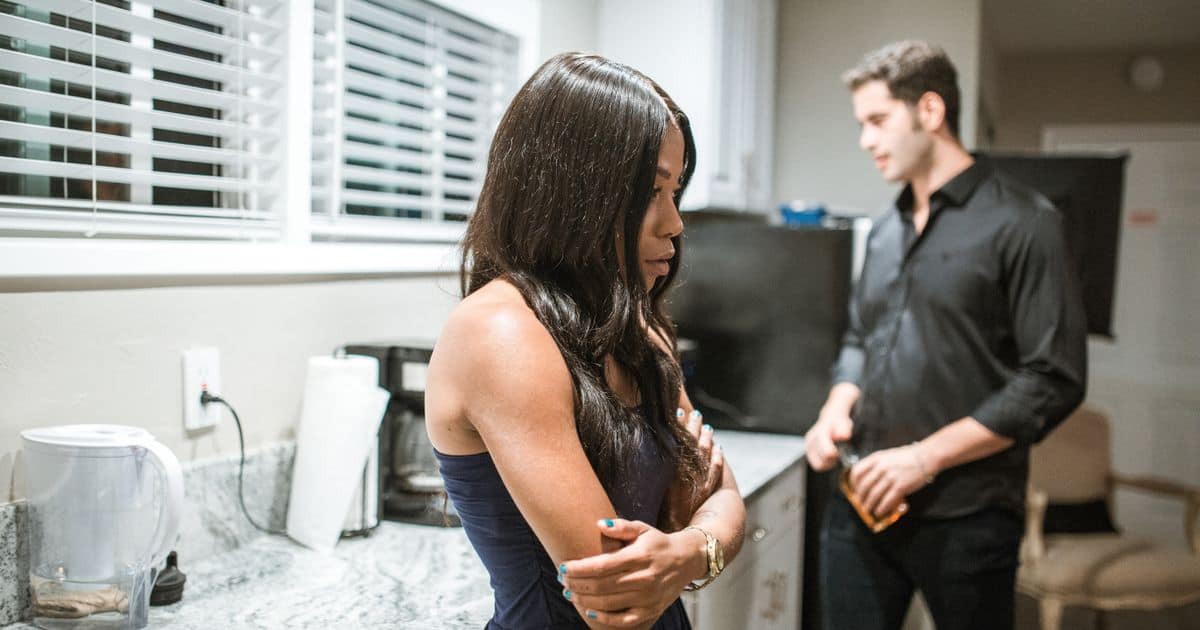
When your wife won’t forgive you, it is usually not stubbornness and it is not punishment. Her nervous system does not feel safe with you yet, and forgiveness cannot be demanded, only earned through repair over time. Another apology will not do it. What does it is staying with her pain without defending yourself, showing her you understand the impact of what you did, answering her questions, offering transparency, and being consistent long enough for her body to believe you. Every time you push her to move on, the clock starts over.
It is late. Tonight it came up over something small, a text at dinner, and within a minute you were back in the worst conversation of your life. You have said sorry fifty times. She said, “I don’t know if I can ever forgive you.” Now you are on the edge of the bed with your phone, typing the words you cannot say out loud: my wife won’t forgive me.
If you want somewhere private to say what happened without having to defend yourself, tell Figlet what you did and what she said tonight, and it will show you the pattern you two are caught in and give you one line to say to her.
Why won’t my wife forgive me when I have already apologized?
Stuck in the same argument again?
Talk it through with Figlet right now. Private, judgment free, built on 17 years of couples therapy.
Because forgiveness after a betrayal is not a decision she makes in her head. It is a biological process. Trust is a biological state. Her nervous system either registers safety with you or it does not, and no amount of promising, reassuring or logical argument will override what her body already knows.
Underneath every interaction with you, her brain is asking two questions it never puts into words. Are you there for me? Am I enough for you? When you had the affair, or lied, or hid the money, both answers became no. Her brain files that under “survival threat,” and the rational part that could accept your apology goes offline. You cannot apply a cognitive solution to a biological problem.
Her body keeps its own ledger of every moment she felt safe or threatened by you, and only behavior settles it. The betrayal was also rarely one wound: the act, the lying, the “who else knew,” the rewriting of every memory. Those are six or seven separate wounds. If it feels like you keep going over the same ground, that is why.
Why are my apologies not landing?
Most apologies after a betrayal are what I call fiat love: words with nothing backing them. “It will never happen again.” You may mean it. But her nervous system learned that your words and your behavior can come apart, so it devalued your words. An apology without empathy is the cherry on top of a cake that does not exist.
Then there is shame, which is hard to see from the inside. Under that much shame, most of us do one of four things: we withdraw, we attack ourselves, we avoid, or we attack her by rewriting the story so she somehow drove us to it. You go quiet. You say “I’m a terrible person.” You change the subject. Or you hear yourself say, “I said I’m sorry, what more do you want from me?” Every one of those moves protects you. None of them repairs anything.
The collapse looks like remorse, but when you sink into “I am bad,” you make the moment about you. She came to you with her wound and you handed her yours. That is a second abandonment. The work is to shift the mix from 100% “I feel bad about myself” toward 20% that and 80% “my heart is breaking for you.”
What does she actually need from me?
Not another apology. She needs to see that you get it. Really get it. That the ground got pulled out from under her, that her whole reality had to be rewritten, and that you are not going anywhere while she puts it back together piece by piece.
I call what she needs proof of work. It means staying emotionally present when you desperately want to leave the room. It means letting go of being right, because when you say “I already explained this,” she hears that your comfort still comes ahead of her pain. It means transparency as a protocol, not an event: phone face up without being asked, texting every time you are late, answering the same question for the twentieth time without a sigh. None of that is dramatic. All of it is expensive. The cost is the proof.
And she needs you to understand that impact is bigger than intention. If my car hits someone, my good intentions mean nothing. “I never meant to hurt you” may be true. It is also beside the point. If you are drowning in guilt and cannot stay present for her, I wrote about how to deal with guilt and shame after cheating so it stops landing back on her.
A couple in my office
A husband sat on the edge of my couch, pleading with his wife, repeatedly promising that his affair meant nothing and swearing he would never hurt her again. His wife sat rigidly across from him, staring blankly at the wall, her hands trembling as she explained that his apologies felt like empty noise. He turned to me, completely exhausted, and asked why his sincere remorse was not enough to repair her trust.
I have watched that scene hundreds of times in my seventeen years of clinical practice. He was sincere. But sincerity is not currency anymore. Her body was reading whether he could sit still in her pain or needed her to make it easier for him.
The moment that changes things usually happens on a Tuesday night. She brings it up, and instead of collapsing or defending, he sits still, looks at her, and stays. Not forgiveness exactly, but the first real evidence that he understands.
Why does my wife keep bringing up the past?
When she brings it up because you were forty minutes late, she is not relitigating. Her body is scanning for danger in the present, and the old wound is the reference file it pulls up when the answer to “are you there for me” feels like a maybe. I wrote more about this in when your partner brings up past mistakes constantly.
There is a loop here I call Never Forget, Never Forgiven. For you, forgiveness means “it’s over,” so every time she raises it you hear a verdict: you are still bad, you will never be forgiven. For her, forgiveness means “yes, I forgive you, but I still need reassurance.” It is the Waltz of Pain after betrayal: she pursues with questions and anger, you withdraw into shame, and each of you confirms the other’s worst fear. In 58,221 relationship assessments we have collected, 74.1% of the 6,159 couples where both partners completed were in this pursue and withdraw cycle. Each time she brings it up is a test of whether you will stay. Pass the test. Do not resent it.
How long does it take for a wife to forgive?
Longer than you want. You are thinking months. The reality is often years. With intensive work, the acute crisis can stabilize in three to six months, but the kind of trust where her nervous system genuinely settles around you again typically takes two to four years. The timeline is not yours to set. It belongs to her nervous system. Every time you say “aren’t you over this yet,” you are telling her your comfort matters more than her healing, and you reset the clock. I wrote about how to rebuild trust after cheating step by step.
What if she won’t forgive me because she has already decided to leave?
Sometimes “I can’t forgive you” means she is done, and no amount of proof of work will change a decision she has already made. Remorse is the minimum condition for repair, not a debt she owes you in return. And if the unforgivable thing gets held over every disagreement forever, that is a power play dressed in reconciliation language, not forgiveness work.
If either of you is using the hurt for threats, violence, control of money or phones, or blocking the other from leaving a room, that is not a forgiveness problem. Get help today: the National Domestic Violence Hotline is 1-800-799-7233. And if the shame has you thinking about harming yourself, call or text 988.
Should I give up if she won’t forgive me?
The couples who make it are not the ones with the smallest betrayal or the most love going in. They are the ones where the partner who strayed did the proof of work without a guaranteed return. There is no contract that says “if I do this for so many months, I get trust back.” Doing it anyway is what proves it is real. If you are still sighing and saying “we’ve been over this,” you have not started yet.
My husband won’t forgive me
Everything here applies when the roles are reversed. A husband who cannot forgive is running the same alarm and asking the same two questions. His version may look like distance instead of questions, but his body is still scanning for whether you are safe. Stay close to it anyway, and do not ask him to manage your shame.
My girlfriend won’t forgive me
Not being married does not make the injury smaller. If she is still bringing it up, her body is still asking whether you are safe. The same proof of work applies.
What should I say to her tonight?
Do not ask for forgiveness. Do not explain. When it comes up, sit still, look at her, and say:
“I see that you are still hurting from what I did. And that breaks my heart. Because I love you and I hate that I caused this.”
Then stop talking. If you want to rehearse first, Figlet can help you find your own version.
If you are the wife reading this
You do not owe forgiveness on anyone’s timeline. Not his, not your mother’s, not your therapist’s. If he is telling you to get over it or blaming you for not forgiving fast enough, what is being asked of you is not forgiveness. It is acquiescence. You get to ask for what your nervous system needs: transparency, accountability, access, patience. His willingness to give it without resentment will tell you more than any apology.
Where to go from here
If you want to understand why forgiveness cannot be rushed from her side, read 7 hard truths about forgiveness in relationships. Her body is still waiting for something it has not received yet, and that something is almost always more witness.
Frequently asked questions
How do I get my wife to forgive me?
You cannot make her forgive you. You can create the conditions: stop defending, stay present when she is hurting, offer transparency before she asks. Forgiveness accumulates when your behavior matches your words for long enough.
Will my wife ever forgive me for cheating?
Many couples recover from betrayals that looked hopeless, and some bonds end up more honest than before. It will not look like forgetting. When it works, the wound that bleeds becomes a scar: a mark of what you survived together.
Is it normal for her to still be angry a year later?
Yes. Real trust takes years, not months. What matters is whether the repair after each trigger gets faster.
If you are lying awake with this, Figlet is a coaching tool I built from my work with couples after betrayal. It is a private place to tell it what happened without defending yourself. It shows you the pattern you two are caught in and gives you the one line to say to her. It is free to start tonight.
Keep Reading



Stuck in the same argument again?
Figlet is relationship coaching built on 17 years of couples therapy. Talk through what is happening the moment it matters, get a clear next step, and stop circling the same fight. Private, judgment free, ready whenever you are.
Free to start. No credit card needed.
Figs O'Sullivan
Founder · EFT couples therapist
“What I would tell you at 10pm, if I could.”