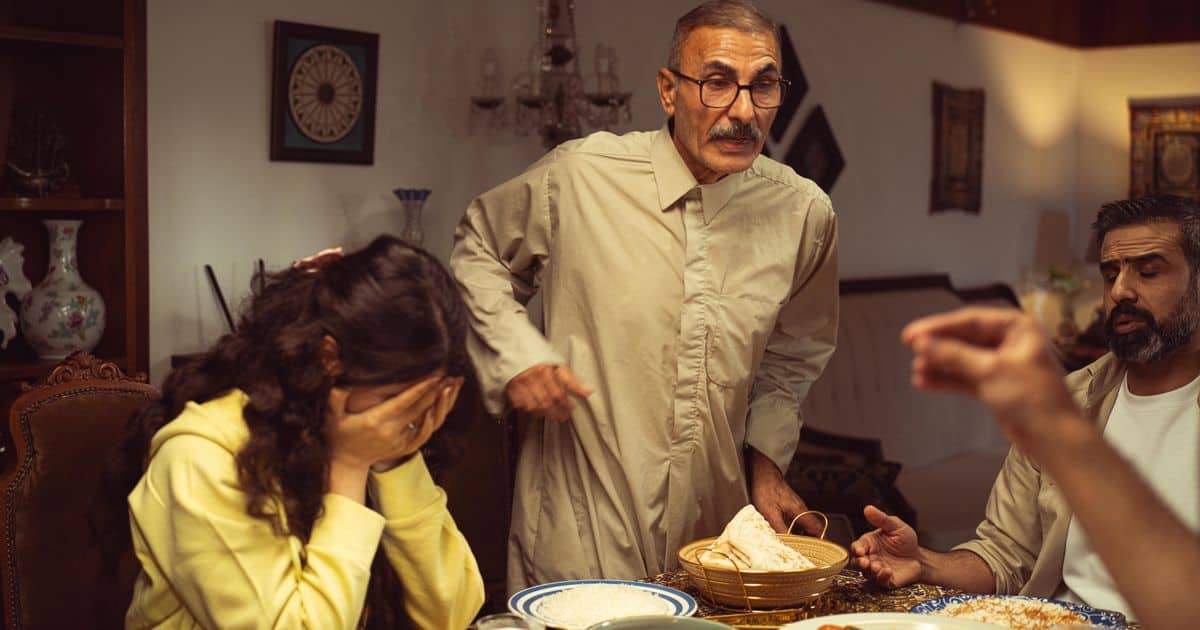
Walking on eggshells in a relationship means you run a silent calculation before you speak: Is this safe? Will this start something? Should I just keep quiet? You scan the room, read the angle of your partner’s shoulders and the tempo of their breathing, and edit yourself constantly because you never know which version of them you’re going to get. That hypervigilance is not a defect. It is your nervous system doing its job, trying to keep you safe in a relationship that no longer feels safe.
What to do tonight: name the pattern out loud, without blame. Try: “I notice that I edit myself a lot around you, and I think we’re caught in a pattern that’s hurting both of us.”
Tell Figlet what you stopped saying because of how your partner might react, and it will help you understand why your body stays on guard at home.
If you’re walking on eggshells in your relationship, you already know what I’m about to describe. You come home and immediately scan the room. You read the angle of your partner’s shoulders, the tempo of their breathing, the way they said “hey” versus “hi.” You run a silent calculation before you speak: Is this safe? Will this start something? Should I just keep quiet?
Constant tension is a signal worth reading. This covers what the real red flags in a relationship look like.
I’ve been working with couples for over seventeen years, and I can tell you that walking on eggshells is one of the most common experiences people describe when they finally sit down in my office. They don’t always use that phrase at first. They say things like “I feel like I can’t be myself” or “I never know which version of them I’m going to get.” But when I reflect back what I’m hearing, they almost always land on it: Yeah. I’m walking on eggshells.
This article is for you if that resonates. Not the clinical version, not the textbook overview. The real thing. What’s actually happening inside your body, why you can’t stop doing it, and what it takes to build a relationship where you can finally exhale.
What Walking on Eggshells in a Relationship Actually Looks Like

Which pattern is running your relationship?
Take the free three minute quiz and meet the creature behind the cycle you keep getting stuck in.

Let’s get specific, because the phrase “walking on eggshells” can sound vague until you recognize the behaviors in your own life.
Walking on eggshells means you rehearse conversations in your head before you have them. You edit yourself constantly. You gauge whether it’s a “good day” before bringing up something that matters to you. You apologize preemptively. You have become an expert at reading micro-expressions, tone shifts, and body language, not because you studied psychology, but because your survival depended on it.
Here’s what it looks like in practice:
- You want to tell your partner something bothered you, but you wait for the “right moment” that never comes.
- You swallow your needs because the cost of voicing them feels higher than the cost of going without.
- You monitor your partner’s mood the way a sailor monitors weather, constantly adjusting your sails to avoid a storm.
- You’ve stopped sharing opinions, preferences, or desires because past experience taught you those things get weaponized.
- You feel relief when your partner is in a good mood, not because you’re happy, but because it means you’re safe for now.
- You’ve become so good at managing their emotions that you’ve lost touch with your own.
If you recognize yourself in three or more of those, you’re not being “too sensitive.” You’re not overreacting. Your nervous system has learned that emotional danger is real in this relationship, and it’s doing exactly what it was designed to do: keep you alive.
From Empathi’s research: in 58,221 completed relationship assessments, 74.1% of the 6,159 couples where both partners completed were in the pursue-withdraw cycle. Both partners typically describe the other as the one withdrawing.
The Biology Behind Walking on Eggshells
Here’s something most articles on this topic miss entirely. Walking on eggshells is not a personality flaw. It’s not “codependency” in the pop-psychology sense. It is a nervous system response, and understanding that changes everything.
Adult romantic love is a biological attachment bond. This isn’t poetry. It’s neuroscience. We are fundamentally dependent on our primary romantic partners for emotional safety. Your nervous system is continuously evaluating your relationship, asking two questions on a loop: Are you there for me? and Am I enough for you?
When your nervous system detects a threat to that bond (your partner’s irritation, their withdrawal, a sharp tone, a dismissive eye-roll), the rational, communicative parts of your brain go offline. Instantly. The prefrontal cortex, the part that helps you stay calm and articulate, gets hijacked by the amygdala. Your organism registers this as an existential threat and executes a protective strategy to survive the unbearable pain of disconnection.
This is why you can’t “just stop” walking on eggshells through willpower. Your conscious mind might know that your partner’s bad mood isn’t a death sentence. But your body doesn’t know that. Your body is operating on older, deeper programming. And in relationships where emotional volatility has become the norm, that programming is running 24/7.
The Hypervigilant Nervous System
Think of your nervous system like a smoke detector. In a safe relationship, the smoke detector is calibrated properly. It goes off when there’s actual fire. In a relationship where you’re walking on eggshells, that smoke detector has been recalibrated to go off when someone makes toast. Every small signal becomes a potential threat. Every silence becomes loaded. Every “we need to talk” triggers a full-body alarm.
This is hypervigilance, and it is exhausting. Your body is burning cortisol like a car idling in first gear on the highway. You’re never not scanning. You’re never not calculating. The cognitive load of this constant monitoring is enormous, and it leaves you depleted, anxious, and unable to access the parts of yourself that make you feel like you.
I see this in my office all the time. A partner walks in and they look tired in a way that sleep won’t fix. They’ve been running their internal surveillance system for months or years. They know their partner’s moods better than their own. They can predict a blowup 48 hours out based on subtle cues nobody else would notice. And they’re proud of this skill, in a grim way, because it’s kept them safe. But it’s also kept them imprisoned.
Very often the eggshells are around one thing in particular, saying what you actually think, and I unpack that pattern in when your partner gets angry every time you disagree.
Why You Learned to Walk on Eggshells (And Why It Made Perfect Sense)

If you’re the one walking on eggshells, I want you to hear something clearly: this pattern didn’t come from nowhere. It’s not a defect. It was, at some point in your life, a brilliant survival strategy.
For many people, eggshell-walking started long before their current relationship. It started in childhood, in a home where a parent’s mood determined the emotional weather for the entire family. You learned early that your job was to read the room, anticipate what was needed, and adjust yourself accordingly. You became a shape-shifter, not because you lacked identity, but because having a fixed identity wasn’t safe.
In the trauma literature, this is sometimes called the “fawn” response. Most people know about fight, flight, and freeze. But fawn is the fourth survival response, and it’s the one that doesn’t get nearly enough attention. Fawning means your nervous system learned that the safest response to a threatening person isn’t to fight them, run from them, or shut down. It’s to please them. Appease them. Become whatever they need you to be so the threat passes.
Fawning looks like:
- Immediately agreeing with your partner to de-escalate
- Abandoning your own position mid-argument because conflict feels unbearable
- Over-apologizing, even when you haven’t done anything wrong
- Anticipating your partner’s needs before they voice them (and feeling anxious when you can’t)
- Losing track of what you actually think, want, or feel because you’ve been so focused on managing someone else’s inner world
This is people-pleasing, but calling it “people-pleasing” makes it sound like a personality quirk. It’s not. It’s a survival adaptation. Your nervous system learned that your safety depends on keeping someone else regulated, and now it runs that program automatically, without your conscious consent.
The “Serving a Life Sentence” Feeling
In my clinical work, I’ve identified a pattern I call the “Reluctant Lover” dynamic. This is the partner whose primary wound is the fear of rejection, driven by an agonizing question: Am I acceptable? During moments of stress, they frequently feel like they are serving a life sentence of never being enough for the person they love the most.
Their nervous system screams: Please do not see my flaws. Please do not expose my not-enoughness. And rather than reaching outward in protest, they withdraw. They shut down. They disappear, not because they don’t care, but because the pain of inadequacy is so overwhelming that disappearing feels like the only way to survive it.
If you’re the eggshell-walker, you may recognize this in yourself or in your partner. Sometimes the eggshell-walker is managing a partner who withdraws, and the withdrawal itself becomes the thing they’re walking on eggshells to prevent. Other times, the eggshell-walker is the one who withdraws, and the walking-on-eggshells behavior is itself a form of retreat, a way of making yourself small enough that nobody can find something to reject.
The Two Survival Dances That Create the Eggshell Dynamic

In most eggshell relationships, you’ll find a predictable pattern playing out between two partners. I call it the “Waltz of Pain,” and once you see it, you can’t unsee it.
There are two primary roles in this dance:
The Relentless Lover (Pursuit): This partner is driven by the fear of abandonment. When connection feels at risk, their body protests for closeness. They reach, complain, criticize, demand. It looks aggressive on the surface, but underneath, it’s a frantic biological attempt to secure the attachment bond. They’re essentially screaming: Come back to me. Don’t leave me alone with this fear.
The Reluctant Lover (Withdrawal): This partner is driven by the fear of rejection. When conflict escalates, they retreat and rationalize. They shut down, go quiet, become stoic or absent. It looks like they don’t care, but underneath, they’re drowning in a sense of failure and inadequacy.
Here’s the cruel part: these two responses trigger each other in an escalating loop. The more one partner pursues, the more the other withdraws. The more one withdraws, the more the other pursues. And both partners end up walking on eggshells, just in different ways.
The pursuer walks on eggshells because they’ve learned that voicing their needs pushes their partner further away. So they bite their tongue, swallow their loneliness, and try to “be cool” until they can’t anymore and it all comes out in a flood.
You calculate every word before deciding if it is safe.
Do you know you can get personalized answers to all your questions from the same wisdom that wrote this article, right now?
Ask anything about your own situation and get an answer immediately. Keep asking, think it through, work out what to do next.
No credit card required. Your first 10 messages are free.

Ask Figlet about walking on eggshells.
The withdrawer walks on eggshells because they’ve learned that any misstep will trigger a painful confrontation. So they stay quiet, stay perfect, stay small, hoping that if they just manage everything well enough, the storm won’t come.
Neither partner is the villain here. Both are trapped in a pattern that predates them, often by decades.
Walking on Eggshells vs. Abuse: A Critical Distinction
I need to address something important here, because not all eggshell-walking is the same.
There is a version of walking on eggshells that exists in relationships where both partners are fundamentally good people caught in a painful cycle. The volatility comes from unprocessed wounds, attachment injuries, and nervous systems that don’t know how to co-regulate. This is the version that couples therapy was designed to address, and with the right help, these couples can absolutely transform their dynamic.
Then there is a version of walking on eggshells that exists in relationships with genuine emotional abuse, coercive control, or narcissistic dynamics. In these relationships, one partner systematically undermines the other’s reality, autonomy, and self-worth. The eggshell-walking isn’t a mutual pattern; it’s a response to a one-directional campaign of control.
If you are not sure which version you are living in, I put together the signs of emotional abuse I listen for in my office, including the ones that show up in you.
How do you tell the difference? Here are some questions to sit with:
- Does your partner take responsibility when they’ve hurt you, or do they consistently turn it back on you?
- Do you have genuine moments of repair after conflict, or does the “resolution” always involve you capitulating?
- Does your partner show curiosity about your experience, or do they dismiss, minimize, or mock your feelings?
- Do you feel like you have a voice in this relationship, even if it’s hard to use, or has your voice been systematically silenced?
- Are you afraid of your partner’s disappointment, or are you afraid of your partner?
If it’s the latter in any of those, please seek individual support before pursuing couples work. A skilled individual therapist can help you assess your safety and make a plan. Couples therapy in the context of active abuse can actually make things worse, because it gives the abusive partner new language and tools to weaponize.
What Happens to You When You Walk on Eggshells for Too Long
Living in a state of chronic emotional vigilance does real, measurable damage. This isn’t about being dramatic. The research on chronic stress and relational trauma is clear.
You lose yourself. When you spend years calibrating to someone else’s emotional state, you genuinely lose access to your own. Clients tell me they don’t know what they want for dinner, let alone what they want from their lives. The muscle of self-awareness atrophies when it’s never safe to use it.
Your body keeps the score. Chronic hypervigilance manifests physically. Jaw clenching, insomnia, digestive issues, headaches, muscle tension, a persistent knot in your stomach. Your body is holding the stress your mind has learned to normalize.
You become resentful, then guilty about the resentment. This is the particular hell of the eggshell-walker. You swallow your needs, then you resent your partner for not meeting them, then you feel guilty for the resentment because “they didn’t do anything that bad.” This cycle erodes love like water erodes stone: slowly, invisibly, and completely.
Intimacy dies. Not just sexual intimacy, although that often goes first. Emotional intimacy. The ability to be spontaneous. The willingness to be vulnerable. You can’t be intimate with someone when your primary relationship to them is one of threat assessment.
You start to believe the narrative. After enough time walking on eggshells, you internalize the idea that you are the problem. That you are “too much” or “not enough.” That if you could just be better, calmer, more patient, less needy, the relationship would work. This is the most insidious consequence, because it takes the systemic problem of a dysregulated relationship and locates it entirely inside you.
How to Stop Walking on Eggshells: The Real Work
I’m not going to give you a list of “5 tips to stop walking on eggshells” because that would be dishonest. This is deep, systemic work. It involves rewiring patterns that have been running for years, sometimes decades. But here’s what actually moves the needle, based on what I’ve seen work in clinical practice.
1. Name the Pattern Out Loud
The eggshell dynamic thrives in silence. It depends on both partners pretending that what’s happening isn’t happening. The single most powerful thing you can do is name it. Not in an accusatory way. Not “You make me walk on eggshells.” But: “I notice that I edit myself a lot around you, and I think we’re caught in a pattern that’s hurting both of us.”
This is vulnerable. It will probably be uncomfortable. It might even trigger the very reaction you’ve been trying to avoid. But it breaks the spell of silence that keeps the pattern locked in place.
If any of this is landing close to home, you can talk it through right now with Figlet, Figs’ AI relationship coach, and get an answer about your own situation in seconds. Ask Figlet about walking on eggshells.
2. Understand That Your Partner Has a Nervous System Too
If you’re in a relationship where the eggshell-walking is mutual (and not abuse), your partner is also suffering. The partner whose moods you’re managing? They’re likely drowning in their own pain, feeling out of control, ashamed of their reactivity, and terrified that they’re pushing you away. This doesn’t excuse harmful behavior. But it opens the door to compassion, which is the only foundation on which repair can be built.
3. Learn to Tolerate Discomfort Without Managing It Away
The eggshell-walker’s superpower is managing other people’s discomfort. You’ve gotten so good at smoothing things over, de-escalating, and preempting reactions that you’ve never learned to simply sit with the discomfort of someone else being upset. The therapeutic task here is learning that your partner can have a feeling, even an intense one, and you don’t have to fix it, prevent it, or make it go away. Their emotional experience is theirs to hold. You can be present without being responsible.
4. Rebuild Your Relationship with Your Own Needs
Many eggshell-walkers have been so focused on their partner’s emotional landscape that they’ve completely abandoned their own. Start small. What do you want for dinner? What show do you actually want to watch? What do you need this weekend? These sound trivial, but for someone who has been living in self-erasure, reconnecting with basic preferences is genuinely radical work.
5. Get Professional Help (And Not Just Any Help)
This is the part where I’m biased, obviously, but I’m biased because I’ve seen it work. Couples therapy with a therapist trained in attachment-based or emotionally focused approaches can fundamentally change this dynamic. Not in one session. Not with a magic technique. But through the slow, steady work of helping both partners feel safe enough to show each other what’s really happening underneath the eggshells.
The key word there is “trained.” A well-meaning therapist who doesn’t understand attachment dynamics can inadvertently reinforce the eggshell pattern by focusing on communication skills while ignoring the underlying emotional realities. You need someone who can see the dance, name it, and help both of you step out of it together.
This is not a you problem or a them problem
“You are not fighting a broken partner, but rather a tragic, co-created system where you both hurt because you mean so much to each other.”
“Most of the hurt in a relationship comes from impact without intention.”
Figs O’Sullivan, LMFT
Frequently asked questions
What does walking on eggshells mean in a relationship?
It means you have become extremely cautious around your partner because you never know which version of them you’re going to get. You rehearse conversations in your head, gauge whether it’s a good day before you bring anything up, and swallow your own needs to keep the peace. Your body is in threat assessment mode at home.
Is walking on eggshells a sign of emotional abuse?
Not always, but it can be. In many couples, both partners are fundamentally good people caught in a painful cycle of unprocessed wounds and nervous systems that don’t know how to co-regulate. In others, the eggshell-walking is a response to a one-directional campaign of control. Ask yourself: are you afraid of your partner’s disappointment, or are you afraid of your partner? If it’s the latter, seek individual support first.
Why do I feel like I’m walking on eggshells with my husband?
Usually because your nervous system learned, often long before this relationship, that keeping the peace keeps you safe. When your partner’s moods feel unpredictable, that old survival strategy switches back on. It made perfect sense once. The work now is noticing it, naming it, and slowly rebuilding your relationship with your own needs.
Can a relationship recover from walking on eggshells?
Yes, when there is no abuse and both partners are willing to do the work. I’ve watched couples who came into my office unable to make eye contact leave holding hands. It takes time and the right help, ideally a therapist trained in attachment-based or emotionally focused approaches, but the pattern can change completely.
What a Relationship Without Eggshells Feels Like
I want to end here, because if you’ve been living in this pattern for a long time, you may have forgotten that another way of being is possible. Or you may never have experienced it at all.
A relationship without eggshells doesn’t mean a relationship without conflict. Healthy couples still disagree, still get frustrated, still hurt each other’s feelings. The difference is what happens next.
In a secure relationship, you can say the hard thing and trust that the relationship will hold. You can have a bad day without your partner taking it personally. You can voice a need without bracing for punishment. You can be imperfect, messy, irritable, sad, scared, or uncertain, and know that the person next to you will still be there tomorrow.
That’s not fantasy. That’s the biological baseline that attachment science says we’re all wired for. Your nervous system isn’t broken for wanting it. It’s doing exactly what it’s supposed to do: searching for safety, connection, and the freedom to finally stop scanning the room and just be.
If walking on eggshells in your relationship has become your normal, I want you to know that normal can change. Not easily. Not quickly. But completely. I’ve watched couples who came into my office unable to make eye contact leave holding hands. I’ve watched partners who couldn’t say “I need you” without choking on shame learn to reach for each other openly. It happens. And it can happen for you.
The first step is the hardest: admitting that the eggshells are there, that they’re real, and that you deserve a relationship where you can walk freely.
Figs is a licensed marriage and family therapist with 16+ years of experience working with couples. He’s the co-founder of Empathi, host of the “Come Here to Me” podcast, and author of an upcoming book on relationships and the systems that shape how we love.
Related reading: 7 Hidden Reasons You Are Terrified of Intimacy (and What Your Nervous System Is Really Trying to Tell You) · How to Deal with Resentment in a Relationship: What Your Body Is Trying to Tell You · How to Stop Walking on Eggshells in Your Relationship · 7 Things Your Relationship Anxiety Is Actually Trying to Tell You
Keep Reading



Every couple has a pattern they cannot see. Find yours.
In love, each of you is a Relentless or a Reluctant, which makes you one of three kinds of couple: Relentless and Reluctant, two Relentless, or two Reluctant. The free quiz reveals your creatures and the cycle they fall into together. About three minutes.
No signup needed to start.
The Relentless

The Reluctant