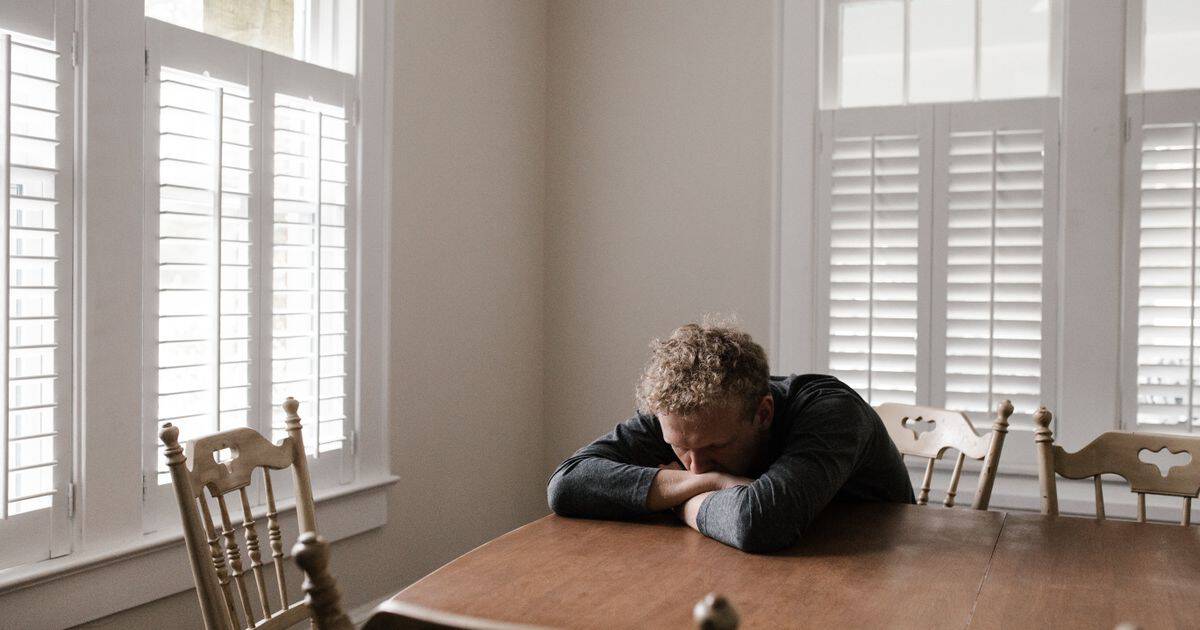
It is a little after eleven. The electric bill got paid this morning; you saw the notification. On the way up the stairs your partner said “love you” in exactly the same tone as “night.” They spent the evening on the other end of the couch, close enough to touch, thumb moving on a screen. Nothing happened tonight. Nothing ever happens. Now you are lying in the dark typing “what is the bare minimum in a relationship” into your phone, because some part of you wants a ruling. Either you are asking for too much, or you have been living on crumbs for so long you stopped noticing you were hungry.
So what is the bare minimum in a relationship?
Stuck in the same fight again?
Talk it through with Figlet right now. Private, judgment free, built on 17 years of couples therapy.
It is not a list of chores. Paying the bills, answering texts, saying the words on the stairs: roommates do all of that.
The bare minimum is the answer to one question. When you commit to someone, your nervous system quietly installs them as your primary attachment figure, and from then on your body scans them constantly and asks two things. Are you there for me? Am I enough for you? The floor of a relationship is a reliable yes to the first one. That means your person is accessible (you can reach them), responsive (when you reach, they turn toward you) and engaged (they let you affect them). Everything else is negotiable. How often you go out, who cooks, how many texts a day, what anniversaries look like. No marriage survives without the yes.
So no, you are not asking for too much by wanting someone to be there. Human beings need to be met. That is a species fact, not a character flaw.
Why do I feel so alone when nothing is technically wrong?
Because your body is not grading the logistics. It is grading presence. When the person six inches away on the sofa is somewhere else, behind a screen or behind their eyes, your body does not register a quiet evening. It registers an emergency. On the savanna, if the person you depended on was right beside you and stopped attuning to you, your organism read that as being about to be abandoned. I describe it as drowning while standing next to a lifeguard. The lifeguard is right there. And he is not looking.
In 58,221 completed relationship assessments at Empathi, 33 percent named “alone” as their deepest feeling when love is not working. More than rejected, more than abandoned, more than hopeless.
This is also why “but I tell you I love you all the time” does not help. Your body is the original ledger. It records every time you reached and got a distracted answer, and after enough entries it stops trusting the words. I call this Fiat Love: love by decree, not by proof. Your body will only settle the transaction when your partner puts the phone down, turns their face to yours and actually lets you affect them. Most couples I see are not in a love shortage. They are in a proof shortage.
Often both people have started sending a Representative to the marriage, the competent version that handles logistics and says “I’m fine” when the truer sentence is “I’m scared and I need you.” Two Representatives can run a household for years. They cannot make a marriage feel warm.
Am I asking for too much, or have I been accepting crumbs?
Look at who is doing the invisible work. Who notices the other one has been quiet for three days and works out how to bring it up? Who breaks the silence after a fight? If it is always you, you are carrying what I write about as emotional labor in relationships, and it is exhausting in a way your partner probably cannot see. Your nervous system is burning more calories of attention. You are running a more expensive operating system, and your partner does not see the electricity bill.
I often tell the story of a husband who made himself one cup of coffee in the morning and none for his wife. To him, it was nothing; he was half asleep. Her nervous system processed it in seconds: you did not think about me, I am alone in this marriage. That is not drama. It is biology, and it shows you where the line sits. Asking your partner to read your mind about everything is too much. Asking to be on their mind at all is the minimum.
This is a different ache from feeling ranked below their friends and their phone, which I wrote about in why do I feel like an option and not a priority. That is about where you land on the list. This is about whether anyone is home when you knock.
What if my partner is not lazy?
Very often they are not. In seventeen years I have almost never met the “cold” partner who was actually cold underneath. I meet a scared person who decided long ago that reaching would cost more than not reaching.
I call that person the Reluctant Lover. The desire for connection is there, buried under armor. Underneath it runs a sentence like: please do not see my flaws, please do not expose my not-enoughness. When every conversation about the relationship lands on them as a performance review they are failing, their flooded body goes to the basement: logic, excuses, the phone, the shed. From the outside that looks exactly like the bare minimum. From the inside it is often someone so afraid of getting it wrong with you that they have stopped trying to get it right.
I know this from the inside. When I get overwhelmed and low, I do not reach. I retreat into what I call my private chasm of suffering. I go quiet, I look angry, and my wife gets what she calls the belligerent Irish farmer. Underneath all of that I am feeling completely alone, like nobody is there. I learned it early. My sister and I, small, sitting in the back of a dark garage at a childminder’s in Tallaght, forgotten while the family ate dinner in the light. I could hear the forks on the plates. I learned to swallow what I needed so I would not be a burden. I spent years as the Reluctant Lover, sitting right beside her and emotionally gone.
None of that excuses the absence. It just means you may be misdiagnosing it, and aiming everything you do next at the wrong target.
Why does asking for more keep making it worse?
Watch the dance. You feel alone, so you reach, and because you are hurt the reach comes out as a complaint. You are always on your phone. We never talk anymore. To your partner’s nervous system that is not an invitation. It is the verdict they have been dreading. So they go deeper into the basement, which leaves you more alone, so you reach harder. I call it the Waltz of Pain. Two people in the same bed, each certain they are the only one hurting. Neither of you is the villain. The dance is.
I had a couple in my office who had not felt close in almost two years, both trying, both reading the books. I asked when they had last sat down, faces turned toward each other, and let one of them say something true without the other jumping in to fix, defend or explain. They could not remember. We did it in the room. Ten minutes. He said, “I feel like a project you are managing.” She cried. She did not defend. She let it land. Nothing was fixed. But the loneliness he had been carrying for two years dropped a notch, because for the first time in a long time his real self had been in the room with hers.
The partner you experience as doing the bare minimum may be experiencing you as a manager. Both of you are starving politely in the same house.
What if I have already stopped asking?
Then this is more urgent than you think. A pursuer who has gone quiet has not found peace. They have burnt out. The Relentless Lover, who protested loudly for years, becomes eerily calm, stops fighting, and starts keeping a silent score, grieving the marriage inside their own heart while still making dinner in the same kitchen. Their partner usually thinks things have improved. If that is you, you are already deciding something, whether or not you have said so out loud.
When is the bare minimum genuinely not enough?
The tell is simple. Is your partner capable, even slowly, even imperfectly, of seeing you as a person and owning some share of what has gone wrong between you? If yes, you are almost certainly in a loop with someone who is also hurting, and the loop is workable. If you have said the soft, true thing plainly, more than once, and the answer is a hard and permanent no, that is a fairer question about the relationship’s future, and your resentment is data worth taking seriously.
And if the loneliness has started to sink into your mood and your sleep, I wrote about how to tell whether your relationship is making you depressed.
Real change looks like proof of work: consistent, observable effort, long enough for a body that has kept score for years to register a new pattern. Not a grand gesture, not a week of trying. And sometimes the person who carried the load has gone past the point of recovery, and no belated effort reopens what shut down to protect them. Usually something is still left. But you are allowed to want more than a co-management agreement.
One line on safety. If there is violence, threats, blocking you from leaving, control of your money or phone, or stalking, that is not a dance and none of this applies. Get help today. The National Domestic Violence Hotline is 1-800-799-7233.
What do I say tonight?
Put down the case. Not the phone, not the list of everything they have not done. Turn the flashlight off them and onto yourself, sit beside them, and say:
“I am not bringing this up to complain or to tell you that you have done anything wrong. I am just feeling really lonely in my own heart tonight. I miss you. I miss us.”
Then stop. No “but.” No “so can we.” There is nothing in that for anyone to defend against.
If you are the one on the other end of the couch
Their protest, however sharp it sounds, is not contempt for you. It is fear that they have lost you. You cannot fix this with words alone, because the words stopped landing a while ago. Make the second cup of coffee. Sit down next to them after a hard day and say “tell me about it,” not because you were asked, but because you saw. And if you go blank when things get heavy, say that instead of disappearing: “I shut down because I am scared I am failing you.” That one sentence is worth more than a year of “love you” on the stairs.
Where to go from here
If the loneliness is the loudest part of this for you, read why do I feel so lonely in my relationship even when we’re lying in the same bed. If you suspect your partner is the Reluctant Lover, or you recognize yourself in that description, avoidant attachment and the fear of not being enough goes deeper into what is happening behind the wall.
If you want help with tonight, I built Figlet for exactly this. Tell it what your evenings look like. It will show you the dance the two of you are in and give you the one line to say that is not a complaint. It is free to start, tonight.
Keep Reading



Stuck in the same fight again?
Figlet is relationship coaching built on 17 years of couples therapy. Talk through what is happening the moment it matters, get a clear next step, and stop circling the same fight. Private, judgment free, ready whenever you are.
Free to start. No credit card needed.
Figs O'Sullivan
Founder · EFT couples therapist
“What I would tell you at 10pm, if I could.”