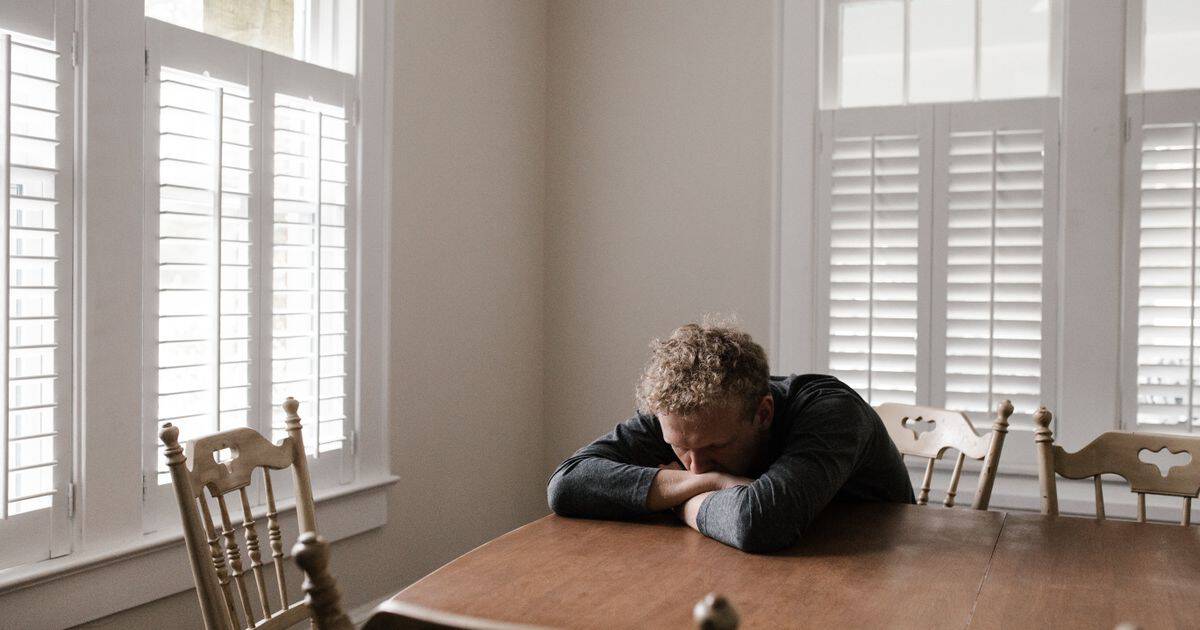
When your partner laughs while you are upset or in the middle of an argument, it is almost always a nervous system in panic, not contempt. Your concern hit their deepest wound, the fear of being a disappointment to you, and they grabbed a joke to survive the moment. That laugh is not the absence of feeling. It is the presence of feelings so overwhelming that humor looked like the only exit.
What to do tonight: do not try to fix it in the moment of the laugh. Wait until the storm has passed, then name the loop instead of the villain: tell them the impact first, and let them share their intention second.
If your partner laughed when you said something that mattered, tell Figlet what you said and how they reacted, and it will help you understand what that laugh is covering.
You finally worked up the nerve. You’d been holding this thing for days, maybe weeks. You rehearsed it in the shower. You waited for the right moment. You looked at the person you love most and said the vulnerable thing.
And they laughed.
Or they smirked. Or they said, “Babe, relax, it’s not that deep.” Or they cracked a joke that landed like a slap. Or they rolled their eyes and reached for their phone.
If the jokes are aimed at you more often than at your concerns, I wrote about what to do when your partner makes hurtful jokes.
Whatever the exact gesture, the impact was the same. Something behind your sternum caved in. Your face got hot. You went quiet, or you got loud, and either way you walked out of that room feeling more alone than you’ve felt in years. And then, of course, the second wound: the story that started running in your head. They don’t care. They’ve never cared. I’m with someone who thinks my pain is funny.
If you typed “partner laughs at concerns” into a search bar tonight, you’re probably in that second wound right now, hunting for someone to confirm what you already suspect. The internet is more than willing to oblige. TikTok will tell you it’s contempt.
I’ve been a couples therapist for over seventeen years. Tens of thousands of hours across from real couples in real pain. And I can tell you, with the confidence that mileage buys, that the story the algorithm is trying to sell you about your laughing partner is almost always wrong. Almost.
Your partner is not laughing because they don’t care. In the vast majority of cases I see, they’re laughing because they care so much that your concern has just detonated something inside them they don’t know how to hold. That laugh is not contempt. It’s a nervous system in panic, reaching for the nearest tool.
The problem is, the tool they grabbed is gasoline. And they thought it was water.
The Two Questions Running Underneath the Laugh

Which pattern is running your relationship?
Take the free three minute quiz and meet the creature behind the cycle you keep getting stuck in.
Before we get to the laugh itself, you need to see what the laugh is actually a response to. Because the fight you think you’re having is almost never the fight you’re actually having.
Every bonded nervous system is only ever asking two questions, underneath every argument about the dishes, the tone, the money, the sex, the sigh at the door. Not with words. Underneath.
The first is: are you there for me?
The second is: am I enough for you?
Almost always, one of you feels the first question louder in your body, and the other feels the second one louder in theirs. And here is the part I need you to sit with, because it changes everything.
When you brought up your concern, your body was probably asking the first question. You were reaching. You were saying, in effect: I need to know you’re with me here. I need to know I matter.
Your partner, when they heard it, did not hear that question. Their nervous system heard the second one. And the answer had already arrived before you finished speaking. You are failing her. You are a disappointment. You are not enough.
That is what their body registered. Not “my partner is bringing me something vulnerable and I should lean in.” Their body registered a threat, specifically the threat of being seen as a failure by the person whose opinion matters most to them in the world.
Now imagine what that panic feels like. Then imagine reaching for the first tool your character has ever handed you to survive it. For a lot of people, that tool is humor. Deflection. A joke. A shrug. A “come on, don’t be so sensitive.” An eye roll. A silver-lining reframe: “at least it’s not worse.” A quick pivot: “let’s not make a whole thing out of this.”
They aren’t trying to hurt you. They are trying to survive the unbearable sensation of failing you. The problem is that their attempt to survive it lands on you as proof of the very thing you feared: I don’t matter to this person.
Two separate sufferings, colliding in the same room, both of you convinced the other one is the villain.
From Empathi’s own research: in 58,221 completed relationship assessments, 74.1% of the 6,159 couples where both partners completed were in the pursue-withdraw cycle. Both partners typically describe the other as the one withdrawing.
The Reluctant Lover and Why They Reach for a Joke
In my work I don’t use the word “avoidant.” It describes behavior and explains nothing. I call this partner the Reluctant Lover. The word tells the truth: they want closeness, and they are terrified of closeness, because closeness means the possibility of being seen and found lacking.
The Reluctant Lover’s deepest wound is not abandonment. It’s inadequacy. Their nervous system is exquisitely tuned to any signal that says you’re not doing enough, you’re not being enough, you’re failing. When your concern arrives, no matter how gently you deliver it, it hits that wound at speed.
I have written more about this specific pattern in how to cope when you have an avoidant partner, and the mechanism is the same one at work here. Not once in seventeen years have I sat across from a partner who deflected because they didn’t care. Not one. I have sat across from hundreds of them who deflected because it hurt too much to feel the pain of possibly being a disappointment to the person they love most.
The laugh, then, is not the absence of feeling. It is the presence of feelings so overwhelming that the body has decided humor is the only survivable exit. Numbness in a smirk. Panic in a punchline. It looks like dismissal from the outside. From the inside, it’s a small child in an adult body who has just been told they’ve failed, and who is desperately reaching for anything that might make the pain stop.
Sit with that image for a moment. Because if you can hold it, even provisionally, the story you’ve been building about this person starts to loosen. And that loosening is where all the movement is.
The Waltz of Pain
Once your partner’s laugh lands on you, you are both officially in the choreography. I call it the Waltz of Pain, and every distressed couple I’ve ever met dances some version of it.
It goes in three steps.
One: negative perception. You see your partner in a negative light. They think this is funny. They don’t respect me. They never have.
Two: reactive emotion. Anger. Contempt. Cold fury. Or a bottomless sadness that looks like nothing on the outside.
Three: protective action. You raise your voice. You go icy. You get up and leave the room. You start a lecture. You issue an ultimatum. You spend the next two days performing distance to teach them a lesson.
Here is the tragedy: your protective action is a boomerang. You throw it to survive the moment, and it lands on your partner’s already-inflamed wound of inadequacy. Now they take their three steps. They see you negatively (she’s punishing me again, nothing I do is right), they feel a reactive emotion (shame, humiliation, defensive rage), and they take a protective action of their own. More jokes. More withdrawal. More phone. More eye rolls. More laughter.
One, two, three. One, two, three. Round and round the two of you go, each of you throwing boomerangs at exactly the same time, each of you gutting the other, and each of you looking across the room at the person you love and wondering why they’ve turned so mean.
You both walk away with your worst fears about each other confirmed. They don’t care about my pain. I can never make her happy. And the loop tightens.
Neither of you is the villain. The loop is the villain. This is not a moral failing on either side. This is two nervous systems, wounded in different ways decades before you ever met, colliding in an adult kitchen and doing exactly what they were built to do.
Ready to work on this?
Figlet is AI relationship coaching grounded in attachment science and Figs O’Sullivan’s clinical work, LMFT. First messages free, no signup.
Impact vs. Intention: The Gap Where All the Damage Lives
Here is a distinction that will save your relationship if you can hold it.
Your partner’s intention, when they laughed, was almost certainly not malicious. Their intention was to survive the moment. To break the tension. To feel less like a disappointment. To make you smile so they could stop drowning.
The impact on you was devastating. Invalidation. Dismissal. A stomach-punch of I don’t matter here.
Both of those things are true at the same time. The intention was not malicious. The impact was crushing.
Most fights get stuck because one partner is defending their intention (I was just trying to lighten the mood, why are you making this such a big deal) and the other partner is describing their impact (you laughed at me when I was hurting). Neither of you is lying. You’re just talking about two different things. Intention lives in the person who acted. Impact lives in the person who was acted upon. You need both, and you need them in order.
The first move in any repair is the person who caused the impact acknowledging the impact. Not the intention. The impact. When I laughed, I hurt you. You felt dismissed. You felt like your pain didn’t matter to me. I get it. I see what I did.
Only after that lands can the intention be shared without it functioning as a defense. And I need you to know I wasn’t laughing because I thought you were ridiculous. I was laughing because I felt so bad that I’d let you down that I panicked and grabbed a joke.
That sequence, impact first then intention, is the difference between a repair and a fresh wound.
Nervous Laugh or Contempt? How to Tell the Difference
Not every laugh is the same laugh. After seventeen years of watching couples in the room, these are the signs I look for.
A panic laugh usually comes fast and looks uncomfortable. Their eyes drop. They fidget, reach for the phone, change the subject, or say “relax, it’s not that deep.” It tends to show up in exactly the moments when you bring them something hard, because those are the moments their body reads as failure. Later, when things are calm, they often feel bad about it, even if they can’t say so well.
Contempt looks different. It is a tone that has become the default: the eye roll, the mockery, the sense that you are beneath a response. It shows up in calm moments too, not just in the heat of a fight, and it never circles back to repair. Contempt is still a defense. It says, “If I make you smaller, you cannot see how terrified I actually am.” But it does far more damage, and it needs to be named directly.
Then there is a line that is not about the loop at all. If your partner laughs while hurting you, laughs at you being afraid of them, or uses mockery alongside threats, control, or physical harm, that is not a nervous system in panic. That is a safety issue. The National Domestic Violence Hotline (1-800-799-7233, or text START to 88788) can help you build a safety plan. They will help you think, not tell you what to do.
One more distinction. A partner who tries to make you laugh in the middle of a heavy argument, and then turns back toward the conversation, may be reaching for you, not running from you. Humor that brings you both back to the table is a repair attempt. Humor that ends the conversation is a deflection.
Why the Internet’s Diagnosis Will Wreck You
Search this pattern and you’ll be told your partner is a narcissist. A gaslighter. Emotionally abusive. Contemptuous. Cold. You’ll be handed the vocabulary of pathology and told that clarity is on the other side of applying it.
Sometimes it is. In a small percentage of cases, the person laughing at your concerns is genuinely cruel, and their laughter is one instrument in a broader pattern of contempt and control. If you’re in that pattern, you already know it in your bones, and you can read my longer piece on how to tell a toxic person from a toxic dynamic to help clarify.
But in the ninety percent of cases I see, the diagnosis is a trap. Because when you go looking for a villain, you stop seeing a human. You start building a case. You gather evidence. Every laugh becomes another exhibit. Your partner stops being a wounded person and becomes a category, and once someone is a category, they can’t reach you anymore, and you can’t reach them.
Some of what you’re calling laughter as contempt is also, honestly, your own attachment alarm going off louder than the actual signal warrants. This is not gaslighting yourself. This is doing the honest, harder work of seeing your own nervous system’s contribution to the loop before you sentence the person on the other side of it.
What Actually Shifts This
You cannot fix this in the moment of the laugh. Your body is flooded. Their body is flooded. There is no thinking brain online in either of you. Anything you try to say in that moment will come out through the survival system, which means it will come out as a boomerang.
The shift happens later, when the storm has passed, and one of you finds the courage to name the loop instead of the villain.
It sounds something like this. I want to talk about what happened last night. Not to relitigate it. I want us to see what we’re both doing. When I brought up my concern, something hurt in you before you could catch it. And you grabbed a joke to survive it. And when the joke landed on me, I felt like I didn’t matter, and I got cold, and that made you feel like even more of a failure, and here we are.
That naming, that we-frame, is the single most powerful move in a distressed relationship. It reframes the enemy from the partner to the pattern. It puts you back on the same side of the table.
The person who laughed has to be willing to say: I get it. My laughing hurt you. That’s not what I wanted. I panicked. I don’t want to keep doing this to you.
And the person who got laughed at has to be willing to say: I know you weren’t trying to be cruel. I know something in you gets scared when I bring hard things. I want us to find a way I can bring things without your body reading it as failure.
Neither of those sentences comes easily. Both of them require you to walk toward the person you’re most afraid of in that moment. Both of them require you to soften while your nervous system is still braced for a fight.
But this is the whole game. Turn toward. The moment you can turn toward each other in the wreckage instead of away, the loop starts to lose its grip. Not in one conversation. In hundreds of small ones. Over months. Over years.
This is not a you problem or a them problem
“Round and round they go. Escalating judgments. Reaffirming worst fears. Two people throwing emotional boomerangs, doing exactly what makes logical sense to survive their own pain, only to gut their partner and ensure their own continued suffering. The way you try to get out of feeling hurt and threatened usually hurts and threatens your partner.”
“The fight is never about the content. It is always about the bond.”
Figs O’Sullivan, LMFT
Common Questions
Why does my partner make jokes when I’m crying?
Because your tears register in their nervous system as evidence they’ve failed you, and the pain of that registration is unbearable. Humor is a protective reflex, not a comment on your pain. In the language I use with couples, they are the Reluctant Lover whose deepest wound is inadequacy. The joke is their attempt to escape drowning, not their assessment of your suffering.
Is laughing at a partner’s concerns emotional abuse?
Almost always no, in my clinical experience. Emotional abuse is a sustained pattern of coercion, contempt, and reality-distortion. A partner who laughs when you’re vulnerable is usually panicking, not dominating. The exception is when laughter is part of a larger pattern of belittling, control, and refusal to ever take responsibility. If that describes your relationship, that is a different problem and requires different support.
How do I get my partner to take my feelings seriously?
Stop leading with the content. Lead with the impact. Instead of “you always laugh at me,” try “when I bring you something vulnerable and you deflect, I feel like I don’t matter to you, and something in me shuts down for days.” The second version doesn’t attack their character. It gives them a way to reach for you without having to defend themselves first.
Why do I feel like I’m too sensitive when my partner minimizes my feelings?
Because minimization creates a specific injury: it tells your nervous system that your honest perception is wrong. Over time, this can leave you doubting your own reality. You’re not too sensitive. Your sensitivity is doing its job. The question is whether your partner can learn to meet it without collapsing into shame, and whether you can bring things in a way that doesn’t hit their inadequacy wound at full speed.
What if my partner refuses to see the loop?
Then you have real information. The loop only softens when both partners can, eventually, look at it together. If your partner is entirely unwilling to examine their part, that is worth taking seriously. But be honest with yourself: refusal often looks like defensiveness in the early conversations and shifts once the frame moves from blame to system. Give it a few real attempts before you conclude they won’t come.
Do not just close the tab on this.
Bring what surfaced here into a real conversation. Figlet coaches you through it, grounded in Figs O’Sullivan’s work, LMFT. Free to start.
The laugh is not the enemy. The story you build about the laugh is. Go find out which one your partner was actually holding.
Keep Reading



Every couple has a pattern they cannot see. Find yours.
In love, each of you is a Relentless or a Reluctant, which makes you one of three kinds of couple: Relentless and Reluctant, two Relentless, or two Reluctant. The free quiz reveals your creatures and the cycle they fall into together. About three minutes.
No signup needed to start.
The Relentless

The Reluctant