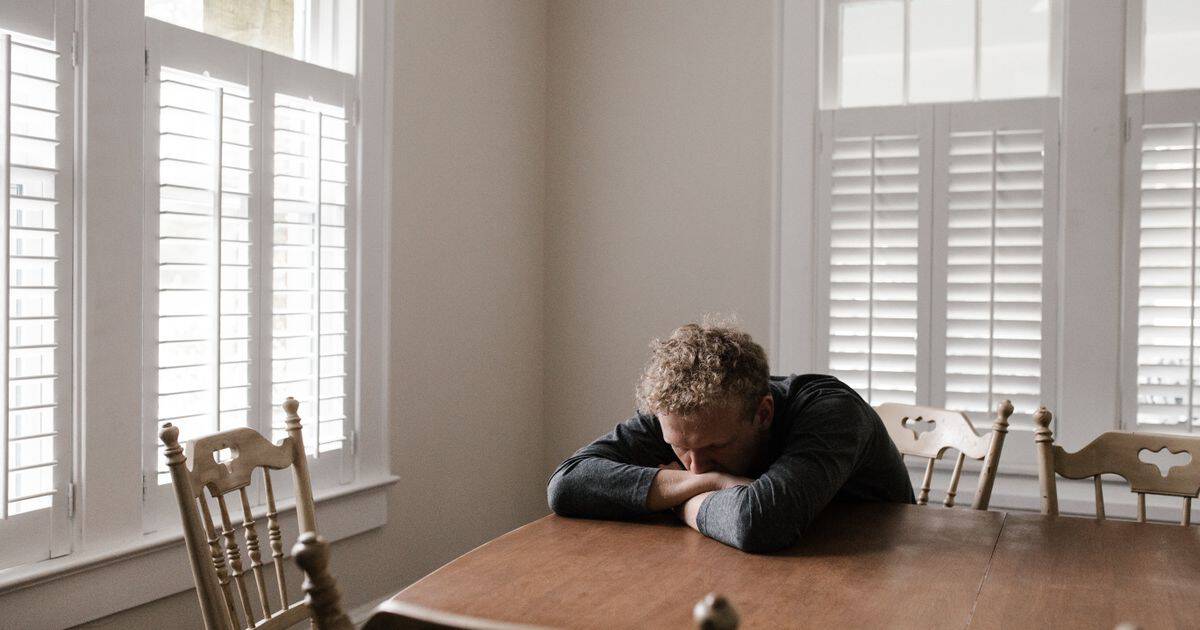
When your partner compares you to others, it is almost never a considered verdict on your worth. It is usually a protest, a clumsy and painful way of saying I feel far from you and I don’t know how to reach you. It becomes a red flag when the comparisons are frequent, contemptuous, and get worse, not softer, when you tell them how much it hurts.
If your partner keeps comparing you to someone else, tell Figlet what they said and how it landed, and it will help you see what they might really be trying to say.
You are standing at the kitchen counter with a glass of water in your hand, replaying it. The comment about your friend’s husband, the one who “actually makes time.” Or the offhand line about how their coworker’s wife runs a whole company and still gets dinner on the table. Or the sigh, followed by, “I don’t know, so-and-so’s relationship just seems easier.”
Your face went hot. Your chest got tight. Something in you wanted to walk out of the room, and something else in you wanted to put together the airtight legal brief on every way you have been the one showing up in this relationship while they check out. You didn’t do either. You went quiet. You went to bed with your back to them. And now you are here, at 11:47 p.m., typing “partner compares me” into a search bar because you cannot carry this on your own for one more night.
I want to slow you down before we go anywhere.
I’ve been a couples therapist for over seventeen years, and this is one of the most misread injuries in adult love. The internet will tell you your partner is a narcissist, or you should set a hard boundary, or you should leave. Almost none of that is what I actually see when a couple like yours walks into my office. What I see is two nervous systems in a very old panic, using each other’s names as weapons because the truer sentence underneath, I feel far from you and I don’t know how to reach you, feels too tender to say out loud.
The Yardstick Is a Protest, Not a Verdict

Which pattern is running your relationship?
Take the free three minute quiz and meet the creature behind the cycle you keep getting stuck in.
This is the reframe most articles will never give you. When your partner compares you to someone else, they are not delivering a considered evaluation of your worth. They are firing off an alarm.
If you are the one who cannot stop measuring yourself against everyone else, I wrote about how to stop comparing yourself to others.
Grounded in attachment theory, your partner’s brain treats you the way a small child’s brain treats a caregiver. You are their primary regulator. When the bond wobbles, when they feel unseen, unmet, or lonely inside the relationship, an ancient alarm fires long before their thinking brain gets a vote. Cortisol dumps. The nervous system braces. And in that state, very few of us have the courage or the language to say the truer thing, which is I miss you. I feel small in this. I’m scared we’re drifting.
Instead, we protest.
The comparison is the protest. Your neighbor’s marriage, your sister’s boyfriend, your friend’s partner who plans thoughtful weekends, all of them are being used as sticks to peck and poke at you until you turn around. Your partner does not actually want you to be the neighbor. They want you to reach for them the way they imagine that other person reaches. The specific human being they named is almost irrelevant. What they are really saying is a clunky, painful version of, I want to feel close to you and I do not know how to get there.
I know that is not how it lands. It lands like an indictment.
What the data shows: in 58,221 completed relationship assessments, the split between feeling “not enough” and “too much” was 52% to 48%. A near-even split, and the wound underneath is identical.
What Does It Mean When Someone Compares You to Someone Else?
In plain words: when someone you love compares you to someone else, they are telling you about a gap they feel between the two of you. They are not handing you a ranking. The other person is a stand-in for a feeling they want and cannot name.
Underneath every fight a couple has, whether it is about the dishes or the phone or the tone of a text, the body is only ever asking two ancient questions. Are you there for me? Am I enough for you? The partner who reaches for a comparison is usually shouting the first question in a borrowed voice. The partner on the receiving end hears the second question answered with a no.
What does he want you to understand when he makes this comparison?
Strip the name out of the sentence and listen for the longing. “Her husband actually plans things” usually means I want to feel like a priority to you. “My friend’s wife is so easygoing” usually means I feel judged when I come home and I don’t know how to say it. “Other couples don’t fight like this” usually means I am scared of what is happening to us.
The content is a red herring. The specific person he named is almost never the actual issue. When you argue the content, you pull on the facts, he pulls back, and the trap only tightens. You are both lawyers in a courtroom instead of partners in a relationship, and nobody wins in that courtroom. The relationship always loses.
What the Comparison Does to Your Body
While your partner is firing off a protest for closeness, the comparison lands on your side of the relationship like a small explosion. If you are the kind of person who tries hard, who cares what your partner thinks of you, who wants to be a good partner, then being measured against another human being does not read as an invitation. It reads as a public verdict.
You are not enough. You are failing. Someone else could do this better.
Your body knows that reading long before your mind names it. Your shoulders climb. Your jaw locks. Something in your chest gets cold and small. And then, depending on your wiring, one of two things happens.
Either you fire back. You reach for your own mental notebook, the one where you have been quietly tallying every one of their failures, and you produce your counter-comparison. Well, your brother’s wife doesn’t work, so of course she has time to do all that. And if we’re talking about people who show up, let’s talk about how your mother treated you. This is your Representative stepping in, the polished, prosecutorial part of you that would rather win the case than let anyone see the frightened kid inside who just heard, You are not lovable as you are.
Or you go silent. You pull the drawbridge up. You withdraw into your basement of quiet analysis where at least no one can watch you fail in real time. From the outside this looks like coldness or apathy. From the inside it is closer to drowning. Every follow-up comment from your partner adds another inch of water. All you can do is disappear.
Either way, you are now locked in what I call the Waltz of Pain. Your partner’s protest for closeness triggered your shame. Your shame response, whether it looks like counterattack or shutdown, confirms your partner’s original fear that they cannot reach you. Round and round it goes. Neither of you is lying. Neither of you is the villain. But the choreography is killing the bond.
If you want to see the whole architecture of this pattern in one place, I’ve written more about what happens on the withdrawing side in Why Does My Partner Ignore Me.
The Seduction of the Story of Other
This next part is hard to hear, because it is about you, not just about them.
When we feel anxious or unsteady in a relationship, our minds do not sit with the discomfort. They run upstairs to what I call the Strategy Room, the airtight courtroom in our heads where we construct a case. And in that courtroom, comparison becomes our favorite piece of evidence.
I call this the Story of Other.
The Story of Other is the mental notebook you have been keeping, whether you meant to or not, about your partner’s failures. It is the running case for why they are the reason you feel this bad. And once you start comparing them to some idealized standard, your friend’s husband, an ex, a father figure, a coworker, you have handed the case a devastating exhibit. Look. Look at what a real partner does. Look at what I could have. Look at what you are not.
The Story of Other is seductive because it makes you feel righteous. It gives you the moral high ground in a moment that otherwise feels intolerable. And it protects you from a much scarier truth, which is that you are aching for closeness with the actual, imperfect person in the other room, and you do not know how to ask.
I sat with a couple once, I’ll call them Clara and Julian, who spent almost a year in this exact loop. Clara was a venture capitalist who spoke in precise, prosecutorial paragraphs. Julian was a software architect who went quieter and quieter every week. Clara kept comparing him to a man named Mark, a friend’s husband who, in her telling, was emotionally present in every way Julian was not. She had a whole notebook of Julian’s shortcomings, cross-referenced against Mark’s virtues.
The first time I asked Clara to stop talking about Mark and turn the flashlight of attention back onto herself, she resisted for a long time. Then something in her face changed. Her jaw softened. She said, very quietly, “My chest goes freezing cold. I feel completely alone in the dark.”
She was not fighting Julian to win. She was using Mark as a stick to try to wake Julian up because she was terrified of being left alone in the dark with him. Julian’s shoulders dropped when she said it. His whole prosecutorial defense went offline. He said, “I go away because when you compare me to him, I feel like I’ve already lost you, and I don’t know how to come back.”
In that moment they stopped fighting about Mark. They started actually being in the room with each other. That is what I call Empathy Cubed, the state where the two separate suffering bubbles collapse into one shared bubble, and both people finally feel their own pain and their partner’s pain in the same breath.
That is the shift you are looking for. Not a technique. A dropping.
Ready to work on this?
Figlet is AI relationship coaching grounded in attachment science and Figs O’Sullivan’s clinical work, LMFT. First messages free, no signup.
“Codependent My Arse”: Why the Advice to Just Set a Boundary Fails Here
Most of the internet, if you tell it your partner compares you to other people, will hand you one of two scripts.
Script one: set a hard boundary. Tell your partner that comparisons are unacceptable and you will leave the room if they do it again. Script two: work on your self-love in isolation so that comparisons no longer wound you.
Both scripts miss the point.
Boundary-setting as the first move treats a protest for closeness like a policy violation. If your partner is firing off comparisons because their nervous system is starving for contact with you, meeting that protest with a rule and a consequence is like answering a drowning person with a lecture on swimming technique. It may feel powerful in the moment. It will not build the thing you both actually want.
And the self-love-first script quietly buys the lie that human beings are supposed to be sovereign, unbothered nodes floating through space, unaffected by whether the person we sleep next to sees us or not. That is not how biology works. Adults regulate one another. We are wired for connection the way we are wired for oxygen. Needing your partner to reflect you well is not codependence. It is being alive in a body.
Codependent, my arse.
The real work is not to stop needing. The real work is to stop confusing the protest for a report card, and to build a base camp between the two of you where either partner can say the true, tender thing without weaponizing it. This is what I mean by secure functioning, a shared operating agreement that says, we protect this bond, we protect each other’s nervous systems, and we do not use each other as evidence in a case against ourselves.
What to Actually Do When Your Partner Compares You
I will not give you a script. Scripts fail the moment your body catches fire. What I will give you is a sequence, in order, that has worked with hundreds of couples in my office.
First, notice the burn. The instant a comparison lands, before you speak, before you move, notice what happens in your body. Chest tight. Jaw locked. Heat in the face. Cold in the belly. Do not analyze it. Just register it. That five-second pause is the entire difference between reacting from your survival brain and responding from something more grounded. Your rational brain runs behind your survival brain by a real margin. Give it a chance to catch up.
Second, translate the protest. Silently, in your own head, translate what your partner just said. You should be more like Mark becomes I feel far from you and I don’t know how to reach you. You do not have to believe the translation is one hundred percent accurate. You only have to believe it might be closer to the real message than the surface words. This is not spiritual bypass. This is clinical accuracy. The comparison is almost never the actual data.
Third, turn the flashlight around. Instead of building the case against them, or against yourself, get curious about what is happening inside you right now. Not what they did. What is happening in your chest. What is happening in your stomach. What frightened, younger part of you just got activated. This is what I mean by moving from the Story of Other to the Experience of Self. It sounds small. It changes everything.
Fourth, say the true thing. When you can speak, say something closer to the real ache than the counter-comparison. Something like, when you said that, something in me went cold. I felt like I was failing you and I don’t know how to come back from that. This is terrifying. It is also the only door out of the waltz. If you want more on how to open this door when your partner has gone silent on the other side of it, I’ve written about that in how to get your partner to open up emotionally.
When Your Partner Compares You to Other Women or Other Men
The pattern underneath is the same in every pairing, but the wound it lands on often has a different shape. I see it in husbands and wives, boyfriends and girlfriends, and same-sex couples. These are the versions that come up most.
When your husband compares you to other women
If my husband compares me to other women is the sentence running through your head at night, the comparison is probably hitting the oldest wire you have. You are not the chosen one. You are easily replaced. Two units of present friction get converted into four hundred units of biological shame.
On his side, the comparison is very often a protector part in action. When he feels criticized, inadequate, or like he is failing you, he does not know how to say I feel like I can’t get anything right with you and it terrifies me. So he sends a representative, a polished, evidentiary version of himself who reaches for the nearest weapon. That does not make it okay. It does tell you which war to fight.
When the comparison is about your body, a colleague’s figure, a woman at the gym, someone on his screen, the stakes go up again, because body shame lives entirely inside the second question. If he is mocking, comparing, or withholding affection as punishment, that is not a clumsy protest. That is a rupture that needs accountability, not patience.
When your boyfriend compares you to other women
Early in a relationship, when your man compares you to another woman, the bond is still being built, so the comparison can feel like an audition you did not sign up for. Notice whether he can hear you when you tell him it stings. A boyfriend who softens and gets curious is in the dance with you. A boyfriend who mocks you for being hurt is telling you something important about how he will handle your feelings later.
When your wife compares you to other men
Men are raised to tie their worth to being capable. So when your wife compares you to other husbands, her brother, her friend’s partner, the man who “would have just fixed it,” your body does not hear a preference. It hears you are failing as a husband. Your throat closes, your chest goes tight, and the comment lands as a report card with an F on it.
And the more you retreat to avoid failing, the more alone she feels, so she turns the volume up. Her comparison is very often a reach from a woman who is carrying more of the load and feeling unseen inside it. You are allowed to ask her to stop the lecturing and the shaming. Pick a calm moment and name the pattern, not the incident.
When your partner compares you to his ex
Comparison to an ex has its own sting, because it touches the question Am I the one? It is usually a desperate reach for higher ground when he feels himself sinking, not a report on how much he still loves her. I wrote a whole piece on that version: what is actually happening when your husband compares you to his ex.
When your partner says you are just like her friend (or his mother)
Sometimes the comparison is not “be more like them” but “you are exactly like them.” Your partner says you sound like her friend who always cancels, or you are just like his mother. This one is about fear more than longing. Your partner is scared the relationship is heading somewhere it has gone before, and they are trying to name the danger by pointing at the person who once hurt them. It still lands as a label. Labels like that are not information. They are weapons, and weapons invite defense.
“Every Time We Argue, He Compares”: Comparison as a Fight Move
If the comparisons only come out mid-fight, that tells you a lot. In a fight, both nervous systems are flooded. The thinking brain goes offline, cortisol dumps, and every piece of content in the conversation becomes a weapon or a wound. A comparison, or a string of hypotheticals (“if you were married to someone like her, you would understand”), is one of the fastest weapons available, because it ends the argument about the dishes and starts an argument about your worth.
Treat it as a sign the fight has gone past the point where anything useful can happen. Do not answer with a counter-comparison. Call the pause, give a time you will come back, and come back to talk about what each of you was so scared of.
What to Say Back When Your Partner Compares You
I said earlier that scripts fail when your body is on fire, and I meant it. But once your body has settled, having a few sentences ready helps. Think of these as doors, not lines to perform.
- In the moment: “That one landed hard. I need a minute before I say anything I’ll regret.”
- Translating the protest: “When you compare me to her, I think what you might be saying is that you feel far from me. Is that close?”
- Naming your side: “When I hear that, I feel like I’m competing for your attention, and that scares me.”
- Asking for the longing directly: “I am willing to hear anything I can change. When it comes as a comparison, I shut down and you lose me. Can you tell me what you’re missing instead?”
- If it comes with contempt: “I am not willing to be spoken to like that, and I will come back when we can talk.” Then actually come back.
Notice what is missing from every one of those: evidence. No list of their failures, no counter-exhibit. Lead with vulnerability instead of criticism. The content can be the same. The delivery determines whether their nervous system opens or closes. If the comparison is part of a wider habit of criticism, I go deeper on that in how to deal with a partner who criticizes you.
How to Stop a Comparison From Landing So Hard
You cannot control what your partner says. You can change how deep it goes. The reason a comparison can flatten you for a whole weekend is that it does not land on the present moment. It lands on a sentence your body wrote long before you met this person: me being me is not going to be enough.
I know this from the inside, and nobody even has to compare me to anyone for it to fire. When my own shame hits, when I feel like I could never provide the life I want for my wife Teale and our kids, when I compare myself to the tech world around me and feel defeated, I disappear inside myself. I am sitting right beside her, but emotionally I am gone, deep in some internal land of pain and defeat. Her body knows abandonment before her mind does. So she reaches the only way she can. Where are you? Why are you shutting down? Her protest lands on me like criticism, like I am failing again. The more she reaches, the more I collapse. The more I collapse, the more abandoned she feels.
That is what a yardstick does once it gets inside you. It does not matter whether your partner is holding it or you are. The “am I enough” wire fires, and the dance starts. So the work is two things at once:
- Keep most of your attention in your own body. During a hard conversation, keep about 75% of your awareness on your feet, your breath and your jaw, and only 25% on their words. Your body is your truth detector. If you abandon it to chase every word, the comparison goes straight to the old wound.
- Find where the sentence came from. Ask yourself when you first learned you had to be better than someone else to be kept. Who were you compared to growing up? The pain of the comment is proportional to that age, not to the comment.
- Say the fear out loud. “I’m scared I’m not enough for you right now” is a frightening sentence. It is also the one that lets your partner meet the real you instead of your Representative.
When the Comparison Is Actually a Red Flag
I want to be honest with you about one more thing. Ninety percent of the comparisons I see in my office are protests for closeness in the language of blame. But not all of them are.
There is a version of this pattern where the comparison is not a clumsy cry for contact. It is a strategy of control. It is designed, consciously or not, to keep you off-balance, small, and always trying to prove your worth. If your partner reaches for comparisons frequently, with contempt, with the clear intent to shame you, and the pattern does not soften even when you name it with vulnerability, that is a different animal. That is not a waltz. That is coercion dressed as feedback.
The clinical difference matters. In a protest pattern, when one person softens, the other person softens too. In a control pattern, softening on your side is met with more heat, not less. If you have tried, again and again, to say the tender thing underneath and been met with fresh contempt, please read relationship red flags: which ones are real and which are your anxiety talking alongside this piece. Telling the two apart is one of the most important pieces of work you will ever do.
Is comparing you a form of emotional abuse?
It can be, and I do not want to soften that. Abusive conflict sounds like: “You always do this. You’re just like your mother. No one else would put up with you.” When I am trying to tell a painful loop from abuse, these are the questions I sit with:
- Is the harm mutual or one-directional? In a painful loop, both people contribute. In abuse, the comparisons flow mostly one way.
- Does remorse turn into changed behavior? In a bad dynamic, both partners feel terrible afterward and want it to stop. In abuse, the apology resets the cycle instead of changing it.
- What happens when you set a boundary? In a relationship that can heal, a clear boundary causes discomfort but is respected. In an abusive one, it is treated as an act of aggression.
- Which way are you shrinking? A painful loop flattens both partners. Abuse shrinks one partner while the other expands.
If the comparisons are aimed at the exact places you once trusted them with, your body, your family, your old shame, read when your partner uses your insecurities against you.
What to Do Tonight When the Comparison Is Still Ringing in Your Ears
You do not need to solve your relationship tonight. You need to get through tonight without making the waltz worse. Small and doable:
- Put your feet on the floor. One breath out, slower than the breath in. Name the place in your body where the comment landed. Chest, throat, belly. Stay there for sixty seconds before you decide anything.
- Write the comparison down, then translate it. One line for what they said. One line underneath for what they might be missing. “You should be more like Mark” becomes “I feel far from you.”
- Do not open the courtroom. No counter-comparison, no list of their failures, no texting a friend in front of them. The content is a red herring tonight.
- Say one true sentence, if it is safe. “When you compared me to her, something in me went cold. I think underneath it you might be lonely. Is that close?” Then stop talking and let them answer.
- If you are the one who compared, go back and say the longing without the yardstick: “I said that because I miss you, and that came out as a comparison. I’m sorry.”
- If it came with contempt, step away with a return time. “I’m not willing to be spoken to like that. I’ll come back to this tomorrow.” Then actually come back.
The Shift You Actually Need
You did not come here for a listicle. You came here because something between you and the person you love has been eroding, and you can feel it, and you want it back.
The shift is this. Stop treating the comparison as a verdict on you. Start treating it as data about the bond. When it happens, your first job is not to defend yourself and not to disappear. Your first job is to notice what just happened in your body, to translate the protest into something closer to the truth, and to say the tender thing that both of you have been circling for months.
That does not make the comparison acceptable. It makes it usable. It turns a weapon into a map.
Common Questions
Why does my partner keep comparing me to their ex?
Comparisons to an ex usually indicate an unmetabolized attachment injury, not a wish to be back with that person. Your partner is often using the ex to name a feeling they cannot name directly, some quality of contact, safety, or seeing they miss. It still lands as a wound in you. The work is naming what they are actually longing for, and whether the two of you can build it together now.
Is it emotionally abusive when your partner compares you to other people?
Occasional comparisons made in frustration, followed by repair when named, are painful but not abusive. They are usually clumsy protests for closeness. The pattern becomes abusive when comparisons are frequent, contemptuous, designed to keep you small, and continue or intensify when you vulnerably name the hurt. In a healthy dynamic, softening invites softening. In an abusive one, your vulnerability is used against you.
How do I respond when my partner compares me to someone else in the moment?
Do not rebut the specific comparison. That keeps you locked in the courtroom. Instead, pause long enough for your survival brain to settle, then name what just happened in your body and what you think the underlying longing is. Something like, that landed hard, and I think what you’re really saying is you feel far from me. This shifts the conversation from evidence to bond.
Why does being compared to other people hurt so much?
Because your nervous system reads comparison as a verdict on your lovability, not as feedback about behavior. If you grew up in a family where love felt conditional on performance, comparison lands directly on that old wound. The pain is not proportional to the comment. It is proportional to the age at which you first learned you had to be better than someone else to be kept.
Can a relationship recover from constant comparisons?
Yes, if both partners can stop using the comparisons as ammunition and start using them as information. The person doing the comparing has to learn to say the underlying longing directly. The person on the receiving end has to learn to translate the protest instead of prosecuting it. Recovery is not the absence of these moments. It is the ability to move through them toward each other instead of away.
Is it normal for a partner to compare you to other people?
An occasional comparison in a frustrated moment is common, and it is painful. It is not a healthy habit to keep. When comparison becomes the main way your partner talks about what they need, both of you lose, because you end up defending your worth instead of hearing the need.
Why does my husband compare me to other women?
Very often because he feels inadequate or criticized and does not know how to say so, so he reaches for evidence that the problem is you and not him. Sometimes it is a longing he cannot name directly. If the comparisons are about your body, come with contempt, or continue after you have told him how much they hurt, treat that as a rupture that needs accountability, not more patience.
Should I compare my partner back so they know how it feels?
I understand the urge, and I would not. A counter-comparison confirms your partner’s original fear that they cannot reach you, and the waltz speeds up. Tell them how it felt in your body instead. That gives them something they can actually respond to.
This is not a you problem or a them problem
“To step out of this cycle, couples must break the Versus Illusion and recognize the system itself as their common enemy. This is achieved when both partners accept the systemic truth: we are both hurting, we are both reacting, and it is only happening because we are so important to each other.”
“Neither partner is the villain. They are two younger selves inside adult bodies trying to stay safe in the only ways they once knew.”
Figs O’Sullivan, LMFT
What to Do Next
Do not just close the tab on this.
Bring what surfaced here into a real conversation. Figlet coaches you through it, grounded in Figs O’Sullivan’s work, LMFT. Free to start.
The next time a comparison lands and your chest goes cold, you have a choice. Build the case, or drop the flashlight into your own body and say the true thing. One of those closes the door. The other one opens it. Which one are you willing to try tonight?
Keep Reading



Every couple has a pattern they cannot see. Find yours.
In love, each of you is a Relentless or a Reluctant, which makes you one of three kinds of couple: Relentless and Reluctant, two Relentless, or two Reluctant. The free quiz reveals your creatures and the cycle they fall into together. About three minutes.
No signup needed to start.
The Relentless

The Reluctant