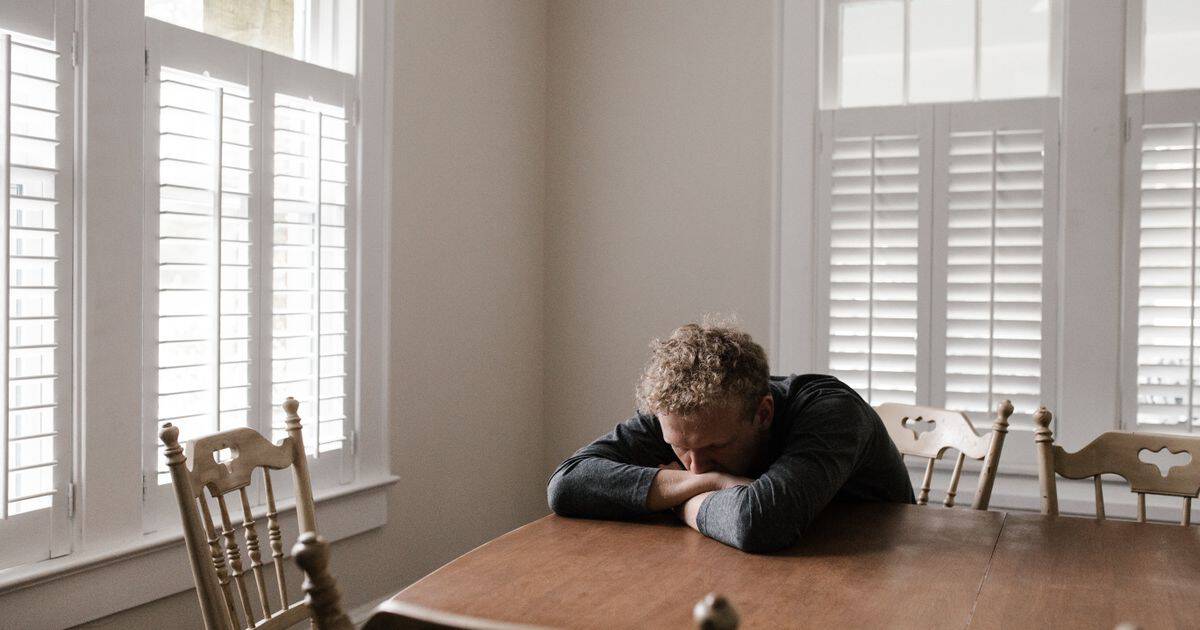
You are lying next to them in the dark. Something small happened at dinner, or nothing happened at all, and there is a request sitting in your chest like a stone. You want more time. You want them to reach for you first. You want to be held without having to explain why. And the words will not come.
Recognize yourself in this?
Talk to Figlet about the ask you cannot make. AI relationship coaching grounded in Figs O’Sullivan’s work, LMFT. Free to start, no credit card.
You rehearse it in your head. You edit it. You soften it. You imagine their face when they hear it, and you feel the whole thing collapse before it leaves your mouth. So you stay quiet. You tell yourself it is not that important. You tell yourself you are being needy. You tell yourself you will bring it up tomorrow, and tomorrow you will not, and the stone stays in your chest and grows.
If you have typed “afraid ask partner” into a search bar, you already know the loneliness I am describing. It is a specific kind. It is the loneliness of being right next to the person you love and not being able to reach across three inches of mattress and say the thing.
I want to tell you something before we go any further. Seventeen years in the therapy room and thousands of couples across from me have taught me this: your fear of asking is not weakness, not neediness, not a personality defect you need to willpower your way out of. It is a nervous system that learned, somewhere along the way, that asking was dangerous. And the way out is not a better script. It is a different understanding of what is happening inside your body when the words dry up.
What the Standard Advice Gets Wrong About This Exact Problem

Which pattern is running your relationship?
Take the free three minute quiz and meet the creature behind the cycle you keep getting stuck in.
The mainstream playbook on this topic is almost useless, and I say that with the confidence seventeen years of clinical practice buys. You have already read it. Use “I feel” statements. Pick a good time. Be clear and direct. State your need without blame. Communicate, communicate, communicate.
None of that addresses what is actually holding you back.
You are not afraid to ask because you lack the right script. You have plenty of scripts. You have been drafting them at 2 a.m. for months. You are afraid to ask because your body, well below the level of language, has a prediction about what will happen when the ask lands. And that prediction is the whole problem.
The prediction goes something like this. If I ask, they will sigh. They will get quiet. They will explain why my need is unreasonable. They will do the thing halfway and resent me for making them do it. They will look at me like I am too much. They will withdraw. They will feel criticized. They will leave, not tonight, but slowly, over months, in a way I will not be able to name.
You are not choosing that prediction. Your nervous system is running it in the background at the speed of your heartbeat. And every time you approach the ask, that prediction fires and your throat closes and the words dissolve.
This is where attachment theory gets clinical. Adult love partners regulate each other the way a caregiver regulates an infant. When you go to ask your partner for something you need, you are not making a request. You are testing whether the bond will hold weight. That is a much bigger event, biologically, than any communication book will tell you.
From Empathi’s research: in 58,221 completed relationship assessments, 74.1% of the 6,159 couples where both partners completed were in the pursue-withdraw cycle. Both partners typically describe the other as the one withdrawing.
The Two Ancient Questions Underneath Every Unasked Ask
The bonded body only ever runs two questions, and never in words. Underneath every argument, every silence, every unspoken need, your nervous system is running the same pair.
Are you there for me? Am I enough for you?
When you cannot ask, both questions are firing at once, and the answers you are afraid of are pre-loaded. You are afraid that if you ask, you will find out they are not there for you. And you are afraid that the asking itself will prove you are not enough, that a person who was enough would not have to ask, that a person who was truly loved would already be receiving what you are asking for.
Read that again. Notice how much weight is sitting on a two-sentence request about weekends, or affection, or how they speak to you when they are stressed.
This is why the ask feels impossible. It is not a request. It is a referendum on whether you are lovable and whether they are safe. Of course your throat closes. Your body is not stupid. It knows exactly how high the stakes are.
Where the Fear of Asking Actually Comes From
Somewhere, and this is the part that matters, you learned that expressing a need cost you something.
Maybe it cost you a parent’s warmth. Maybe you asked for comfort and got a lecture. Maybe you asked for attention and got a screen. Maybe you asked to be held and were told you were making a big deal out of nothing. Maybe your father shut down when you got emotional. Maybe your mother got so overwhelmed by your need that you learned to shrink yours to protect hers. Maybe there was no obvious injury at all, just a quiet, consistent message across a thousand small moments that your needs were an inconvenience.
Your nervous system encoded that. Not as a memory you can recite, but as a rule your body follows without your permission. Asking is dangerous. Wanting is dangerous. Needing is dangerous. Better to preempt the disappointment by never fully naming what you need.
I have written more about how the body carries these old rules in a piece on attachment styles in relationships. What I want you to see here is that the fear you are feeling right now, in this relationship, was rehearsed long before this relationship existed. Your partner is standing in for every person who did not meet you when you reached.
That is not their fault. It is also not yours. It is a nervous system running on old data.
The Representative and the Ask You Cannot Make
When our organic, vulnerable self believes it is fundamentally not enough to secure love, we develop a survival strategy. We build a polished mask I sometimes call the Representative and we send that Representative into the relationship in our place. The Representative is easygoing. The Representative does not need much. The Representative laughs when it is hurt and says “no worries” when it is not fine. The Representative is very good at making sure nobody has to work too hard to love us.
The Representative is why you cannot ask.
Because the ask would blow the Representative’s cover. The ask says: actually, I am not fine. Actually, I do want something. Actually, there is a real, wanting, needing human under this pleasant surface, and if you love me you have to love that person, not the smoothed-over version of me that has been showing up to dinner for two years.
That is a terrifying reveal. The Representative has been keeping you safe by keeping you unknown. Asking is the beginning of being known. And being known is the beginning of possibly being rejected for who you actually are, which is a much heavier grief than being rejected for a mask.
So the throat closes. So the words dissolve. So you stay behind the Representative, and the stone in your chest grows, and you tell yourself you will bring it up tomorrow.
The Waltz You Are Both Dancing
Here is the part almost nobody names. Your partner is in this too, in a way you probably cannot see from inside the fear.
If your partner is the kind who goes quiet, gets busy, retreats into work or the phone when things get emotional, they have their own body running its own prediction. Their prediction says: I am going to fail her. She is going to ask me for something and I am not going to be able to give it and I am going to be, once again, a disappointment. Their withdrawal is not indifference. It is preemptive shame management. It is a wobbly attempt to preserve some dignity by not standing directly in the fire of feeling like a failure.
I sometimes call this pair the Relentless Lover and the Reluctant Lover. One reaches, the other retreats, and both are terrified. The Relentless Lover reaches because reaching is the protest against disconnection. The Reluctant Lover retreats because retreat is the protest against feeling not enough.
Now hold both of those together. You are afraid to ask because you are afraid the ask will not be met. Your partner is afraid to be asked because they are afraid they will fail the ask. You are both organized around the same wound from opposite sides. And the more you protect yourself by not asking, the more they interpret your silence as either contentment (which starves the relationship) or resentment (which triggers their shame). And the more they retreat when you finally do ask, the more your body’s old prediction gets confirmed, and the more the next ask feels impossible.
This is what I mean when I say the enemy is the loop, not the partner. There is a version of this article that would tell you your partner needs to be more receptive. There is another version that would tell you that you need to be braver. Both would miss it. What is happening is a system, and the system has a shape, and you can only change the shape by seeing it whole.
I have laid out more of the underlying architecture of this in how to get your partner to open up emotionally and in the deeper piece on secure functioning.
Ready to work on this?
Figlet is AI relationship coaching grounded in attachment science and Figs O’Sullivan’s clinical work, LMFT. First messages free, no signup.
Why “Just Self-Soothe” Is Terrible Advice Here
Somewhere along the way, therapy culture decided that the answer to unmet needs was to stop having them. Learn to soothe yourself. Meet your own needs. Do not put your happiness in another person’s hands. Be sovereign, be independent, be a whole person on your own.
Self-soothing my arse.
We have been sold a story that independence is the goal of healing, that a truly healthy adult is a self-sufficient island who occasionally partners with another self-sufficient island for convenience and pleasure. That is not how human biology works. You are wired for connection the way you are wired for oxygen. Needing your partner to see you, needing to be reached for, needing to be able to ask and be met, is not codependency. It is what mammals do.
Telling a person who is afraid to ask that they should stop needing so much is like telling someone who cannot breathe that they should stop needing so much oxygen. It compounds the shame. It tells them the very thing their body is doing correctly, wanting closeness, is the problem.
The real path is not to want less. It is to build a relationship where wanting is safe. Where asking is met with reaching. Where the two of you become each other’s regulating base, not because you are weak, but because that is what secure adults actually do.
What Actually Shifts It
You do not fix “afraid to ask” by getting better at asking. You fix it by changing what happens inside your body before the ask, and by slowly, over time, gathering evidence that the ask can be met.
The first move is to name it out loud without pretending it is anything other than what it is. Not the ask itself. The fear of the ask. That is the sentence. “I am scared to tell you what I need.” Or, “I have been sitting on something for weeks and I cannot get it out of my throat.” Or, “There is a version of me that wants to ask you for something and there is another version that is convinced it will go badly, and I do not know which one to listen to.”
Notice what that sentence does. It does not ask for anything yet. It just puts the fear on the table. It makes your partner a witness instead of a judge. It shifts the conversation from “can you meet this need” to “will you help me with the terror of naming it,” which is a much smaller, more possible ask.
Most partners, even the reluctant ones, can meet that. Most partners soften when they hear “I am scared.” Most partners were braced for a complaint and instead receive a piece of your interior, which is a completely different transaction.
The second move is to lower the stakes of any single ask. Your body is treating each ask like a referendum. It is not. It is one data point. If it goes badly, you have information. If it goes well, you have information. Neither outcome tells you whether you are lovable. Both outcomes tell you something about the current shape of the loop between you.
The third move, and this is the one most people skip, is to stay in the room after you ask. The old pattern is: ask, get a mixed response, spiral, retract, apologize, decide never to ask again. The new pattern is: ask, notice the response, notice your body’s reaction to the response, and stay. Just stay. Do not fix it. Do not smooth it over. Do not tell them you were just kidding. Sit with your partner in the wobble of a fresh, unresolved ask. That wobble is where the loop gets rewritten.
When the Fear Is Telling You Something Real
I want to be honest with you. Sometimes the fear of asking is not old data. Sometimes it is current data. Sometimes you are afraid to ask because when you have asked in this relationship, the response has been contempt, punishment, or a slow accumulation of resentments used against you later.
If that is your situation, the framework in this article still applies, but the diagnosis is different. You may not be dealing with a stuck loop between two decent people. You may be dealing with a partner whose response to your needs is genuinely unsafe. That is a different piece of work, and I have written about how to tell the difference in am I in a toxic relationship.
For most people reading this, though, the fear is old, the partner is decent, and the loop is fixable. It is just going to take practice and a different theory of what asking actually is.
This is not a you problem or a them problem
“When two insecurely attached people interact, their protector strategies collide to form a negative feedback loop I call the Waltz of Pain. Your protector meets your partner’s protector. Their protector meets yours. Two childhood strategies collide, and the relationship becomes a reenactment of wounds neither partner caused.”
“Neither partner is the villain. They are two younger selves inside adult bodies trying to stay safe in the only ways they once knew.”
Figs O’Sullivan, LMFT
Common Questions
Why am I so scared to ask my partner for something small?
Because your nervous system is not measuring the size of the ask. It is measuring the size of the possible rejection. A small ask that gets a sigh or an eye roll registers biologically as evidence that your needs are unwelcome, which is a much bigger wound than the small thing you asked for. This is why “little” requests can carry paralyzing weight. The stakes your body perceives are always bigger than the content.
Is it normal to be afraid to tell your partner what you want in bed?
Yes, and it is one of the most common versions of this fear I see clinically. Sexual asks carry a triple charge: the ask itself, the vulnerability of wanting, and the fear that naming a desire will make your partner feel inadequate. Most people manage this by staying quiet and quietly resenting. The path forward is to start by naming the fear of the ask before you name the ask, which shifts the whole conversation.
Does being afraid to ask mean I have anxious attachment?
Not necessarily. Fear of asking shows up across attachment patterns. Anxious folks often over-ask in indirect ways while suppressing the direct request. Avoidant folks tend to skip the ask entirely and manage the unmet need alone. Fearful patterns cycle between both. What matters more than the label is understanding what specifically happens in your body when you approach the ask, and what old prediction is running underneath.
How do I ask for what I need without sounding needy or demanding?
Stop trying to disappear the need in how you deliver it. When you soften an ask into invisibility, your partner gets a confusing signal and cannot meet you. Try leading with the vulnerability underneath: “I have been afraid to say this, and I want to say it anyway.” That is not needy. That is intimacy. Needy is when the ask is disguised as a complaint. Direct is when the ask is named with the fear intact.
What if I ask and my partner still does not respond?
One ask is one data point, not a verdict. Notice what happened, stay in the room, and try again later with more context: “When I asked you for X the other night and you got quiet, what happened for you?” That question turns a single failed ask into an actual conversation about the loop between you. The goal is not a perfect first ask. The goal is a relationship where asking becomes possible.
Do not just close the tab on this.
Bring what surfaced here into a real conversation. Figlet coaches you through it, grounded in Figs O’Sullivan’s work, LMFT. Free to start.
The stone in your chest is not going to move on its own. Say the fear first. The ask can come after.
Keep Reading



Every couple has a pattern they cannot see. Find yours.
In love, each of you is a Relentless or a Reluctant, which makes you one of three kinds of couple: Relentless and Reluctant, two Relentless, or two Reluctant. The free quiz reveals your creatures and the cycle they fall into together. About three minutes.
No signup needed to start.
The Relentless

The Reluctant