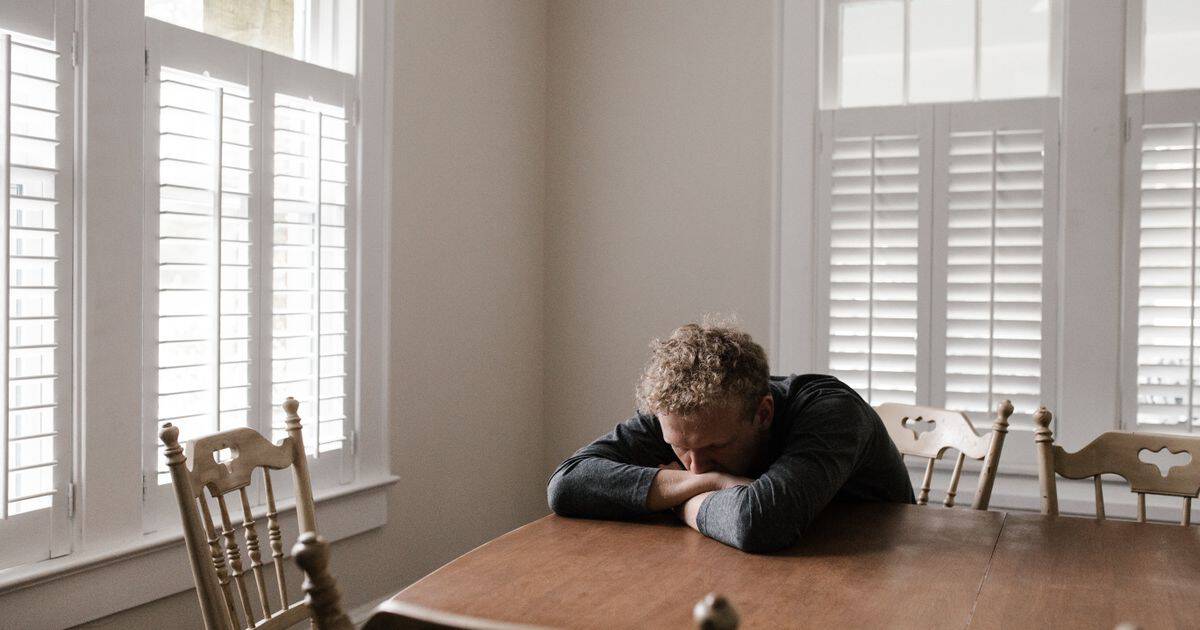
It is 11:47 at night. The kids are finally down. You are sitting on the kitchen floor because the couch felt too far away, and the dishwasher is humming through its second cycle of the day. There is a plastic cup by your foot with a crust of milk on the rim. Your phone is in your hand. You have typed some version of “exhausted single parent needs help” into the search bar, and you cannot quite remember whether you were looking for a therapist, a nanny, a nap, or a stranger who would tell you, without flinching, that you are not the worst mother in the world.
I want to slow you down before you scroll another listicle.
I have been a licensed marriage and family therapist for seventeen years. I have sat across from thousands of parents in some version of this exact moment. And I can tell you, with the confidence mileage buys, that what you are experiencing right now is not a character defect, a discipline problem, or evidence that you are pathologically broken. Your body is running an ancient survival protocol inside a modern setup that was never designed for a single human nervous system to metabolize alone.
The advice you have been fed (self-care, boundaries, hyper-independent regulation, a bath and a candle) is pointed at the wrong problem. It treats exhaustion like a battery you can plug in for twenty minutes and restore. Your exhaustion is not a battery issue. It is a bond issue. And until we name it correctly, no amount of scented anything is going to touch it.
What Your Exhaustion Actually Is

Which pattern is running your relationship?
Take the free three minute quiz and meet the creature behind the cycle you keep getting stuck in.
Here is the reframe that changes everything, and I want it to land before we go any further.
You are not tired because you have too much to do. You are tired because you are doing it without a co-regulator. Those are not the same thing.
Grounded in attachment theory, the human nervous system was never designed to hold vigilance alone. We are mammalian creatures. We settle in the context of a bond. When there is no other adult body in the room whose presence tells your organism “you can put the sword down for a moment, I will scan the horizon,” your baseline threat level stays quietly high all day, every day, for years.
Your body is not exhausted from the laundry. It is exhausted from being the only sentry.
Watch what happens in your body when you finally sit down at night. Your chest tightens. Your stomach knots. A quiet, fuming madness starts humming underneath the fatigue. That is not laziness catching up with you. That is a nervous system that has been holding a code-red posture since 6 a.m. finally being allowed to register how expensive the day was.
On the ancient savanna, if you were the only adult with a child, you did not sleep. You could not. To sleep was to die. Your amygdala, which does not know it lives in a house with locks now, is still running that program. This is why you cannot rest even when the kids are asleep. Your body does not trust that there is anyone else on watch.
Recognize yourself on that kitchen floor?
Talk to Figlet about the exhaustion right now. AI relationship coaching grounded in Figs O’Sullivan’s work, LMFT. Free to start, no credit card.
What the data shows: in 58,221 completed relationship assessments, 74.1% of the 6,159 couples where both partners completed were in the pursue-withdraw cycle. Both partners typically describe the other as the one withdrawing.
The Two Questions Running Underneath the Exhaustion
In my office, I tell every parent that the bonded body only ever asks two questions, and never in words.
Are you there for me? Am I enough for you?
You probably thought those were partner questions. They are also parent questions. And when you are the only adult in the house, both questions are firing constantly, in two directions at once.
Your children’s small bodies are asking those questions of you all day. Every whimper, every tug on your sleeve, every request for water at bedtime is one of those two questions in disguise. You answer them, hundreds of times a day, with the patience of a saint you do not actually feel like.
But here is what almost nobody names. Your body is asking those same two questions too. And there is no one there to answer.
That is the loneliness underneath the exhaustion. Not the loneliness of a partner missing at dinner. The much older loneliness of a physiology that is doing all the answering and none of the receiving.
The Representative Is Killing You
There is a version of you that gets sent out into the world of school pickup, work calls, and pediatrician appointments. She has the tone right, the timing right, the caveats loaded up front. She smiles at the teacher. She apologizes for being three minutes late. She jokes with the neighbor about how “we’re hanging in there.”
I call this version The Representative.
The Representative is the polished mask you deploy because somewhere along the way you learned that the organic version of you, the one who is fuming on the kitchen floor at midnight, is not quite acceptable. Too much. Too needy. Too messy. Too something.
The Representative is exhausting for exactly one reason. She is a full-time performance of enoughness. She cannot rest, because the moment she rests, someone might see what she has been hiding.
And here is the cruelty of the loop for single parents specifically. The Representative gets rewarded. People tell you how strong you are. How they don’t know how you do it. How your kids are so lucky to have you. Every compliment is a nail in the coffin of the real you, because it reinforces the belief that the performance is what is loveable, not the tired human underneath.
When friends offer help, The Representative declines. Not because you don’t need help, but because needing help would mean the mask slipped. And if the mask slips, then what?
This is where recovery starts. Not with a schedule. Not with a chore chart. With the slow, deliberate act of letting the mask fall in front of one safe person, in one small moment, and finding out that you do not, in fact, disappear.
Why “Self-Care” Has Failed You
Every article you have read has told you to practice self-care. Take a bath. Journal. Move your body. Meditate.
I am not against any of those things. I do Pilates. I paddle on the ocean. Those practices matter.
But self-care as it is sold to you, as a solo activity performed in the ten minutes between the dishwasher and bedtime, is a bandage on a bullet wound. It treats settling your body as something you can generate alone, from scratch, using willpower and lavender oil.
You cannot. Nobody can. That is not how mammalian bodies work.
Your body settles in the context of another regulated body. Full stop. When you are the only adult in the house, the physiological math simply does not balance. You are outputting calm to two or three small people and receiving none in return. A bath does not close that gap. It just briefly softens the edges of it.
This is why you can do all the self-care and still feel like you are drowning by Wednesday. You are not doing it wrong. The prescription was wrong.
What you actually need is what I have been writing about for years in the context of couples: a secure base. A place where your body can put the sword down and be received rather than performing. For coupled parents, that base is (ideally) the partner. For a single parent, that base has to be constructed on purpose, out of a small handful of relationships that are chosen for their capacity to actually see you, not applaud you.
I have written more about the emotional architecture of being seen versus being performed for in Overcoming Fear of Judgment from Your Romantic Partner. The clinical mechanics apply just as much to friendship and to family as they do to romance.
The Sibling Society Trap
Here is a pattern I see constantly in single parent households, and almost nobody names it. When there is no co-parenting adult in the home, the temptation to pull the oldest child up into a peer position is enormous. Not because you are a bad parent. Because your body is starving for a co-regulator, and the biggest, most verbal person in the house is your ten-year-old.
I call this the Sibling Society at the family level. Instead of one adult standing as a secure floor above the children, everyone starts operating as peer siblings competing for validation and comfort. The oldest becomes your confidant. The middle one becomes the manager. The youngest becomes the emotional weather report.
This is what we clinically call parentification. And it is not something bad parents do on purpose. It is what a lonely, unsupported physiology reaches for by default.
The work is not to shame yourself for it. The work is to notice when it is happening and to redirect the reach. Your children cannot be your co-regulators. Not because they don’t love you, but because their small bodies are not built to metabolize adult distress. When they carry it, they collapse, and the pattern gets written into their bodies for the next generation.
You have to find your co-regulation somewhere else. A friend on the phone at 9 p.m. A sister who will let you cry without fixing it. A therapist. A neighbor with whom you can be genuinely useless together for twenty minutes. This is not optional. This is the load-bearing wall of a single parent home.
If you want to name your own pattern of reaching first, you can take the free Figs Quiz. It will show you what your survival response defaults to when it is drowning, and that piece of information changes everything about how you build support.
The Shame Loop That Keeps You Small
There is a specific shame that lives inside single parenting, and I want to name it, because it does not survive being named out loud.
The shame says: if I were a better mother (or father), I would not be this tired. Other parents seem to manage. My kids deserve better than a parent who is running on fumes. If I ask for help, I am admitting I cannot do this. If I cannot do this, then the story I have been telling everyone, that we are fine, that we are thriving, that I chose this and I am handling it, collapses. And if that story collapses, what am I?
This is what shame researchers call the Compass of Shame, and it points in four directions: withdraw, avoid, attack self, attack other. You will feel yourself running all four in a single evening. You withdraw from friends who might see through the mask. You avoid the pediatrician’s questions about how you are doing. You attack yourself for snapping at the four-year-old. And sometimes, in the worst moments, you attack the co-parent who is not there, or the family that isn’t showing up, or the ex who never asks.
None of this is a moral failing. All of it is a body running out of options.
The way out is not to fight the shame. It is to bring it into contact with another human being who will not flinch. Shame dies in daylight. It lives in isolation. And a single parent’s life is, structurally, isolated in ways that a coupled parent’s life is not. So the antidote has to be built on purpose.
Ready to work on this?
Figlet is AI relationship coaching grounded in attachment science and Figs O’Sullivan’s clinical work, LMFT. First messages free, no signup.
Building A Sovereign Us When There Is No Us
In my work I talk a lot about the Sovereign Us, the state a couple reaches when two people function as a secure unit that protects the space between them. Single parents read that and think, well, that door is closed to me. It is not.
The version available to a single parent is not romantic. It is a small, deliberate constellation of chosen people who function as your regulating team. Not a village in the sentimental sense. A team in the operational sense. Two or three humans who know what your Tuesday actually looks like, who will pick up the phone at 11 p.m., and who will not flinch when you say the true thing.
You have to name them. You have to tell them. You have to ask.
This is where most single parents stall out. The asking. Because the asking requires taking off The Representative, and The Representative has been running the show for so long that the organic self underneath has forgotten how to speak in the first person.
Start smaller than you think. One text. One friend. One sentence that is not a joke about how tired you are, but an actual statement of what you need. “I am underwater this week. Can you sit with me for an hour on Saturday and not try to fix anything?”
Your body does not need many people. It needs a few, deeply. Bowlby’s work on the secure base was never about a village. It was about a reliable other. One is enough, if the one is real.
I have written about this constellation of chosen support and the mechanics of asking in How to Get Your Partner to Open Up Emotionally. Read it laterally. The bond mechanics are the same whether the person you are reaching for is a spouse, a sister, or a friend.
What A Usable Shift Looks Like Tonight
I do not want to send you back to the kitchen floor with a framework and no ground. So here is the shift I want you to try, tonight or tomorrow.
When the alarm inside you fires (the tightness in the chest, the fuming quiet, the sudden desire to disappear or to scroll for two hours), do not try to solve it. Notice it. Name it out loud, to yourself if no one is there. “My body is asking a question. It is asking whether anyone is there for me right now.”
Then answer it. Not with a lie. With whatever is actually true. “Right now, in this exact moment, there is nobody sitting next to me. That is real. And I am going to call Sarah tomorrow at 10 a.m. because I know she picks up.”
This is not positive thinking. This is not affirmation. This is the beginning of a practice I call turning the flashlight around, and it is the single most useful thing I know for a body in chronic threat. You are not fixing the exhaustion. You are letting the exhaustion be seen, first by you, then by one other real human, so that it stops being a secret that grows in the dark.
The exhaustion will not disappear in a week. But it will stop being lethal. It will become something you are carrying with company, instead of something you are carrying alone.
Common Questions
Why am I so exhausted as a single parent even when the kids behave?
Because the exhaustion is not caused by the kids’ behavior. It is caused by the absence of a co-regulating adult in the home. Your body holds a baseline vigilance whether the day was hard or easy. Good behavior lowers the workload but does not turn off the sentry. Only another regulated adult presence does that, which is why quiet evenings can still feel unbearable.
How do single parents avoid burnout without a partner?
Not with self-care alone. With a deliberately constructed team of two or three humans who function as your regulating base. Burnout in single parents is a bond problem, not a scheduling problem. The task is to identify the specific people whose presence actually settles your body, then ask for their time on purpose. Small, reliable contact beats grand gestures.
Is it normal to resent my kids when I am this tired?
Yes, and it is not evidence that you are a bad parent. Resentment is what a body produces when it is giving out calm without receiving any. It is a signal, not a verdict. The move is not to shame the resentment away but to notice what it is pointing at: an empty tank that needs a real adult refill, not just five more minutes of scrolling.
How do I ask for help without feeling like a burden?
You start by naming, quietly, that “not being a burden” is The Representative talking. She has kept you safe by keeping you small and self-sufficient. Ask anyway. Use one sentence. Do not perform gratitude in advance. The people who love you want to be useful in ways that count, not applauded from a distance. Let one person in this week.
Can therapy help if I cannot afford weekly sessions?
Yes. The relationship with a skilled clinician, even monthly, can function as an anchor for your survival response. So can peer support groups for single parents, which are free and often deeper than people expect. AI coaching can fill in between sessions. What matters is not the frequency but the reliability. Your body needs to know something is there. If you want to test whether it is a person or a pattern making you feel stuck, Am I in a Toxic Relationship? A Therapist’s Diagnostic Frame walks through the clinical distinction.
This is not a you problem or a them problem
“Relationship distress is a feature, not a bug, of loving someone so much that their emotional distance feels terrifying. It is the predictable dance of two nervous systems desperately trying to survive the perceived loss of one another.”
“The fight is never about the content. It is always about the bond.”
Figs O’Sullivan, LMFT
What To Do Next
Do not just close the tab on this.
Bring what surfaced here into a real conversation. Figlet coaches you through it, grounded in Figs O’Sullivan’s work, LMFT. Free to start.
You are not tired because you are weak. You are tired because you have been holding a two-adult job with one adult body, and no nervous system was built for that. Build the team. Ask the question. Take the mask off in front of one person this week. That is where the shift begins.
Keep Reading



Every couple has a pattern they cannot see. Find yours.
In love, each of you is a Relentless or a Reluctant, which makes you one of three kinds of couple: Relentless and Reluctant, two Relentless, or two Reluctant. The free quiz reveals your creatures and the cycle they fall into together. About three minutes.
No signup needed to start.
The Relentless

The Reluctant