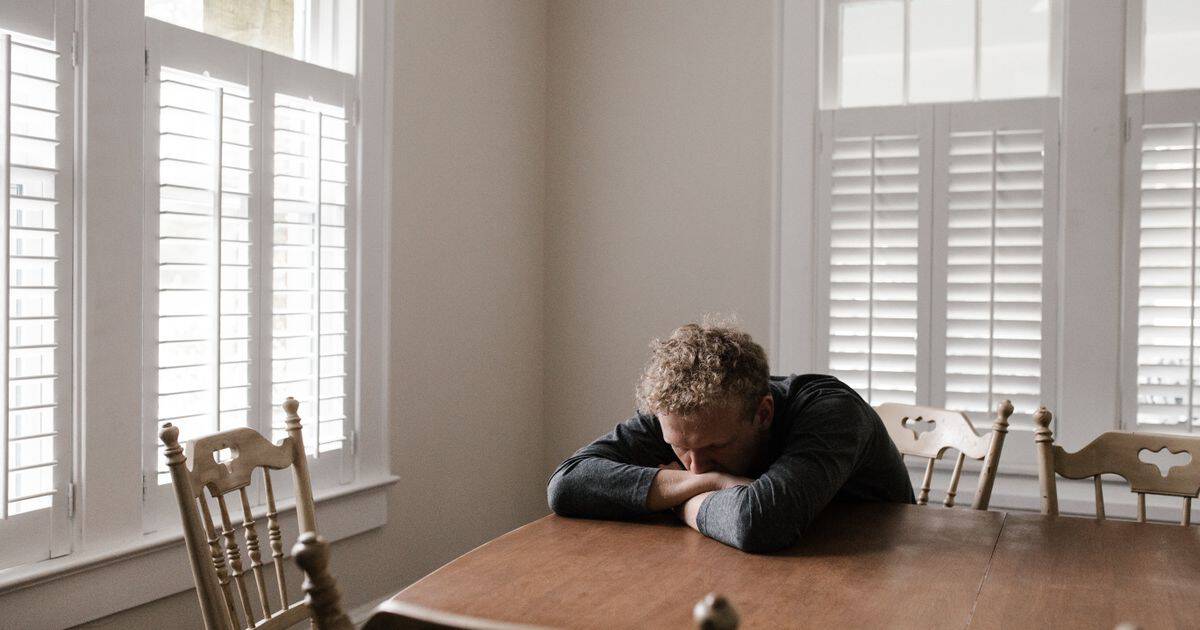
You did the hard part. You survived the ending of the last thing. You met someone. You fell in love again, this time with more scars and more clarity. You said yes to their kids, or they said yes to yours, or both. You pictured Sunday mornings. You pictured a house that felt like a house.
Recognize yourself in this?
Talk to Figlet about your blended family right now. AI relationship coaching grounded in Figs O’Sullivan’s work, LMFT. Free to start, no credit card.
And now you are standing in the kitchen at 8:47 on a Wednesday night, and your stepson just walked past you like you were a piece of furniture, and your partner is quietly defending him again, and you can feel the specific cold spreading across your chest that says: I do not belong in my own home.
Or you are the biological parent, and you are watching your new spouse’s face tighten every time your daughter comes into the room, and you are exhausted from being the bridge, and some small treacherous part of you is starting to wonder if you made a terrible mistake.
Or you are lying in bed at midnight typing “blended family problems” into your phone because the fight you had over the dishwasher was not about the dishwasher, and you know it, and you have no idea what it was actually about.
I want you to slow down. I have been doing this work for a long time, and what I need to tell you first is this: the pain in a struggling blended family is almost never what the surface fight says it is. It is not really about house rules, or bedtimes, or who does the laundry, or whether the twelve-year-old is “disrespectful.” Those are the words the fight is wearing. Underneath, three nervous systems (sometimes four, sometimes six) are asking the same two ancient questions in different keys, and nobody is answering.
Let me show you what I mean.
The Two Questions Running Underneath Every Blended Family Fight

Which pattern is running your relationship?
Take the free three minute quiz and meet the creature behind the cycle you keep getting stuck in.
Every bonded nervous system in the house is running the same two queries at all times, and never in words:
Are you there for me?
Am I enough for you?
In an intact family, those questions have had years to find some working answers. In a blended family, everyone is asking them again, from scratch, in a house full of relative strangers, while pretending the questions do not exist.
The child is asking their biological parent: do I still matter now that this new person is here. Are you still my base camp. Am I about to be replaced.
The stepparent is asking their partner: am I enough here. Am I actually part of this family, or am I a paying guest with opinions. Will you choose me when it counts.
The biological parent is being asked both questions at once, from two directions, by the two people they love most, and their body is trying to answer both without dropping either. Which is impossible. So they collapse. So they get sharp. So they retreat into logistics.
And nobody in the house is bad. That is the part I need you to hear first. Nobody in the house is the villain. There is no toxic person in most of these systems. There is a toxic loop, and the loop is fed by biology, not malice.
Grounded in attachment theory, a child’s parent-system is their entire universe. It is the emotional base camp from which they venture out into the world. When a new adult enters that base camp with the authority of a parent, the child’s body does not process this as “a nice new person is joining our family.” It processes it as an existential threat to the one bond they cannot live without. Their prefrontal cortex goes offline for a beat. What comes next, the eye roll, the door slam, the silence at dinner, the sudden hostility toward the stepparent who was doing nothing wrong, is not a behavior problem. It is a survival response, protecting the base camp.
Meanwhile, the stepparent walks into that eye roll and receives it as a verdict. I am not wanted here. I am failing. I chose this and it is rejecting me.
Two threat responses collide over the kitchen counter. And the biological parent stands in the middle, holding a bag of groceries, watching their two most important people register each other as danger.
That is the actual problem. The dishwasher is not the problem.
From Empathi’s own research: in 58,221 completed relationship assessments, sad was the third most common deep feeling and hopeless the fifth, at 17,094 and 9,160 people.
The Stepparent’s Representative and the Basement of Shame
Here is what I see most often in the stepparent, especially the stepfather, though it happens across genders. When the organic, tender part of us believes we are not quite enough to secure the love we have found, we build a polished proxy and send it in to do the work of belonging. Call it the Representative. It is the version of you that shows up with house rules, spreadsheets, calm reasoning, and a slightly-too-crisp tone. It is the you that thinks: if I can just get the logic right, they will accept me.
The Representative is exhausting to run, and it fools nobody. Children, especially, can smell a Representative from three rooms away. They know they are not meeting you. They are meeting your armor.
When the eye roll comes, or the stepchild says something cutting, or your partner sides with the kid instead of you, the Representative fails in a very specific way. Your chest goes cold. Your throat closes. And underneath, in the basement, there is a small voice saying: I am not enough for this family. I never was. I never will be. I am failing at the one thing that was supposed to work this time.
That basement is unbearable to sit in. So most stepparents do one of two things. They climb up into a penthouse of cold logic and start issuing edicts about house rules. Or they retreat into the study, the garage, the phone, the work project, anywhere that is not this kitchen. Either move looks like withdrawal to the biological parent. Either move confirms the child’s suspicion that the new person does not really want them.
And the loop tightens.
The Biological Parent’s Impossible Position
If you are the biological parent, your body is being asked to calm two people who are currently registering each other as threats. That is not a role. That is a job description written by a sadist.
What I watch biological parents do, again and again, is one of three things.
They side with the child. Because the child was here first, and because the child’s distress registers in the body as a five-alarm emergency, and because guilt about the divorce or the death or whatever brought you here is already sitting in the driver’s seat. When you consistently side with the child, your new partner’s body reads it as: I chose you and you did not choose me back. The stepparent’s basement gets deeper. The Representative gets more polished, or the withdrawal gets more complete.
They side with the new partner, in a bid to consolidate the marriage, and the child’s base camp trembles. The child, who was already asking “am I about to be replaced,” now has evidence. They act out harder. The stepparent, feeling backed, doubles down on the rules. The child concludes their parent has been captured by an alien.
Or they try to hold the middle, which is the noblest and most exhausting failure of all. They translate for both sides. They soften every message. They live inside a permanent negotiation. And slowly they disappear from their own life, until one night they cannot remember the last time they had a thought that was not about managing the temperature in the house.
If any of that is landing, I want to name what you are not doing wrong. You are not weak. You are not a bad parent. You are not a bad spouse. You are one exhausted person trying to serve as the emotional infrastructure of a household that was assembled out of two prior shipwrecks. Of course you are tired. Of course you are getting it wrong. There is no way to do it right from that position.
The way out is not to try harder in the middle. The way out is to stop being the middle.
The Sibling Society Trap
There is a specific failure mode I see in blended families that I want to name plainly, because it does more damage than anything else, and most parents do not know they are doing it.
It is what happens when the two adults in the house stop functioning as a parental floor and start functioning as peers competing for the child’s alliance. I call this the Sibling Society. Everyone in the house has dropped to the same developmental level. The stepparent is complaining to the child about the biological parent’s inconsistency. The biological parent is quietly telling the child that the stepparent is being too harsh. The child is being consulted on adult decisions. The child is being told about adult feelings. The child is being invited, tacitly or explicitly, to have opinions about the marriage.
This looks like closeness. It looks like honesty. It looks like “we do not keep secrets in this family.” It is none of those things. It is parentification. It is asking a child to carry the weight of the adults’ unmetabolized shame and grief. It is handing them a job they cannot refuse and cannot possibly do well.
One of you has to be the parent. One of you has to be the child. When you let your child act as your emotional confidant, or when you let them override the parenting team by playing you against your new partner, you are not being close to your kid. You are drafting them into your relational shipwreck.
I have written more about this pattern of pursuit and retreat in couples in how to get your partner to open up emotionally, because the two-adult version of it is the engine underneath everything I am describing here.
What Has to Happen Instead: The Sovereign Us of Parents
Here is the shift, and it is not a technique. It is an architectural change.
The two adults in the house have to become a calming, aligned parental floor before anything else can work. Not friends of the kids. Not democratically elected officials. Not co-negotiators. A floor. A secure, aligned, defended alliance between the two of you that the children cannot split, cannot triangulate, cannot destabilize by trying.
Call this the Sovereign Us of Parents. It is the couple version of what secure functioning looks like when children are in the picture. I go deeper on the couple version of this in what secure functioning in relationships actually is, and everything there applies here, with the added layer that in a blended family, the couple alliance is doing the additional work of holding the ground for children whose original ground already cracked once.
This parental alliance is not built by agreeing on house rules. That is downstream. It is built by the two of you turning toward each other, in private, and answering the two questions honestly. Are you there for me. Am I enough for you. And doing that repair work over and over, before you ever try to present a united front to the kids.
Most struggling blended-family couples try to build the front first. They sit at the kitchen table hashing out screen time and bedtimes and consequences, and they wonder why it never holds. It never holds because there is no floor under it. The floor is not the rules. The floor is two bodies learning to trust each other under pressure.
Ready to work on this?
Figlet is AI relationship coaching grounded in attachment science and Figs O’Sullivan’s clinical work, LMFT. First messages free, no signup.
The Flashlight Move: Turning It Back on Yourself
There is one clinical move that changes blended-family dynamics faster than anything else I know. I call it turning the flashlight around.
Most of the time, when you are in pain in your blended family, the flashlight of your attention is pointed outward. You are building the case against your stepson, your partner’s ex, your partner’s parenting, your stepdaughter’s attitude. You have paragraphs ready. You have receipts. You are prosecuting.
The move is to turn the flashlight, slowly, back onto your own chest. What is happening in your body right now. Not the story of what they did. The experience of what is alive in you.
The stepfather I mentioned earlier, when he did this in my office, said: my chest goes freezing cold and my throat closes up. And underneath that, quieter: I feel like a kid failing a test. I slink away because I cannot sit in feeling like a failure in front of the woman I love.
His wife, watching him say that, did something I have seen a hundred times. Her posture softened. The sharpness she had been carrying dropped out of her face. She saw, for the first time, the frightened child inside the man she had been reading as cold. And then she could say her own truth: I get loud and critical because I feel completely alone in the dark holding all of this, and the louder I get, the more you leave, and the more you leave, the louder I get.
Two separate suffering bubbles dissolved into one shared bubble. That is what I call Empathy Cubed, and it is the moment the loop cracks. Not because they solved anything. Because they finally saw each other underneath the performance.
Why “Self-Soothing” Advice Fails Blended Families
I want to say something plainly that runs counter to most of the internet’s advice on this topic.
You will read, on many stepfamily blogs, that the answer is rigid parallel parenting, firm individual boundaries, extensive self-soothing practices, and detachment when your partner’s behavior activates you. The framing is that you must become a self-sufficient island, and if the relationship keeps hurting, the relationship is probably the problem.
I do not buy it. Not in this context. Not in most contexts.
Human beings do not settle their bodies alone. We calm each other. We find ground in the context of a bond. The idea that a stepparent in genuine pain about their place in the family should go handle that alone with breathing exercises while their partner handles the kids in the other room is a fantasy dressed up as wisdom. It ensures the two adults will never actually meet each other. It ensures the floor never gets built.
Needing your partner to make you feel safe in your own home is not codependence. It is biology. Individual sovereignty, the kind that actually lets you show up as a steady presence for stepchildren who are watching you like a hawk to see if you are safe, is not a starting condition you manufacture through solo effort. It is an emergent property that arises out of a secure bond with your partner, sustained repair, and the felt experience of being met.
You cannot learn to swim while fighting for air. First the two of you have to become each other’s air. Then the swimming becomes possible. Then, and only then, do the house rules start to hold.
If you are wondering whether what you are in is a fixable dynamic or something more serious, I have written a fuller diagnostic in am I in a toxic relationship that may help you separate a struggling blended family from something else.
What to Actually Do This Week
Not a list of tips. One shift.
Stop trying to fix the family. Fix the couple first, in private, without the kids as the topic. Have one conversation this week where neither of you brings up the children by name. Talk about what it is like to be you inside this house. What is cold. What is scared. What was hoped for and has not arrived. Turn the flashlight on your own chest and let your partner see what is actually there.
Then, and only then, do you come back to the parenting questions. You will find they answer themselves once the floor is built.
This is not a you problem or a them problem
“Relationship distress is a feature, not a bug, of loving someone so much that their emotional distance feels terrifying. It is the predictable dance of two nervous systems desperately trying to survive the perceived loss of one another.”
“The fight is never about the content. It is always about the bond.”
Figs O’Sullivan, LMFT
Common Questions
Why does my stepchild hate me even though I’ve done nothing wrong?
They almost certainly do not hate you. Their body registers your presence as a threat to the parent-bond that is their entire base camp. The eye roll, the coldness, the hostility, is a survival response protecting the one relationship they cannot lose. It is not personal, though it lands personally. Your job is not to win them over. Your job is to become a steady, non-anxious presence they can slowly conclude is not going to displace them.
How long does it take a blended family to actually blend?
Longer than anyone tells you, and probably not on the timeline you imagined. Clinicians working with stepfamilies often talk in years, not months. What I would say from the therapy room is that the timeline is not the point. The couple alliance is the point. Families with a strong parental floor between the two adults settle over time. Families without one do not, no matter how many years pass.
Should I discipline my stepchild or leave it to my partner?
In the early years, discipline is almost always the biological parent’s job, with the stepparent operating more as a supportive adult presence. The stepparent does not have the earned relational credit yet to hold authority without triggering the child’s threat response. This is not about power. It is about biology. Discipline lands from someone the child feels safely bonded to. Build the bond first. Authority follows, not the other way around.
Why does my partner always take their kid’s side against me?
Because their physiology is running an impossible triangle and the child’s distress is louder in their body than yours. This is not a moral failure on their part, but it is a structural problem the two of you have to solve together. The solution is not asking them to side with you against the child. It is building a couple alliance strong enough that neither of you feels forced to choose. That work happens in private, between the two of you, before any conversation with the kids.
Is it normal to regret becoming a stepparent?
Yes, and the fact that you are asking probably means you are more committed than you feel. The regret usually shows up in the season when the fantasy of the blended family collides with the reality of the labor. Naming the regret to yourself, and eventually to your partner, without shame, is often the beginning of the real conversation you have been avoiding. The regret is data. It is telling you something in the structure has to change.
Do not just close the tab on this.
Bring what surfaced here into a real conversation. Figlet coaches you through it, grounded in Figs O’Sullivan’s work, LMFT. Free to start.
The family does not blend because you found the right rules. It blends because two adults decided to build a floor no child could crack, and then stood on it, together, long enough for everyone else to feel the ground finally hold. Start there. The rest is downstream.
Keep Reading



Every couple has a pattern they cannot see. Find yours.
In love, each of you is a Relentless or a Reluctant, which makes you one of three kinds of couple: Relentless and Reluctant, two Relentless, or two Reluctant. The free quiz reveals your creatures and the cycle they fall into together. About three minutes.
No signup needed to start.
The Relentless

The Reluctant