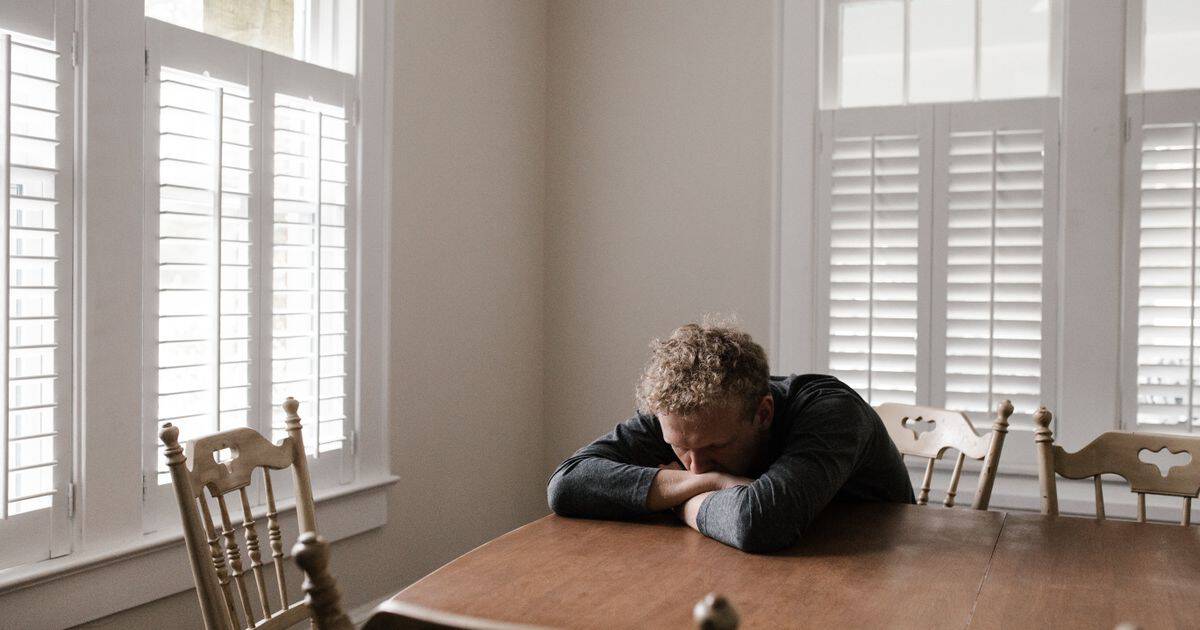
Kids are caught in the middle of divorce when the two adults stop functioning as one parental team and start using the child, without meaning to, as a messenger, a spy, a confidant or a judge. The damage is rarely the divorce itself. It is the loyalty bind: the moment loving one parent feels like betraying the other.
The way out is not a better custody schedule. It is two parents (or even just one) climbing back up onto the parent floor, refusing to recruit the child, and settling their own body so the child no longer has to hold the family up.
If your kids are caught between you and your ex right now, Figlet, my AI relationship coach, is there at 2 in the morning, or right now, to help you find the words before the next handoff. Start with Figlet here.
You already know something is wrong. Your kid used to sleep through the night. Now they wake at two in the morning asking where you are. Or they have started getting stomachaches on the mornings they switch houses. Or they have gone quiet in a way that feels older than their body should be, watching your face the way an air-traffic controller watches a runway.
Recognize yourself in this?
Talk to Figlet about the pattern between you and your co-parent, right now. AI relationship coaching grounded in Figs O’Sullivan’s work, LMFT. Free to start, no credit card.
And you are exhausted. You are trying. You bought the co-parenting app. You do not badmouth their other parent in front of them. You keep the handoffs civil. You read the checklists. You are doing what everyone told you to do, and your child is still carrying something they should not have to carry.
If you have typed “kids caught in the middle of divorce” into a search bar at midnight, I want to say something before we go any further. Your child is not fragile because your marriage ended. Your child is registering the emotional truth of the family system the way a seismograph registers the ground. And the ground has been moving. Their body knows it. Their body knew it before the papers were signed.
Seventeen years of doing this work, and I can tell you the thing almost every parenting-through-divorce article gets wrong: the damage is rarely about the divorce itself. The damage is about what the parents do with each other after the divorce. It is the invisible war the child’s nervous system is being asked to survive without weapons, without language, and without permission to name what they are feeling.
The Ground That Melted Underneath Them

Which pattern is running your relationship?
Take the free three minute quiz and meet the creature behind the cycle you keep getting stuck in.
Grounded in attachment theory, your child’s parent-system is not two individuals to them. It is one thing. It is the emotional base camp. It is the entire climate of their inner world. When two parents live in the same house and function as a team, the child’s nervous system uses that team as the floor to stand on. From that floor, they can explore, fail, come back, cry, sleep.
When the base camp splits, the floor does not just move. For a child’s limbic system, the floor is gone. Not metaphorically. Their body reads the split the way a small mammal reads a change in wind direction on the savanna. Something has shifted at the edge of the world, and something is coming.
Now, that alone does not have to wound them. Kids are wildly adaptive. Divorce does not have to be a trauma. Two parents can uncouple romantically and still function as a secure parental floor. The child grieves, the child adjusts, the child integrates. The base camp has moved, but it is still standing.
What breaks the child is not the divorce. What breaks the child is when the two adults who used to be the floor stop functioning as a team and start functioning as opponents. When the floor becomes a battlefield, the child has nowhere left to stand.
From Empathi’s research: in 58,221 completed relationship assessments, sad was the third most common deep feeling and hopeless the fifth, at 17,094 and 9,160 people.
The Sibling Society: When Parents Drop to Peer Level
There is a state I see over and over again in divorced and separating couples that I call the Sibling Society. The two adults, who used to at least attempt to hold a parental floor together, drop to the level of peer siblings. They compete for the child’s alliance. They keep score. They use the child as a shield, or a witness, or a courier, or evidence in the case they are quietly building about who the real villain is.
Nobody plans this. Nobody wakes up one morning and decides to weaponize their kid. It happens because both parents are drowning in their own shame and grief, and the child is the only person left in the family who feels safe enough to lean on. It happens because you are exhausted and lonely and your kid says something perceptive at dinner and for one second you forget they are ten years old.
Here is what happens inside the child when the parents drop to peer level. Their body registers that the adults are not steady, so they scan for a way to create stability. They pick a side. They align with the parent who seems more fragile, or more angry, or more likely to fall apart without them. They become the diplomat. They become the confidant. They become the little judge in the middle of the courtroom, listening carefully to both cases, trying not to give anything away.
This is called parentification. It is one of the quietest, most respectable forms of harm we do to children. It does not look like abuse. It looks like a very mature, very helpful, very verbal child. The kid everyone compliments. The kid who is doing so well, considering.
The parent-system is a one-way street of emotional regulation. Parents settle the child’s fear. Not the other way around. When you turn to your child to process your grief about your marriage, when you leak your distress about your ex into the car ride, when you let them see the tightness in your face after a text comes through, you are asking a young body that is still forming to carry weight it was not built for. One must be the parent. One must be the child. The moment that reverses, orphan parenting begins, and the child learns to survive by becoming hyper-independent, hyper-attuned, and quietly alone.
Signs Your Child Is Caught in the Middle
Kids are not caught in the middle of adult drama by accident. They are there because adults put them there. I have watched this unfold in my office more times than I can count: parents who swear they are protecting their children while turning them into emotional Switzerland. Most children in the middle are playing one or more of four roles.
The messenger
“Tell your dad the soccer bag is still at his place.” “Ask your mom why the check is late.” It feels efficient. To the child, every message is a small grenade they have to carry across the border between two houses, hoping it does not go off in their hands. Communication with your ex is your job. It is never theirs.
The spy
“So who was at Dad’s this weekend?” “Did Mom have anyone over?” Questioning a child after a visit puts them in the position of informant, which forces them to betray one parent to satisfy the other. Even when you ask gently, their body knows what the question is for.
The confidant
This is the child you vent to in the car. The one who knows about the money, the lawyer, the new girlfriend, the thing their father said in mediation. It looks like closeness. It is a small body being asked to regulate a large one.
The judge
The child who listens carefully to both cases, trying not to give anything away. The one who is asked, out loud or silently, “Who do you want to be with?” A child in the judge’s chair has been handed a power no child should hold: the power to raise or lower the emotional temperature of the two adults they desperately need to be okay.
Alongside those roles, watch for the quieter signs:
- Stomachaches, headaches or meltdowns on transition days.
- Keeping their feelings about the other house a secret, or going silent when you ask.
- Telling each parent what that parent wants to hear.
- Guilt after having a good time at the other house.
- Watching your face before they speak, checking the weather first.
- Over-competence: the suspiciously mature, suspiciously helpful, suspiciously fine child.
- Suddenly refusing to go to one parent’s house.
The Somatic Ledger Does Not Lie
Kids do not tell you what they know. They show you. And what they show you almost never looks like grief in the way adults expect grief to look.
It looks like school anxiety. Stomachaches on transition days. A regression in sleep. A new fear of the dark. A sudden preoccupation with whether the front door is locked. A child who used to run into the room and now watches your face first to see what the weather is. A teenager who has become suspiciously easygoing, suspiciously accommodating, suspiciously fine.
The body keeps a ledger. Your child’s body is keeping one right now, whether they can name what they are recording or not. Every tightening of your jaw when their other parent’s name comes up, every one-second pause before you answer a question about the schedule, every over-cheerful voice you put on for the handoff, is being logged. Kids are not fooled by the surface. They read what is happening in the body underneath the surface. That is what mammalian young are designed to do. It is how they survived long enough to become us.
So when you ask, “How are they doing with all this?” and they say “fine,” and they are getting stomachaches on Tuesday nights, believe the stomach. The stomach is telling you the truth their language is not old enough to tell.
What Being Caught in the Middle Does to a Child
Kids are remarkably resilient to changes in family structure. What breaks them is the loyalty bind. A child in the middle of a two-parent war cannot hold both parents at once when those parents can no longer hold each other. It is neurologically too much.
So the child’s system does what any small mammal does when the ground is unstable. It finds a piece of solid rock and climbs onto it. In my experience, children in this position do one of three things, sometimes all three:
- They develop somatic symptoms. The stomachaches and headaches and mystery illnesses that no pediatrician can quite pin down.
- They pick a side. Quietly aligning with whichever parent they perceive as more fragile or more wounded, and becoming a small emotional partner to that parent.
- They check out. Going glossy-eyed at their screens, learning early that the safest thing to do inside a family is to feel less.
Underneath all three is guilt. A child who is required to reject one parent is being asked to amputate half of themselves. Half of their genes. Half of their history. Half of their heart. The armor they wear is not indifference. It is guilt turned into stone.
None of these is a small cost. Each one shapes how that child will love, twenty years from now. The child who is allowed to love both parents grows up into an adult who can love. The child who is required to choose often grows up into an adult who cannot, without splitting, without contempt, without repeating the very fracture that was handed to them.
The Girl Who Was the Smoke Alarm
I sat with a couple once. She was a pediatrician, brilliant and precise. He was a general contractor, big-handed, gentle, foggy behind the eyes. They came in because their ten-year-old daughter had developed severe anxiety and stomachaches and was refusing to go to school. They wanted me to fix the girl.
I asked them how things were between the two of them. Long pause. She said “fine.” He said “fine.” I asked how long fine had been the answer. She said about four years. He looked at the carpet.
Their daughter was not the problem. Their daughter was the smoke alarm. She was carrying the emotional truth of the household in her body because the adults were refusing to carry it in theirs.
Here is why I tell this story on a page about divorce: that couple was not even divorced. Their daughter was already caught in the middle. The middle is not an address or a custody percentage. It is the emotional field between two parents, and a child can be standing in it before anyone files a single paper, and long after the papers are signed.
What Parents Do That Puts Kids in the Middle
Nobody sets out to do this. When the person who used to co-regulate you becomes the person who most destabilizes you, your nervous system goes searching for anywhere else to land. The child is right there. Small. Loving. Available. And so, without ever intending it, parents start doing things that only make sense between siblings:
- Passing messages, schedules or money questions through the child.
- Asking what happened at the other house, who was there, what was said about you.
- Leaking distress: the sigh at a text, the tight voice when the ex’s name comes up, the tears in the car.
- Sharing courtroom or mediation details and calling it honesty.
- Making offhand comments about the other parent’s new partner, or letting relatives and friends make them.
- Asking the child which house they prefer, or where they want to spend the holiday.
- Getting quiet or hurt when the child says they had fun at the other house.
- Saying the other house’s rules are wrong, so the child has to pick which rules are real.
If you recognize yourself in that list, I am not shaming you. I have watched exceptionally kind, thoughtful, accomplished parents do exactly this on my couch. The pull is enormous. Naming it is the first step out.
Why Custody Checklists Are Not Enough
I want to say something that will sound sharp, because it needs to. The dominant advice culture on this topic (co-parenting apps, parallel parenting boundaries, custody spreadsheets, communicate only in writing, keep it business-like) is not wrong. It is just wildly insufficient for what your child actually needs.
Those tools address the logistics. Logistics matter. But logistics are not what wounds children in a divorce. What wounds children is the emotional field between their two parents. And you cannot fix an emotional field with a Google calendar.
I have worked with parents who have flawless co-parenting apps and cold, contemptuous handoffs. The app is immaculate. The kid is unraveling. Because the child’s body is not reading the app. It is reading the two-second look you give when your ex pulls up in the driveway. It is reading the way your voice drops half a register when you say their name. It is reading the field.
Parallel parenting boundaries and custody checklists can only take you so far. What actually settles a child is when the two adults, however much they no longer love each other, agree at a physiological level that they are still a team when it comes to this small human. Not romantically. Not logistically. At the level of the field.
I have written more about the underlying architecture of this in What Is Secure Functioning in Relationships?, because secure functioning does not end when the marriage does. It changes shape. But the requirement, that both adult bodies agree to protect the small third body in the room, does not go away.
The Waltz Does Not End Just Because the Marriage Did
Here is a piece almost nobody talks about. The same negative cycle you had inside your marriage, the pursue-withdraw, the criticize-defend, the flood-and-shutdown, does not disappear at divorce. It just moves outside the house.
The Waltz of Pain keeps waltzing. One of you sends a tight, controlled text about the pickup. The other reads it as an attack and either goes cold or fires back. Now you are both dysregulated. Now you both walk into the handoff with cortisol in your bloodstream. Now your child stands between two adults whose bodies are still doing the exact thing they were doing at the end of the marriage, only now with less cover and less repair.
You did not divorce the pattern. You divorced the person. The pattern is still yours to work on, and now the stakes are your child’s ability to settle, not just your own peace.
I lay out the everyday structure that helps two homes hold that pattern more gently in my guide to co-parenting after divorce.
This is where I have to be honest with you about something the internet will not tell you. If you have not done the work on your own attachment pattern, on your own protector parts, on your own shame, the divorce will not save your child. It will just move the war outdoors. Your kid will still be caught in the middle, only now they will be caught in the middle across two houses, two dysregulated adults, and two ongoing protests neither one can fully name.
If you want a starting point on decoding your own contribution to the cycle, I go deeper into it in Attachment Styles in Relationships. The pattern you brought into the marriage is the pattern you are bringing into the co-parenting.
Ready to work on this?
Figlet is AI relationship coaching grounded in attachment science and Figs O’Sullivan’s clinical work, LMFT. First messages free, no signup.
The Story of Other vs. The Experience of Self
Here is the single most important shift you can make. Most divorced parents I sit with spend ninety percent of their internal energy on the Story of Other. The case against their ex. The list of what the ex did wrong, is still doing wrong, will probably do wrong next week. The internal courtroom is always in session.
That case is real. Some of it is even true. But every hour you spend inside the case against the other parent is an hour your own physiology is running on threat. And your child is downstream of that threat. They can feel it in the room, in the car, in your shoulders when you help them with homework the night before a handoff.
The move is to turn the flashlight around. Away from what your ex did. Toward what is happening inside your own chest right now. The tightness. The dread. The specific loneliness of Sunday nights. The shame that lives underneath the anger. That is your work. That is the only work that will actually free your child.
Because here is the deep pattern in these dynamics: siding against one parent, even quietly, even in the story you tell yourself in the car, only confirms the child’s unspoken sense that their own worth is negotiable. If half of them, the half that came from your ex, is bad, then half of them is bad. Kids do the math instantly. They do not need you to say a bad word about their other parent. They only need to feel the field.
If you want a clearer diagnostic on whether what is happening between you and your co-parent is a repairable dynamic or something genuinely dangerous to the child, I go through the distinction in Am I in a Toxic Relationship?. The framework applies just as sharply to co-parenting after divorce as it did to the marriage.
How to Get Your Child Out of the Middle: What to Say
The words matter less than the state you are in when you say them. Your child is scanning your nervous system every second they are with you. But words still help, especially when they are short, warm and repeated. These are the ones I give parents.
When they seem weighed down by both houses
“Hey, it sounds like things feel really complicated between our two houses. I’m not gonna put you in the middle of that. You don’t have to solve anything for me.”
When they come home from the other parent’s house
Do not interrogate. Create space: “I am glad you are home. If you ever want to talk about anything, I am here.” Then wait. Watch them exhale.
When they say something against the other parent
Do not accept the gift, even when it is partly true. Say, gently and often: “I know it is hard right now with Dad. He loves you. You are allowed to love him too. You do not have to pick.” Say it into the eye roll. Say it a hundred times.
When you already got it wrong
You are going to get hijacked. You will snap when they mention their mother, or go cold when they talk about Dad’s rules. That is not the failure. The failure is refusing to repair. Walk into their room an hour later and say something like: “Hey. Earlier when you told me about Dad’s rules, I got tight and I was not fair. That was not about you. I am working on it. I love you and I love that you have a good time at Dad’s.”
The repair is what transmits emotional security. Not the absence of rupture. The willingness to come back.
When Your Ex Keeps Putting Them in the Middle
This is the one that makes parents feel crazy. You are doing the work, and the other house is still sending your child back with messages, questions and stories about you. Your anger makes complete sense. Having your character attacked through your own kid is infuriating.
But here is what I know from seventeen years of sitting with families in this exact kind of pain: the moment you start fighting that battle through the child, you lose. Not the argument. You lose the child’s sense of safety.
- Do not counter-recruit. Do not build a case for your child to believe. Kids raised by one steady parent and one dysregulated one usually find their way, as long as the steady parent stays steady.
- Take it adult to adult. Bring the concern to your ex directly, in writing if you need to, and keep the kids out of it.
- Bring in a third person. A mediator, a parenting coordinator or a co-parenting counselor can hold the question neither of you can hold alone: what system are we in together that is producing this in our kids?
- Control your side of the field. You cannot control what happens in the other house. You can settle your body when their name comes up, refuse to interrogate your child for intel, and speak of the other parent without acid in your voice. That alone changes a lot.
When it shows up as stories that are not true, I have written about how to respond in when kids tell lies about the other parent. A child telling lies about a parent is almost always a child in pain, caught in exactly this bind.
What to Tell Your Kids at Each Age
At every age, the core message is the same: this is a grown-up problem, it is not your fault, you do not have to fix it, and you are allowed to love both of us. What changes is how much they can hold and how they will show you it is too much.
Little ones (under six)
Young children cannot follow the story, so do not give them one. They need the floor to feel solid: the same bedtime, the same goodnight words, the same small rituals at both houses if you can manage it. Predictability is not boring. For a child moving between two homes, predictability is oxygen. Watch for regression in sleep, toileting and separation, and answer it with more closeness, not more explanation.
School-age kids (six to twelve)
This is the age of quiet self-blame and fierce fairness. They will keep score of who is sad and who is angry, and try to balance it. Say out loud, more than once, that the divorce is not because of them and that they do not have to choose. Keep adult information adult: no money, no lawyers, no affairs. They need to hear that the two of you are handling it, even if it does not always feel that way.
Teenagers
Teens are the most likely to be recruited as confidants, because they can sound like adults. They are not. A teenager who becomes your sounding board loses the right to be a teenager. Be honest without being detailed, let them have their own feelings about each parent, and do not punish them for wanting time at the other house. If they push you away, do not close the door. Keep showing up, quietly. Floors do not disappear when they are not being walked on.
Is This Parental Alienation?
If your child has suddenly turned against you, you have probably already read about parental alienation at eleven at night. I want to be careful here. Sometimes one parent really is working to turn a child against the other, and that is serious and painful, and it deserves a qualified family therapist or custody evaluator, not an internet diagnosis.
But much more often, what looks like alienation is a child’s nervous system running a survival strategy. Collapsing an unbearable three-way war into a simple story with a hero and a villain. Protecting the parent who seems least able to hold themselves. Trying to end the war by removing one leg of the tripod. The alliance is not love and it is not agreement with your ex’s version of events. It is a foothold.
If you are the parent your child currently prefers, that is not a trophy. It is a warning light, and it means you need to actively, repeatedly refuse the alliance your child is trying to hand you. I go deeper into both sides of this in when kids choose sides after divorce.
What The Sovereign Us of Parents Actually Looks Like
Two parents who no longer love each other romantically can still form what I think of as a Sovereign Us of Parents. A parental alliance that holds, even when the marriage does not. This is not friendship. This is not pretending. This is not putting on a show for the kid. Kids see through shows. They do not need a show. They need a field they can trust.
What they need is two adults who have each agreed, privately and separately, to stop being siblings and go back to being the floor. Who have agreed to work on their own shame instead of asking the child to carry it. Who have agreed that when the ex’s name comes up, their face will stay soft, not because they are performing, but because they have done enough internal work that softness is actually possible.
This is proof-of-work parenting. It is unglamorous. It happens in therapy rooms, in journals, on long walks, in the moment before you hit send on the text. It is the parent noticing the flare of contempt in their own chest and not passing it downstream to the child.
When to Get Outside Help
If your child is regularly caught in the middle, showing anxiety at transitions, loyalty conflicts, somatic symptoms like stomachaches on exchange days, or an emotional flatness that was not there before, outside support is worth pursuing. If they talk about hurting themselves, or their grades, sleep or friendships fall off a cliff, do not wait. Get help now.
- A therapist for your child who is trained in attachment and somatic work, and who will not take sides. Your child gets a room where they are not a witness, a judge or a soldier.
- A family therapist or co-parenting counselor for the two adults, so the same negative cycle from the marriage stops running the handoffs.
- Mediation or a parenting coordinator when the logistics themselves keep reigniting the war.
- Your own work. Grief, shame, the protector parts that ran the show in the marriage.
I will say this honestly: in my experience, the fastest way to help a child in a high-conflict co-parenting situation is for the parents to do their own work. Kids stabilize when the parent-system stabilizes.
The Real Shift: Your Child Is Not Your Problem to Fix
I want to leave you with the reframe that changes everything for the parents I work with.
Your child is not the problem. Your child’s stomachaches are not the problem. Your child’s school anxiety is not the problem. Those are the smoke detector. They are working. They are telling you that the air in the field between the two adults has smoke in it.
You cannot fix the smoke detector. You can only clear the air. And you clear the air by turning the flashlight around, by grieving your marriage rather than litigating it inside your own head, by doing the somatic and relational work of settling your own body so that when your child stands in front of you they meet an adult who is on the ground.
That is what “not caught in the middle” actually means. It does not mean the parents are friends. It means the two adult bodies the child is riding between are no longer at war. The middle is safe again. The middle is where the child gets to just be a child.
What to Do Tonight If Your Child Is Caught in the Middle
- Retire the messenger. Pick one thing you would normally send through your child (a pickup time, a forgotten bag, a money question) and send it to your ex directly instead.
- Skip the debrief. If your child came home from the other house today, do not ask who was there or what was said. Say, “I am glad you are home,” and let that be enough.
- Say the sentence. At bedtime, tell them: “You do not have to pick. You are allowed to love both of us. The grown-up stuff is ours to fix, not yours.”
- Repair one moment. If you got tight or cold this week when the other parent’s name came up, go back and own it in two sentences. No speech.
- Turn the flashlight around. Before you sleep, take sixty seconds and notice what is happening in your own chest about your ex. Name it to yourself, or write it down, instead of leaking it downstream.
This is not a you problem or a them problem
“To step out of this cycle, couples must break the Versus Illusion and recognize the system itself as their common enemy. This is achieved when both partners accept the systemic truth: we are both hurting, we are both reacting, and it is only happening because we are so important to each other.”
“Neither partner is the villain. They are two younger selves inside adult bodies trying to stay safe in the only ways they once knew.”
Figs O’Sullivan, LMFT
Common Questions
How do I know if my child is actually being harmed by the divorce, or just adjusting?
Watch the body, not the words. Adjustment usually shows up as sadness, questions, some clinging, and then gradual integration over months. Harm shows up somatically and persistently: sleep disruption, stomachaches on transition days, regression in developmental milestones, hypervigilant scanning of your face, a sudden and suspicious over-competence. If the smoke detector keeps going off across weeks and months, the field between the two co-parents is what needs the attention, not the child.
Is it ever okay to tell my kids the truth about what their other parent did?
No, not in the way you want to. The impulse to correct the record with your kids is almost always the adult’s own shame looking for a witness. Kids are not the appropriate audience for your case against their other parent. They will figure out who their parents are on their own timeline. Your job is to protect the field, not to win it. Save the truth for your therapist, your journal, or a trusted friend.
My ex badmouths me to the kids. What do I do?
You cannot control what happens in the other house. What you can control is the field on your side. Do not counter-badmouth. Do not defend yourself in detail. Instead, hold a soft, grounded presence, and when the child brings something back, say something like, “That sounds really hard to hear. I love you, and I am here.” Over time, kids trust the parent whose body stays settled, not the parent who wins the argument.
How do I co-parent with someone I no longer trust?
You separate the human from the parental function. You may never trust them as a partner again. You are being asked to trust them enough as a co-parent to hold the floor with you. That means clear logistical structures, minimal emotional entanglement, and, crucially, doing your own work so their behavior does not send you into dysregulation that then leaks onto your child. Trust the structure, not the person. If more is possible, more will emerge.
What if my child refuses to go to the other parent’s house?
Slow down before you interpret. A child’s refusal is almost never simple. It could be genuine distress at that house, or it could be alignment with the parent they perceive as more fragile, or it could be their body voting against the transition itself. Do not reward the refusal by making yourself the safe harbor from the other parent. Get curious. Talk to a family therapist. And check whether your own body is quietly relieved when they refuse, because kids read that too.
What does it mean when kids are caught in the middle of divorce?
It means the child has been pulled into the conflict between their parents, as a messenger, a spy, a confidant or a judge, instead of being protected from it. The core injury is the loyalty bind: feeling that loving one parent betrays the other. It can happen during the divorce, years after it, or even inside a marriage that is still intact.
How do I stop putting my child in the middle?
Start with the four roles. Stop sending messages through them, stop asking about the other house, stop venting to them, and stop asking them to choose. Then do the inner work so your face stays soft when their other parent’s name comes up. When you slip, repair out loud.
Should I ask my child which parent they want to live with?
No. Asking a child to choose hands them the judge’s chair and makes them responsible for one parent’s hurt. Listen to their feelings and preferences without making them the decider, and let the adults, mediators or the court carry the decision.
What are the long-term effects on kids caught in the middle?
The pattern they survive in childhood tends to become the way they love as adults. Children who were required to choose often struggle later with splitting, contempt and trusting closeness, while children who were allowed to love both parents carry that capacity forward. The good news is that a parent who steadies and repairs can change the trajectory at any age.
Does my child need a therapist?
If the signs persist for weeks or months, or if they are getting worse, a child therapist trained in attachment work is worth it. But do not send your child to therapy instead of doing your own work. Kids stabilize fastest when the parents stabilize.
Do not just close the tab on this.
Bring what surfaced here into a real conversation. Figlet coaches you through it, grounded in Figs O’Sullivan’s work, LMFT. Free to start.
Your child is not caught in the middle of your divorce. Your child is caught in the middle of whatever is still unfinished between the two of you. That is the work. Start there.
Keep Reading



Every couple has a pattern they cannot see. Find yours.
In love, each of you is a Relentless or a Reluctant, which makes you one of three kinds of couple: Relentless and Reluctant, two Relentless, or two Reluctant. The free quiz reveals your creatures and the cycle they fall into together. About three minutes.
No signup needed to start.
The Relentless

The Reluctant