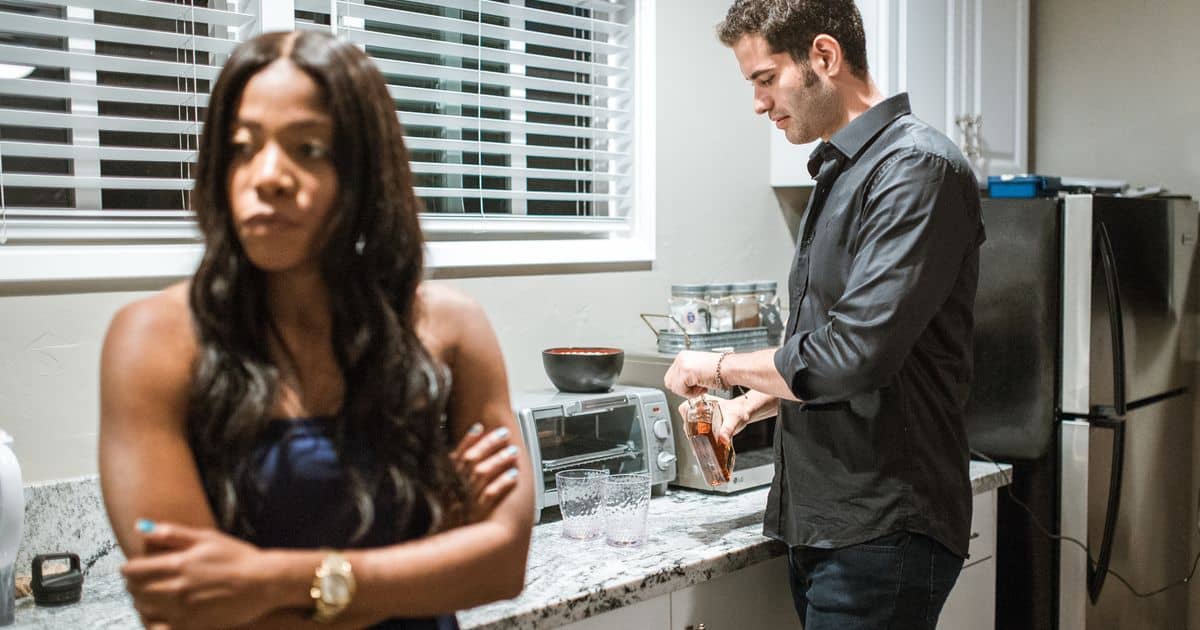
If your boyfriend doesn’t put in effort anymore, the most likely explanation is not that he stopped loving you. Most of the time the early chase has ended and the two of you have slipped into a loop where you reach and he retreats, and every time you reach harder he retreats further. Sometimes he has checked out, and that is a different conversation. If you want help sorting out which one you are living in, tell Figlet what the last month has looked like and it will show you the pattern.
It is 11 at night. You just looked at your phone and realized you have sent the last six texts. You booked the last three dinners. The weekend plans exist because you made them. He used to text good morning before you were awake. He used to show up with a plan. Now he shows up, and that is about it. You are not angry so much as tired, and you are asking: do I keep trying?
Why did my boyfriend stop putting in effort?
Stuck in the same fight again?
Talk it through with Figlet right now. Private, judgment free, built on 17 years of couples therapy.
Start with what you fell for. Early in dating, we all send in what I call the Representative. It is the polished version of ourselves, the one who is charming, available, never tired, never frustrated. And we fall in love with the Representative of the other person, not the actual human.
No one can sustain the Representative. Somewhere between six and eighteen months, the dopamine high gives way to a quieter chemistry of bonding. I call those early months fiat intimacy: affection printed out of thin air, real enough to spend, but not yet backed by anything. Part of what you are grieving is the free trial ending. That is not the whole story, because a quieter relationship should feel safe, and yours feels lonely.
The bigger reason is usually the dance. Your nervous system scans him constantly for one answer: are you there for me? Every unanswered text registers as no. So you protest. Sharply, or with a cool distance, or with a careful, tearful talk. But impact is bigger than intention. Your protest lands on him as a verdict on the other attachment question, the one he is asking: am I enough for you? If every recent conversation tells him he is failing you, he does what a flooded nervous system does. He gets smaller. From the outside, that retreat looks exactly like not caring. From the inside, it is often someone so afraid of getting it wrong that he has stopped trying to get it right at all.
If you cannot tell whether this is fear or something more final, read the signs your boyfriend doesn’t love you anymore, and the ones that only look like it.
I call this the Waltz of Pain. In my work the reacher is the Relentless Lover and the retreater is the Reluctant Lover. In 58,221 completed relationship assessments at Empathi, 74.1% of the 6,159 couples where both partners completed it were in this pursue and withdraw cycle.
Other causes are real too. He may be overwhelmed by work or family, and you get what is left of an empty tank. He may be depressed, which can look a lot like not trying (if either of you has thoughts of self-harm, call or text 988). Or he has checked out.
Is he comfortable, checked out, or done?
Comfortable means the Representative left and the real man showed up. He is still warm when you are together. He responds when you reach, even if he rarely reaches first. When you tell him you miss him, something moves in his face.
Checked out means he is tired and has given up on the old way, the same fight that always ends in the same place. Underneath the flat surface there is still pain and still longing. Does he still get irritated with you? Do you still catch moments where something warm flashes across his face before the wall comes back up? If so, his attachment system is still running. What looks like indifference is almost always despair masquerading as apathy. Checked out is recoverable.
Done looks different. Zero emotional response to your pain: not shutting down (which is a response) but the shrug with no distress behind it. Broken promises, no remorse. Effort that appears only when you threaten to leave and disappears the moment the threat passes. If that is your situation, the question shifts from “how do we fix this” to “what am I willing to accept, and for how long?”
Should I stop trying to see if he notices?
Almost everyone in your position has run this test. You stop texting first. You stop suggesting date night. And what happens confirms your fear: nothing. He doesn’t reach back.
The test usually fails because it is still a protest, just a silent one, and he reads it as one more sign he is in trouble. So he goes quieter, and you take the quiet as proof.
There is a version of stepping back that does help, and the difference is what is inside it. Stop performing the role the dance has handed you. Stop filling every silence. This feels like giving up. It is not. It lets him feel the absence of your reaching, which sometimes is what moves a withdrawer to reach back. But do it out loud, not as a trap. Tell him you are going to stop carrying the plans, and why, so he isn’t left guessing which test he is failing.
How do I tell him without it turning into a report card?
You have probably been keeping a quiet ledger: the texts that took nine hours, the plans moved for his friends. Every word of it may be accurate. It is also what I call the Story of Other, the story where he is simply the problem, and arguing it is a Chinese finger trap. The harder you pull, the more stuck you get.
I remember a couple I sat with, a physician and an engineer. She was pursuing, he was withdrawing, and every time she tried to name the loneliness underneath the fight, his face went blank and he reached for his phone. She was convinced he did not care. He was convinced he was a failure who could not do anything right, so he shut down harder to preserve some scrap of dignity. The turn came when she stopped bringing him her anger and brought him the small, scared part of her instead: “there is a part of me that has felt invisible since I was seven and it is loud in me right now, and I am scared to tell you because I think you will look at your phone.” His eyes came back into the room. He said, “I look at the phone because I think I am the reason you feel that way, and I do not know how to be enough for you.”
That is the move. Not a better list of what he isn’t doing. Your own fear, said before his failure. Tonight, try something close to this, in your own words:
“I have been keeping score in my head and it has been making me sharp with you, and I don’t want to do that. The real thing is smaller. When I am always the one who plans and texts first, some part of me decides I don’t matter to you, and I get scared. I’m not handing you that as a failure. I miss you. I want to feel chosen by you.”
Then watch what he does with it.
What happens if I keep carrying it alone?
You will run out. Relentless Lovers pursue until they collapse. The person who always reached, always asked, always initiated suddenly stops. One day you look at him and feel nothing, and the story in your head has changed from “we have problems” to “I have tried everything.” What looks like a withdrawer is sometimes a pursuer who has given up. More on that in relationship burnout, and if you are already there, do not make permanent decisions from a depleted state.
The partner who coasted often doesn’t realize anything is wrong until the reaching stops, and by then you may have grieved the relationship while still in it. So say it now. If you want to talk it through before you do, Figlet, the coaching tool I built, can help you find words that don’t sound like a verdict.
When is it time to leave?
Here is the tell. Is he capable, even slowly, even imperfectly, of seeing you as a person and owning some share of what has gone wrong between you? When you tell him how tired you are, does he minimize it, or does he stop, hear you, and change something you did not have to orchestrate?
If he can, you are almost certainly caught in a loop with someone who is also hurting, and loops are workable. If you have said it plainly, more than once, and the answer is a shrug, staying is not noble. It is the slow erosion of your sense of self. You deserve better than being the sole architect of a life your partner refuses to help build.
And if the distance comes with something harder, if he controls your money or your phone, isolates you from friends, threatens you, or treats you with steady contempt, that is not the Waltz of Pain and this page is not your answer. Call the National Domestic Violence Hotline at 1-800-799-7233 today.
My husband makes no effort. Is marriage different?
The dance is the same; the fatigue is heavier. In a marriage the missing effort shows up as the mental load: the appointments, the birthdays, knowing when the dog needs the vet. That is not small stuff. It is the infrastructure of care. A husband who has gone quiet is often a man bracing for the sigh that says he failed again, and a wife who has carried it for years is often a collapsed pursuer. The same line works. So does couples therapy, and it is rarely too late while there is still a flicker of irritation or warmth.
If you are the boyfriend reading this
Her complaints are not contempt. They are fear that she has lost you. I know her asking can feel like a performance review you keep failing. But your retreat lands on her as proof she doesn’t matter, and she will reach until she can’t. The most powerful thing you can do is not a grand gesture. It is one small, unprompted turn toward her that asks nothing back: the first text, the plan already made, often enough that she can set the load down. Not a promise. Proof, over time.
Where to go from here
If the bigger question is whether your whole relationship has become lopsided, start with what a one-sided relationship really is. If the ache sounds more like being someone’s afterthought, read why you feel like an option and not a priority. And if the missing effort lives mostly in touch and the bedroom, I wrote about a partner who never initiates affection.
Frequently asked questions
Why did my boyfriend stop putting in effort?
Usually the early chase ended and the Representative, the polished version he showed you while dating, went home. Then your reaching lands on him as criticism and he retreats. Stress, depression or lost interest can also be the cause.
Is it normal for effort to drop after the honeymoon phase?
Some drop is normal as the early high gives way to a calmer bond. Feeling lonely inside the relationship, or doing all the reaching, is not.
Should I stop putting in effort to see if he notices?
A silent test usually backfires; he reads your distance as trouble and goes quieter. Stepping back can help if you say so openly and say why.
How do I tell my boyfriend he isn’t putting in effort?
Lead with your fear, not his failures. “When I’m always the one who plans, I get scared I don’t matter” lands very differently from a list. Then watch whether he turns toward you.
When is it time to leave?
When you have said it plainly more than once and get no emotional response, no remorse and no change. Decide from rest, not exhaustion, and get help now if there is control, threats or contempt.
If you want to start tonight, try Figlet. It is a coaching tool I built from my work with couples. Tell it what happened, it shows you the pattern the two of you are caught in, and it gives you one line to say. Free to start tonight.
Keep Reading



Stuck in the same fight again?
Figlet is relationship coaching built on 17 years of couples therapy. Talk through what is happening the moment it matters, get a clear next step, and stop circling the same fight. Private, judgment free, ready whenever you are.
Free to start. No credit card needed.
Figs O'Sullivan
Founder · EFT couples therapist
“What I would tell you at 10pm, if I could.”