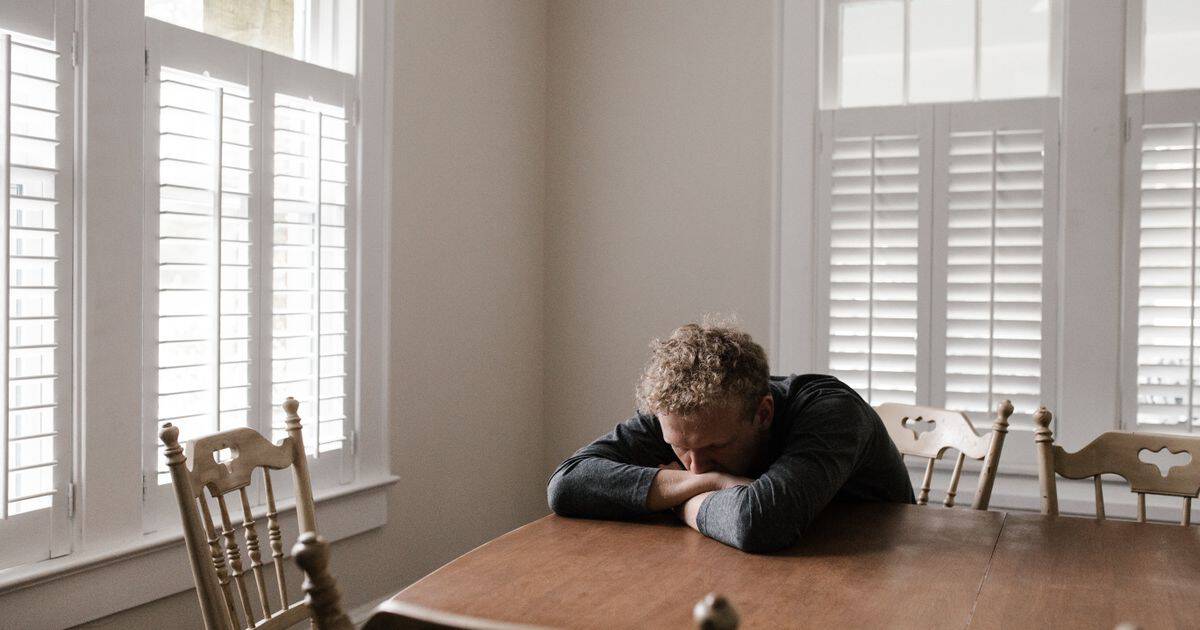
When your husband ignores you, it is almost never because he has stopped caring. In most marriages I see, he has gone quiet because being close to you has started to feel like a place where he fails, so he retreats to the phone, the work, the garage, and every time you reach harder he hides deeper.
What helps is not a louder case against him. It is one soft sentence about what his absence does to you, said at a calm moment, and then letting him come back toward you.
If you want help finding your words before you say them, Figlet, the AI coach built on my work, is there at 2 in the morning, or right now: tell it what being ignored looks like in your house.
You told him about your day and he said mm. You asked him a question and he answered the phone in his hand instead. You walked into the room and he did not look up. And it is not that he is cruel. He is just not there. You are living with a man who is in the house and nowhere near you, and somewhere along the way you stopped being angry about it and started feeling like you were disappearing.
Then you type my husband ignores me into your phone, on the same sofa, a foot away from him.
I want to tell you what is actually happening, because it is not what it feels like, and because I have been the man on the other end of that sofa.
Being ignored is the oldest wound there is
Stuck in the same argument again?
Talk it through with Figlet right now. Private, judgment free, built on 17 years of couples therapy.
There are three questions every human nervous system asks the person it is attached to, and it asks them constantly, under the words. Are you there for me. Do you see me. Do I matter to you.
When you speak and he walks past, or gives you a flat one-word answer, or looks at a screen, your body does not register a busy man. It registers erasure. Do you see me is not a poetic question. It is a survival test, and on the savanna, if the person you depended on stopped seeing you, you died. That is the alarm going off in your chest when he does not look up. Your chest goes cold, you feel invisible in your own house, and it is the same feeling whether he is being cruel or just absent, because your body cannot tell the difference.
So no, you are not oversensitive. You are a mammal whose person has stopped attuning to you, which is the one thing a mammal cannot bear.
Why he goes absent
Here is the thing I need you to see, because it changes everything.
A husband who goes silent, or behind his phone, is not sitting there thinking how do I hurt my wife today. He is somewhere he feels competent because he has stopped feeling competent with you. Somewhere back there, your bids, your tone, your presence started landing on him as a statement that he was failing. And a man who feels like a failure with the woman he loves does the one thing his nervous system knows to do with that much shame. He goes to the basement. Work, logic, the garage, the screen.
The phone is not a rival. It is an exit. It is a safe little box where nothing he does is wrong.
I know because I do it. When I get overwhelmed with work I retreat into my head and start optimising tasks, and my wife has had to stop the movie and say, Figs, you are running past me, I feel completely unseen in this house. I did not know I was doing it. I was in what I call my private chasm of suffering, looking angry or distant, and underneath it feeling completely alone and like once again I had done it wrong.
I learned it early. My sister and I, small, in the back of a dark garage at a childminder’s in Tallaght, forgotten while the family ate dinner in the light. Hearing the forks on the plates. I learned to go quiet and swallow what I needed rather than risk asking for it. A lot of absent men learned some version of that.
Other reasons a husband ignores his wife
Shame about failing you is the most common thing I find under a husband’s silence, but it is not the only thing. Here is what else I see, so you can hold your own marriage up against it.
He is flooded
Sometimes he is not ignoring you so much as he is offline. John Gottman’s research found that stonewalling is almost always accompanied by physiological flooding: a racing heart, stress hormones, muscle tension. When his body is in that state, the part of his brain that does language and nuance is on standby. He could not have the conversation you want even if he wanted to, and he usually does want to. It looks cold from the outside. Inside, he is not cold. He is flooded.
Work and stress have swallowed him
Some men disappear into work because work is the one shore where they can still stand up. I see this constantly with men who stay at the office late. Shame nobody helped them call shame gets converted into workaholism, into staying late, because coming home means facing the person they feel they are failing. I was one of those men once, renting myself to a career I did not believe in, so I recognize it.
He is ignoring you when you talk because talking has become a test
If he is fine with the kids, fine with his friends, fine at work, and goes flat the moment you start talking, that is usually not about your voice. It is about what conversations with you have come to mean in his body. If recent talks have tended to end with him feeling like he got something wrong, then your opening sentence sounds, to his nervous system, like the start of another performance review. So he gives you mm and keeps scrolling. It is not that the screen is more interesting than you. It is that nothing on the screen can find him lacking.
He used to be the one reaching
One caution before you label him. Sometimes the man who ignores you used to be the one reaching, and pursued for years until he had nothing left. What looks like a withdrawer is sometimes a pursuer who gave up. That man does not need space. He needs to feel that his old reaching was not in vain.
Resentment, low mood, or something he is not saying
Distance can also be resentment that was never spoken, a heaviness that might be depression and deserves its own help, or, sometimes, a secret. I am not going to pretend those do not exist. But I will tell you what I have learned across seventeen years in the room: not once have I sat with a husband whose silence was actually indifference. Hundreds of them, though, whose silence was pain they had no other way to carry. If he did not care, he would not shut down. He would be calm and disengaged. Real disinterest looks like ease, not withdrawal.
If you are dating rather than married, the pattern is the same but the questions are a little different, and I have written separately about why a partner ignores you and about the boyfriend who goes quiet when he is upset.
Why everything you have tried makes it worse
You have asked louder. You have tested him, gone quiet to see if he notices, said something sharp to get a reaction. You have gone cold yourself. Every one of those is a reasonable thing to do when you are drowning next to someone. Every one of those lands on him as proof that he is failing, so he goes further into the basement, so you feel more invisible, so you push harder.
I call this the Waltz of Pain. You reach, he retreats, you reach harder, he retreats further. Two people on one sofa, each certain they are the only one hurting. Neither of you is the villain. The dance is.
When the quiet starts the moment he is hurt or stressed himself, I wrote about why a husband goes silent when upset and what brings him back.
He does not have to mean it for it to hurt
Let me tell you about a couple I sat with. I will call them Josh and his wife. Josh has a sleep apnea machine. They went to bed a little irritated with each other one night, and Josh did what he always does when he feels the edge in the room. He went into his hole. He put his headphones in so he would not bother her, and watched something on his phone until he fell asleep.
His wife felt the disconnection in the dark next to him. She could not sleep, so she went downstairs to get her head right. Sometime later Josh woke up to use the bathroom and, out of pure habit to keep the dogs contained, latched the bedroom door. He did not even know she was not in the bed. When she came back upstairs, calmer, ready to apologize and reach for him, the door was locked. She whispered his name. He could not hear her through the door and the machine. She went back down and slept on the couch.
The next morning Josh came downstairs cheerful and said good morning, and his wife looked at him with absolute fire. To her nervous system, that locked door meant: you hurt me, and you are out. Josh’s intention was the dogs. The impact was devastation.
That is most of what being ignored is. Impact without intention. Your husband may honestly not know he is doing it, the way I did not know I was running past my wife. But Josh could not repair it by saying I did not mean it, it was just the latch. He had to sit with the fact that the woman he loves stood in a dark hallway feeling utterly abandoned, and his body was the one that put her there. Both things are true. He did not mean it. And it hurt you. You are allowed to ask him to hold both.
Ignoring, stonewalling, or the silent treatment?
These words get used as if they were the same thing, and they are not quite.
Being ignored, the way I mean it here, is the everyday absence. The mm. The phone at dinner. The man who is present in the chair and gone behind his eyes. It is often not tied to any fight at all.
Stonewalling is what happens inside a conflict: the face goes flat, the jaw sets, he stops responding while you are still talking. It is mostly flooding, a body tripping a circuit breaker. The silent treatment is different again, because it is a deliberate going quiet afterwards, sometimes for days, to make a point. I wrote about how to tell those two apart in silent treatment vs stonewalling.
What matters more than the label is the direction. Does he drift back toward you when the pressure drops, or does the distance only harden?
Is it abuse when your husband ignores you?
Usually, no. Most husbands who ignore their wives are inside a shame-driven loop, not an abusive one. But silence used to control or punish you is a different thing, and it deserves different help.
The tell is whether he eventually comes back, takes responsibility and tries to repair. If he does, even slowly and clumsily, you are almost certainly in the loop I have been describing. If the silence is a weapon, if it goes on until you apologize for things you did not do, if it comes alongside him controlling where you go and who you see, monitoring you, threatening you, or making you afraid, then this article is not your answer. Please talk to someone today, a person you trust or the National Domestic Violence Hotline at 1-800-799-7233 or thehotline.org.
Absent, or gone
Most of what I am describing is a man in a cycle, and that changes. But some of you are asking a harder question, so here is how I tell the difference in the room.
A man who is absent inside a cycle still reaches, in small, wobbly ways, when the pressure drops. He makes tea. He fixes the thing. He looks for your eyes when nobody is fighting. And after a cold stretch, he feels bad about it, even if he cannot say so. A man who has checked out does none of that. Nothing moves when you stop pushing, there is no remorse, and the distance costs him nothing you can see. If that is what you are living with, this article is not enough and you should be reading the test I use for that and talking to someone who does this work.
Most of you are not there. You are with a man who is hiding, not a man who has left.
What not to do when your husband ignores you
You will want to do all of these. I understand why. Each one makes the waltz faster.
- Do not ignore him back. Matching his silence feels like dignity, but it just turns one person hiding into two. Now nobody is reaching.
- Do not build the case. When your brain is in limbic panic it does one thing extraordinarily well: it builds a courtroom case. The notebook of wrongs, every time he picked the phone over you. You can be right about all of it and still never reach him from there, because you cannot reach anyone by diagnosing them.
- Do not try to talk him out of a shutdown. Problem solving, explaining, minimizing and sarcasm all pour gasoline on the fire when he is flooded. Questions that begin with why did you are gasoline too.
- Do not bang on the floorboards. I often describe it this way to the partner who is reaching. Imagine coaxing a frightened animal out from under a porch. What works is patience and softness. What does not work is reaching under the porch and grabbing.
- Do not decide what his silence means before you have asked. The story your mind writes in the gap is almost always darker than the one in his body.
How to stop chasing him without giving up on him
Stop pursuing for a moment, without leaving. That is the whole move, and it is the hardest one there is. You are not giving up on him. You are just no longer feeding the fear response that keeps his breaker tripped.
When he goes quiet, give his body some time to settle, about twenty minutes, and then come back. Not with the argument, but with the ache underneath it. Space without repair becomes abandonment, so the coming back matters as much as the pause.
Turn the flashlight around. Instead of studying his silence, notice what it does in your own chest. The throat closing, the stomach dropping. That ache, said simply, is something his body can actually receive. A list of his failures is not.
And keep your own life full while you do this, your friends and the things that feed you, so your whole sense of being wanted is not riding on one evening on the couch. That is not distance. It is you staying steady enough to keep reaching softly.
What to do tonight, before you say anything
- Put your own phone face down. Not to make a point. So that when you do look at him, you are actually there.
- Catch the half-second. When he gives you the flat answer, there is a moment where you feel the sinking, the being-passed-over ache, before your mouth opens with the complaint. Notice it. That half-second is where the work lives.
- Pick a calm moment, not the one where he has already gone behind his eyes. If he is flooded, let it pass and come back.
- Leave the history out. Stop working the movie, the last ten years, and work the single frame: what is happening between you right now.
- Then say one thing. Not the speech. The sentence below.
What to say tonight
Not a plan. One thing.
Put down the case. Not the phone, not the last six times, not the list. You are going to turn the flashlight off what he is not doing and onto what it does to you.
Sit beside him. Softly. Something like:
I am not bringing this up to complain or to say you have done anything wrong. But when you go quiet or look at your phone when I am talking, my chest goes cold and I feel invisible in my own house. I love you. I miss you. I just need to know you can see me.
Then stop. No but. No and another thing. There is nothing in that for him to defend against. You have just done the one thing that shouting and testing and going cold could never do, which is answer his fear that he is failing you by showing him that what you need is not a performance. It is him.
Other words for other moments
If he goes flat in the middle of a conversation: I can see you have gone quiet. I know that means something in here got too heavy. I am not going anywhere. Take the time you need, but I need us to come back to this before we go to sleep.
If you can feel the old dance starting: I think we are doing our thing again, where I reach and you pull away. That puts you on the same side, looking at the loop together.
If you only have a few words left in you: I feel very far from you and I do not know how to reach you. That will do more than an hour of building your case.
When he still will not talk: getting help
If you have said it plainly, more than once, and he still will not engage, and he refuses couples therapy, that refusal is usually a withdrawer’s response, not an indifference response. He hears therapy as another room where he will be told everything he is doing wrong. His refusal is protection, not apathy.
You can go alone. You only need one person to interrupt a cycle. The dance requires two participants, and if you change your steps, it cannot continue in its current form. Going alone does not guarantee he follows, but it helps you see your own part in the loop and stop doing the things that make him withdraw harder.
Get help sooner rather than later if the silence has hardened no matter what either of you does, if you have started to lose yourself trying to be seen by someone who will not look, or if any part of it feels like control or punishment. Duration matters less than direction.
If he is reading this over her shoulder
She is not attacking you. She is drowning a foot away from you and reaching for the only thing floating. Every time you go behind the screen to get some air, her body reads it as the thing it was most afraid of. You do not have to fix anything. Put the phone face down, look at her, and say, I can see you, I am here. Say it with your body as much as your mouth. That is all the question ever was.
Common Questions
Why does my husband ignore me?
Most often because being close to you has started to feel like a place where he fails. His nervous system reads your frustration as I am failing her again, and going quiet is how he survives that feeling. Less often it is flooding, work stress, low mood or resentment that was never spoken. It is rarely that he has stopped caring.
Why does my husband ignore me when I talk to him?
Because talking has started to feel like a test he keeps failing. If recent conversations have ended with him feeling he got something wrong, your first sentence lands as the start of another verdict, and his body checks out before you have finished it. Shorter, softer openings that lead with your feeling rather than his failure give him something to receive instead of something to defend against.
Is my husband ignoring me because he doesn’t love me anymore?
In my clinical experience, this is almost never what silence means, even when it lasts for weeks. If he did not care, he would not shut down; he would be calm and disengaged. Coldness that looks like indifference is usually fear of shame and failure. Real disinterest looks like ease, not withdrawal.
Is ignoring your wife a form of emotional abuse?
Not usually, but it can be. Silence becomes abuse when it is used to punish or control you, when it only ends when you give in, or when it sits alongside monitoring, threats or fear. If that is your marriage, talk to someone you trust or the National Domestic Violence Hotline at 1-800-799-7233.
Should I ignore my husband back?
No. It feels like self-respect, but it turns one person hiding into two, and then nobody is reaching. Step back from chasing without going cold: pause, let his body settle, and come back with one soft sentence about how you feel.
Why does my husband ignore me but talk to everyone else?
Because nobody else’s opinion of him carries the same weight. With friends and colleagues there is nothing at stake. With you, his deepest question, am I enough for you, is on the line every time you speak, so you are the one person whose disappointment he cannot bear, and the one person he hides from.
How do I get my husband to stop ignoring me?
You cannot make him, but you can change what he is hiding from. Stop pursuing without leaving, name the loop instead of the man, and say what his absence does in your body rather than what he is doing wrong. Over weeks of that, the shutdowns tend to get shorter and the returns quicker.
Can a marriage recover when he has been ignoring me for years?
Yes, more often than the internet will tell you. What has to change is not the length of the history but the level at which you both work: the single frame, not the whole movie. I have watched couples who had been living as roommates for a decade find their pulse again. It is not fast, but it is real.
What I tell the woman in that chair
You are not too much. You are asking the oldest question there is to a man who has stopped believing he can answer it. When you ask it from the inside instead of the outside, and he hears the question instead of the verdict, the phone loses its job. It was only ever a place to hide from failing you.
If you want help with the words for tonight, that is what I built Figlet for. Tell it what your evenings look like and what you have tried. It will show you the cycle you are both in and give you the one line that asks the question instead of shouting it.
Keep Reading



Stuck in the same argument again?
Figlet is relationship coaching built on 17 years of couples therapy. Talk through what is happening the moment it matters, get a clear next step, and stop circling the same fight. Private, judgment free, ready whenever you are.
Free to start. No credit card needed.
Figs O'Sullivan
Founder · EFT couples therapist
“What I would tell you at 10pm, if I could.”