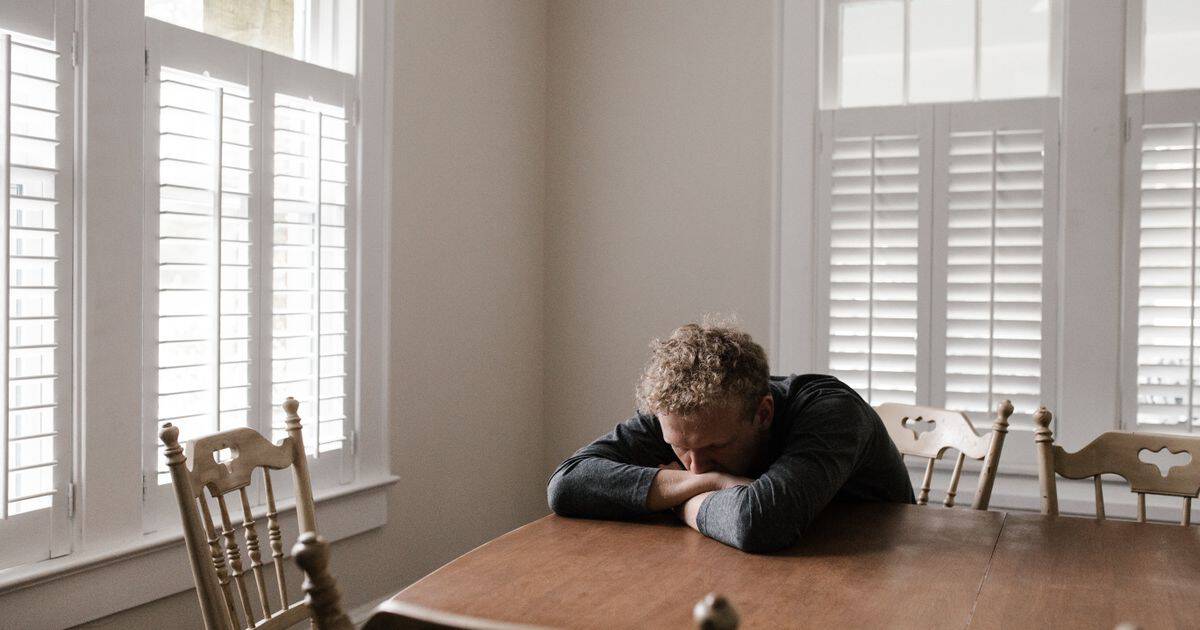
If you are married but lonely, you are not imagining it and you are not needy. Your nervous system is sounding an alarm because the person your body chose as home is right beside you and no longer reaching, which is why it can hurt more than being single.
It is almost never one cruel partner. It is usually two decent people who stopped being able to reach each other and slowly replaced reaching with logistics, and that is one of the most repairable things I see in couples work.
If you are lying awake feeling alone inside your own marriage and want help finding words that will not start another fight, Figlet is an AI coach that is there at 2 in the morning, or right now.
You are lying next to someone. You can hear them breathing. Twenty minutes ago you talked about who is collecting the kids and whether the car needs a service, and it was perfectly pleasant, and you have never felt more alone in your life.
That is the thing nobody warns you about. Lonely and single is one kind of pain. Lonely and married is another, and it is worse, and I want to tell you why, because once you understand why, you will stop thinking there is something wrong with you.
If this is your marriage, I also wrote about what it means to feel married but alone and disconnected, and how couples find their way back to each other.
Why it hurts more than being alone
Stuck in the same fight again?
Talk it through with Figlet right now. Private, judgment free, built on 17 years of couples therapy.
When you are single, your nervous system expects to navigate the world on its own. It is on normal alert. It copes.
When you are married, you have appointed one person as your safe harbour. That is what marriage is to a mammal. And so when you are sitting six inches from that person on the sofa and they are somewhere else, behind a screen or behind their eyes, your body does not register a quiet evening. It registers an emergency. On the savanna, if the person you depended on was right beside you and stopped attuning to you, your organism read that as being about to be abandoned. That is why loneliness in marriage feels like drowning while standing next to a lifeguard. The lifeguard is right there. And he is not looking.
So no, you are not needy. You are a mammal whose person is present and absent at the same time, which is the one thing a mammal cannot make sense of.
Is it normal to feel lonely in a marriage?
Yes. It is more common than almost anything else that walks into my office. Not the loud marriages. The quiet ones. The ones that look completely fine from the outside and feel completely dead from the inside.
From Empathi’s own research: in 58,221 completed relationship assessments, 33% named alone as their deepest feeling when love is not working. That is 19,139 people, more than rejected, more than abandoned, more than hopeless.
Common is not the same as harmless, though. Most long-term couples hit at least one long stretch where they are technically together and functionally distant. Loneliness inside a marriage is not evidence that the marriage is wrong. It is evidence that the bond has gone quiet and needs deliberate repair. Ignored, it hardens. Named honestly, together, it softens.
And it is not something you can meditate, journal or self-love your way out of. The advice to learn to love yourself first gets attachment backwards. You do not solo your way to feeling met. You get met, and the meeting is what steadies you.
Signs you are married but lonely
Being alone is about who is in the room. Being married but lonely is about who is still reaching. Loneliness rarely announces itself. Often it is disguised as a perfectly fine marriage. These are the signs I hear most often from the people sitting across from me:
- Most of what you talk about is logistics. Who is collecting the kids, whether the car needs a service, what is for dinner. Perfectly pleasant, and nobody touches anyone’s heart.
- You are fine at work, funny with friends, and then you walk in your own front door and feel your whole system deflate. Home is where the alarm lives.
- You ask about their day, get “fine,” and you have stopped asking the follow up.
- “Love you” comes out in exactly the same tone as “night.” Affection has become a checkbox, a kiss on the top of the head on the way out the door.
- You would rather tell a friend about your day than the person you married.
- You are the one who always notices the silence and works out how to break it.
- Small fights about the dishes or the phone keep flaring up, because negative attention is still attention when your nervous system is starving.
- A tight chest at dinner, a heaviness in bed, a quiet dread on Sunday nights.
- The fights have stopped, and it does not feel like peace.
That last one matters most, and I will come back to it. For the wider picture of loneliness, inside and outside a relationship, I also wrote about how to deal with loneliness.
How you got here
Nobody sets out to become roommates. What happens is that life gets big. Careers, mortgages, children, the kitchen remodel. And the two of you stop showing up as yourselves and start sending in your representatives, the competent versions, the ones who manage the household. You talk about who is picking up the kids and what is for dinner and you never once touch each other’s hearts.
I call this emotional fiat. You keep printing polite check-ins and domestic coordination that are not backed by anything. The peace feels fine. But the debt piles up under the surface, every small missed reach, every time one of you moved on rather than have the hard conversation, and one morning you wake up as two business partners co-managing a house.
The baby years
New parents are extraordinarily vulnerable to this, and almost nobody prepares them for it. The baby gets the attention, as it should, and the partnership gets starved. The parent at home is running on broken sleep and a body that already belongs to everyone else. The other one throws themselves into work as their contribution, which reads as emotional absence. Both of you are giving everything, and neither of you is giving it to each other.
Work, screens and parallel lives
Some couples build completely separate lives under the same roof. Different schedules, different bedtimes, different friend groups. They co-parent well. They are polite. And they are profoundly alone.
Then there is the phone, which creates a loneliness that is hard to name because it comes wrapped in plausible deniability. I was just checking one thing. I am right here, what do you want? Your nervous system does not care about the excuse. It registered the moment you reached and your partner chose a screen.
You both stopped bringing the real thing
Every one of us walked out of childhood with some version of “if I show the real thing, something bad happens.” So you swallow the tender sentence because the last time you said it, it landed with a thud. Your partner does the same. Nobody is lying, but nobody is fully there either. That protection keeps you from getting hurt, and it also keeps you from being found.
Underneath every one of these is the same thing. The bonded body only ever runs two questions, and never in words. Are you there for me? Am I enough for you? When you are married but lonely, one of those questions has been quietly answering itself in the negative for a long time. Every unanswered bid stacks on the pile.
The dance you are both in
Here is what I see in the room. You feel alone, so you reach, and because you are hurt the reach comes out as a complaint. You are always on your phone. We never talk any more. You treat your friends better than me. And to your partner’s nervous system that is not an invitation. It is a performance review they just failed. So they do what a mammal does with shame. They go to the basement. Logic, excuses, the phone, the shed. Which leaves you more alone, so you reach harder, so they go deeper.
Two people in the same bed, each certain they are the only one hurting. I call it two separate suffering bubbles. I feel terrible and you did it to me. I feel terrible and you did it to me. Neither of you is the villain. The dance is.
What it looked like for one couple
A couple I sat with, I will call them Jan and Ben, came in after having their second baby. Successful people. A tech founder husband. A sharp, capable wife. They had not been physically intimate in over a year. Jan sat with a righteous, sharp anger. Ben went silent behind his study door most evenings.
The story they told themselves was that the baby had killed their sex life. The story underneath was that Jan felt achingly alone in the marriage, and Ben felt like a constant disappointment to the person he most wanted to be good for. Her reaching came out as sharp critique. His pain came out as retreat. Each move confirmed the other’s worst fear.
The work was not date night homework. It was slowing the movie down to a single frame and helping Jan drop her prosecutor long enough to admit the freezing loneliness underneath. When she did, Ben’s tech-founder armor collapsed, and he admitted a childhood-old terror of failing the person he loved most. Their two separate suffering bubbles merged into one shared bubble. For the first time in a long time, both of their bodies got a real answer to the two ancient questions. Yes, I am here. Yes, you are enough.
Married but lonely as a woman, and as a man
The alarm is the same in every body. What changes is how people tend to carry it, and I want to be careful here, because plenty of women go quiet and plenty of men are the ones reaching.
As a woman
Many of the women who search “I am married but alone” are carrying the mental load of the house: the calendar, the school forms, the meals, the moods. When you feel like a project manager instead of a partner, touched out and tending everyone, there is very little of you left that anyone is actually turning toward. And when you finally say something, it comes out as the list, because the list is the only part of the pain that feels allowed. Underneath the list is a much simpler sentence. I am lonely and I miss you.
As a man
Many men’s loneliness is quieter, harder to see and less often spoken. A lot of men were raised to deal with shame on their own and never let it show, so the very thing that would heal it, company, is the thing they have been trained to avoid. A man can have a wife, kids, workmates and a group chat, and still have nobody he would call at two in the morning. If his wife is the only place he was ever allowed to be soft, and that door has gone quiet, he will often retreat to the study, the shed or the phone rather than say “I have been lonelier than I have let on.” It will feel enormous to say. To the person hearing it, it usually sounds like an invitation.
If that’s your husband, or you, I wrote about what’s behind the male loneliness epidemic and what men can actually do about it.
The dangerous version
Some of you reading this have stopped reaching. You stopped complaining months ago. The fights stopped. Your partner probably thinks things are better.
I want to say this plainly. That is the most dangerous stage there is. A pursuer who has gone quiet has not found peace. They have burnt out. They have put down the protest and started keeping a silent score, grieving the marriage inside their own heart while still making dinner in the same kitchen. I see these couples after one of them has already packed the bags emotionally, and the other one is still oblivious. If that is you, this article is more urgent than you think.
I know this from the inside
When I get overwhelmed and low, I do not reach. I retreat into what I call my private chasm of suffering. I go quiet, I look angry, my wife gets what she calls the belligerent Irish farmer. And underneath all of that I am feeling completely alone, like nobody is there.
I learned it early. My sister and I, small, sitting in the back of a dark garage at a childminder’s in Tallaght, forgotten while the family ate dinner in the light. I could hear the forks on the plates. I learned to swallow what I needed so I would not be a burden. Most lonely people in marriages learned some version of that somewhere, and it is why the reach comes out sideways or not at all.
Can a marriage recover from loneliness?
Yes, and I watch it happen, but not through willpower. Loneliness in a marriage is a signal that the bond has gone quiet, not a verdict that the bond is dead. Bonds go quiet. They can come back.
It recovers when both partners stop building the case against each other and start looking at the loop between them. When the one who withdraws feels safe enough to come out of hiding, and the one who pursues softens the protest into a real reach. The fact that the loneliness hurts this much is good news. It means the attachment system is still online. If there were nothing left, you would feel resignation, not pain.
What does not fix it is the big gesture. The trip away, the surprise weekend. What fixes it is small, daily, repeatable evidence that you are still each other’s person. Eye contact at the door. A hand on the back when passing in the kitchen. Turning toward them when they say the small thing, not just the big thing. What changes quickly is hope. What changes slowly is the body.
What to say to your spouse
Most people have already tried to say it, and it went badly. That is usually because the sentence came out as a case. “I feel like you never prioritize me. I feel like you are always on your phone.” Every one of those starts with “I feel,” and every one of them is an accusation. Your spouse’s body hears threat, and they defend, counterattack or shut down.
Lead with what is happening in your chest, not with what they did wrong. Pick a quiet moment, not the middle of a fight and not as they walk out the door. A few ways in:
- “I woke up this morning feeling really disconnected from you, and it scared me.”
- “I have been feeling a specific loneliness lately and I do not want to keep swallowing it.”
- “Look what we keep doing to each other. Neither of us wants this. Can we sit together for ten minutes, no phones?”
The first is not a prosecution. It is an invitation. And name the loop rather than the person, because the two of you are not enemies. The dance is.
If your spouse is the one telling you
If your partner says they feel lonely, their nervous system needs you to reflect it before you explain anything. “You have been feeling alone with me.” Not “well, I was busy because.” Let them know it makes sense: “Of course you felt that way.” Then make contact with the feeling under it: “That sounds really lonely. I hate that you have been feeling that.” You are not admitting guilt. You are showing them someone is home.
If they do not respond the first time
Sometimes you say the soft, true thing and get a shrug, a defense, or the phone. Do not escalate the case. The partner who goes quiet is very rarely cold underneath. I meet a scared person who decided long ago that reaching would cost more than not reaching. Try once more, softer, at a calmer moment, and ask what happens for them when you bring up the distance. If you want the longer version, I wrote about why you can feel so lonely lying in the same bed and what to do when the words stop landing.
Can you go to marriage counseling alone?
Yes. In my office it is almost always one person who starts the repair. If your spouse will not come, going on your own is not a consolation prize. It is often how the whole thing begins to move.
Here is why it works. A marriage is a system, and a system has to respond when one part moves. You cannot change your steps in a dance and have your partner keep doing the same choreography. When you stop pursuing with criticism, the withdrawer’s wall loses its purpose. When you stop prosecuting, there is nothing left to defend against. Going alone gives you a place to learn your own half of the loop, why you reach the way you do, the fear underneath the anger, and how to bring the soft sentence instead of the case.
Here is the honest limit. One person can start it. One person cannot finish it. Repair happens between two people, and the fire that starts when your partner’s face goes flat on a Sunday afternoon does not start when you are alone on a therapist’s couch. So use the time to change your steps, and keep the door open for your spouse to join when something shifts. I go deeper on this in how to fix a relationship when you are the only one trying.
When loneliness is a sign of something bigger
Loneliness on its own is almost never the verdict. It is a symptom. But there are times it is pointing at more than a loop, and I want you to know them.
- Depression. Loneliness can sit very close to depression. If you have stopped enjoying anything, you cannot sleep or cannot get up, or you are drinking to get through the evenings, please talk to a licensed therapist where you live. If you are thinking about hurting yourself, call or text 988 in the US.
- Safety. If you feel unsafe with your partner, that is not loneliness to be worked on together. Your safety comes first.
- A hard and permanent no. The tell I look for is simple. Is your partner capable, even slowly, even imperfectly, of seeing you as a person and owning some share of what has gone wrong between you? If you have said the soft, true thing plainly, more than once, and the answer is still a hard no, that is a fairer question about the marriage’s future, and your resentment is data worth taking seriously.
Most people considering leaving a lonely marriage have never actually had the conversation where they name the loop together without turning it into a fight. Try that first.
What to say tonight
Not a plan. One thing.
Put down the case. Not tonight the phone, not the friends, not the list of everything they have not done. You are going to turn the flashlight off them and onto yourself, and say the thing that is actually true.
Sit beside them and say something like: I am not bringing this up to complain or to tell you that you have done anything wrong. I am just feeling really lonely in my own heart tonight. I miss you. I miss us. I love you and I am scared of how far apart we feel.
Then stop. No but. No so can we. There is nothing in that for anyone to defend against. There is just someone they love, telling them the truth from the inside. That is the one thing the complaints could never do, and it is the only thing that has ever pulled a couple out of the roommate stage.
And a few small things you can actually do before you sleep:
- Put your hand on your chest and take three slow breaths. This is not woo. It is physiology, and it brings you out of alarm enough to think.
- Ask yourself honestly: am I the one who reaches, or the one who goes quiet? Most people know instantly.
- When the ache comes, do not build the case. Ask where you feel it in your body and stay with it for thirty seconds. Locating the feeling calms the alarm. Arguing the story feeds it.
- Put the phone in another room for ten minutes and sit near your spouse with no agenda. Turn your face toward theirs.
- If it feels possible, say the one true sentence above. Then let it land.
Common Questions
Why do I feel lonely when I am married?
Because the person your body has appointed as home is physically present and emotionally offline. Your nervous system keeps asking “are you there for me” and “am I enough for you,” and when the answer keeps coming back as no or maybe, it rings an alarm you feel as loneliness. It is rarely about one bad partner. It is usually two people who replaced reaching with logistics.
Why does being married but lonely hurt more than being single?
Because being unseen by a stranger is one thing, and being unseen by the person your biology treats as home is a different, deeper ache. When you are single, your body is not scanning anyone for safety. When you are married, being near them without being met by them is more painful than being physically alone.
Can you go to marriage counseling alone?
Yes. One person can start the repair, because when you change your steps in the dance your spouse’s nervous system gets something new to respond to. You will not be able to finish it alone, since repair happens between two people, but going on your own is very often how it begins.
Can a marriage survive years of loneliness?
Yes, when both partners stop building the case and start looking at the loop between them. The thaw takes time, because a body that has kept score for years needs consistent proof before it trusts again. It is repairable. It is rarely repairable alone.
Should I leave if I am lonely in my marriage?
Loneliness on its own is a symptom, not a verdict. Before you decide, ask whether the two of you have ever named the loop together without turning it into a fight, because most people have not. If, after real work, your partner gives a hard and permanent no, that is different information, and if you feel unsafe, your safety comes first.
What if my spouse thinks everything is fine?
Very often they do, especially if you have stopped complaining. Quiet looks like peace to the partner who was being pursued. Do not wait for them to notice. Tell them what is happening in your own heart, without the case, so they have something to come toward.
What I tell the person in that chair
You are not too much and your partner is not cold. You are two people who both learned to swallow what they needed, married each other, and are now starving politely in the same house. The way back is not a date night. It is going from two bubbles into one. Would you look at what we are doing. We are both lonely because we are so important to each other.
If you want help with the words for tonight, that is what I built Figlet for. Tell it what your evenings look like and what you have tried. It will show you the cycle you are both in and give you the one line that is not a complaint.
Keep Reading



Stuck in the same fight again?
Figlet is relationship coaching built on 17 years of couples therapy. Talk through what is happening the moment it matters, get a clear next step, and stop circling the same fight. Private, judgment free, ready whenever you are.
Free to start. No credit card needed.
Figs O'Sullivan
Founder · EFT couples therapist
“What I would tell you at 10pm, if I could.”