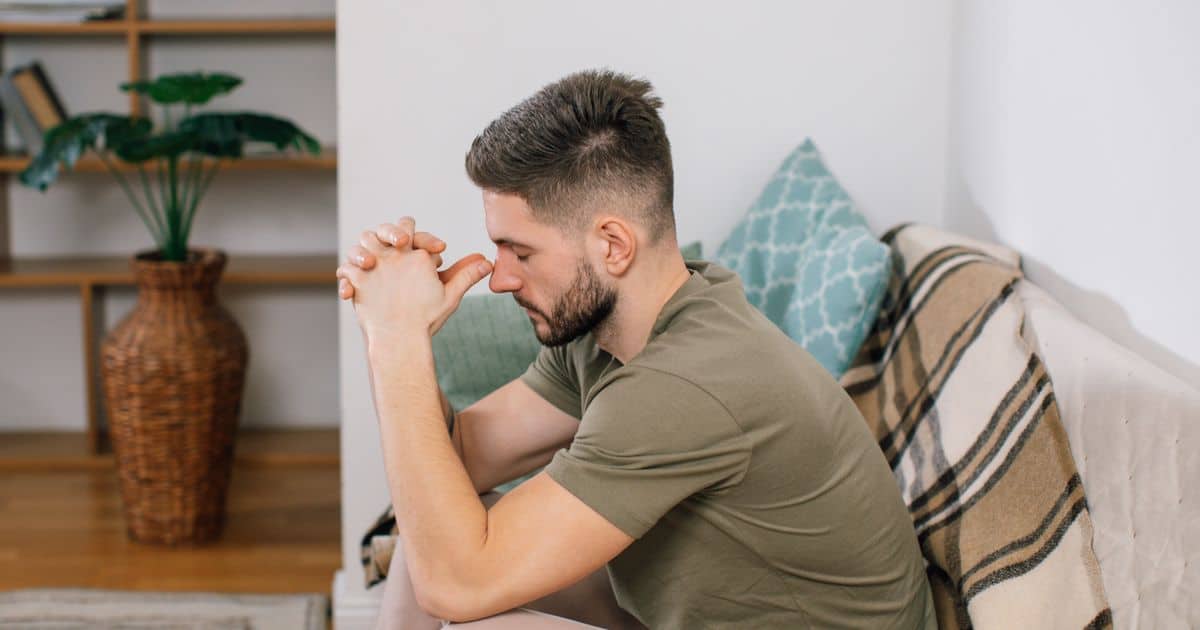
If your husband sulks, he is usually protesting a disappointment he does not have words for. He felt refused, small or not enough, he cannot say “that hurt” or “I felt turned down,” so the feeling leaks out as a mood the whole house has to carry. It is not your job to fix it by giving in, and when the mood is used to punish you or to get a yes you did not want to give, it has become something else.
You said no. Maybe to his mother’s for the weekend, maybe to the expensive thing, maybe to sex. Now come the sighs, the short answers, the door closed a little too firmly, and the air in the house has gone heavy, the way it always does, until you give in. It is 11pm and you are typing “my husband sulks” because you cannot tell anymore if you are being punished or if you are just tired. If you want somewhere private to put it first, tell Figlet “my husband sulks every time I say no” and see the pattern you are both in.
Why does my husband sulk when he doesn’t get his way?
Stuck in the same argument again?
Talk it through with Figlet right now. Private, judgment free, built on 17 years of couples therapy.
I have been a couples therapist for seventeen years, and the sulk is almost never about the weekend or the purchase. The bonded body only ever asks two questions, and never in words. Are you there for me? Am I enough for you? When you say no, the second question fires. To a scared nervous system, no can sound like a rejection of him rather than of the request.
Donald Nathanson called it the Compass of Shame, and I use it with couples every week. Shame runs in four directions: withdraw, attack self, avoid, attack other. Sulking is the withdraw corner, with attack self sitting right underneath it. Withdrawal feels like control to him, but it is fear wearing a mask. The pout is shame trying not to be seen. Your no landed on the oldest wound he has: I am not enough.
There are no angry people, only people hurting. That does not make the mood okay. It makes it readable.
My husband sulks like a child. Is that what he learned growing up?
Often, yes. The husband who sulks, drags his feet and jokes with an edge is usually a man who learned very early that direct anger was dangerous and direct disappointment was unbearable. If he asked clearly for what he wanted, he would be mocked or made to feel small. If he said no straight, someone would erupt. So he learned to comply on the surface and protest underneath. What kept him safe at six is running the show at forty, in your kitchen.
That is why it looks childish. Telling him he is “sulking like a child” is accurate and will make it worse, because it lands directly on the shame the sulk exists to hide.
Is sulking a form of control?
Sometimes. The honest answer is that sulking sits on a spectrum. Protective freeze at one end, passive aggressive sulking in the middle, and at the far end punitive silence that is intentional, sustained and designed to control.
The difference is not the outcome. It is the method. A man who is disappointed and goes quiet for an evening is human. A man who keeps the mood going, guilt trips and brings up old debts until you capitulate is no longer protesting a hurt. He is penalizing you for not complying. I unpack that family of moves in relational aggression in love.
Ask yourself three things. When he comes back, does he come back toward you, or with a price tag? Does the mood reliably end the moment you change your answer? Have you started pre-shrinking your no so you do not have to sit through it? If those are yeses, the sulk has become leverage, even if he could not tell you he is doing it.
My husband sulks when I say no to sex
This one needs saying plainly. You do not have to have sex you do not want. What you should not have to do is pay for your no. A sulk that keeps going until you say yes is pressure, and a yes given to end a sulk is not a free yes.
Understanding him still helps. When a man reaches and is turned down, something in him collapses into the old shame of not being enough. He does not stay with the collapse, because the collapse is unbearable. So he protects. He withdraws, he sulks, he gets snippy at breakfast, he disappears into his phone. His protection lands on you as coldness, and you pull back further. His hurt is real. It still does not give him a claim on your body.
My husband sulks after a fight
After a fight the sulk often looks the same but means something slightly different. His body may have heard the argument as “you have failed again,” and the heaviness is how he survives that. In 58,221 completed relationship assessments, shut down and withdraw were the top two reactive behaviours for withdrawers. If his mood after a fight is less pout and more wall, I go deeper into that freeze in my husband goes silent when upset.
My husband sulks for days
When a sulk stretches past an evening into days of not speaking, it has moved into silent treatment territory. I walk through what to say and text in when your husband gives you the silent treatment for days.
What is happening in me when the house goes heavy?
While he is drowning in Am I enough?, you are living inside the other question. Are you there for me? You made a reasonable choice and the person whose warmth you depend on went cold over it. Your body registers it as love being withdrawn. So you tiptoe.
Impact is bigger than intention. He may not mean to make you feel punished. You still do.
Why does everything I try make it worse?
Because you are in a dance, and every move you have is a step in it. I call it the Waltz of Pain. In our research, 74.1% of the 6,159 couples where both partners completed the assessment were in the pursue and withdraw cycle. He goes heavy. You reach, coax, ask, explain. To him your reaching sounds like a performance review, proof he has upset you again, so he goes heavier. His heaviness confirms your fear that you do not matter.
Look at the four moves most wives make. Giving in to end the mood teaches both of you that your no is negotiable. Over asking “what’s wrong?” ten times keeps you pursuing a man whose freeze is thawed by safety, not by pressure. Mocking it, “you’re sulking like a child,” hands his shame a verdict. And matching it with your own withdrawal just puts two sulks in one house.
A confession about my own disappearing
I know this from the inside. When I felt like a failure, when financial shame hit, I would disappear inside myself. I would be sitting right beside Teale, but emotionally I would be gone. And when I withdrew, she pursued. She got louder. She demanded. Not because she was trying to control me, but because my disappearance triggered her own terror of abandonment. Her pursuit made me withdraw further. My withdrawal made her pursue harder. We were both trying to survive, and we were both making it worse.
I was not trying to punish her. I was hiding. From her side, it looked exactly like a sulk.
When the sulk is not a dance
If the sulking comes with threats, punishing you or the kids, controlling money or your phone, blocking exits, or pressuring you into sex, that is not a dance and you do not need to understand his childhood before you protect yourself. Call the National Domestic Violence Hotline at 1-800-799-7233, or text START to 88788. If you feel hopeless, call or text 988.
What do I say to a sulky husband tonight?
Name it once, without contempt. Hold your no warmly. Leave a door open. Repair later, when the mood has lifted.
The shift is from the Story of Other to the Experience of Self. The story sounds like: “You’re sulking because you didn’t get your way.” The experience sounds like this, word for word:
“No is still my answer, and I’m not going anywhere. When the house goes heavy like this, I feel like I’m being punished, and I miss you. If something in you got hurt, I want to hear it.”
Then stop talking and go about your evening. Do not chase. If he gets defensive, that is the protector part, not the man. If you want to rehearse it first, Figlet will show you the dance and give you the one line.
My boyfriend sulks
The mechanics are the same without a ring. Pay close attention to how he handles no. Someone who respects you will be disappointed and adjust without punishing you: no guilt trip, no sulk, no week of quiet coolness that makes you pay for having a need of your own. Softening that meets softening is a good sign. A price on every no is information too.
If you are the husband reading this
The sulk is protecting you from saying the smaller, scarier thing. Somewhere you learned that asking clearly or being openly disappointed got you mocked or made someone erupt, so the mood does the talking. She cannot meet the mood. The Representative, the version of you that would rather look put out than hurt, is standing between you.
Try the true sentence instead: “I felt turned down and I didn’t know how to say it. It’s not that you did anything wrong by saying no. Something in me went small.” That sentence takes thirty seconds. The mood takes days.
Where to go from here
If the sulking sits inside a wider pattern of slammed cabinets, digs and freezing out, go back to the relational aggression piece above. If he does not pout so much as shut down completely, read what his withdrawal is protecting. If the long silences are the worst of it, the silent treatment piece covers the days. And if sex is where the sulking lives, hand him she always turns me down, which I wrote to the man lying awake on that side of the bed.
Frequently asked questions
Why does my husband sulk when he doesn’t get his way?
Usually because your no has landed on his shame, the felt sense of not being enough. Sulking is the withdraw corner of the Compass of Shame: he would rather look put out than let you see he feels refused.
Is sulking emotional abuse?
Not automatically. An evening of disappointment is human. It becomes a problem, and sometimes control, when the mood is sustained to punish you or reliably used to get a yes, especially around sex, money or seeing your friends. Threats, intimidation or controlling your money or phone are a safety issue, not a sulk.
Should I give in to stop him sulking?
No. Giving in buys a quiet evening and teaches both of you that your no only lasts until the house goes heavy enough. Hold the no warmly, name the mood once, and stay kind.
My husband sulks when I say no to sex. Is that normal?
Feeling hurt by a no is common. Making you pay for it is not okay. A sulk that continues until you agree is pressure.
If you want help with the words before you say them, Figlet is a coaching tool I built from my clinical work. Tell it what happened, it shows you the pattern you are both caught in and gives you one line to say. It is free to start tonight: talk to Figlet.
Keep Reading


Stuck in the same argument again?
Figlet is relationship coaching built on 17 years of couples therapy. Talk through what is happening the moment it matters, get a clear next step, and stop circling the same fight. Private, judgment free, ready whenever you are.
Free to start. No credit card needed.
Figs O'Sullivan
Founder · EFT couples therapist
“What I would tell you at 10pm, if I could.”