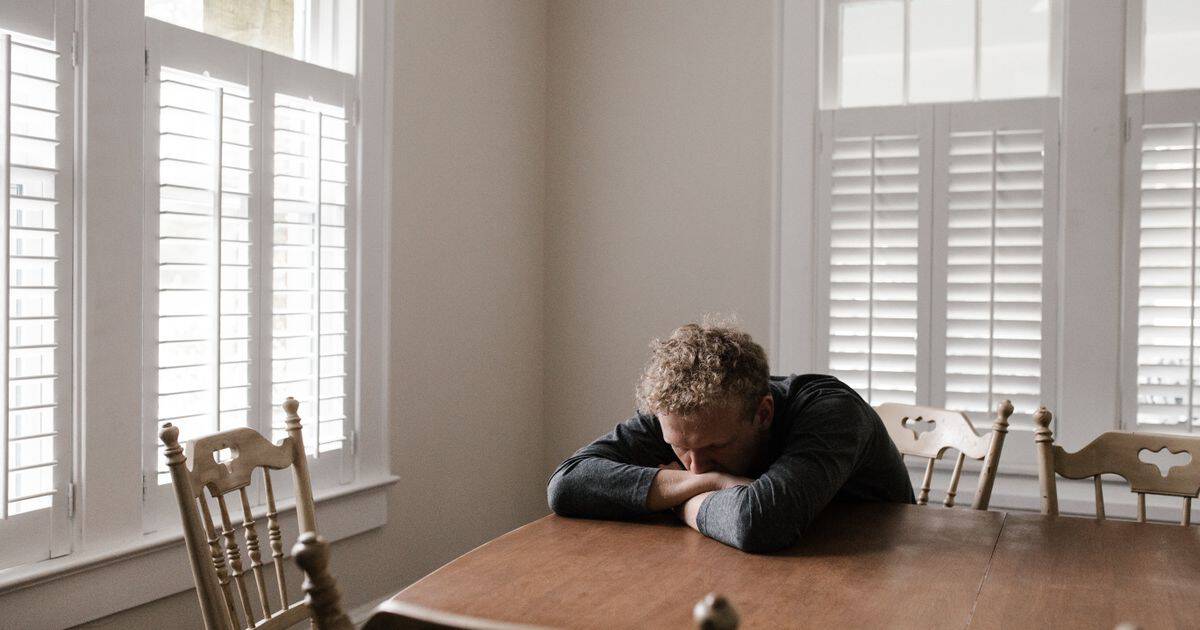
You are mid-sentence when they stand up. Maybe they say “I need a minute.” Maybe they say nothing at all. The bedroom door closes. Or they walk into the garage. Or they just sit there and go somewhere else behind their eyes, the body still on the couch but the person gone.
Recognize yourself in this?
Talk to Figlet about the hallway pursuit right now. AI relationship coaching grounded in Figs O’Sullivan’s work, LMFT. Free to start, no credit card.
And something inside you detonates.
Not a small thing. Not annoyance. A full-body alarm that does not match the size of what just happened. Your chest tightens. Your hands go cold or hot. A voice inside starts writing the whole story of your relationship, and the story ends badly. You want to follow them down the hallway. You want to bang on the door. You want to send seventeen texts even though they are one room away. Or you want to go completely silent for three days to teach them what it feels like.
If you have typed “partner leaves room” into a search bar at eleven at night, sitting on the edge of a bed you now have to sleep in alone, I want you to slow down before you scroll another listicle.
I have been sitting with couples in this exact moment for over seventeen years. What is happening between you is not a communication problem. It is not that they are avoidant and you are anxious and now you know your labels. It is something much older and much more biological than that, and until you understand it in your body, no script anyone gives you is going to work.
Your partner walking out of the room is not the ending. It is the middle of a dance both of you are doing, and neither of you can see it while you are inside it.
Why the Hallway Feels Like the Savanna

Which pattern is running your relationship?
Take the free three minute quiz and meet the creature behind the cycle you keep getting stuck in.
Here is the first thing I need you to understand about what your body just did.
When your partner stood up and left the room, your limbic system did not register “my partner needs space.” It registered a code-red threat to survival. Adult love partners regulate each other’s nervous systems the way a caregiver regulates an infant. This is not sentimental. This is attachment theory, and it is mammalian biology. Human beings are wired for bonded connection the way we are wired for oxygen.
So when the person your nervous system has designated as your primary source of safety turns and walks away in the middle of something hard, your amygdala hits the alarm before your thinking brain gets a vote. Cortisol dumps. The rational brain runs behind the survival brain. What you feel is not proportionate to a closed door because your body is not responding to a closed door. It is responding to what your body reads as the first inch of losing them.
That specific vertigo you feel in the hallway, the one that makes you want to bang on the door or scroll through six months of their location history, is not weakness. It is not codependence. It is your body doing exactly what evolution designed it to do to keep you connected to the people who keep you alive.
Which means the first thing that has to happen, before any tool, before any conversation, is you have to stop pathologizing your own alarm. It is not the problem. It is data.
What the data shows: in 58,221 completed relationship assessments, sad was the third most common deep feeling and hopeless the fifth, at 17,094 and 9,160 people.
What’s Happening Inside the Person Who Leaves
Now here is the part almost nobody online will tell you, and it will change how you see every walkout you have ever experienced.
The person who just left the room is not calm. They are not indifferent. They are not, in that moment, thinking about how to punish you or how relieved they are to be free of the conversation. Their nervous system is drowning.
Withdrawing partners describe it to me, once the armor finally opens enough for them to speak, like this. Their chest goes freezing cold. Their throat closes. A weight lands on them that feels like being underwater. And underneath all of it is a single, unbearable thought. I am failing her. I have failed her before. I am failing her right now. I will keep failing her into the future.
Their body did not process your reach as a request. It processed your reach as a verdict. And when the verdict is that they have failed the person they love most, their nervous system does the only thing it knows how to do to survive that much shame. It collapses down. It flattens out. It gets them out of the room, because staying in the room means sitting inside a burning conviction that they are, at their core, not enough.
Slinking away is their wobbly attempt to preserve some dignity. It looks cold from the outside. It feels like drowning on the inside.
If you can hold both of these truths at the same time, that your alarm is real biology and their retreat is real biology, you are already standing on different ground than you were ten minutes ago.
The Dance Neither of You Can See
This choreography, one partner reaching and the other retreating, is the most common relational cycle on earth. In my clinical work I call it the Waltz of Pain, and it works like an infinity loop.
Something happens. A tone. A sigh. A comment about money. Your body registers a wobble in the bond. You reach, because reaching is what your nervous system does when it feels disconnection. Your reach comes out a little sharp, because you are already in alarm, and the volume of your alarm is the volume of your love.
Their body registers your sharp reach as evidence of their capability failure. They retreat, because retreat is what their nervous system does when it feels like it is about to be exposed as not enough. Their retreat looks like coldness or leaving.
Their retreat lands in your body as abandonment. Your alarm gets louder. You chase down the hallway. Your chase confirms their conviction that they are failing you. They lock the door.
Neither of you is rejecting the other. You are both fighting for the same bond, using the exact protective strategies most likely to trigger the other’s deepest wound. That is why the same fight keeps happening. That is why the content of the fight never actually matters. The dishes, the phone, the tone, the in-laws, none of it is the fight. The fight is two nervous systems asking the same two ancient questions and hearing the wrong answer.
Are you there for me? Am I enough for you?
You feel the first one louder. They feel the second one louder. And you are both answering the same threat with opposite moves.
Why “Just Give Them Space” and “Just Self-Soothe” Both Fail
Here is where most of the advice on this topic goes off a cliff.
One camp will tell you to give them space. Let them cool off. Do not chase. Regulate yourself. Learn to self-soothe. Build your independence. Stop being so needy. If you can just become secure inside yourself, you will not need your partner to come back so badly.
Self-soothing and solitary independence, my arse.
We have been deeply and tragically programmed to believe independence is the endpoint of healing. That the mature adult is the self-sufficient island who does not require anyone’s presence to feel okay. This is a fantasy sold to nervous systems that were never designed to work that way. Human biology co-regulates. We settle in the context of a bond. Sovereignty is not the starting condition of adult love. It is an emergent property that arises through secure connection, through successful repair, through sustained co-regulation over years. You cannot learn to swim while fighting for air. Secure attachment is the life jacket that lets the swimming lesson begin.
Telling the partner left in the hallway to just self-soothe is telling a drowning person to work on their stroke.
The other camp will tell you the walker is emotionally unavailable, avoidant, a stonewaller, that you deserve better, that this is the beginning of the end. It builds a courtroom case against your partner. It gives you a verdict but no bond.
Both approaches miss the target. Neither creates the one thing that actually changes anything, which is a shared understanding, held by both people, that the dance is the enemy, not the partner.
Turning the Flashlight Around
I sat with a couple recently, both of them brilliant, both of them exhausted. She was fuming. She had been Googling variations on this exact search for weeks. He was flat, cold, rigid, explaining his work schedule in precise paragraphs while she leaned forward looking like she wanted to throw something.
I asked her, gently, to stop building her case against him for a minute. To turn the flashlight of her awareness away from his calendars and his tone and his silence, and to point it at the somatic tightness inside her own chest. Not the story about him. The sensation inside her.
She went quiet. Then she said, “I feel completely alone in the dark.”
That was the truth underneath the case. Not “he is emotionally unavailable.” Not “he does not care.” Just, “I feel completely alone in the dark, and I got loud because loud was the only way I knew to make him look at me.”
Then his Representative went offline. That polished, calm, logical version of himself he sends into the room to explain and defend, it just fell away. And he said, “My chest goes freezing cold when she starts. I feel like a kid failing a test. Leaving the room is the only way I know to survive that feeling.”
Both of them stopped defending the case. And for the first time, they could see the wobbly, frightened younger self inside the other. Her separate suffering and his separate suffering dissolved into one shared bubble of grief for what they had been doing to each other without meaning to.
This is the shift. Not a script. Not a technique. A change in what you are looking at.
You can read more about this specific move away from the case against your partner in how to communicate better in a relationship, which walks through the neuroscience of why content-fighting fails and what has to happen first before any technique can land.
Ready to work on this?
Figlet is AI relationship coaching grounded in attachment science and Figs O’Sullivan’s clinical work, LMFT. First messages free, no signup.
What to Actually Do in the Moment They Leave
I am going to give you something practical, but I want you to hear it inside the frame we just built, not as a hack.
When your partner stands up and walks out, the first move is not to follow. It is also not to freeze them out for the next three days. It is to name, out loud in your own body, what your nervous system just did. My alarm is going off. This is the old alarm. My partner is not my abandoning parent. My partner is a person who just went underwater.
That naming does not make the alarm quiet. It just gives your prefrontal cortex a foothold to come back online. Six beats. Twelve beats. Whatever it takes for the ground to steady an inch.
Then, if you can, you send a signal, not a pursuit. A pursuit sounds like “We are not done, come back here right now.” A signal sounds like “I got scared. Take your time. I am not going anywhere.” Or even just, “I love you. When you are ready.”
The signal does two things. It tells your partner’s drowning nervous system that the verdict of failure has not been handed down. And it tells your own nervous system that you are not being abandoned, you are being paused.
Then, and this is the part that matters more than any single walkout, you have a conversation about the pattern when neither of you is in it. Not when the door has just closed. Not while the cortisol is still in the room. Days later, on a walk, in the car, over coffee. You name the dance. You agree that when one of you starts to reach hard and the other starts to disappear, the enemy is the loop, not each other. You agree on what the signal will be next time. You agree on a return time, so leaving the room does not mean leaving forever.
For the talk itself, I wrote about how to have serious, hard conversations with your partner so they feel less like an ambush.
This is the beginning of what I call the Sovereign Us. Not two islands. Not one enmeshed blob. Two people who have looked at their dance together and decided to protect the bond over winning the argument.
For a deeper walkthrough of what this operating system looks like day to day, what is secure functioning in relationships unpacks the mutual agreements underneath it. And if the acute panic that hits when your partner disappears is the part that is running you, separation anxiety in relationships goes deeper into why your body treats their absence like existential danger.
The Shift I Want You to Leave With
Your partner leaving the room is not proof they do not love you. It is proof that the two of you have built a dance in which reaching and retreating trigger each other in a loop that neither of you can stop while you are inside it.
The way out is not for you to need them less. It is not for them to feel less shame. It is for both of you to stop looking at each other as the enemy and start looking at the pattern between you as the enemy.
The alarm you feel in the hallway is real. Their drowning behind the door is real. And both of them are asking, in different accents, the same two questions.
You are allowed to answer those questions for each other. That is what the bond is for.
This is not a you problem or a them problem
“Relationship distress is a feature, not a bug, of loving someone so much that their emotional distance feels terrifying. It is the predictable dance of two nervous systems desperately trying to survive the perceived loss of one another.”
“The fight is never about the content. It is always about the bond.”
Figs O’Sullivan, LMFT
Common Questions
Is it normal for my partner to walk out during every argument?
It is common, and it is your dance, not their character. Walking out is what a nervous system does when it hits the threshold of shame or overwhelm it cannot metabolize. If it happens every time, the pattern is entrenched, not incurable. The work is to name the dance together outside of a fight and build a return protocol, so leaving the room stops meaning leaving the bond.
Should I follow my partner when they leave the room?
Following almost always deepens the loop, because your reach lands as more evidence of the failure they are already drowning in. Sending a soft signal, not a pursuit, works better. Something like “take your time, I am not going anywhere.” That interrupts the loop without abandoning yourself or them. Return to the actual conversation once both nervous systems are back inside their window.
How long should I give my partner to cool down before we talk again?
There is no universal number, but agreeing on one together, in advance, changes everything. Twenty minutes, an hour, until morning, whatever fits your bodies. What matters is that the pause has a return time, so the withdrawing partner knows the door is not permanently closed and the reaching partner is not left in open-ended abandonment. Ambiguity is what turns a pause into a wound.
Is walking out the same as stonewalling?
Not always. Stonewalling is a chronic, contemptuous shutdown that refuses repair. Walking out to survive a flood of shame, while intending to return, is a nervous system in collapse, not a character indictment. The difference matters. One is a survival response inside a repairable dance. The other is a pattern of contempt that requires a different conversation. Most walkouts I see in my office are the former, not the latter.
Can this pattern actually change or are we stuck like this?
It can change, and I have watched it change in couples married thirty years. What does not work is trying harder inside the same dance. What does work is both partners seeing the loop together, taking their part in it seriously, and building small, repeated agreements about signals, pauses, and returns. The bond does not heal in one conversation. It heals in the accumulation of small proofs that this time is different.
Do not just close the tab on this.
Bring what surfaced here into a real conversation. Figlet coaches you through the hallway pattern, grounded in Figs O’Sullivan’s work, LMFT. Free to start.
The door will close again. What you do the next time it does is where the whole thing turns.
Keep Reading



Every couple has a pattern they cannot see. Find yours.
In love, each of you is a Relentless or a Reluctant, which makes you one of three kinds of couple: Relentless and Reluctant, two Relentless, or two Reluctant. The free quiz reveals your creatures and the cycle they fall into together. About three minutes.
No signup needed to start.
The Relentless

The Reluctant