The talking stage is the stretch between meeting someone and actually dating them: lots of texting, maybe a date or two, no label and no agreement. It should not last long. If you both like each other, you meet in person within a few weeks and you know where it is heading within roughly two to three months. There is no rule, but if months have passed and you are more confused than excited, it is not progressing.
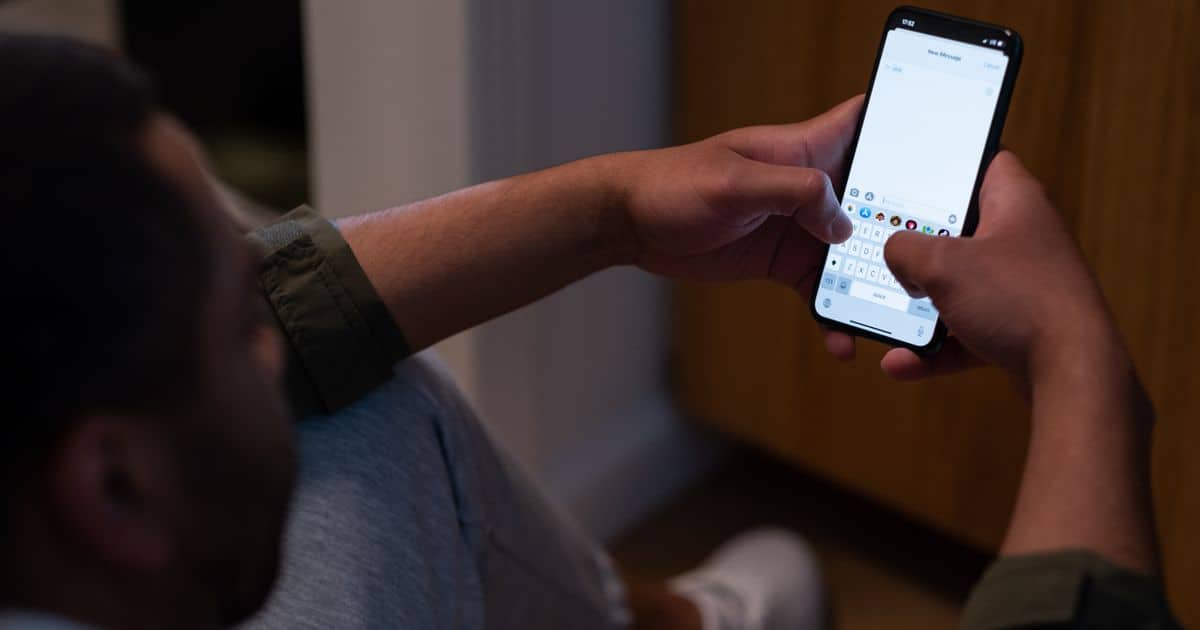
It is a little after eleven. Your last message was three warm sentences and a question. Theirs came back four hours later: “haha yeah.” You have read it six times. You have typed a reply, deleted it, and typed a shorter one so you seem as relaxed as they do. You have not even kissed this person, and your chest feels like something is being taken from you.
What is the talking stage, really?
Feeling more like roommates than partners?
Talk it through with Figlet right now. Private, judgment free, built on 17 years of couples therapy.
I have been a couples therapist for seventeen years, and in my office I describe the talking stage as two Representatives texting each other. As Chris Rock once said, when you first meet someone, you are not meeting them. You are meeting their representative. The frightened, tender person underneath gets nowhere near those first messages, on either side.
Texting makes this worse. Text strips out every signal your nervous system relies on to assess safety: tone, facial expression, the warmth in a voice. Your brain fills the gaps with the worst case. Texting is the perfect medium for longing because it gives you just enough contact to switch your attachment system on without ever giving you enough to satisfy it.
Is the talking stage considered dating?
It is the very front edge of dating, the audition. Dating is the period where you are still trying each other out, still self protecting, still keeping enough distance that if it ends you can tell yourself you were fine all along. A relationship begins somewhere else entirely, at a threshold your body crosses when it decides this is the person it wants its emotional needs met by. I wrote about that threshold in the difference between dating and being in a relationship. The talking stage is not there yet. It is two people deciding whether to begin.
Why does a few weeks of texting hurt this much?
Because the alarm fires before the attachment exists. Attachment wounds do not wait for commitment to start whispering. They show up in the first text exchange, in the moment you catch yourself liking someone.
I wrote a whole piece on anxious attachment in early dating for anyone whose body starts reaching for certainty before there is any bond to lean on.
Underneath every bond, two questions run constantly. Are you there for me? Am I enough for you? The talking stage cannot answer either one. When you send something open and a little brave, watch the typing dots appear, then disappear, then nothing for six hours, your body registers what I call a sudden interruption of positive affect. You were reaching and hoping, and the movement broke. The meaning your body assigns is always relational: I am too much, I am not enough, I am being dropped.
Then the phone lights up with something warm and you get a flood of relief. That is intermittent reinforcement, the slot machine effect, and your body confuses the relief with love. This is how alarm gets mistaken for chemistry. If you notice you are most drawn to the person who answers slowest, that is not coincidence. The spark you feel with someone slightly out of reach is often your alarm system going off, and your alarm system has terrible taste.
Why does the talking stage drag on for months?
Because it is the safest place to stand. To stay in the talking stage forever, to keep things casual, to only let your Representative date, is to avoid the terrifying leap into actual attachment. It is the safest possible position, and it is also the loneliest.
We live in a culture of what I call fiat intimacy: affection printed faster than it can be backed. A flurry of “good morning beautiful” texts that mean nothing. You receive someone’s Representative, polished and over printed, and your body, hungry for the real thing, accepts the fiat as if it were gold. This is why you can feel scraped raw after a week of “talking” to someone you have never met.
I sit with clients every week who are exhausted by exactly this. A highly successful person will sit on my couch and insist they are fine keeping things casual with someone they have been seeing for months. They tell me they do not want to be too needy. Then I ask what happens in their chest when that person takes two days to text back, and the tears start to fall. Smart, accomplished people who run companies come completely undone by a slow reply. It is not weakness. It is the collision between the drive toward connection and the drive toward self protection, and the talking stage lives right at that collision point.
What if one of us is anxious and the other avoidant?
Then the dance can start on date two. In 58,221 completed relationship assessments at Empathi, 58.4% of the people we typed came out as pursuers and 41.6% as withdrawers. I call the pursuer the Relentless Lover. In the texting phase they double text, write the long message after the second date, and build what I call the murder board, a wall of red string connecting every emoji and every delay into proof they are being left.
The withdrawer is the Reluctant Lover. Their deepest fear is not being left. It is being a disappointment. A defined relationship comes with expectations, and expectations mean they might fail. So they get busy, or vague, or they reply with “haha yeah.” From the outside it looks like they do not care. From the inside they are bracing against the vulnerability the warm texts lit up. Your reach lands on them as pressure, their distance lands on you as abandonment, and the Waltz of Pain begins before anyone has agreed to anything. If the hot and cold is what is keeping you up, I wrote more about mixed signals.
Signs the talking stage is going nowhere, or is it just your alarm?
Some signs are real information. Plans to meet keep staying hypothetical. You have been talking for weeks and they still avoid a concrete day. You are always the one who reaches first, and they never reach back. You asked clearly once, and in the weeks after nothing about how they show up changed. Most talking stages do not end with a no. They end with a fade, and a fade is just a maybe that keeps going.
Other signs are your alarm. Two tests help. First, does the feeling respond to reassurance? Anxious activation spreads, shifts targets, and calms for a while when soothed. Real signal is specific, persistent, and gets louder the more you ignore it. Second, how does your body feel after the conversation, not during? If you consistently leave exchanges with this person more dysregulated than you entered them, that is data, whatever your mind says about them.
What is the difference between a talking stage and a situationship?
A talking stage is the beginning: you have not decided whether to date. A situationship is what a talking stage becomes when nobody names anything for too long. It offers the closeness of a relationship, often physical closeness, without commitment or a future, and it is a system perfectly designed to never answer the two questions. If neither of you speaks up, the default is not a slow natural progression. The default is the situationship.
How do you get out of the talking stage?
You ask, once. Not as a test you have been secretly grading for weeks, and not as a strategy to make them chase. If you can, say it in person or at least on a call, so there is a voice in it. Lead with your own experience rather than a case file of everything they have not done.
Here is a line for tonight, word for word: “I like talking to you, and I’d like to actually see you. Are you free Thursday? If this isn’t going anywhere for you, I’d rather know.” Then stop typing. Do not add “no pressure” or a joke. Softening is how you stay stuck. Their answer, or their silence, is information, not a puzzle.
If the person you are talking to threatens you, pressures you, tracks where you are, demands access to your phone, or keeps contacting you after you have asked them to stop, that is not a dance and it is not a pacing question. Get help today. In the US, the National Domestic Violence Hotline is 1-800-799-7233.
How do I end a talking stage without ghosting?
Ghosting is often a nervous system in overwhelm choosing the only exit it knows, but impact is bigger than intention. On the other end, a vanishing confirms every fear an anxious body carries: people leave without warning and you can never be safe. A clear no hurts, but a system can process a no and grieve it. It cannot process a maybe. Something like this is enough: “I’ve enjoyed talking with you, and I’ve realized I’m not feeling what I’d want to feel to keep going. I didn’t want to just disappear. I wish you well.”
If you want more words for that moment, I wrote a guide on how to let someone down easy with a few versions you can send tonight.
If you are the one keeping it vague
If someone keeps asking where this is going and your body goes cold, you are not heartless. Your system may have read the question as a test you could fail. You do not owe them a relationship. You do owe them clarity, because warm and vague is the exact crumb pattern that keeps their alarm ringing. If your hesitation is fear of disappointing them, say that. “I get scared I’ll let you down” is more honest than “I don’t do labels.”
Where to go from here
If the talking stage has already slid into months of closeness with no name, start with what a situationship is and why it hooks your attachment system. When you are ready to ask for more than texting, how to turn a situationship into a relationship walks through the exact conversation. And if you are past the talking stage and wondering when to be exclusive, read how many dates before a relationship.
Frequently asked questions
How long should the talking stage last?
Usually a few weeks to a couple of months. If you both like each other, meet in person within a few weeks and expect some clarity within roughly two to three months. There is no fixed rule, but time alone does not move anything. If months pass and you are more confused than excited, it is not progressing.
Is the talking stage considered dating?
It is the earliest edge of dating, the audition before either of you has decided. It becomes dating when you start spending real time together on purpose.
What is the difference between a talking stage and a situationship?
A talking stage is the undecided beginning. A situationship is closeness without commitment that has gone on long enough to feel like a relationship while never being named. An unnamed talking stage often becomes one.
How do you get out of the talking stage?
Ask once, clearly, ideally by voice: say you would like to see them and name a day. Then let their answer, or their silence, tell you where you stand.
What comes after the talking stage?
Dating: real time together, where you see each other tired and ordinary and not just witty on a screen. Exclusivity may follow. The deeper shift, when your body decides this person matters, comes later and on its own schedule.
How do you end a talking stage nicely?
Say it plainly and kindly instead of fading out. Thank them, tell them you are not feeling what you would want to keep going, and wish them well. A clear no lets both nervous systems settle.
If you are staring at that dry text right now, I built a coaching tool called Figlet for exactly this moment. Tell it what happened, the slow replies, the plans that never land, and it will show you the pattern you are both caught in and give you one line to say. It is free to start tonight: talk to Figlet about the talking stage.
Keep Reading


Feeling more like roommates than partners?
Figlet is relationship coaching built on 17 years of couples therapy. Talk through what is happening the moment it matters, get a clear next step, and stop circling the same fight. Private, judgment free, ready whenever you are.
Free to start. No credit card needed.
Figs O'Sullivan
Founder · EFT couples therapist
“What I would tell you at 10pm, if I could.”