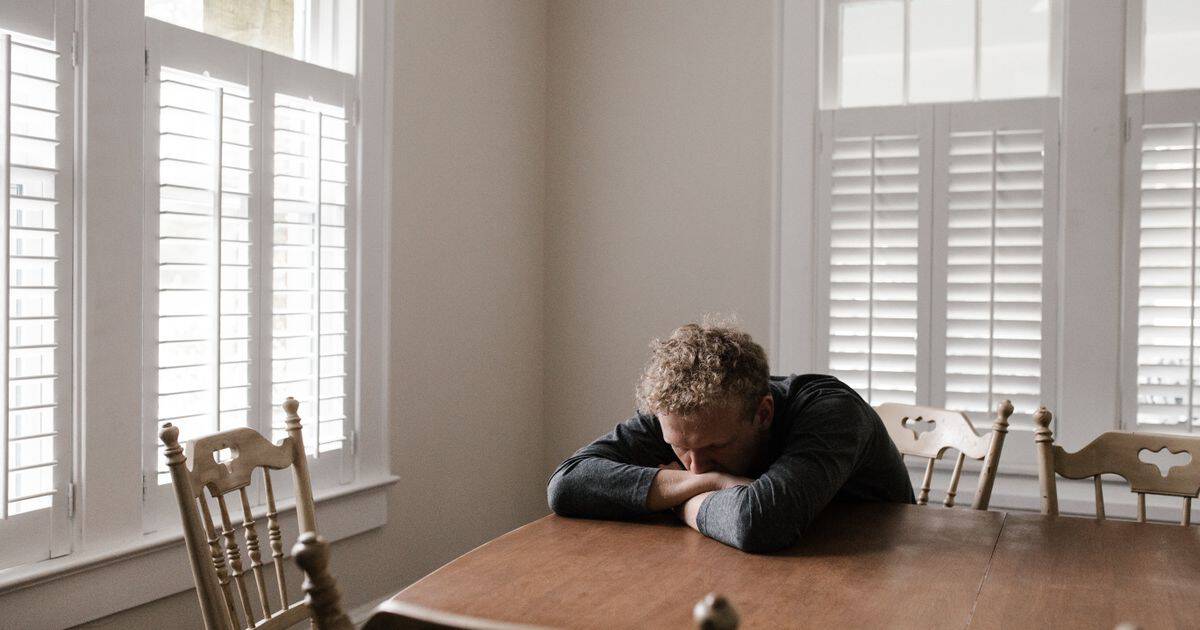
If it feels like your wife hates you, what you are usually looking at is not hate. It is resentment: anger that has gone cold after years of reaching for you, carrying the house, and feeling alone in the marriage with you right there.
That hurts, but it also tells me the bond still matters to her, and resentment softens when you stop defending yourself and start seeing what she has been carrying. The exceptions are contempt, abuse, or a depression sitting underneath everything, and those need a different response.
If you want help finding the words before you say anything to her, Figlet, my AI relationship coach, can help you see what is underneath the coldness in your house. It is there at 2 in the morning, or right now, and it is free to start.
She laughs on the phone with her sister. Warm, easy, the laugh you used to get. Then she hangs up, turns to you, and her whole face goes flat. You ask how her day was and get one word. You reach for her hand in the car and she moves it to adjust the vent. When you do something right, nobody notices. When you do something wrong, it comes back with years attached to it. Last week you said something small about the bills and she looked at you like you were a stranger who had wandered into her kitchen. Tonight you typed the sentence you would never say out loud to anyone: why does my wife hate me.
I have been a couples therapist for seventeen years, and I have sat across from hundreds of husbands holding that exact question. What I find underneath it is almost never hate. It is something colder and older than hate, and it has a name.
It is not hate. It is resentment.
Stuck in the same argument again?
Talk it through with Figlet right now. Private, judgment free, built on 17 years of couples therapy.
Resentment is anger that has gone cold. It is what happens when anger cannot be spoken, received, or resolved, so the body files it away and lets it accrue interest. Anger says, this hurts right now. Resentment says, this has been hurting for a long time and no one has noticed.
And here is the part that matters for you. Resentment is never a primary emotion. It is a secondary, protective response. Underneath the stony face is a softer reach that kept coming back with static. She reached for contact, for comfort, for acknowledgement, and her husband turned away, looked at a screen, minimized the distress, or answered a feeling with a fact. Rather than stay exposed in the terrifying vulnerability of feeling unimportant, her body did something intelligent. It converted the raw pain into armor.
That armor is what you are calling hate. It is a wall built out of grievance, and it was built one brick at a time.
Signs your wife resents you
The men I sit with rarely open with “my wife hates me.” They open with the small things. If several of these sound like your house, you are not imagining it. But notice that none of them is proof she has stopped loving you. They are what a protective body does after too many reaches came back empty.
The small things set her on fire
The way you chew. The cabinet door you left open. The way you breathe when you concentrate. Things that would not have bothered her in a healthy season now land with volcanic irritation. The irritation is real, but it is not about the cabinet door. It is the ledger leaking out through the smallest crack it can find.
Even your kindness lands wrong
You bring her coffee and instead of softening she thinks, what does he want now, or too little, too late. Psychologists call this negative sentiment override: a brain trained by repeated hurt starts reading even neutral or kind actions through a threat filter. It does not mean she is unfair. It means her protector has taken the wheel.
She has stopped reaching for you
She used to ask for your time, your attention, a walk after dinner. Now she does not. John Gottman’s research on bids for connection found that partners in healthy relationships turn toward each other’s bids about 86% of the time, and in relationships heading toward distress that drops below 33%. After enough misses, a nervous system simply stops making the bid.
She keeps score
She can tell you exactly who did the last school run, the last night feed, the last time anybody planned a date. Keeping score feels like accountability to the person doing it. Underneath, it is the defended self gathering evidence that she is alone in this.
She is building a life beside you, not with you
Conversation shrinks to logistics. Touch fades, not just sex but a hand on the shoulder. Her plans start quietly not including you. It can feel like peace because the fighting has stopped. It is not peace, and it is the sign I take most seriously on this list.
The ledger she is keeping
Human beings do not keep emotional accounts on spreadsheets. We keep them in the body. I call this the somatic ledger: the record of every moment of safety, trust, threat, and unreturned reach that has ever passed between two people.
When a couple sweeps the small hurts under the rug to keep the peace, every one of them gets written down anyway. Every sacrifice that was never acknowledged. Every “it’s fine” that was not fine. The nervous system logs each one as an unsettled transaction, and emotional debt compounds. Resentment is the body’s margin call. It is the ledger demanding that an old, unpaid debt of attunement finally be honored.
From the inside, the wife carrying that ledger often describes the same thing. She feels like an unpaid employee running an emotional company alone. In 58,221 completed relationship assessments, the number one unmet need was “like we’re a team.” 24,037 people named it, ahead of loved, heard, understood and appreciated. When a wife looks at you with that flat face, she is very often looking at the person she expected to be on her team, and she is tired of playing alone.
This is also why you cannot logic her out of it. “Just let it go” is one of the most infuriating things anyone can say to a person carrying a ledger. The body will not release what has not been felt, named, and received.
What is usually underneath it
The fight is never about the thing. But the things do cluster. These are the roots I see most often when a husband tells me his wife hates him, and most marriages have more than one.
She is carrying the house alone
She runs the calendar, remembers your mother’s birthday, tracks which child needs new shoes, notices when you have been quiet for three days and decides whether to bring it up. That is the mental load, and the emotional labor that comes with it. None of it shows up on a chore chart, and nobody notices it until she stops. Wives say it to me all the time: “I feel like I’m raising another child.” When she criticizes how you loaded the dishwasher, what she often means is, please look at what I am carrying.
Hurts that were never repaired
The night you chose work. The thing with your mother. The betrayal you both agreed to stop talking about. When a couple sweeps hurt under the rug to keep the peace, it gets written down anyway. Her needs did not go away when she stopped mentioning them. They went underground, and they come out sideways, as coldness, as numbness, as the look you are calling hate.
She feels unseen, managed or dismissed
Disrespect does not always look loud. The joke at her expense. The way you “forget” the thing she told you matters most. Answering her feeling with a fact. The message she receives is not “I don’t love you.” It is “your inner world is not important enough to engage with.” That is devastating, and resentment is one of the ways a body protests it.
A baby, a move, a crisis
Big transitions starve the couple bond. After a baby, the baby’s needs consume every available emotional resource and the marriage gets whatever scraps are left over. That can work for weeks, maybe months. Then the malnourished bond starts showing symptoms: irritability, distance, loss of sexual connection, contempt, and the creeping sense that you have become co-managers of a small, demanding enterprise rather than lovers. If the coldness in your house started around a birth, a job loss, an illness or a move, that matters. It is very workable when both of you can name it.
Old wounds standing on new ground
The closer you get to someone, the more they become familiar. Familiar as in family. If she grew up with a parent who was there in body and gone in every other way, your phone at dinner does not land as a phone. It lands with the full weight of every earlier time nobody came. The present hurt is real. It is also supercharged, and that is true for you too.
It may not be the marriage at all
One question I always ask: is it only you? If she is flat and irritable at work, with her friends, in her own body, if sleep and appetite have changed and nothing lights her up anymore, you may be looking at depression, and the blame is riding on top of it. Depression is not sadness. It is a nervous system in collapse, and when it rises up it often swings at the one person she is allowed to be this awful with. Burnout, caregiving, illness, money pressure and hormones can do the same thing. If that sounds like your house, read my wife is depressed and blaming me, because what helps is different. And bodies are bodies: hormones, medication and exhaustion are worth a conversation with her doctor, offered gently, never as a way of saying the problem is her.
What Teale taught me before our baby came
I want to show you what the opposite of this looks like, because it is smaller than you think. When my wife Teale was pregnant, we had explicit conversations I had never had before any of my previous children arrived. Teale said something to me that still lands in my chest. She talked about the joy of “I get to do this again with you.” That one sentence carried everything: the grief of what she had lived before, the vulnerability of choosing to risk it again, and the hope that this time, with this partner, it could be different.
And I had to match her. I had to tell her, honestly, that I can feel really powerless when I want to support her through labor and I do not know how. That admission was hard for me. Every protector part I have wanted to puff up and say, I got this, don’t worry. But that would have been a lie, she would have felt the lie, and the lie would have cost us. Saying my fear out loud gave me some permission for myself, and it gave her more room for everything that was coming for both of us.
What we were building, without naming it at the time, was what I call a rock that feels. Not a rock that pretends to be unshakeable. A rock that can hold the person carrying the heavier load while being honest about its own fear. Most of the wives I see who look like they hate their husbands are married to a rock that pretends. He performs calm, he says it’s fine, he fixes, and she is left alone with everything nobody is saying. Tell her what you are scared of. Tell her what you do not know how to do. Ask her what she needs from you specifically. Not guessing. Asking.
Why she is still angry is the good news
Underneath every argument the two of you have ever had, her nervous system is asking one of two ancient questions. Are you there for me? Am I enough for you? Everything else, the bills, the tone, the dishwasher, is a proxy. If the answer to her question has felt like a no for long enough, the reaching turns into protest, and the protest hardens into what you are living with now.
Resentment only builds where the bond matters. You do not feel resentment toward a stranger who ignores you at a coffee shop. You feel it toward the person your nervous system has chosen as its safe place, when that safe place keeps feeling unavailable. The intensity of her resentment is often a measure of how much she needed you to be there.
The wife I worry about is not the one with the edge in her voice. It is the one who has gone polite and pleasant and stopped asking for anything at all. If that sounds more like your house, read my wife doesn’t love me anymore, because that is a different conversation. A wife who is still sharp with you is still in it.
Is it her, or the lens you are looking through?
I have to ask you this one gently, because some of what you are feeling may be coming from your side of the bed. Some men do not only feel rejection when it happens. They feel it constantly. Clinicians call this rejection sensitivity: anxiously expecting, readily perceiving and intensely reacting to rejection. A short text reads as cold. Her quiet drive home means she is furious. A tired face becomes proof.
Men are raised to tie their worth to being capable, so when the woman whose eyes matter most looks disappointed, what arrives is not a thought. It is shame, a body event, the felt sense of failing a test with invisible questions. Your mind writes “she hates me” on top of it afterward. If you are stressed, depressed, or running on no sleep, that lens gets thicker, and neutral moments start coming out shaped like the same verdict.
So here is a useful check. If the size of the feeling does not match the size of the event, that is a clue. Ask yourself not “does she hate me?” but “when is the first time I felt this exact feeling in my body?” Very often the answer is a kitchen from thirty years ago. That does not mean nothing is wrong in your marriage. Both things can be true. But you will reach her much better from your own two feet than from inside an old alarm.
The night I built a time machine
Teale and I used to fight every night about who does the dishes. Every night. I would come home from work and she would be standing there with Grace in her arms, and I would say, I am so tired, would you do the dishes tonight? And she would look at me like I had lost my mind. I have been with Grace all day and you think I am the one to do the dishes? Do you not value me at all? And I would come straight back with, are you kidding me, I did seven sessions in a row.
So I did what men like me do. I solved it. I got so fed up that, in the story I tell on myself, I spent two weeks on Reddit and ChatGPT working out how to build a time machine. I jumped thirty minutes into the future, found us laughing at the sink, and ran back with the answer. You wash, make extra bubbles, throw them at me. I clean the countertops and flick you with a tea towel. We listen to music and dance. I presented it to her like a finished product.
Teale said something to me I will not print here. She was right. I had treated her like a logistics problem rather than a person who needed me to slow down and meet her first. That night we slept in the same bed and the distance between us might as well have been the Grand Canyon. If you had asked me at midnight, I would have told you my wife could not stand me.
The answer was in the part I skipped. When we finally got there, it sounded like this. Me: I feel so bad when I don’t feel appreciated, and I felt like you don’t see what I do. Teale: I get it. I can feel like you think the work I do is less important, and it really hurts my feelings. After that, every solution worked. Me doing the dishes worked. Her doing them worked. Nobody doing them worked. Because we were connected.
What you are probably doing that makes it worse
If you are a capable man who solves problems for a living, you have probably tried three things.
You defended yourself. You laid out the facts of your week. That is handing her a cognitive answer to a limbic problem, and her body does not hear your logic. It hears, your hurt is invalid.
You went quiet. You decided it was safer to stop trying than to keep failing, and you retreated into work, the garage, the phone. Your silence confirms her worst fear, which is that she is on her own, so the edge gets sharper.
Or you made the gesture. Flowers, a trip, a big speech. I call this emotional fiat. You are printing affection that is not backed by anything she can feel, and her body sniffs it out instantly. “I promise I’ll change” is a decree. The ledger does not clear because someone said the right words. It clears when there is enough behavioral evidence to believe the safety is real.
There are two more I see constantly. You start keeping your own tally of everything she criticizes and everything you could criticize her for. Two adults keeping score are not a team, and when you criticize back you have just joined the dance on her side of it. And you ask her, “Do you still love me?” To a woman who has been drowning for years, that is not a question. It is a job. One more thing she has to manage, for the man she already feels she manages.
And here is the cruelest part. If I asked her tonight, there is a real chance she would tell me she feels like her husband can’t stand her. Both of you are sure you are the one who tried harder. Nobody is lying. Pain is loud and memory is selective. Two nervous systems, each convinced the other started it, dancing what I call the Waltz of Pain. Neither of you is the villain. The dance is.
When it is something else
Most resentment in a marriage is a protest that has not been answered. But there is a line. Criticism says you did it wrong. Contempt says you are wrong. If what comes at you is mockery, disgust, being run down in front of the kids or your friends, or there is hitting, throwing things, threats, or control of your money, your phone, or who you see, that is not the dance, and it is not acceptable. Men are on the receiving end of that too, and it is just as serious. Talk to a professional today. In the US, the National Domestic Violence Hotline is 1-800-799-7233.
If the edge has calcified into eye rolls and disgust in both directions, contempt in relationships explains how it forms and how couples take it apart.
Can a marriage come back from this?
Often, yes. Not always. Resentment tells me the reach has been going unanswered, not that the bond is dead. In my experience most marriages where a husband types “why does my wife hate me” are starving, not finished. Starving marriages can be fed.
The question I hold is whether she is burnt out or done. A burnt-out wife looks flat, arms folded, halfway out the door, but when her husband finally sees what those years were like, without a “but,” something moves in her. The tears come because she is still there. A wife who is finished says it calmly, from flat ground, and nothing moves when the pressure comes off. That is the whole difference. Not how bad it looks. Whether anything moves. If she has gone quiet rather than sharp, read walkaway wife syndrome, and if you are trying to tell the difference honestly, I lay out what I look for in signs your marriage is over.
What brings it back is smaller and slower than you want it to be. Shut up and feel the impact. Own the specific pattern instead of promising to try harder. Impact is bigger than intention: you did not mean to leave her alone, and the impact was that she was alone anyway. Then be the same man on Tuesday that you were on Monday. Ten years of absence does not get paid off with a twenty-minute speech. It gets paid off with proof of work, one ordinary evening at a time.
What if she will not talk about it?
Do not ask her to reopen on your timeline. A woman who has stopped trusting the bridge between you will not cross it because you finally want to. You can still change your side of the dance. When one person changes their steps in the Waltz of Pain, the dance itself has to change. Stop disappearing. If you need space, say so and give a time: “I need twenty minutes to come down, and then I want to come back to this.” Then actually come back, and reach first.
When to get help
If you have tried to change your side for a few months and the two of you keep landing in the same fight, if contempt is moving in both directions, if she has mentioned divorce, or if you are losing sleep, appetite or interest yourself, get help now rather than later. A couples therapist trained in attachment work can slow the dance down enough for each of you to see the other’s fear. If she will not go, go on your own. When one partner starts working on their side of the loop, the whole system has to reorganize. And you deserve somewhere to put your own hurt that is not her.
What to say tonight
Not “why do you hate me.” That question hands her one more job: reassure the man who left her alone with the ledger.
Not a defense and not a plan. One thing. Wait until the house is quiet. Sit near her. Feet on the floor. Then say something like:
“I think you have been carrying this house and this family on your own for a long time, and I have been telling myself we were fine. I can see now that you stopped feeling like we’re a team. I’m not asking you to make me feel better tonight. I just want you to know I see it, and I’m sorry you’ve been alone in it with me right here.”
Then stop. No “but.” No list of what you did this week. You have just done the one thing that years of defending and disappearing never did, which is look at the ledger with her instead of arguing with it.
She may not soften the first time. A body that has been let down for years does not trust one good night. That is not failure. That is the beginning of proof of work: the same presence on Tuesday that you showed on Monday, until her nervous system starts to believe it.
If it helps to have tonight as steps, here it is in six small moves:
- Do not ask “why do you hate me?” Not tonight, not by text. It asks her to take care of you.
- Write down one moment, not the list. The one night she was alone with it, the one time you picked up your phone while she was talking. That is what you will own.
- Wait until the house is quiet. Sit near her, feet on the floor, one slow breath before you speak.
- Say the sentence above, then stop. No “but,” no plan, no list of what you did this week.
- If you feel yourself flooding, name it. “I need twenty minutes to come down, and then I want to come back to this.” Then come back.
- Tomorrow, do one thing she usually carries, without being asked and without announcing it. That is the first entry in rewriting the ledger.
If she is reading this over your shoulder
He is not ignoring you because he doesn’t care. Every sigh lands on him as a verdict that he is failing you, and he has decided the verdict is that you hate him. The resentment you carry was smart. It protected you. But it hides the softer thing it was guarding. Try saying that softer thing once, not the list. Something like: “I feel like I’m doing this alone, and I miss you.” Watch what happens to his face.
If this has turned into her criticizing everything you touch, my wife criticizes everything I do goes deeper into that version. If she pulls away whenever you reach for her, read why does my wife push me away.
Common Questions
Does my wife hate me, or is she just angry?
Almost always, she is angry, and the anger has gone cold. Anger says, “This hurts right now.” Resentment says, “This has been hurting for a long time and no one has noticed.” What feels like hate is usually resentment that has been building for months or years, and it only builds where the bond matters.
What are the signs my wife resents me?
Small things set her off, your kindness lands as “too little, too late,” she has stopped asking for your time, she keeps score, and conversation has shrunk to logistics. The quietest sign is the most serious one: she stops complaining altogether and starts building a life beside you instead of with you.
Why does my wife hate me when I do everything for her?
Because doing is not the same as being there. You may be working hard and still be absent in the way her nervous system measures, which is whether you notice what she carries, stay when she is upset, and reach for her first. Gifts and effort she cannot feel are what I call emotional fiat. What reaches her is presence she can count on.
Why does my wife seem to hate me after having a baby?
Because the baby takes every emotional resource she has, the couple bond gets the scraps, and the load is very often uneven. Add exhaustion and a body that has been touched all day, and resentment builds fast. It is one of the most common times I see this, and it is very workable when you stop performing calm and start asking her what she needs from you specifically.
Could she be depressed rather than hating me?
Yes, and it is worth asking. If the flatness shows up everywhere in her life, not just with you, and it has lasted two weeks or more with changes in sleep, appetite and interest, depression may be underneath the blame. Do not try to fix her. Tell her you are on her team and not going anywhere, and gently help her find support that is not only you.
What should I do when my wife says she hates me?
Do not answer the word. Answer what is underneath it. In the middle of a fight, “I hate you” is usually the body’s way of saying “I am hurting and I cannot reach you.” When things are calm, tell her you can see she has felt alone, and ask her what the hardest part has been. Then listen without defending.
Is my marriage over if my wife hates me?
Not by itself. Resentment means the reach has gone unanswered, not that the bond is dead. What I watch is whether anything moves in her when you finally see what those years were like. The wife I worry about most is not the one with the edge in her voice. It is the one who has gone polite and stopped asking for anything.
What if my wife will not go to couples therapy?
Change your side of it anyway, and get support for yourself. When one person changes their steps, the dance has to change. Stop defending, stop disappearing, and keep showing up the same way week after week. If she keeps refusing to look at anything at all for a long time, that tells you something real too.
What I tell the man in that chair
Your wife does not hate you. She is tired of being the only one who notices what this marriage costs. The wall she built was smart. Your job is not to knock it down or argue that it should not be there. Your job is to become someone she can safely stop guarding against, one ordinary evening at a time.
If you want help with the words, that is what I built Figlet for. Tell it what the last cold moment looked like and what you did next. It will show you the cycle the two of you are in and give you the one sentence that reaches under the resentment instead of bouncing off it. It is free to start tonight.
Keep Reading



Stuck in the same argument again?
Figlet is relationship coaching built on 17 years of couples therapy. Talk through what is happening the moment it matters, get a clear next step, and stop circling the same fight. Private, judgment free, ready whenever you are.
Free to start. No credit card needed.
Figs O'Sullivan
Founder · EFT couples therapist
“What I would tell you at 10pm, if I could.”