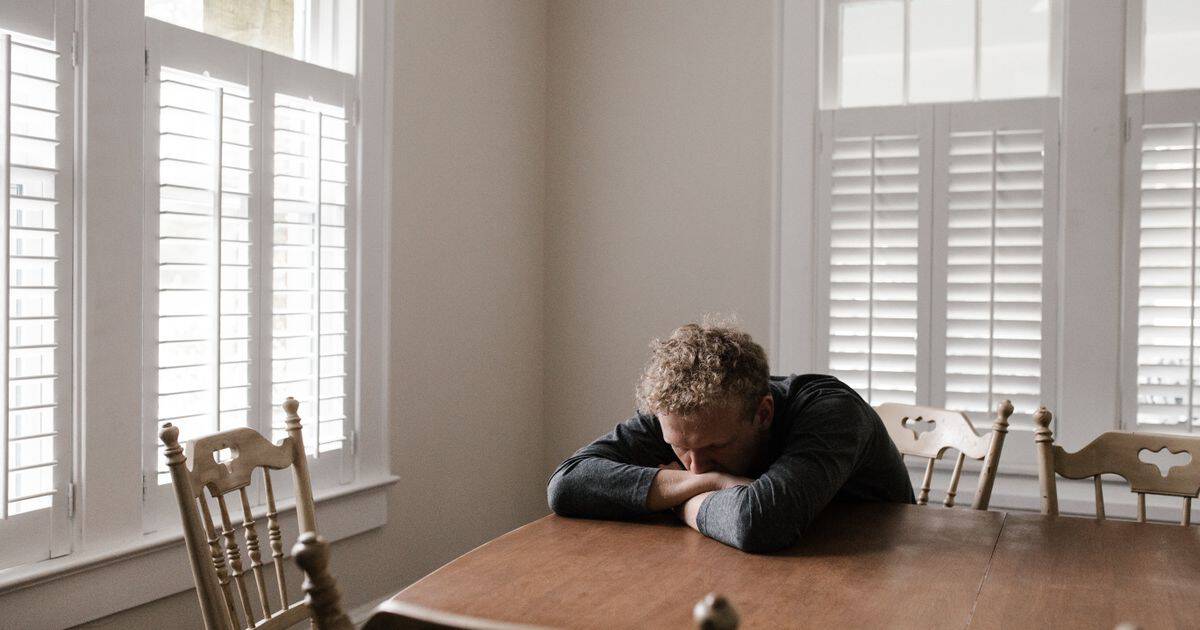
If you do not want to have sex with your husband, it is almost never because something is broken in you. Most often desire has gone quiet because something between you has gone unrepaired: resentment you have swallowed, a mental load you carry alone, or sex that has started to feel like one more duty.
Sometimes the body piece is real too, like a new baby, perimenopause, medication, depression or pain. Your lack of desire is information, not a verdict, and in most marriages it can come back.
He reached for you last night. A hand on your hip, the particular way he says your name when he means it. And something in your body went rigid before your mind had even formed a thought. You said you were tired. You were tired. That was not the whole truth, and you both knew it. Now he is asleep, or pretending to be, and you are lying in the dark with a sickening vertigo in your stomach, typing why don’t I want to have sex with my husband, and the question underneath it is worse. Is something wrong with me? Do I not love him anymore? Is this what the rest of my life looks like?
You love him. You would take a bullet for him. And your body will not open. Every listicle you have opened tonight is telling you to buy lingerie, try a position, schedule a weekend away. None of that is going to work, and I can tell you why. After seventeen years of sitting with couples in this exact silence, I can tell you that what is happening in your body is not a libido problem you can hack with novelty. It is a very old, very intelligent survival program, and it is telling you something true.
Is it normal not to want sex with your husband?
Stuck in the same argument again?
Talk it through with Figlet right now. Private, judgment free, built on 17 years of couples therapy.
Yes. It is one of the most common things I hear in my office, and almost every woman who says it out loud thinks she is the only one. Desire shifts across a marriage. It dips after babies, in hard years, in seasons of grief or overwork, and around the change of life. A dip is not a diagnosis.
What I pay attention to is not whether your desire went quiet. It is what it went quiet around. Did it fade slowly as you became more of a manager than a lover? Did it stop after one particular hurt? Did it change suddenly, with no story attached at all? Those three answers point in very different directions, and the rest of this piece will help you tell them apart.
And one thing I want you to hear clearly: not wanting sex with your husband and not loving your husband are two different things. Most of the women I sit with love their husbands deeply. That is exactly why this hurts so much.
Love and desire run on different currencies
Love is a bond. Desire needs safety, plus enough room to see your partner clearly. You can have one without the other, and most women who type this question at midnight do.
Your body keeps what I call a somatic ledger. A running record, incorruptible, of every moment reaching cost you and every moment reaching was met. Every glance that landed as no. Every apology that never came for the thing that hurt. Every night you swallowed something to keep the peace. The ledger does not forget, and it will not accept a substitute payment.
When couples avoid a hard conflict and paper over it, they are printing relational debt. In the bedroom, that looks like having sex because that is what married couples do. Faking interest because you do not want a fight. Performing arousal you do not feel because the alternative is a conversation you are too tired to have. Your body knows. Every time. And eventually your body refuses to print any more fake currency.
Your absent desire is not proof something is wrong with you. It is proof something is right with you. Your body is holding the line your mouth has stopped holding.
The two questions underneath the bedroom
The bonded body carries two questions underneath every interaction, and it never asks them in words. Are you there for me? Am I enough for you? Your desire lives entirely downstream of those two questions. When your body registers that the answer to either one is uncertain, it will not open. It cannot. It is not built to.
For a lot of the women I sit with, the first question has been answered no in a hundred small ways that never made it into an argument. She has become the household manager and lost the lover. She tracks the dentist appointments, the birthday presents, the school forms, his mother’s moods. She has said the softer version of I need you here, hinted at it, gone quiet and hoped he would notice. By the time he reaches for her body at eleven at night, she is not being reached for as a woman. She is being reached for as one more thing on the list. Being reached for as an object rather than a self is one of the fastest ways I know to switch desire off.
There is also a piece of research worth knowing. Emily Nagoski, in her book Come As You Are, and others have shown that desire runs in two modes. Spontaneous desire seems to appear out of nowhere. Responsive desire emerges in response to closeness and arousal, not before it. Responsive desire is far more common than most people realize, especially in long term relationships and especially in women. So if you are waiting to feel like it before anything happens, you may be waiting for a kind of desire your body was never going to deliver on its own. That is not a defect. It means your desire needs a warmed room to answer in.
The most common reasons you do not want sex with your husband
When women ask me why, they usually want one answer. There are usually three layers, and it helps to check all of them: the body, your history, and the bond between you. Here is what I see most often, roughly in the order I see it.
Resentment and emotional disconnection
This is the big one. Resentment is what happens when hurts pile up without repair. Every time you swallowed something to keep the peace, your body wrote it down. You cannot feel open toward someone your body is quietly keeping a case against. If the two of you have become logistical partners who never rupture and never repair, the erotic part of the marriage collapses first, because it is the most vulnerable part. If this is landing, I go much deeper on it in how to fix resentment in a relationship.
Stress and the mental load
Carrying the mental load of a household, feeling like a project manager instead of a partner, is one of the quickest ways I know to turn love into resentment. Your nervous system cannot be on duty all day, tracking every appointment and every mood in the house, and then drop into pleasure at ten at night. Desire needs a felt sense of safety and spaciousness. A body that is still on watch has neither.
Sex that has started to feel like a duty
If you have been saying yes out of guilt, to avoid a fight, or because it has been a while and you can feel him counting, your body has learned that sex is a task. Every yes given out of guilt builds a low grade resentment that shows up later as another quiet no. Nobody owes anybody sex. When sex becomes an obligation, the body starts to brace instead of open, and the bracing is what you are feeling now.
After a baby: postpartum and breastfeeding
After a baby, your body was a home for another person, then it became a food source, then it became the primary regulation system for a completely helpless human being. You are touched out, hormonally restructured, sleep deprived, and your nervous system is on constant alert. A doctor clearing you for sex at a postpartum checkup tells you the body has healed enough. It does not tell you the nervous system feels safe enough. If dread or flatness will not lift after a baby, tell your doctor, because postpartum depression is common and treatable.
Perimenopause and menopause
Hormonal shifts are real. Around perimenopause and menopause, many women notice desire dropping, and dryness can make sex uncomfortable or painful, which teaches the body to avoid it. This is a medical conversation worth having with a gynecologist who takes it seriously. But even when the physical piece is real, the relational field around it either helps you move through it or locks you further in.
Medications, including antidepressants and birth control
Some medications lower desire. Antidepressants, especially SSRIs, are one of the most common culprits I hear about, and the Cleveland Clinic also lists some hormonal birth control methods among the medications that can lower sex drive in women. If your desire changed around the time you started something new, do not just stop it. Bring it to the doctor who prescribed it, because sometimes the answer is as simple as an adjustment.
Depression and anxiety
Depression flattens every appetite you have, and desire is usually the first to go. Anxiety keeps the body braced. If you are not just uninterested in sex but uninterested in most things, if mornings feel heavy and joy has gone gray, please take that to your doctor as a mood question first, not a marriage question.
Pain during sex
If sex hurts, your body will start avoiding it, and it is right to. Pain is a medical question, not a relationship failure, so bring it to your doctor or a pelvic floor physical therapist rather than gritting through it. Pushing through pain teaches the nervous system that the bedroom is a place to survive.
Past sexual trauma
My favorite definition of trauma is this: trauma is any time the past merges with the present. If something happened to you, as a child or as an adult, your body may freeze or go blank when your husband initiates, even if he is kind and patient and has read every book. You are never going to heal that with a logical conversation about boundaries. Your capacity for desire is intact. It needs a slower, body-based kind of safety, and usually a trauma specialist in the room. I have written about that path in reclaiming pleasure after sexual trauma.
Body image and shame
When you are in your head, monitoring your body, bracing for judgment, you are not actually there with your partner. You are thinking about the angle, the stomach, the light. It is like trying to dance in a straitjacket. The shame keeps you armored exactly when you need to be open, and from the outside it can look like you simply do not want him.
The Representative left the bedroom
When you first met, you both sent your Representatives into the bedroom. That is what I call the polished version of you, the one who shows up on a first date already dressed for the part. Playful, confident, effortless. His Representative met yours, and the room caught fire.
The Representative is brilliant at recruitment. It cannot carry a marriage. As the uncertainty of early love drops away, the Representative loses its job and quietly walks out of the bedroom. Then two vulnerable, unpolished humans have to show up in bed together. If you have not made room for those humans anywhere else in the house, the bedroom becomes the last place you will risk being seen.
I know this one from the inside. In my twenties and thirties, bartending in San Francisco, I leaned hard on the Seducer. My worth was tied up in being wanted. Years ago at Esalen, at a dance workshop, I was running my whole routine on a woman, the shine and the eye contact, and she stopped in the middle of the room and said, “Do you want to keep dancing with your Representative, or do you want to actually meet me?” I remember my sternum caving in. That is what desire in a long marriage asks of both of you. Not more skill. Less mask.
This is why the lingerie does not work. Lingerie is a Representative solution to a vulnerable self problem.
The dance in the dark
He feels your no. His body does not hear she is tired. It hears I am not enough for her. So he either reaches again with an edge in his voice, or he goes quiet and wounded and stops trying, and both of those land in your body as pressure. Pressure is the opposite of safety. So you close a little more. Which he reads as a little more rejection.
That is one movement of what I call the Waltz of Pain. Every bid becomes a test. Every no becomes a verdict. Every yes given out of guilt builds a low grade resentment that shows up three weeks later as another quiet no. Neither of you is the villain. You are two nervous systems executing survival programs that were smart when you were small and are now setting fire to your bedroom.
Look, too, at what I call the Third Party. It does not have to be a person. It is often a phone. Overwork. Wine at the end of the day. The kids, when they become the emotional center of gravity that displaces the couple. If one of you comes to bed at midnight after two hours on a screen, and the other has been lying there feeling less and less like a person for ninety minutes, the desire problem is downstream of the Third Party.
The line
Sometimes the body has correctly refused to perform in a place where it is not safe. If he pressures you, guilts you, punishes you with coldness or anger when you say no, if there has been any force or any sex you did not want, that is not a desire problem and it is not a dance. Please talk to a professional today, and if you are afraid of him, call a domestic violence hotline. If there has been a betrayal that was never repaired, that also has to be named before your body will trust the room again. And it is worth a conversation with your doctor about hormones, medication and exhaustion, because bodies are bodies. But in most of the women I sit with, the medical piece is not the whole story.
When to see a doctor
Bodies are bodies. Make an appointment with your doctor or gynecologist if any of these are true:
- Your desire changed suddenly, with no relational story you can point to.
- Sex hurts, or you have dryness, bleeding or burning.
- You started a new medication, including an antidepressant or a new form of birth control, around the time things changed.
- You are postpartum, breastfeeding, or in the years around menopause.
- You feel flat, hopeless or numb about most of your life, not just sex.
Go in with your symptoms written down, because it is easy to minimize in the room. Ask directly about hormones, medication side effects and pain. And if your doctor gives you a clean bill of health and the desire is still gone, that is not a dead end. It usually means the answer lives in the relationship, which is the part of this that can actually change.
What to say to him
Not tonight, while you are both lit up. Pick an hour when you are both fed and neither of you is on your phone. Sit facing each other. Do not apologize for your body and do not prosecute his. Say the sentence you have been carrying in your chest for months:
I want to want you, and something has been in the way. It is not that I do not love you. I miss feeling like your partner instead of the person who runs everything.
Then stop. That sentence replaces I am just tired, which tells him nothing and leaves him to fill the gap with his worst fear. The body cannot open in the presence of a lie it has been asked to swallow. It can open in the presence of a truth that has finally been spoken and received.
Some couples I work with also protect twenty minutes on the couch with no phones, a weekly practice of holding each other with no expectation that it leads anywhere. Not scheduled sex. Scheduled contact. Inside that slot, the body has permission to open or not. That is not unromantic. That is proof of work.
How to make the conversation survivable
When you open with anything about sex, however lovingly worded, his body may not process a request. It may process a verdict. So the real question is not how to say it perfectly. It is how to make the conversation survivable for both of you.
- Settle your body first. If your chest is tight and you are rehearsing your case, you are not ready. Put your feet on the floor, slow your breath, and wait until you can talk without building a prosecution.
- Talk about the conversation before the content. Something like: “I want to talk about something that has been hard, and I notice I am scared to even open my mouth. Can we go slow?”
- Lead with the ache, not the list. Tell him what it is like inside you, not what he has failed to do. He can climb through a window. He cannot climb through a demand.
- Expect his activation to spike. A flat face or a defensive sentence is not the end of the conversation. It is the beginning. You can say, “I can see this is hard. I am not building a case. I want us to find our way back.”
- Plan on a hundred small conversations, not one big one. Every time you touch the topic and both of you survive it, your bodies learn this room does not have to end in shame.
What changed in my own marriage
I know this from my own marriage. My wife and I had a fiery start, the kind of connection that required no effort at all. Then we moved into real life, with kids and businesses, and that spontaneous desire faded the way it does for nearly everyone. We had our own agonizing conversations, where she told me she felt lonely being the one to initiate, and I had to confess how terrified I was of being a disappointment. My sexy persona had collapsed. What was left was two scared, not very confident people who had to learn how to make love as exactly that.
What worked was scheduling. Not the sex. The showing up. A fixed time where we put down our Representatives, turned off the phones, and met each other without needing lightning or a flawless performance. It was the least sexy idea I have ever had, and it saved us.
If he is reading this
Her no is not a verdict on you. It is information about the room. When you feel rejected and say you never want me, you put her on trial. When you say I miss you, you invite her in. The words are close. Her nervous system reads them completely differently. Your job is not to get the yes. It is to become the man it feels safe to say yes to: the one who carries his share of the house without being asked, who can hear what has been in the way without defending, who reaches for her on a Tuesday afternoon with no agenda at all. Desire follows repair. It does not lead it.
What he can actually do
- Get curious instead of hurt. Ask her, “What would help you feel like yourself again?” rather than “When are we going to be close again?”
- Carry the load from start to finish. Not helping when asked. Owning whole tasks, including the invisible ones: remembering the appointments, noticing what is running low.
- Touch with no agenda. A hand on her back, a long hug that ends as a hug. Her body has to learn that touch does not automatically lead to pressure.
- Take the pressure off for a while. Some couples I work with agree to take sex off the table for a defined period, two or three weeks, so the bodies can remember that closeness does not have to lead somewhere.
- Repair the small things the same day. The sharp comment at breakfast, the sigh at the sink. Desire is built in the front rooms of the house long before the bedroom.
Is this a sexless marriage now?
Maybe, and that word scares people more than it should. A sexless marriage is a symptom, not a diagnosis, and it almost never comes down to a simple lack of desire. In seventeen years I have seen many couples who had gone years without sex come back to real intimacy. What I watch for is not the size of the gap. It is willingness. Dead bedrooms are recoverable. Dead willingness is not. If the two of you have gone months or years without sex and the bed has become a no man’s land, start with what to do in a sexless marriage.
What to do tonight
- Do not bring it up in bed. Not while either of you is lit up. If he reaches tonight and you do not want to, a gentle “not tonight, and I want to talk with you about us this week” is kinder than “I am just tired.”
- Write down what your body has been keeping score of. The hurts that never got repaired, the load you carry alone, the times you said yes when you meant no. You do not have to show anyone. You just have to see it.
- Notice when it started. Slowly, after one hurt, after a baby or a new medication, or suddenly with no story. If it was sudden or sex hurts, book the doctor’s appointment tomorrow.
- Offer one touch with no agenda. Only if it feels safe: a hand on his arm, your feet touching under the covers. Let it end as touch.
- Pick the hour. Choose a time this week when you are both fed and off your phones, and plan to say the one sentence above.
Common Questions
Why don’t I want to have sex with my husband even though I love him?
Because love and desire run on different currencies. Love is a bond. Desire needs safety, plus enough room to see your partner clearly. When your body has been swallowing small hurts to keep the peace, or the two of you have become household managers instead of lovers, desire shuts down first while the love stays.
Is it normal to lose interest in sex with your husband?
Yes, it is very common, especially after children, in high stress seasons and around menopause. Desire in a long relationship is usually responsive rather than spontaneous, so it does not just show up on its own. A dip is normal. What matters is whether the two of you can get curious about it rather than turn it into a verdict.
Is it my hormones or my relationship?
Often it is both, which is why it helps to check both. A sudden change, pain during sex, a new medication, a recent baby or perimenopause all point toward a doctor’s visit. A slow fade alongside resentment, loneliness or a heavy mental load points toward the relationship. Even when the physical piece is real, the bond around it makes it easier or harder to move through.
Should I have sex with my husband when I don’t want to?
You do not have to have sex you do not want. Sex given out of guilt or fear builds the resentment that keeps desire away. Responsive desire is different: being open to closeness and letting arousal arrive first, without any pressure, is a choice some women find helps. If there is any pressure, punishment or force around sex, that is not a desire problem, and you can call the National Domestic Violence Hotline at 1-800-799-7233.
Can my desire for my husband come back?
In most marriages, yes. When couples do this work, the daytime connection returns first: the touch on the shoulder, the look across the kitchen. Sex tends to come back last, quietly, when both bodies have decided each other is safe again. Desire follows repair. It does not lead it.
Does not wanting sex mean I am not attracted to him anymore?
Not usually. Most women I sit with still find their husbands attractive in the abstract. What has changed is the room, not the man’s face. When the two questions underneath, are you there for me and am I enough for you, get answered with a yes again, attraction usually has somewhere to land.
If you want to understand the body side of this more deeply, read what your body is telling you when desire disappears. If the two of you are already stuck arguing about frequency, read how to deal with mismatched libidos. And if pulling away from closeness is showing up outside the bedroom too, start with intimacy avoidance.
If you want help finding the words before you say them to him, that is what I built Figlet for. Tell it what happens when he reaches for you and what you have not said yet. It will help you name what is in the way and find the one sentence that opens the room instead of closing it.
Keep Reading



Stuck in the same argument again?
Figlet is relationship coaching built on 17 years of couples therapy. Talk through what is happening the moment it matters, get a clear next step, and stop circling the same fight. Private, judgment free, ready whenever you are.
Free to start. No credit card needed.
Figs O'Sullivan
Founder · EFT couples therapist
“What I would tell you at 10pm, if I could.”