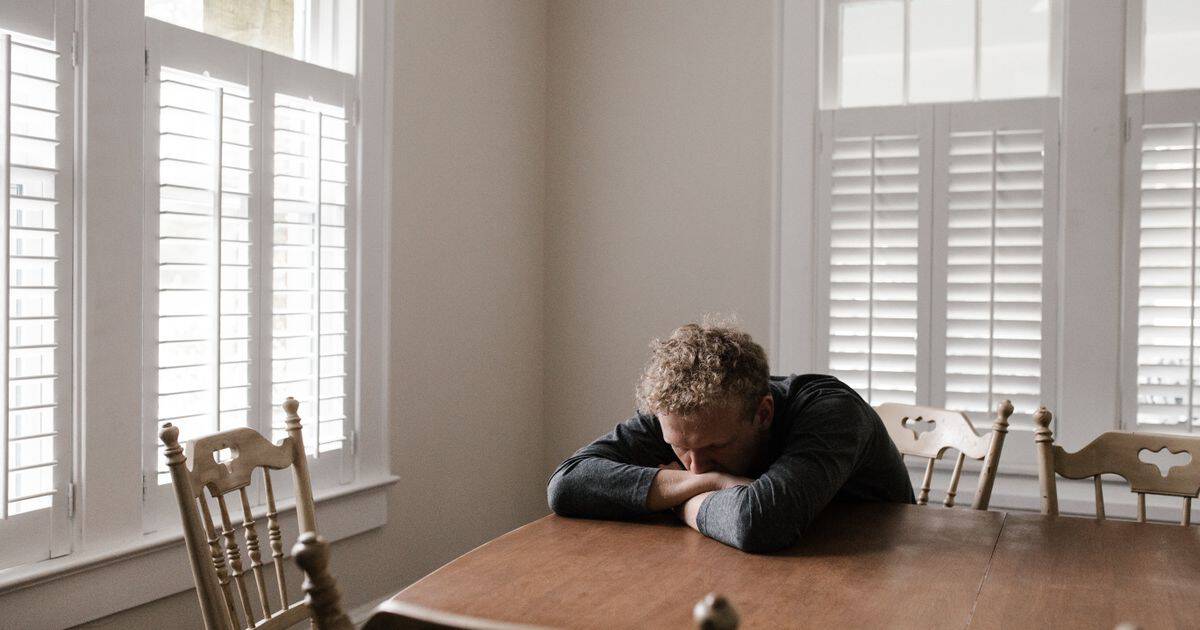
You are sitting in the dark of your kitchen at three in the morning. The tile is cold under your feet. Upstairs, she is asleep. And you are wide awake because you just found something. A receipt tucked into a book. A bank statement in a drawer you were not supposed to open. A text thread she deleted but not carefully enough. A charge on a card you did not know existed.
When a wife hides things from her husband, it is usually an old protective strategy, not a scheme. Her body learned long before the marriage that being seen in a mistake meant disappointment or withdrawal, so she keeps the drawbridge up and hides the evidence to stay The Good Wife in your eyes. The injury you feel is less about the hidden thing and more about the map you were using turning out to be wrong, and that map is what the two of you need to repair.
What to do tonight: do not confront her from a flooded body. Wait until you are steady, then say what you found and what it did to your sense of reality, and let her sit inside that without defending herself.
Just found something she kept from you? Tell Figlet what you found and what it made you fear, and it will help you think before you confront her.
Your chest is an iron clamp. Your head is spinning at a speed that feels almost chemical. And underneath the anger, there is a quieter, more terrifying question: what else?
You have started running the tape backward. That weekend she seemed off. The way she closed her laptop when you walked in. The story about the lunch that did not quite add up. Every ordinary moment of the last year is suddenly suspect, and your body is scanning them all at once. You do not just feel lied to. You feel like the ground you have been standing on was never the ground you thought it was.
If you searched my wife hides things and landed here, I want you to slow down for a minute before you do anything with what you have found. Because what happens in the next few weeks between you will matter more than the thing she hid. And most of what the internet is about to tell you to do is going to make it worse.
I have been a couples therapist for over seventeen years. I have sat with hundreds of couples on the other side of a discovery like the one you just made. And I can tell you that the pattern almost nobody names online is the one that is actually running your marriage right now.
The Story You Are Telling Yourself Is Almost Certainly Incomplete

Which pattern is running your relationship?
Take the free three minute quiz and meet the creature behind the cycle you keep getting stuck in.
Most articles on this topic will offer you the same list. She is a liar. She has a character defect. She is probably cheating. Set rigid rules. Demand full transparency. Consider whether you can even stay.
Some of that might turn out to be true. If there is genuine ongoing betrayal, ongoing abuse, or a pattern of predatory dishonesty, those are their own category and you need a real person to help you assess it. Nothing I say here overrides that.
But in the vast majority of cases I see in my office, when a wife hides things from her husband, she is not executing a scheme. She is executing a protective strategy. And the strategy is old. Much older than the marriage. Older than you.
If what she has been hiding looks like an affair, I wrote about how to confront your partner about cheating without blowing the conversation up.
Grounded in attachment theory, our nervous systems learn very early who is safe, how to be loved, and what happens when we fail. If your wife grew up in a home where mistakes were met with disappointment, contempt, withdrawal, or worse, her body wrote a rule: do not let them see the thing that makes them look at you that way. That rule is not a decision she makes each morning. It is a reflex. It runs before language.
When she hides something from you now, whether it is a purchase, a text, a lunch, a bottle, a debt, an appointment, she is not calculating deception. Her body is running its oldest program: keep the drawbridge up.
When the hiding happens online, I wrote about why a girlfriend hides her relationship on social media and what to ask her.
From Empathi’s research: in 58,221 completed relationship assessments, 74.1% of the 6,159 couples where both partners completed were in the pursue-withdraw cycle. Both partners typically describe the other as the one withdrawing.
What Wives Most Often Hide, and Why
In my office, the things a wife hides from her husband are rarely dramatic. Spending she is ashamed of. A credit card or a debt. A secret savings account she keeps as a safety net. A health worry she does not want to burden you with. A therapy appointment where she is trying to work out whether the marriage can be saved. Doubts about sex she has never found a safe way to raise. A drink, a family drama, an old friendship.
The list changes. The reason underneath almost never does. She is not hiding these things because she does not care about you. In almost every case I see, she is hiding them because being seen as a failure by you feels unsurvivable to her body. Money and health get hidden the most because they are the places where a mistake feels like proof she is not enough.
How to Tell If Your Wife Is Hiding Something
Most husbands who search this already know the signs, because their body has been collecting them for months. She closes her laptop when you walk in. Her phone goes face down. A story about a lunch does not quite add up. She goes quieter, flatter, a little further away behind the eyes. Conversations about money or her day get shorter.
None of these signs is proof of anything on its own. The same distance can come from shame, from stress, or from a body that has learned you react badly to bad news. So do not build a case by going through her phone at three in the morning. But do not gaslight yourself either. If your body is telling you something is off, that signal deserves a calm conversation, not a raid.
Privacy or Secrecy: Where the Line Is
Not everything she keeps to herself is a secret. Privacy is having a personal inner world. Adults get to have some interior life that is not shared, and a wife with a private journal or a private passcode is not automatically hiding anything. Secrecy is actively withholding information that would change how you understand the relationship, your shared reality, or her. A hidden debt is secrecy. A hidden account is secrecy. A diary is privacy.
The difference that matters most is whether her privacy can include your fear. A wife who wants space and can also settle you when you are scared is safe. A wife who uses privacy to keep the drawbridge up is running the same old protective strategy, and that is the pattern to work on together.
What Hiding Actually Is: The Armor of Innocence
Every one of us learned, one way or another, that our organic, undefended self was not always going to be safe in the room. So we built a Representative. A version of ourselves we could send out into the world that would be received well. Polished. Competent. Good.
Your wife has a Representative too. And in this marriage, she has probably been sending you a specific version of it. Call her The Good Wife. She keeps the house together, keeps things nice, does not want to be a burden, does not want to be too much, does not want to be the reason you look at her the way somebody once looked at her.
When she makes a mistake, whether it is a real one or one she just fears you will see as one, The Good Wife has a problem. If she brings the mistake to you, you might realize the Representative is not the whole story. You might see behind it. And behind it, in her nervous system’s oldest math, is a girl who is not enough.
So the Representative does what Representatives do. She hides the evidence. Not because your wife wants to deceive you. Because she wants to keep the version of herself you love in the room, and get rid of the version she is terrified you will reject.
This is why the classic move, sitting her down and asking her to just be honest with you, so often makes it worse. Her body does not hear a request. Her body hears a verdict. I have failed you. I am failing you now. And I will keep failing you. The Representative pulls tighter. The drawbridge goes higher.
The Shame Underneath Is Doing the Driving
Underneath the hiding is something my work spends a lot of time on: shame. Not guilt, which is I did a bad thing. Shame is I am a bad thing. It is the felt sense of being separate from belonging. It arrives in the body before a thought forms. Throat closes. Chest goes cold. Face flushes. The organism is preparing to be cast out of the tribe.
When shame hits, the nervous system does not have infinite options. It has roughly four. It can attack you (turn the disappointment back on you, make it your fault). It can attack itself (spiral into self-loathing you then have to manage). It can withdraw (go silent, go flat, disappear behind the eyes). Or it can deny the problem exists (pretend, hide, minimize, delete the text).
A wife who hides things is largely living in that fourth quadrant. She is not evil. She is trapped inside a strategy that keeps postponing a reckoning her body believes she cannot survive. Every day the secret stays hidden is one more day she gets to be The Good Wife instead of the person she is afraid you will see if the drawbridge drops.
I have written more about how this kind of nervous system reflex operates in What Is Secure Functioning in Relationships?. The short version: two nervous systems that do not trust the other to hold them will always find a way to keep the drawbridge up, even when they say they want to be close.
Why This Is Also a Dance, Not a Solo
This next part will be harder to hear. She is not the only one in this pattern.
If you look honestly at your marriage over the last few years, is there a version of you she might have learned to hide from? Not a monster. Not an abuser. Just a version of you that gets tight, gets cold, gets sharp, gets disappointed. A version of you whose face changes when the news is not what you wanted to hear. A version of you who has, without meaning to, taught her body that the safest move is to manage the information you receive.
This is what I call the Waltz of Pain. Both partners are dancing. Both are in pain the whole time. Neither one is the villain. The system is the problem.
Her hiding triggers your alarm. You get vigilant, cold, suspicious, controlling, or you go quiet and go somewhere else in your head. That triggers her shame. Her shame tightens the drawbridge. The drawbridge triggers your alarm. Round and round.
You did not cause her attachment history. She did not cause yours. But you are both, right now, feeding each other’s oldest fears. Understanding this is not about excusing what she did. It is about seeing what actually needs to change if you want a real marriage on the other side of this, and not just a surveillance arrangement.
You can read more about this loop in Why Does My Partner Ignore Me?, which walks through the pursuer and withdrawer dance in detail.
The Real Injury Is Not the Hidden Thing
When you found what you found, the pain you felt was probably disproportionate to the object itself. A three hundred dollar handbag. A lunch with an old friend. A therapy appointment she did not tell you about. On paper, some of these are not catastrophic. So why does it feel like the ground gave way?
Because the injury is almost never the content. The injury is the vertigo.
Your nervous system had been organizing itself around two beliefs. That you were her priority. And that you knew what was real between you. Hiding shatters both. Now you cannot tell what was real. You cannot tell how much else you do not know. Your savanna alarm is scanning the horizon at full volume because the map you were using turned out to be wrong.
That is what needs repair. Not the receipt. The map.
If you go to war over the receipt, you will win the receipt and lose the marriage. If you go after the map, together, you have a shot at something real.
Ready to work on this?
Figlet is AI relationship coaching grounded in attachment science and Figs O’Sullivan’s clinical work, LMFT. First messages free, no signup.
What Actual Repair Looks Like
I want to give you the shape of what real repair looks like, because most people have no idea. They think repair is a confession followed by forgiveness. That is not repair. That is a transaction. The nervous system does not accept transactions. It accepts experience.
Real repair has three moving parts.
First: she has to be able to tolerate the heat of her own guilt long enough to sit inside your shattered reality without defending herself. This is the hardest thing a hiding partner will ever be asked to do. Her whole nervous system was built to avoid exactly this moment. If she can stay in the room while you tell her what it was like to find what you found, and she does not slide into denial, does not slide into yes but you also, does not slide into collapse and make you comfort her about her own behavior, something starts to shift. Her body starts to learn that being seen in her worst does not actually kill her. And your body starts to learn that she can meet you.
This is not one conversation. It is many. The nervous system rebuilds trust the way a broken bone rebuilds. Slow, layered, and only under the right conditions.
Second: you have to be able to hold your legitimate injury without weaponizing it. There is a version of the next year where you make her pay for this every single day. Passive comments. Checking her phone. Bringing it up whenever she asks for something. That version of you is understandable. It will also destroy any chance of repair. Not because she deserves not to be reminded, but because a nervous system living under permanent surveillance will not open. It will just get better at hiding.
You are allowed to have questions. You are allowed to need to see accounts, calendars, phones for a period. What you are not allowed, if you actually want this back, is contempt. Contempt is the drawbridge glue. It welds it shut permanently.
Third: you both have to look at the pattern that made hiding feel necessary in the first place. Not to excuse it. To end it. What is it about how the two of you handle disappointment, mistakes, money, differences, that made her body decide honesty was too expensive? That question is not an accusation of you. It is an invitation into the real work. Because whatever answer you find is what the marriage actually needs to change.
The Sovereign Us: What You Are Actually Building Toward
Most advice on this topic will tell you to become more self-sufficient. Set your boundaries. Do not need her so much. Be an island. The subtext is that needing your partner is codependent, and healthy people do not need anyone.
I think this is one of the most destructive ideas in modern relationship advice. Codependent my arse. Needing your wife to be a safe person for your nervous system is a biological necessity. You are a mammal. You are wired for a bonded other. Trying to heal from betrayal by becoming an island will not make you sovereign. It will just make you lonelier inside the same marriage.
Real sovereignty in a relationship is not built by not needing. It is built by two people who can stand on their own ground and let each other affect them. Who can drop the Representative and be met anyway. Who can bring the mistake into the room and stay in the room while it lands.
That is what you are trying to build on the other side of this. Not a marriage where she never hides anything because you have installed enough surveillance. A marriage where she does not need to hide anything because bringing it to you does not cost her the ground under her feet. And where you do not need to hunt for what she has hidden because you can tell, in your body, that the drawbridge is down.
That is a slow build. It takes months, sometimes years. It takes both of you doing your own work, and doing the shared work. It is not romantic. It is more like laying stone. But the marriage on the other side of it is a real one. Not the performance of one.
For a deeper walk-through of what this kind of opening looks like in practice, I have written about it in How to Get Your Partner to Open Up Emotionally.
Common Questions
Why does my wife hide small things that would not even upset me?
Because for her nervous system, the size of the thing is not the point. The felt threat of being seen and judged is the point. A partner whose body learned early that mistakes bring withdrawal or disappointment will hide a twenty dollar impulse buy with the same reflex she would hide something bigger. It is not calculation. It is the drawbridge going up automatically at the first hint that she might not be enough in your eyes.
Should I confront my wife about the things I have found?
Yes, but slow down first. Confrontation from a flooded nervous system will land as attack, and her Representative will lock down. Wait until you are steady enough to bring the discovery without contempt. Say what you found. Say what it did to your sense of reality. Then stop talking and let her sit inside that. If she can meet you there without defending or collapsing, you have something to build on.
Is my wife hiding things a sign of cheating?
Sometimes. Often not. Hiding is a pattern that shows up around spending, drinking, family drama, food, past debts, therapy, and many other places, not only infidelity. Do not assume the worst before you know. But do not gaslight yourself either. If your body is telling you something is off, the honest move is to bring what you have found into the open calmly and see what shape her response takes.
How long does it take to rebuild trust after discovering hidden things?
Longer than either of you will want. In my clinical experience, meaningful repair takes twelve to twenty four months of consistent work, not because the wound is that deep, but because the nervous system rebuilds trust slowly and only in the presence of repeated evidence. One good conversation does not do it. A hundred small moments of her staying present when she would normally hide, and you staying open when you would normally punish, do it.
Can a marriage survive if my wife keeps hiding things after I have asked her to stop?
It can, but not by trying harder at the same thing. If she keeps hiding after being asked, the pattern is bigger than willpower. Her nervous system is running an old program that a promise cannot override. You both need help interrupting the cycle. That usually means real work with a therapist or coach on the shame underneath, the dance between you, and the specific conditions that would let her body risk being fully seen.
This is not a you problem or a them problem
“You are not fighting a broken partner, but rather a tragic, co-created system where you both hurt because you mean so much to each other.”
“Most of the hurt in a relationship comes from impact without intention.”
Figs O’Sullivan, LMFT
What to Do Next
Do not just close the tab on this.
Bring what surfaced here into a real conversation. Figlet coaches you through it, grounded in Figs O’Sullivan’s work, LMFT. Free to start.
The receipt is not the marriage. The map is the marriage. Go find out what actually happened to your map, together, before you decide anything about the rest.
Keep Reading



Every couple has a pattern they cannot see. Find yours.
In love, each of you is a Relentless or a Reluctant, which makes you one of three kinds of couple: Relentless and Reluctant, two Relentless, or two Reluctant. The free quiz reveals your creatures and the cycle they fall into together. About three minutes.
No signup needed to start.
The Relentless

The Reluctant