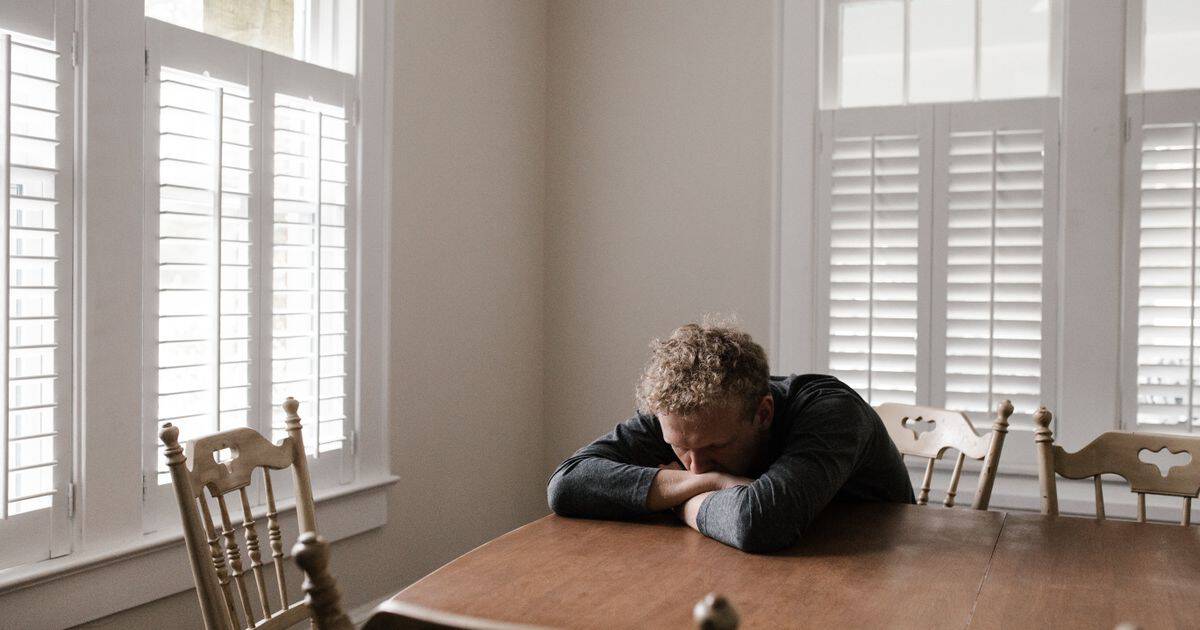
You are standing in your own kitchen. Your partner’s voice has just gone up an octave and then another, and something inside your chest has gone cold and small. Your throat closes. Your legs feel far away. Part of you is trying to keep track of what they are actually saying, whether the dishes or the money or your tone at dinner is the point, and part of you has already left the room even though your body is still there.
Recognize yourself in this?
Talk to Figlet about it right now. AI relationship coaching grounded in Figs O’Sullivan’s work, LMFT. Free to start, no credit card.
Later, when it is quiet again, you will type “my partner yells at me and I feel scared” into a search bar. You will scroll. You will read some listicle that treats a raised voice and a closed fist as versions of the same thing, and you will close the tab more confused and more alone than when you opened it. Because you know it is not nothing. And you also know, somewhere underneath, that it is not the whole picture either. You still love this person. You are not sure if that makes you brave or foolish.
I want to slow you down. I have sat with couples in this exact pattern for seventeen years, and what happens between two people when one starts yelling and the other freezes is more specific, more biological, and more workable than any red-flag checklist will ever tell you. But it will not be workable until you can see it clearly.
First, Let’s Draw a Line Nobody Online Will Draw For You

Which pattern is running your relationship?
Take the free three minute quiz and meet the creature behind the cycle you keep getting stuck in.
Before we go anywhere near the clinical piece, I need to name something clearly. There is yelling that is part of a painful loop between two decent, dysregulated people who have never learned how to fight without setting fire to each other. And there is yelling that is part of a pattern of intimidation, contempt, coercion, or physical threat, where the fear you feel is your body correctly reading a partner who is not safe.
Those are not the same thing, and no article can tell you which one you are in. What I can tell you is that if you are afraid to disagree, afraid to leave the room, afraid to have your own opinions, if there is any physical intimidation, any breaking of things, any pattern of contempt that follows you into other rooms of your life, that is a different article and a different conversation. Please call a professional or a domestic violence line.
The rest of this piece is written for the far more common situation I see in my office: two people who love each other, both scared, both dysregulated, one going loud and one going small, both convinced the other one is the problem. If that is you, keep reading.
If the fear has spread into every small moment, I wrote about being scared of making your partner mad.
From Empathi’s research: in 58,221 completed relationship assessments, shut down and withdraw were the top two reactive behaviours for withdrawers (8,653 and 7,743) and the second and third for pursuers (8,007 and 7,700).
The Six-Second Truth About What Just Happened In Your Body
Grounded in attachment theory, adult partners calm one another the way a caregiver settles an infant. Your nervous system is not a metaphor. It is the original ledger, and it keeps an incorruptible record of who is safe and who is not.
When your partner’s voice spikes, your amygdala fires before your thinking brain even gets to vote. The rational part of you runs behind the survival part. Cortisol dumps. Your throat closes. Your face goes still or your eyes fill. You cannot access the arguments you had ready ten minutes ago. This is not weakness. This is biology doing exactly what it was built to do inside a mammal whose survival, from the beginning, depended on staying in the good graces of the person it loved most.
Human beings are wired for connection the way we are wired for oxygen. That is not a greeting card sentiment, that is the whole architecture. So when the person you have bonded to raises their voice at you, your body does not register a difference of opinion about the credit card statement. It registers a rupture in the field that keeps you alive. That is why the fear is out of proportion to the words. The fear is not about the words. The fear is about the ground moving.
If you have ever wondered why you cannot just “let it roll off you” the way people online seem to think you should, this is why. You are not built to let it roll off you. You are built to notice. Your body is doing its job.
Two Nervous Systems, Same Fire, Opposite Moves
Here is the piece almost nobody names. When your partner yells, they are not calm. They are not “winning.” They are on fire too. Their body is in the same biological emergency as yours. They are just running the opposite survival move.
In my office I call this pattern the Waltz of Pain. It is a circular loop where each partner’s protective strategy triggers the other’s deepest fear, and both of you end up locked in mutual threat across the kitchen table, both certain the other is the one causing the pain.
Underneath every yelling outburst is something almost nobody Googles for. There is a sudden interruption of connection. Your partner reached, in whatever clumsy way, for closeness or agreement or repair, and felt you go cold, or felt themselves fail, or felt an old shame flare, and their body could not hold it. So they executed what we call attack-other. They yelled to protect their heart from the burning pain of not being enough. The yell is a shield. It is loud precisely because underneath it is something small and terrified.
I am not saying this to excuse it. Yelling is not okay and it does real damage to your body and to the bond. I am saying it because if you cannot see the small, terrified thing under the shield, you will keep trying to fight the shield, and the shield is not the problem. The shield is a symptom.
Meanwhile, on your side of the room, you are executing the opposite move. You are going small. Silent. Frozen. You are not trying to punish them, though it may land that way. Your body is trying to survive by disappearing. Both of you are drowning. Both of you are convinced the other one is holding your head under water.
The Story You Are Telling Yourself vs. The Experience You Are Actually Having
Here is where the work turns. Most people in this situation spend their thinking hours building a case. Against their partner. For their own reasonableness. They rehearse arguments in the shower. They screenshot texts. They tell friends the worst version of the last fight. And every rehearsal makes the body more braced, not less.
I ask couples to turn the flashlight around. Not away from your partner’s behavior, that still matters, but away from the story of other and back onto the experience of self. What is actually happening in your chest when they raise their voice? Not what does it mean about them. What is it like inside you.
Most people, when they slow down enough to actually feel it, find something like this. My chest goes tight. My throat closes. I feel about four years old. I feel like I am going to disappear. I feel like I am about to lose everyone I have ever loved.
That is not a critique of your partner. That is an old wound you are carrying, being touched by a present-day event. Both are true at once. Your partner’s yelling is real and does real harm. And the size of the fear inside you is also carrying something older, something that started long before you ever met them. Naming that does not let them off the hook. It gives you back some ground. You can read more about how to tell those two apart in this piece on real red flags versus your anxiety talking.
Ready to work on this?
Figlet is AI relationship coaching grounded in attachment science and Figs O’Sullivan’s clinical work, LMFT. First messages free, no signup.
What The Yeller Is Actually Feeling (And Why It Matters For You)
I want you to understand something about the person raising their voice, because this understanding is the door out.
In my clinical framework I call the loud partner the Relentless Lover. They pursue. They protest. They get sharp and critical because underneath the noise is a terror that they do not matter, that they are failing you, that you are already halfway out the door in your head. Their fight is a fight for the bond, executed in the most self-defeating way possible.
If you are the one being yelled at, the yell lands as attack. In their body, it feels like reaching. Both are true. This is what makes the dance so cruel. The move that feels most like war to you is, inside them, a scared child pounding on a door they think you have already locked.
I sat with a couple recently, I will call them Sadhbh and Conor. Sadhbh was the loud one. She would come in hot, sharp, accusing. Conor would go flat and rigid and start explaining logistics in careful paragraphs, his voice pulled thin. Every article Sadhbh had read told her Conor was emotionally unavailable. Every article Conor had read told him Sadhbh was verbally abusive.
When I finally got Conor’s Representative offline, that polished, careful mask he had been running for thirty years, he said his chest went freezing cold when she raised her voice. Slinking away was his wobbly way of preserving some scrap of dignity without having to sit inside the burning shame of feeling like a failure again. Sadhbh’s face changed. She said, quietly, that when he went flat she felt completely alone in the dark, and she got loud and critical to try to force him to see her, which just made him go further away.
That is the whole loop, right there, in one exchange. Neither of them was the villain. The system between them was the villain. And once they could see the system, they could stop attacking each other and start attacking the loop instead.
If your partner is the one going silent while you get louder, this piece on why partners withdraw will give you the other side of this same equation.
What Actually Helps When Your Partner Yells
I am going to give you a real shift, not a script. Scripts fail in the middle of a fight because your prefrontal cortex is offline and you cannot execute complicated moves. What you can do is much simpler and much harder.
First, in the moment, name your state, not their behavior. Not “you are yelling at me and it is not okay,” though that may be true. Instead, something closer to: “My body is scared right now. I cannot think. I need ten minutes.” Not as a weapon. Not as a punishment. As a fact. When you name your own state, two things happen. You give your own body some ground to stand on. And you interrupt the loop by refusing to play your assigned part in it.
Take the ten minutes. Actually take them. Walk outside. Feel your feet. Drink water. Do not spend the ten minutes building your case. Spend them coming back into your body. Then return. Do not disappear for the night. Coming back is the piece that repairs.
Second, outside the fight, when you are both settled, have the meta-conversation. Not about the dishes or the money or whatever the surface content was. About the loop. “When your voice goes up, my body goes cold and I disappear. I know that lands as me not caring. I do care. I am scared.” That kind of sentence, said when neither of you is on fire, changes more than a hundred good scripts said mid-blaze.
Third, and this is the part almost no popular article will tell you, do not try to become independent. Do not try to self-soothe your way out of needing your partner to be gentle with you. Self-soothing my arse. You are a bonded mammal. Needing your partner to be safe with you is not codependence. It is biology. What you are working toward is not two islands who never trigger each other. It is what I call the Sovereign Us: two whole people building a shared base camp where both bodies can rest. That is different, and more honest, than the independence sold by half the internet. You can read more on what that actually looks like in this piece on secure functioning.
What This Costs If You Do Not Name It
Here is the part I do not want to say and have to say. If you keep living inside a pattern where one of you yells and the other one freezes, and you keep telling yourself it is fine because there is no physical violence, your body will keep the score. Your physiology does not forget. The ledger stays open. Over months and years, you will get smaller. Your voice will get quieter. You will start pre-editing sentences before you say them. You will stop bringing up the things that matter because bringing them up is too expensive.
That is not a marriage. That is a hostage situation with good moments. And it is not what your partner wants either, even the one doing the yelling, because underneath the shield they are also lonely, also missing you, also aware that something is going wrong that they do not know how to fix.
The loop will not solve itself. Time does not heal this one. What heals it is one of you deciding, out loud, that the loop is the enemy, and that the two of you are on the same side against it. That sentence, said and meant, is the beginning of the way out.
Common Questions
Is my partner yelling at me considered emotional abuse?
Yelling exists on a spectrum. If the yelling is part of a mutual pattern of dysregulation where both of you get triggered and both get through it and both repair afterward, that is a painful loop, not abuse. If the yelling is part of a pattern of intimidation, contempt, control, threats, or fear that follows you into other parts of your life, and if you are afraid to have your own opinions or leave the room, that is a different situation and it needs a domestic violence professional, not a couples therapist.
Why does my body freeze when my partner yells at me?
Freezing is a survival response, not weakness. When your amygdala reads a raised voice from your primary attachment figure as threat, and when fight or flight is not available, your body drops into freeze. Your throat closes, your legs feel far away, you cannot access words. This is old wiring doing exactly what it was built to do. You cannot willpower your way out of it. You can only slowly teach your body that this partner, in this moment, is workable.
Should I leave a relationship where my partner yells at me?
I cannot answer that from an article. What I can say is that the question worth asking first is whether your partner can see the loop, own their part, and work on it with you. A partner who yells, hears you, and gets curious about what is happening in them is workable. A partner who yells, denies it, blames you for provoking it, and refuses any repair is telling you something different. The willingness to look, not the absence of the yelling, is the real signal.
I answer the question so many women bring me, my boyfriend yells at me, why does he do it, in a separate piece.
How do I stop feeling scared during arguments with my partner?
You do not stop feeling scared by trying to feel less. You reduce the fear by changing the loop that is generating it. That means naming your state out loud in the moment (“I am scared, I need ten minutes”), taking real breaks, and having the meta-conversation about the pattern when you are both calm. The fear goes down as the pattern changes, not before.
What does it mean when my partner apologizes but keeps yelling?
An apology without behavior change is what I sometimes call a fiat apology. Words issued by decree, with no behavioral evidence behind them. Real repair is not the phrase “I am sorry.” Real repair is your partner noticing their own escalation earlier next time, taking their own break, coming back and naming what was really going on underneath. If the apologies keep coming but nothing changes, the apology is functioning as a way to close the incident, not to actually repair it.
This is not a you problem or a them problem
“You are not fighting a broken partner, but rather a tragic, co-created system where you both hurt because you mean so much to each other.”
“Most of the hurt in a relationship comes from impact without intention.”
Figs O’Sullivan, LMFT
What To Do Next
Do not just close the tab on this.
Bring what surfaced here into a real conversation. Figlet coaches you through it, grounded in Figs O’Sullivan’s work, LMFT. Free to start.
The yelling is not the whole story. Your fear is not the whole story either. What sits underneath both is a loop that neither of you built on purpose and neither of you can solve alone. Name the loop out loud. Make it the enemy instead of each other. That is where the work starts.
Keep Reading



Every couple has a pattern they cannot see. Find yours.
In love, each of you is a Relentless or a Reluctant, which makes you one of three kinds of couple: Relentless and Reluctant, two Relentless, or two Reluctant. The free quiz reveals your creatures and the cycle they fall into together. About three minutes.
No signup needed to start.
The Relentless

The Reluctant