By Fiachra “Figs” O’Sullivan, LMFT
“I feel like I can’t be myself around my partner” is one of the most common sentences I hear in my office, and it almost never means you are broken or with the wrong person. It means your nervous system has decided your real, wobbly self is not safe to bring into this bond, so it sends in a careful, agreeable mask I call the Representative. The way back is not trying harder to be authentic: it is noticing the moment you go small, and letting your partner see it.
If you go careful and quiet around your partner, tell Figlet what you hold back and why, and it will help you understand what your body is protecting.
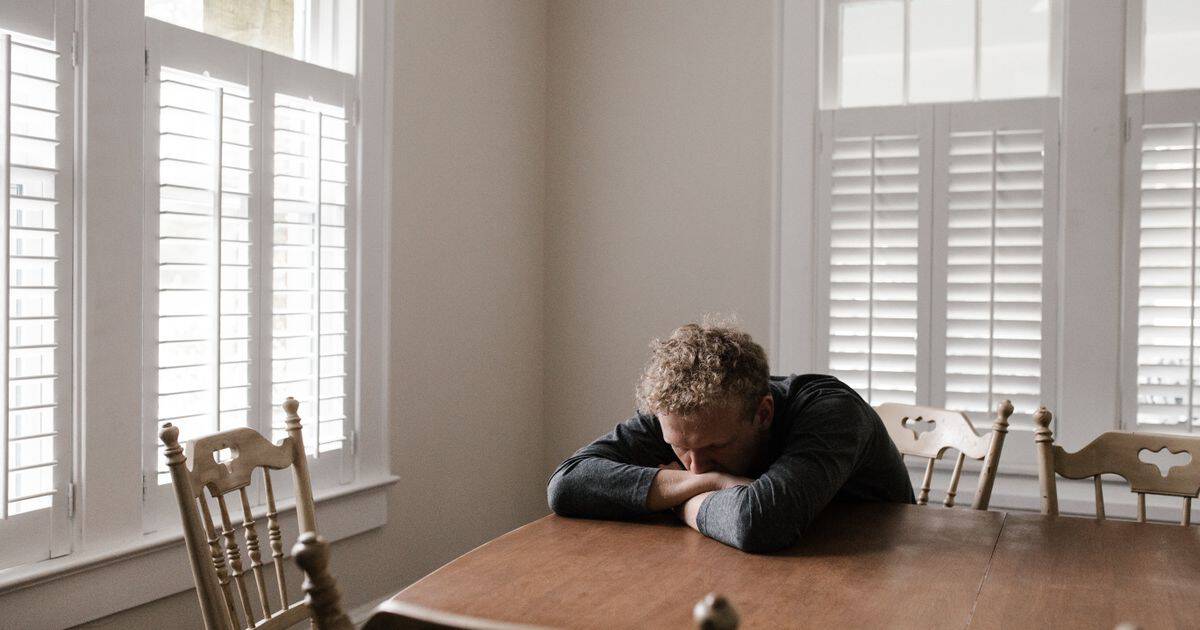
It’s Thursday night. You’re on the sofa. Your partner is right there, shoulder almost touching yours, and you feel a specific kind of loneliness that only exists inside a relationship.
You had a small disagreement earlier. Or maybe you didn’t. Maybe the air just shifted, and something in you shifted with it. Your shoulders tightened. Your breath went shallow. Your voice got small and careful and pleasant. You laughed at the joke you didn’t find funny. You agreed to the plan you didn’t want. You went quiet about the thing that mattered.
Later, alone in the bathroom, you look in the mirror and you don’t quite recognize the person you were being all evening.
You type some version of “can’t be myself partner” into a search bar. You’ve read the listicles. Set boundaries. Practice self-love. Learn to differentiate. Do the inner work. If you can’t be yourself, maybe you’re with the wrong person. Maybe you’re too anxious. Maybe you never learned who you are.
Slow down before you scroll another piece.
I’ve been a couples therapist for over seventeen years, and I want to tell you something the internet won’t. The version of you that shows up performative and small around your partner is not a defect. It is not weakness. It is not proof that the relationship is dead or that you have failed at being an adult.
That careful, polite, disappearing self is your nervous system running an ancient survival protocol. Grounded in attachment theory, it is exactly what a bonded mammal does when the ground underneath a primary relationship starts to wobble. You send in a Representative. You put your organic self somewhere safer. You perform lovability because you cannot yet trust that being lovable is enough.
Let’s actually look at what’s happening, because until you see the mechanism, no amount of “just be yourself” advice will land.
The Representative: Why You Send a Mask In First

Which pattern is running your relationship?
Take the free three minute quiz and meet the creature behind the cycle you keep getting stuck in.
Every one of us, somewhere in childhood, learned something about which parts of ourselves got loved and which parts got trouble. Maybe your sadness was too much. Maybe your anger got you shamed. Maybe your excitement was mocked, or your needs made someone in the house tighten up. Your body took notes. Very careful notes.
Out of those notes, you built a Representative. The polished, competent, agreeable version you send out into the world because your organic self, the wobbly, needy, contradictory, actually-alive one, was flagged as unsafe to show.
The Representative is brilliant at what it does. It reads rooms. It anticipates moods. It knows what to say to keep things smooth. It agrees, softens, defers, laughs at the right moment, disappears at the right moment. It has kept you employed, kept you connected, kept you loved-enough.
And then you fell in love, and you brought your Representative to the relationship, because that’s who gets brought first. Everywhere.
At the start, the Representative worked. Your partner met it and liked it. The problem is what happens next. Because the closer two people get, the more the biological stakes rise. Your nervous system starts to ask the two questions it always asks under a bond: Are you there for me? Am I enough for you?
And here is where the trap snaps shut. If your partner is loving your Representative, your organic self reads that as: they love the mask, not me. You feel more alone the closer they get to the version of you they can see. So you double down on the performance, because dropping it now feels like showing them the person you’re most convinced they wouldn’t choose.
That’s the specific loneliness of not being yourself around your partner. It isn’t distance. It’s proximity to someone who is bonded to a version of you that you know isn’t real.
From Empathi’s own research: in 58,221 completed relationship assessments, 74.1% of the 6,159 couples where both partners completed were in the pursue-withdraw cycle. Both partners typically describe the other as the one withdrawing.
Signs You Can’t Be Yourself in a Relationship
Most people don’t notice the Representative arriving. It doesn’t announce itself. It just quietly takes over more and more of the evenings. These are the seven signs I see most often in the room, and you may recognize more than one.
1. You edit sentences before you say them. You rehearse the request in your head, cut the part that might land badly, soften the rest, and by the time it comes out of your mouth it isn’t really what you meant anymore.
2. You never fully relax, even years in. Your shoulders don’t drop when they walk into the room. Part of you is always on duty, reading their tone, their face, their energy, the way a prey animal tracks a predator. That looks like empathy. It isn’t. It is threat assessment.
3. You feel relief when they leave the house. The door closes and something in your chest loosens. You put on the music you like. You eat what you actually want. You feel like a person again. That relief is information.
4. You’ve stopped knowing what you want. Someone asks which restaurant, how you feel about the trip, what you think about the money decision, and you genuinely don’t know. Not because you’re being passive. Because the part of you that tracks your own needs went offline so you could track theirs.
5. You’re a different person with your friends. Funny, loud and opinionated over a pint. Pleasant and careful at home. Same body, two different people.
6. You bite your tongue, and then the resentment leaks out sideways. You swallow the small things to keep the peace, and then you find yourself in a furious fight about the dishwasher that feels like life or death. Every swallowed need is printed as relational debt, and that debt collects interest.
7. You feel lonely sitting right next to them. The Thursday night sofa. Close enough to touch, and nobody really there.
If several of these land, hear me clearly: none of them is a character flaw. Every one of them is a protective move your body learned for good reasons. I’ve written more about what those hidden parts are guarding in the cost of hiding parts of yourself from your partner. And if the main feeling is fear of their reaction, that pattern has its own shape, which I unpack in walking on eggshells in a relationship.
When You Don’t Feel Like Yourself in Your Marriage
Sometimes it isn’t one sharp moment. It’s a slow fade. You look up after ten years and think: when did I stop having opinions? When did I stop doing the things that made me feel like me? Some people tell me they don’t feel like a participant in their own relationship anymore, as if they’re watching the marriage from the hallway while a polite stand-in does the living.
That fade almost always happens one small accommodation at a time. A friendship that made your partner uneasy. A hobby that took you out of the house. Your way of disagreeing. Nobody took them from you all at once. You set them down to keep things comfortable, and the Representative picked up the slack. I’ve written about that slow disappearing in losing yourself in a relationship. The hopeful part is that you come back the same way you left: one small piece at a time.
The Silent Collusion: Why This Is Never a Solo Problem
Here is what the “learn to be yourself” content misses almost every time. This is not a you-problem. It is not solved in isolation by therapy, journaling, breathwork, or self-love.
Performance in a couple is almost always a jointly created, circular loop. I call it the Waltz of Pain, and it works like an infinity sign.
You feel the ground wobble. You send in the Representative. You go quiet, or agreeable, or careful.
Your partner’s nervous system reads your careful quiet as a verdict. Something in them thinks: I have failed you before. I am failing you now. I will keep failing you. Their shame-sensitive body hears your compliance as silent criticism.
So they contract. Maybe they get sharper. Maybe they withdraw further. Maybe they get louder to force a real response out of you. Whatever their move, it lands on your nervous system as further evidence that your organic self is unwelcome here, and you send the Representative in deeper.
Round and round. Neither of you means any of it. Both of you are drowning.
The reason you can’t be yourself around your partner is not that you’re broken and not that they are. It’s that the two of you have built, without meaning to, an emotional weather system where both of you feel too unsafe to bring the wobbly, uncertain, actually-real version of yourselves into the room.
What Most Advice Gets Wrong
If you’ve searched this topic before, you’ve been told some version of: differentiate, self-soothe, work on yourself, set boundaries, become secure alone first.
I want to be direct about this. Differentiation and self-love, done as an isolation project, will not fix a bonded body.
Human beings are mammalian creatures. You need a co-regulating other. You needed one as an infant to stay alive, and your adult brain never rewrote that requirement. You cannot learn to swim while fighting for air, and expecting yourself to “just be yourself” inside a relationship where your body reads it as unsafe is exactly that. Secure attachment is the life jacket. It is not a reward you earn after doing solo work. It is the condition that makes the work possible.
Which is why the advice to “become secure first, then bring your true self” gets the physics backwards. Sovereignty and authentic self-expression are emergent properties of feeling safe with another person, not prerequisites for it. I’ve written more about this in What Is Secure Functioning in Relationships, because it matters. The relationship is the vehicle. You don’t build the boat on shore. You build it together on the water.
None of this means you have no work to do. It means the work is different than what you’ve been told.
The Two Questions Under Every Careful Performance
When you go small and polite around your partner, your body is answering, in real time, one of two questions.
Am I too much for them? This is the shape it takes for the partner whose organic self was flagged as needy, intense, dramatic, or demanding. You shrink to stay lovable. You perform ease, undemandingness, low-maintenance calm.
Am I not enough for them? This is the shape for the partner whose organic self was flagged as inadequate, disappointing, or a failure. You perform competence, agreement, cheerfulness. You bury the parts of you that feel uncertain or wobbly because bringing them in feels like proving you’re the disappointment you already suspect you are.
Both performances look like “I can’t be myself.” Underneath, they are different flavors of the same wound. Both are trying to answer a threat by managing the other person’s experience of you.
The tragedy is that management does not produce closeness. It produces the very loneliness you’re trying to prevent.
The Story of Other, and the Experience of Self
Here is one of the most useful shifts I know for people stuck in this pattern.
When you can’t be yourself around your partner, your mind is almost certainly running a Story of Other. It sounds like: he’ll be disappointed. She’ll get that face. They’ll go quiet. He gets stressed when I’m upset. She doesn’t want to hear this. They think I’m too much already.
You have built an entire case, in your head, about who your partner is and what they can and cannot handle. You’ve probably been building it for years. And you may even be partly right. Some of the evidence is real.
But the Story of Other is not the whole map. It is the flashlight pointed outward. The work is to turn the flashlight around and look at the Experience of Self. What is happening in your chest right now? Where is the tightness? What is your throat doing? What is the small, specific ache under all this careful management?
When you turn the light inward, the Representative goes offline. You cannot manage your partner’s imagined reaction and be inside your own body at the same time. The body always wins, if you let it.
This is not journaling for its own sake. This is how you find the version of yourself you can’t seem to bring into the room. She’s not lost. He’s not gone. That self is in your chest, being guarded by a very old, very smart protector part.
A Scene from the Practice Room
A couple I saw, we’ll call them Emma and Sean, came in because Emma had reached the point of Googling “can’t be myself partner” at three in the morning. Emma is a corporate VP. Sean is a startup founder. From the outside, they looked like they had it wired.
In the room, Emma sat forward, fluent, articulate, building the case. Sean sat back, flat, cold, giving logical answers, complying like a robot while emotionally somewhere else entirely.
Emma’s Representative was the perfect, high-performing, agreeable one. She spent her days at work being sharp and decisive and her evenings at home being pleasant and careful. She said she felt like she was suffocating in her own house.
I asked her to stop the case for a minute and just tell me what her chest was doing.
Long pause. Then quietly: cold. Freezing cold. And my throat closes up.
I asked how old that feeling was.
Another pause. Little. Like a little kid who’s failing a test.
Something shifted. Emma wasn’t building a case against Sean anymore. She was inside her own body, describing a frightened child who had learned that agreeing and complying was her only route to being loved. Being pleasant was not who she was. It was what she did to survive not being enough.
Sean’s posture changed. Something in him softened. He’d been sitting there hearing her complaints as verdicts against him. Now he was seeing something else, a scared kid inside his wife, and his shame dropped a notch. He said quietly that he’d been feeling completely alone in the dark, getting louder and colder to try to force some real contact, which only made her withdraw more.
That was the moment. Their separate suffering, held apart by two protective performances, collapsed into one shared field. Not because either of them fixed anything. Because both of them stopped performing for a minute and let the other one see the wobble.
That is the work. Not becoming a different person. Becoming a person who lets the wobble show.
Ready to work on this?
Figlet is AI relationship coaching grounded in attachment science and Figs O’Sullivan’s clinical work, LMFT. First messages free, no signup.
When It’s Actually the Relationship, and When It’s the Loop
I have to be honest about something, because a lot of writing on this topic sits on the fence. There is a version of “I can’t be myself around my partner” that is a real signal about a real relational danger. Contempt, coercion, chronic dismissal of who you are, punishment for having opinions, a partner whose reactions genuinely require you to shrink for your safety. That is a different animal, and no amount of turning the flashlight inward will fix it. I’ve written about how to tell the difference in Am I in a Toxic Relationship.
But the far more common version, the one most people are actually inside, is a loop between two decent people whose protective parts have taken over the relationship. Both are performing. Both are lonely. Both are convinced the other one is the problem. Neither can be themselves because neither feels safe enough to try.
Is It Normal to Not Want to Be Around Your Partner?
Yes. It is far more common than people admit, and it is rarely the confession it feels like. When you can’t be yourself around someone, being around them is work. Hours of performing are exhausting, and of course your body starts to want the evenings off.
There is also a simpler version. Some nervous systems recharge by being with people, and some recharge by being alone. If you are the second kind, time on your own is how you come back to yourself so you can actually be present. When you don’t get it, your circuit breakers start to trip. You get short. You go flat. And eventually, if you never get air, you shut down for real.
So the question is not whether wanting space makes you a bad partner. It doesn’t. The question is what the space is for. Is it a battery recharge, or is it a hiding place? For a lot of the people I sit with, the room behind the closed door is the only place they are not being measured. That’s the tell.
I Don’t Want to Be Around My Husband
If that’s the sentence in your head, I’d ask you one question before anything else. Do you not want to be around him, or do you not want to be around the version of you that shows up when he’s there? Those are very different problems. The first can point to real distance or real hurt. The second is the Representative, and you are tired of being it.
Notice what your body does in the ten minutes before he gets home. Tightening? Bracing? Rehearsing? That isn’t proof the love is gone. It’s proof your system has learned that this bond requires a performance. And if what your body feels is actual fear of him, go back to the section above about real relational danger, because your safety comes first.
Tired of Being in a Relationship and Only Want to Worry About Yourself?
A lot of people land on this page after typing something like “I’m tired of being in a relationship because I only want to worry about myself.” If that’s you, I’m glad you said it plainly. Here is what I think is usually going on underneath it.
When you spend every day managing someone else’s moods, there is no room left to worry about yourself. So the fantasy of being single is often not really a fantasy about being alone. It’s a fantasy about putting the Representative down. About one evening where nobody is reading your face and you don’t have to read theirs.
That longing is real and worth listening to. But before you decide it means the relationship is over, try an experiment. What would it look like to worry about yourself inside this relationship? To say out loud, “I need this evening for me,” and see what actually happens. Sometimes the relief you’re craving really does mean leaving. More often, in my experience, it comes from finally being allowed to take up space where you already are.
What I Learned About This in My Own House
I want to tell you something from my own marriage, because I’ve been on both sides of this.
My wife once looked at me with what I can only call terror. She told me later that, in that moment, she saw me as a cat sitting on a mouse. My energy is high and fast and Irish, and I did not know it was flattening her. She needed room from me to feel like herself. Not because I was cruel. Because there was so much of me in the room that there wasn’t space left for her.
I had to learn to step back and give her somatic space, and to understand that her needing it was not a verdict on me. That was hard for my own protector, who reads distance as failure.
And I’ve been the other one too. When I got overwhelmed with the baby and work, I would go into my head and disappear, and my wife was left with a man who was in the house and gone, with no idea why.
What saved us was not that one of us gave in. It was that we learned to say the thing out loud before the door closed. So if you can’t be yourself around your partner, it’s worth asking two questions, not one. What is happening in me? And is there something about how we are together, the volume, the pace, the sheer amount of one person’s energy, that leaves no room for me? Your partner may have no idea. I didn’t.
How the Self Comes Back Into the Room
You do not solve this by announcing “I’m going to be more authentic now.” That’s the Representative doing authenticity as a performance, which is a fresh flavor of the same problem.
You solve it by learning to notice the moment your body goes small, and getting curious about it in real time. Not fixing it. Not shaming it. Not overriding it. Just noticing.
My chest went cold when he said that. Interesting. What am I afraid he’ll do if I disagree?
I just agreed to something I don’t want. What just happened in me?
I laughed at that joke and I didn’t find it funny. What was I protecting?
These small internal noticings are what start to give you access to your organic self again. You cannot bring her out until you know where you put her.
The second half of the work is telling your partner what you are noticing. Not as a complaint. Not as a case. As a small, wobbly disclosure. I just noticed I went quiet a minute ago because I was scared you’d think I was too much. That’s an old feeling of mine. I want you to know it’s happening.
That kind of sentence changes rooms. It short-circuits the loop. It gives your partner something to actually meet, instead of a Representative to bounce off. And it lets them, maybe for the first time, be with the version of you that has been in there all along. Some people find How to Get Your Partner to Open Up Emotionally useful for the other side of this same conversation, because it usually goes both ways.
The result is not that you suddenly become uninhibited and radiant. The result is that the room gets a little safer, and next time the wobble is a little more available, and slowly the performance stops being the only version of you either of you knows how to reach.
This is not a you problem or a them problem
“When two insecurely attached people interact, their protector strategies collide to form a negative feedback loop I call the Waltz of Pain. Your protector meets your partner’s protector. Their protector meets yours. Two childhood strategies collide, and the relationship becomes a reenactment of wounds neither partner caused.”
“Neither partner is the villain. They are two younger selves inside adult bodies trying to stay safe in the only ways they once knew.”
Figs O’Sullivan, LMFT
What to Do Tonight
You don’t need a big conversation tonight. You need a few small moves that tell your nervous system it’s allowed to come out a little.
- Catch one moment. Sometime this evening, notice one moment where you go small: agreeing, laughing, going quiet. Don’t fix it. Just say to yourself, “There it is.”
- Find it in your body. Where did it land? Chest, throat, stomach? Put a hand there for a few breaths. You are turning the flashlight from the Story of Other to the Experience of Self.
- Take back one small preference. Pick the show. Order the thing you actually want. Say “I’d rather not” to one small plan. Then watch. Most of the time, the room survives.
- Say one wobbly sentence. Something like: “I just noticed I went quiet a minute ago because I was nervous you’d think I was too much. That’s an old feeling of mine. I’m not blaming you. I just want you to know it’s happening.”
- If you need space, narrate it. “I love you and we’re good. I need an hour on my own so I can actually be here with you. I’ll come find you at nine.” Then come back when you said you would.
Common Questions
Why do I feel like I can’t be myself around my partner but I can with my friends?
Because your friends aren’t your primary attachment figure. The biological stakes with them are lower. Your nervous system reserves its heaviest protective machinery for the relationship it’s most bonded to, which is often the one where you feel least able to be yourself. That’s not evidence you picked wrong. It’s evidence your body knows this bond is the load-bearing one.
Is losing yourself in a relationship a sign of anxious attachment?
Sometimes, yes, particularly if the loss looks like constant accommodating and monitoring their mood. But it also shows up in avoidant and disorganized patterns, just wearing different clothes. The common thread is a protective part deciding your organic self isn’t safe to bring forward. Naming the specific pattern matters more than the label. The mechanism is what you work with.
Can I get myself back without leaving the relationship?
Usually, yes, and often the relationship is exactly where the recovery happens. The catch is that it can’t be a solo project inside the same loop. Both partners have to start noticing their own protective moves and letting the other see the wobble. If your partner refuses to do any of this work, that’s different information. But most couples in this pattern are both trapped, not one trapping the other.
Why does it feel worse the longer we’ve been together?
Because bonded attachment intensifies over time, not the reverse. Your nervous system reads a decade-old relationship as higher-stakes than a two-year one, so the protective machinery gets thicker, not thinner. Early relationships often feel easier to be authentic in precisely because the bond isn’t deep enough yet to trigger the oldest protectors. Depth of bond is what activates the oldest wounds.
How do I stop performing without triggering a huge fight?
Start small and start inside. Notice one moment a day where you go small. Don’t fix it. Just track it. Then try one wobbly disclosure a week, framed as your own noticing rather than a complaint about them. “I just noticed I agreed when I didn’t mean to” lands very differently from “you never let me disagree.” The nervous system change is slow and it compounds.
What does “I can be myself around you” mean?
It means someone’s nervous system has stood down around you. They don’t have to send in the Representative, edit their sentences, or track your mood to stay safe. It’s one of the most loving things one person can say to another, because it means the bond feels safe enough for the organic self to show up, wobble and all.
Why do I feel relieved when my partner leaves the house?
Because the performance can stop. Relief when they leave usually means your body has been on duty the whole time they were home, scanning and managing. It isn’t proof you don’t love them. It’s information that something about how you are together needs more room for you.
Should I leave if I can’t be myself in my relationship?
If shrinking is how you stay safe, because of contempt, control, or punishment for having opinions, your safety comes first and that is a different conversation. But if you’re with a decent person and you’re both caught in a loop, leaving often just moves the Representative into the next relationship. The pattern travels with you until you work with it, and the relationship you’re in is often the best place to do that.
Do not just close the tab on this.
Bring what surfaced here into a real conversation. Figlet coaches you through it, grounded in Figs O’Sullivan’s work, LMFT. Free to start.
The version of you that went quiet on the sofa isn’t lost. She’s in your chest, right now, being guarded by a very old, very tired protector who needs to know it’s safe to stand down. That’s the work. Find her. Bring her, wobbling, into the room. See what the room does.
Keep Reading



Every couple has a pattern they cannot see. Find yours.
In love, each of you is a Relentless or a Reluctant, which makes you one of three kinds of couple: Relentless and Reluctant, two Relentless, or two Reluctant. The free quiz reveals your creatures and the cycle they fall into together. About three minutes.
No signup needed to start.
The Relentless

The Reluctant