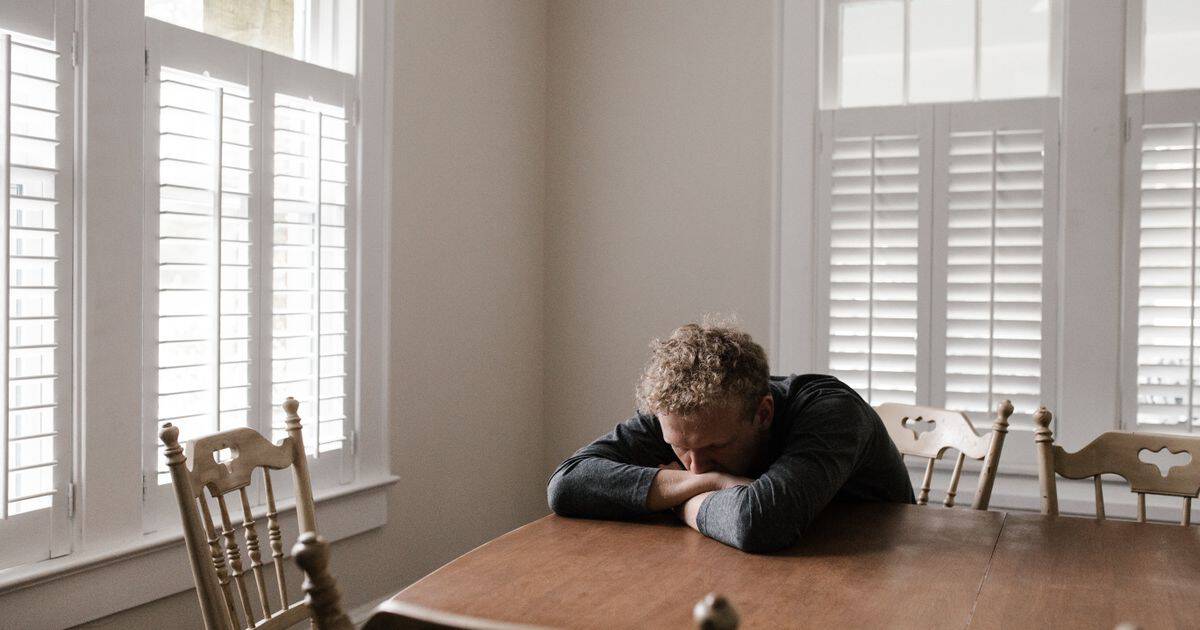
It’s ten at night. Your partner is three feet away on the couch and there’s a small sentence in your chest you cannot get out. A question about a charge on the credit card. A gentle correction about how they spoke to you at dinner. A want you rehearsed on your drive home. Maybe just, “I had a hard day.”
Recognize yourself in this?
Talk to Figlet about being scared of your partner’s anger right now. AI relationship coaching grounded in Figs O’Sullivan’s work, LMFT. Free to start, no credit card.
You get close and your throat tightens. You can already see the face they’re going to make. The sigh. The jaw setting. The flat, tired voice explaining why what you feel doesn’t quite add up. Or worse, the flush of heat, the sharpness, the room going small.
So you swallow it. Again. You pull your hand back into your own lap. You tell yourself it isn’t worth it, that you’ll bring it up another time, that you’re being too sensitive. And then you pick up your phone and quietly type “scared partner mad” into the search bar, hoping somebody out there has a name for this specific loneliness.
I want you to slow down before you scroll another listicle. I’ve been a couples therapist for seventeen years. I’ve watched thousands of people land in this exact place on my couch, and the story they’re telling themselves about it is almost always wrong. You think you’re weak. You think you picked a volatile partner. You think you have anxious attachment and you should learn to self-soothe and stop needing so much.
I want to offer you a different frame, grounded in attachment theory and in what actually happens in the therapy room when this pattern gets unhooked.
Being scared of making your partner mad is not a character flaw. It’s a biological event with a specific architecture. And once you can see the architecture, you can stop being run by it.
What Your Body Is Actually Doing When You Freeze

Which pattern is running your relationship?
Take the free three minute quiz and meet the creature behind the cycle you keep getting stuck in.
Watch what happens in you the moment you consider saying the thing. Your chest goes tight. Your stomach turns. Something metallic climbs into the back of your throat. You get a specific psychological vertigo, the kind that opens up when someone who is supposed to be your safe person feels ten thousand miles away while sitting next to you.
That is not analysis. That is alarm.
Adult love partners regulate each other the way a caregiver regulates an infant. When the bond wobbles, even slightly, your amygdala fires before your thinking brain gets to vote. Cortisol dumps. The rational brain runs behind the survival brain. On the ancient savanna, if the person your survival depended on turned on you in rage, your organism registered certain death. That circuit is still in you. When your partner’s anger flares, your body does not register a difference of opinion. It registers a threat to your life.
This is the piece almost no article on “walking on eggshells” will name. Your fear is not paranoia and it is not weakness. Your body keeps an absolute record of every time reaching cost you and every time it didn’t. Every unattuned response from a caregiver, every ex who went cold, every time this partner’s voice sharpened on a Tuesday you can’t quite remember, all of it is written on that record. When the ledger tips toward threat, your prefrontal cortex goes partly offline before you have a chance to speak. The mouth closes. The sentence dies. You freeze.
You are not being dramatic. You are protecting yourself from a specific felt experience of being small and exposed in front of the person whose eyes matter most.
What the data shows: in 58,221 completed relationship assessments, 74.1% of the 6,159 couples where both partners completed were in the pursue-withdraw cycle. Both partners typically describe the other as the one withdrawing.
The Two Questions Running Underneath the Freeze
Something I say to every couple on my couch: the bonded body is only ever asking two things, and it never asks them in words.
Are you there for me? Am I enough for you?
If you’re the one scared to speak, both of those queries are firing at once, stacked on top of each other. Are you there for me, or are you about to go cold, sharp, punishing. Am I enough for you, or is this small thing I want going to prove I am too much again.
Here is what almost nobody names. Your partner, the one you are scared of, is running the exact same two questions. And their body is answering them by getting angry.
That sentence usually needs to sit for a second. The person whose flash of anger terrifies you is, underneath the heat, running an ancient version of “am I enough for you.” When they sense you’re upset, when they feel your caution, when they read your careful tone, their nervous system does not process it as feedback. It processes it as verdict. I have failed you before. I am failing you now. I will keep failing you into the future.
To a shame-sensitive nervous system, that verdict is unbearable. So the body reaches for a defense. Sharpness. Logic. A raised voice. The intellectual lecture about why what you feel doesn’t quite add up. That heat you are so scared of is not usually the presence of cruelty. It is the presence of too much unbearable shame, with anger bolted on the front of it so nobody sees the failure underneath.
I am not asking you to excuse the behavior. I am asking you to see the architecture. Because as long as you think you’re dealing with a bad person, you will keep flattening yourself and hoping. And as long as you’re flattening yourself, they will keep reading you as a judge, and their defense will keep firing.
The Representative: Why Flattening Yourself Makes It Worse
There is a part of you that learned somewhere along the way that your organic self is not quite acceptable. Too much. Too needy. Too intense. Too something. So you built what I call the Representative. The polished version. The one who has the tone right, the timing right, the caveats loaded up front. She rehearses the sentence for two hours. She checks his mood before she speaks. She adds “no worries if not” to every request.
The Representative believes she is keeping you safe. And in a way, she is. She is trying to make you small enough that no anger can find you.
But watch what she actually produces. When you speak from the Representative, your partner cannot meet you. They can only meet the mask. The careful voice, the loaded caveats, the slight preemptive apology. All of that reads, to their shame-sensitive nervous system, as cold assessment. She’s handling me. She thinks I’m dangerous. She’s already decided I’m going to fail.
Which fires the exact defense you were trying to prevent.
This is the cruelty of the loop. The more scared of them you are, the more you send the Representative in, the more they feel judged, the more they harden, the more scared you get, the deeper the Representative goes. Both of you are trying to protect your soft hearts, and both of your protective strategies are perfectly designed to trigger the other’s deepest wound.
You can read more about this pattern in how to get your partner to open up emotionally, where I go into what happens when careful requests keep landing as verdicts.
Turn the Flashlight Around
There is a move I teach every client caught in this dynamic, and it is the single most useful thing I know for people who are scared of their partner’s anger. I call it turning the flashlight around.
When you’re freezing on the couch at ten at night, your flashlight is pointed outward. You are building what I call a Story of Other. He is like his father. She has a temper. He will explode. She will shut me down. He is a narcissist. She doesn’t love me. The story feels productive because it feels like clarity is one more piece of evidence away.
It never is.
The move is to turn the flashlight one hundred and eighty degrees and point it at what I call the Experience of Self. Not the story about them. The felt experience in you. The tight band across your chest. The knot behind your sternum. The specific ache of wanting to say something and being unable to. The small child in you who learned that speaking cost her.
That is the ground. That is where the work is.
Because here is what actually happens when you stay with the felt experience instead of the case against them. Your nervous system starts to settle. Not because you did a breathing exercise. Because you finally stopped abandoning yourself to build a courtroom against your partner. When you can be with your own tenderness, you stop needing them to change their behavior in order for you to be okay in the moment. That doesn’t mean their behavior is okay. It means you are not solely dependent on their regulation for your ground.
I’ve written more about this move in how to stop overthinking about your partner.
Ready to work on this?
Figlet is AI relationship coaching grounded in attachment science and Figs O’Sullivan’s clinical work, LMFT. First messages free, no signup.
Aoife and Liam on the Tuesday Couch
I see this dance on my couch every Tuesday morning. Let me tell you about Aoife and Liam. Aoife is an attorney. Liam runs a hardware startup. She came in fuming and terrified. He came in flat and cold, arms folded, waiting.
“Figs,” Aoife said, her voice shaking, “I am trapped in a nightmare. The moment Liam gets stressed about his company, his voice gets sharp and his face flushes. I freeze. I check his mood before I speak. I have completely flattened myself. I feel alone in the dark and my reality does not exist to him.”
To Liam, sitting three feet away, that description landed as devastating evidence. His Representative went cold. Not because he didn’t care. Because he cared so much that hearing her describe him this way was another failure he could not survive.
I stopped the movie. I turned to Liam.
“What actually happens inside your body when Aoife goes silent and acts scared of you?”
He was quiet for a long time. Then something in his face cracked. “I feel like a monster. I feel like my father. I feel like no matter what I do, I am the thing hurting her. And I don’t know how to stop being the thing hurting her, so I get harder.”
Aoife started to cry. Not because she felt vindicated. Because for the first time she was seeing that the man across from her was not a wall. He was a small, terrified boy in a founder’s body, trying not to feel like a failure in front of the person whose eyes he needed most.
That is the dance. She flattens because she’s scared of his anger. His anger fires because he’s scared of her disappointment. In our clinical model we call this the Waltz of Pain, and it does not care who started it. It only knows how to keep spinning until somebody steps out of position.
Neither of them was the villain. The loop was the villain.
What Actually Changes This
If you take one thing from this article, take this. You cannot fix being scared of your partner’s anger by getting better at managing their anger. That is the trap. That is what the Representative has been trying to do for years. Every apology in advance, every careful sentence, every swallowed want, every eggshell you’ve learned to walk on. All of it is you trying to control the temperature of their nervous system from the outside.
It doesn’t work. It has never worked. It cannot work.
What actually changes this is a different order of operations.
First, you find your own ground. Not by leaving. Not by lecturing them. By turning the flashlight around and staying with the felt experience in your own chest long enough that your nervous system remembers there is a floor. This is the interior sovereignty piece. You cannot build a secure bond on top of a self that has been flattened into a Representative. There has to be someone home in you first.
Second, and only after the first, you begin to speak from your organic self instead of your mask. Not the polished sentence with all the caveats. The small true thing. “I want to bring something up and I’m scared.” That is a completely different signal to your partner’s nervous system than the careful courtroom voice. It doesn’t read as verdict. It reads as vulnerability. And vulnerability is the only thing that can reach the frightened part of them that has been firing anger for years.
Third, you both start noticing the loop as a third thing in the room. Not you against them. The two of you against the pattern. In secure functioning, the enemy is never your partner. The enemy is always the cycle you fall into together.
When It Is Actually Not Safe
I have to say this clearly, because the dance I’m describing is not the same as abuse and I will not pretend it is.
If your partner uses their anger to control you, if they threaten you, if they intimidate you into compliance and carry on with their day untouched while you shake, if they get physical or use silence and rage as a system of domination, that is a different article and a different conversation. What I’ve written above assumes two people who love each other and are both trapped in a survival dance neither of them chose.
The tell is this. In a survival dance, both people are drowning. In coercive control, only one is drowning while the other is calmly holding them under. You know which one you’re in. Your body has always known. If it is the second one, please stop trying to fix the dance and get support to leave safely.
You can read more about the distinction in overcoming fear of judgment from your romantic partner.
Common Questions
Why am I so scared of my partner’s anger even when they haven’t done anything terrible?
Because your nervous system is not running a rational analysis. It is running an ancient survival query. If a caregiver in your early life used anger, coldness, or unpredictable moods, your body learned that a shift in tone equals danger. That circuit does not turn off just because you’re an adult now. Your reaction is proportional to the old wound, not the current volume.
Is walking on eggshells always a sign of an abusive relationship?
No, and this is where popular content does real damage. Walking on eggshells can be a sign of coercive control, and if it is, you need to leave safely. But far more often, it is a survival dance where one partner flattens themselves out of shame-based fear and the other hardens out of shame-based defense. Both are drowning. The pattern is repairable. The abusive version is not, and you should not confuse them.
How do I bring something up without setting off my partner’s anger?
You probably can’t fully control that, and trying to is exhausting you. What you can do is stop leading with the Representative. Instead of the polished, caveat-loaded sentence, try the small true one. “I want to bring something up and I’m scared to.” That signals vulnerability rather than verdict, which lands very differently in a shame-sensitive nervous system than a careful, managed tone does.
Why does my partner get so angry when I’m just asking a question?
Because their nervous system is not hearing a question. It’s hearing a case being built against them. To a shame-sensitive body, “why did you spend this?” or “can we talk about last night?” arrives with a verdict already glued to it. The anger is defense against feeling like a failure in front of you. It’s protection, not aggression, even when it doesn’t feel that way.
Can this pattern actually change or should I just leave?
It can absolutely change, but not through more careful communication scripts. It changes when both of you stop trying to manage each other’s nervous systems from the outside and start finding your own ground first. That work is doable. Whether to stay is a different question, and only you know the answer. But do not confuse a repairable dance with a broken person.
This is not a you problem or a them problem
“When two insecurely attached people interact, their protector strategies collide to form a negative feedback loop I call the Waltz of Pain. Your protector meets your partner’s protector. Their protector meets yours. Two childhood strategies collide, and the relationship becomes a reenactment of wounds neither partner caused.”
“Neither partner is the villain. They are two younger selves inside adult bodies trying to stay safe in the only ways they once knew.”
Figs O’Sullivan, LMFT
What To Do Next
Do not just close the tab on this.
Bring what surfaced here into a real conversation. Figlet coaches you through the fear of your partner’s anger, grounded in Figs O’Sullivan’s work, LMFT. Free to start.
The sentence you’ve been swallowing at ten at night is not the problem. The Representative you keep sending in to say it for you is. Put her down. Say the small true thing. See what happens when you stop trying to manage their weather and start finding your own ground.
Keep Reading



Every couple has a pattern they cannot see. Find yours.
In love, each of you is a Relentless or a Reluctant, which makes you one of three kinds of couple: Relentless and Reluctant, two Relentless, or two Reluctant. The free quiz reveals your creatures and the cycle they fall into together. About three minutes.
No signup needed to start.
The Relentless

The Reluctant