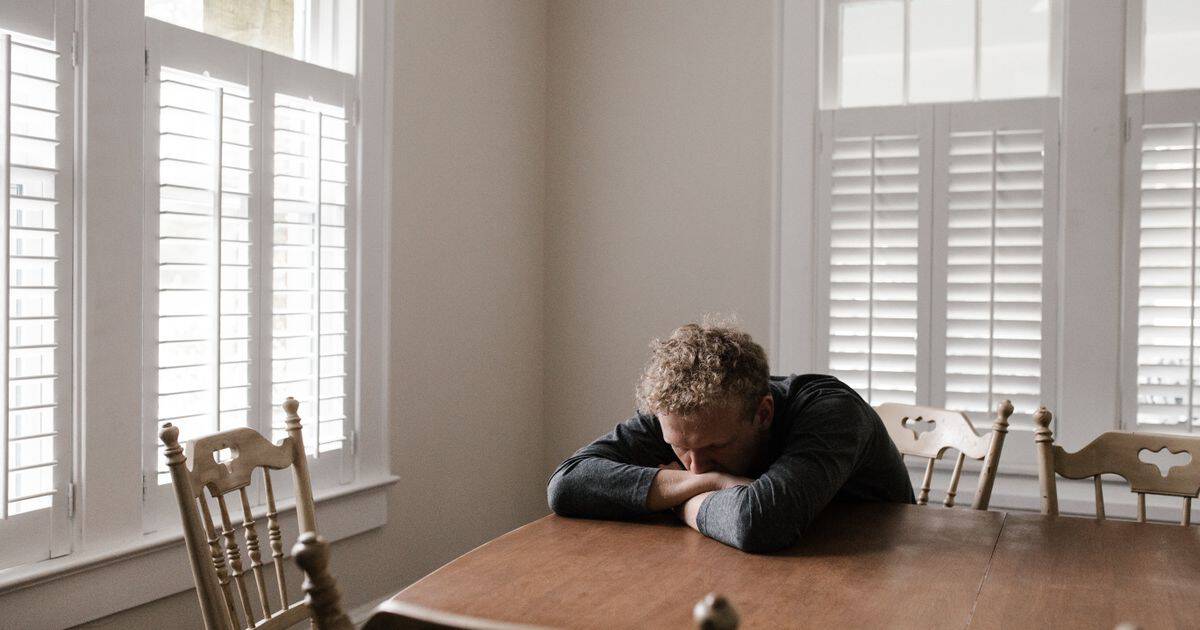
Feeling emotionally abandoned by your partner is your nervous system registering a “no” to the question it is always quietly asking: are you there for me? It is not neediness and it is not a communication problem. It is a mammal correctly registering a threat to the bond, and most of the time your partner has not stopped caring. They are withdrawing because they are terrified of being a disappointment to you, and the two of you are caught in a dance of protest and retreat.
What to do tonight: instead of the protest, say the vulnerable thing underneath it. “When you looked at your phone, I felt like I didn’t matter, and that made me feel so sad and alone.”
Recognize yourself in this?
Talk to Figlet about feeling emotionally abandoned in your relationship right now. AI relationship coaching grounded in Figs O’Sullivan’s work, LMFT. Free to start, no credit card.
You walk into the kitchen and see one cup of coffee on the counter. Not two. Just one.
You’re in the middle of telling a story and their phone lights up and their eyes go with it. You reach for their hand in bed and their body is there but they are somewhere else. You ask how their day was and get three syllables back.
Your rational adult brain says this is nothing. Don’t make a thing of it. You are being dramatic. But underneath, the bottom drops out of your stomach. A small, ancient voice speaks before you can stop it. I don’t matter. I am not a priority. I am completely alone in this.
If you typed “emotionally abandoned partner” into a search bar tonight, that voice is why. You are not crazy. You are not too much. You are not needy. Something in you is registering a real thing, and your body is treating it like the emergency your mind keeps trying to talk it out of.
I have been a licensed marriage and family therapist for seventeen years. Roughly 36,000 hours across from real couples in real pain. And I want to tell you, before you scroll another checklist about narcissists or emotionally unavailable men, that what you are experiencing has a name, a biology, and a way through. It just isn’t the way the internet keeps trying to sell you.
Why Your Body Reads This as an Emergency

Which pattern is running your relationship?
Take the free three minute quiz and meet the creature behind the cycle you keep getting stuck in.
Here is the frame almost every article misses. What you are calling “emotional abandonment” is not, at its root, a communication problem or a personality problem. It is a nervous system event.
When that event keeps firing long after the relationship feels safe, I wrote about abandonment issues in relationships.
Human beings are wired to need emotional bonding from the cradle to the grave. That is not a greeting card. It is mammalian biology, and it is the core insight of attachment theory. When you were an infant, if there wasn’t a good enough other on the other side of your birth to hold you, feed you, look at you with love, you would have died. A baby on the African savanna a million years ago, whose caregiver wandered off, got eaten by a dingo. That is the physiological reality your body was built inside of.
Fast forward. Your primary attachment figure is no longer your mother. It is your partner. But your organism has not updated the file. It still sends out sentinels all day long, quietly checking in. Are you there for me? Do I matter to you? Am I a priority?
When the answer arrives as one cup of coffee, or a phone lighting up mid-sentence, or a distracted “mm-hmm,” your amygdala fires before your thinking brain gets a vote. Cortisol floods. Logic exits the building. You are not “overreacting.” You are a mammal, correctly registering a threat to the bond your survival system is tied to.
Do not call yourself needy. Do not call yourself codependent. Wanting connection is not a weakness. It is the reality of being alive in a body. Your pain is proof of how much you love.
From Empathi’s research: in 58,221 completed relationship assessments, 33% named alone as their deepest feeling when love isn’t working. 19,139 people, more than rejected, more than abandoned, more than hopeless.
The Two Questions Running Underneath Every Fight
In my office, I tell couples that the bonded nervous system is only ever asking two questions. Not consciously. Underneath everything.
Are you there for me?
Am I enough for you?
Every argument about the dishes, the tone of a text, the sigh at the door, the phone at dinner, is a proxy fight for one of those two questions. When you feel emotionally abandoned, your body is registering a “no” to the first one. Are you there for me? And the answer that has landed in your tissue reads: no, not really, not the way I need.
That “no” is unbearable. So you do what your nervous system knows how to do. You protest.
The Relentless Lover’s Protest
You do not usually turn to your partner and say, “I feel so sad and lonely right now, and I just need to know I am special to you.” The nervous system cannot tolerate that much naked vulnerability under threat. So you rise up into a protective strategy.
I call the partner who is highly sensitive to abandonment the Relentless Lover. When the Relentless Lover feels the pain of disconnection, they protest for closeness. You might criticize. Complain. Sigh loudly. Offer value-added feedback on how they could be better. Send the sharp text. Give the cold shoulder. Repeat yourself louder. Build a case.
It is a 1-2-3 step. A negative perception of your partner. A reactive secondary emotion, usually anger or frustration. And an action tendency that pushes them.
You think you are trying to solve the problem. You think you are trying to pull them closer. But you are running around with a can you think is full of water to put out the fire, and it is actually filled with gasoline.
Because here is the tragedy that most people, and even many therapists, miss.
What Happens on the Other Side
When you protest your abandonment, it does not land on your partner as “she is hurting and needs me to lean in.” It lands on their oldest wound.
The other side of wounding in adult love is the terror of being rejected. Of being seen and found lacking. Of being a disappointment. I call this partner the Reluctant Lover. When they pick up your frustration, their body does not hear a plea for connection. It hears a verdict. I am failing her again. I am not enough.
That “no” to am I enough for you? is so devastating that they do the only thing their body knows how to do to survive it. They defend. They explain. They rationalize. Or they go quiet. They leave the room, or they leave inside the room, disappearing into their phone, their work, that place behind their eyes you cannot follow.
To you, their withdrawal looks like they don’t give a damn. It confirms your worst fear. See. I really am alone.
So you double down on the protest. And they double down on the retreat. You are throwing a boomerang that guts your partner, and then it comes back and guts you.
Not once in seventeen years have I sat across from a withdrawing partner who was withdrawing because they did not care. Not one. I’ve written about this at length in When Your Partner Is Emotionally Distant, and if the withdrawer side of this dance is where you land most nights, that piece will save you months of grief.
Sit with this. The person you have decided doesn’t care is often sitting in the next room drowning in how much they care and how badly they believe they are failing you.
The Diagnosis Trap
The culture around you offers a terrible, destructive solution to this pain. You go online and you learn to pathologize the person you love. Emotionally unavailable. Avoidant. Dismissive. Narcissist. Toxic.
I understand the pull. Diagnosis feels like ground under your feet. When the bond is threatened, your body is desperate for a story with a villain, because a story with a villain tells you exactly what to do. Leave. Block. Cut off. Done.
But here is what the algorithm is doing to you. It rewards certainty. It feeds you more evidence until you stop seeing a human being and start seeing a category. The relationship dies by certainty.
In my office, I see something different. I see two people who love each other so much they are scaring the living daylights out of each other. The partner who looks like a brick wall is not shut down because they don’t care. They are shut down to survive the absolute devastation of being a disappointment to you. And you are not a nag or too much. You are terrified of being alone in the world with the person whose presence your body has decided it needs to survive.
If you want to sort real danger from an old wound talking, Should I Leave, or Is It My Attachment Style? walks through the diagnostic question underneath the diagnostic question. If you want the difference between an anxious alarm bell and an actual red flag, Relationship Red Flags: Which Ones Are Real and Which Are Your Anxiety Talking is the piece to read next.
The Waltz of Pain
When the reach meets the retreat, you slide into a choreography neither of you consciously chose. I call it the Waltz of Pain. One-two-three, one-two-three. You reach. They retreat. You reach harder. They collapse deeper inside themselves. You escalate. They flatten.
The problem is not your partner. The problem is not you. The problem is the system the two of you are trapped inside.
In my practice, there is a rule I teach couples early. If one of four things is present, all four are present. If your partner is acting badly, you must assume they are hurting. If you are acting badly, you must assume you are hurting. Bad behavior in intimate love is almost never the cause. It is the symptom of a nervous system in pain.
The cycle is your common enemy. Not each other. It is not you versus me. It is us versus the dance that keeps trying to kill our connection.
Ready to work on this?
Figlet is AI relationship coaching grounded in attachment science and Figs O’Sullivan’s clinical work, LMFT. First messages free, no signup.
Two Suffering Bubbles Into One
Right now, you are living in a separate suffering bubble. You are sitting there thinking: I am not prioritized, I don’t matter, and my partner is doing this to me.
Your partner is in their own suffering bubble, thinking: I am powerless, nothing I do is ever enough, and my partner is doing this to me.
Two people. Two bubbles. Same pain. Both convinced the other is the source.
The shift that changes everything happens when those two bubbles join into one shared suffering bubble. When you can look at your partner and say, “We are both hurting, and the things we each do to try not to hurt end up hurting the other person.” The threat drops. The limbic system settles. Empathy arises naturally. Things are still bad. But now they are bad for us, not bad between us.
That is the move. From I-consciousness to we-consciousness. From two enemies to two allies facing the same dance.
Why “Just Communicate Better” Will Not Save You
Here is the thing almost nobody online will tell you. The parts of your brain that host your carefully learned communication skills, your active listening, your I-statements, go completely dark the second your body registers disconnection from your primary attachment figure. Your house is burning down, and someone is handing you a laminated card on how to alphabetize the bookshelf.
There is no cognitive fix for a limbic problem. If you want the emotional abandonment to stop, you have to stop trying to win the conversation and start looking at the system the two of you are wired into together.
Disconnection in intimate love is a feature, not a bug. If you love someone, you will inevitably step on their emotional toes, and they will step on yours. The goal is not to avoid the waltz forever. If you succeeded in never getting into it, you would never create the fertile ground for the vulnerable parts of you to finally be seen and held.
The magic is not in avoiding the pain. The magic is in the repair.
The Repair: Dropping Into the C-Curve
Repair means climbing down from the protective 1-2-3 into the vulnerable 4-5-6 underneath it. I call this the C-Curve. It means uncovering the unmet need, the primary vulnerable emotion, and the negative view of self that got triggered.
It is the courage to stop attacking and instead say something like: “When you looked at your phone, I felt like I didn’t matter. And that made me feel so sad and alone. And underneath that, an old shame came up, that maybe I am just too much.”
That is not weakness. That is the most powerful move in intimate love.
And your partner, instead of defending themselves, gets to look at you, drop their armor, and say, “Come here to me.”
When my wife Teale and I repair, I turn my belly toward her, unarmed, and show her the vulnerable boy inside me who is terrified of failing. She sees the girl inside her who was terrified of being left behind. We don’t fix the moment by proving who was right. We fix it by finally showing each other the small ones underneath.
That is the whole game.
The Real Shift You Came Here For
You came looking for how to stop feeling emotionally abandoned. Here is the honest answer.
You are not going to stop feeling it because you find the right words, or because you leave, or because you get your partner to finally understand. You are going to stop feeling it when the two of you can begin to see the dance you are trapped inside together, name it as your common enemy, and start practicing dropping into the tender place underneath the protest and the retreat.
The abandonment you are feeling is real. The fear is real. But the story that you are alone in this, that your partner does not care, that you are too much or not enough, is almost certainly the old wound talking, not the current reality. The current reality is that two nervous systems are locked in survival choreography, and neither of them knows how to get out without help.
You can get out. But not by winning. By turning toward.
Common Questions
What does abandoned mean in a relationship?
Being emotionally abandoned in a relationship means your partner is physically there but you feel alone with them. Your body asks are you there for me? and the answer that lands is no, not really, not the way I need. It is a felt experience of disconnection from your primary attachment figure, not always proof that you are unloved.
What are the signs you are emotionally abandoned by your partner?
Three syllables back when you ask about their day. Their eyes going to the phone in the middle of your story. Their body in bed with you while they are somewhere else. And inside you, the sentence I don’t matter, I am not a priority, I am completely alone in this. The signs are small. The alarm they set off is not.
What do I do if I feel abandoned by my husband?
Stop building the case and drop into the tender place underneath it. Your husband’s withdrawal is usually a man drowning in how badly he believes he is failing you, not a man who does not care. Lead with the vulnerable feeling, not the accusation, and name the dance between you as your common enemy instead of each other.
Is feeling emotionally abandoned the same as being neglected?
Not exactly. Neglect is a chronic, one-directional pattern of a caregiver or partner failing to meet basic emotional needs. Feeling emotionally abandoned is what your nervous system registers in the moment of disconnection, and it can happen even in a genuinely loving relationship. The felt experience is similar. The clinical reality, and the way forward, is different. Most of what people call emotional abandonment is a mutual survival dance, not one-sided neglect.
Why do I feel abandoned even when my partner hasn’t done anything wrong?
Because your nervous system is running threat detection older than this relationship. When a caregiver’s face was closed, distracted, or overwhelmed, your body wrote a sentence in early childhood: I am alone, I am not a priority. That sentence gets triggered now by ordinary human behavior, a distracted glance, a delayed text, an off day. The feeling is real. The threat is often historical, not current.
Can a relationship recover from years of emotional abandonment?
Yes, in most cases. In my clinical experience the vast majority of couples who describe years of emotional abandonment are stuck in a mutual dance of protest and retreat, not with a fundamentally unsafe partner. Once both people can see the choreography, name the cycle as the common enemy, and begin practicing repair, the bond can come back online. It takes real work. It rarely takes as long as people fear.
How do I talk to my partner about feeling emotionally abandoned without triggering their withdrawal?
Lead with the vulnerable feeling, not the accusation. Instead of “you’re never here for me,” try “when you were on your phone tonight, I felt small and alone, and an old sadness came up in me.” Naming the vulnerable emotion underneath the protest gives their nervous system something to lean toward instead of something to defend against. It is not a script. It is a direction.
Is emotional abandonment a form of abuse?
In most relationships, no. It is a nervous system dynamic between two people who both feel unsafe in different ways. There is a small, real category of relationships involving coercive control, contempt, or deliberate withholding as punishment. Those require different support. If you are unsure which category you are in, Should I Leave, or Is It My Attachment Style? and the piece on avoidant partners and how to cope will help you locate yourself.
This is not a you problem or a them problem
“You are not fighting a broken partner, but rather a tragic, co-created system where you both hurt because you mean so much to each other.”
“Most of the hurt in a relationship comes from impact without intention.”
Figs O’Sullivan, LMFT
What to Do Next
Do not just close the tab on this.
Bring what surfaced here into a real conversation. Figlet coaches you through the abandonment dance, grounded in Figs O’Sullivan’s work, LMFT. Free to start.
You are not too much. You are not alone. You are a mammal in pain, in love with another mammal in pain, and the dance you’re in has a way out. The next reach you make does not have to be a protest. It can be the small, terrified, honest thing underneath it. Try that one instead.
Keep Reading



Every couple has a pattern they cannot see. Find yours.
In love, each of you is a Relentless or a Reluctant, which makes you one of three kinds of couple: Relentless and Reluctant, two Relentless, or two Reluctant. The free quiz reveals your creatures and the cycle they fall into together. About three minutes.
No signup needed to start.
The Relentless

The Reluctant