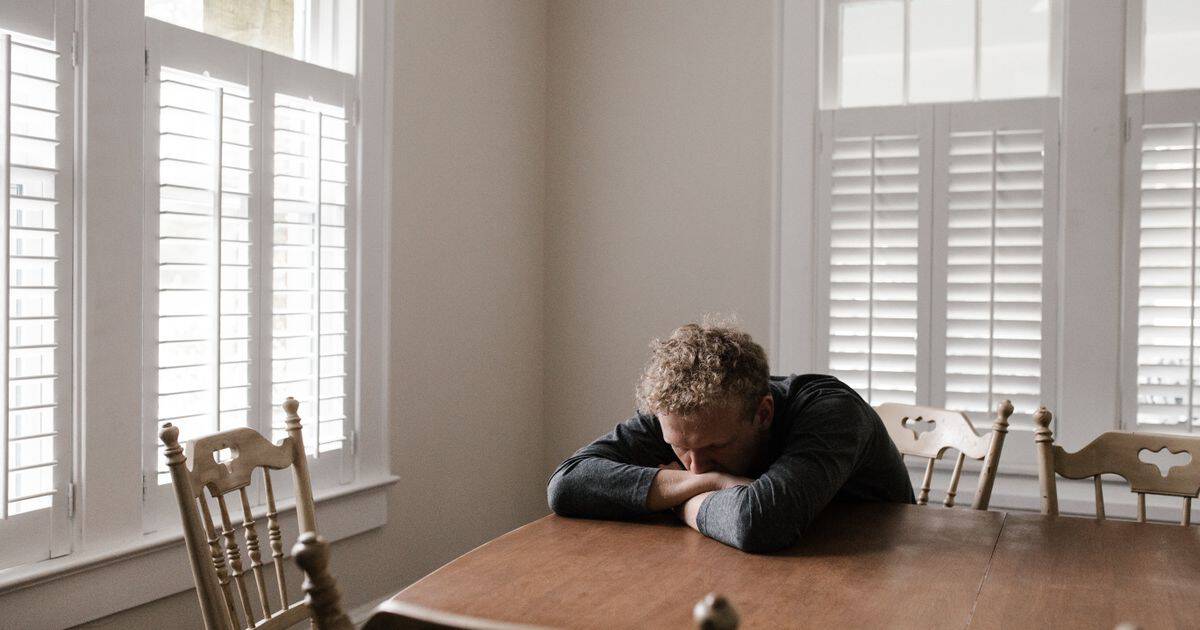
You finally worked up the nerve to say it out loud. Maybe over dinner, maybe in the car, maybe after another fight that ended the way they all end lately, with one of you on the couch and the other staring at the ceiling. You said: I think we need to see someone.
And they said no.
Maybe they said it kindly. Maybe they said it with an edge. Maybe they laughed. Maybe they told you therapy is for people who cannot handle their own lives. Maybe they told you they do not want to sit in a room and pay a stranger to pick them apart. Maybe they told you that you are the one with the problem, so you go.
Whatever version you got, your body registered the same thing. A door closed. And on your side of the door, you are exhausted. You are the one who reads the books. You are the one who has three podcast subscriptions about attachment. You are the one lying awake at 2 a.m. wondering if this is the year you finally leave. And now the person you love is telling you they will not walk into the room where the work happens.
You are running as hard as you can and the two of you keep standing still.
I have been a couples therapist for over seventeen years. Somewhere around 35,000 hours across from real couples in real distress. I want to slow you down before you decide what their no means. Because in almost every case, the meaning your body has assigned to their refusal is wrong. Not slightly wrong. Categorically wrong.
Your partner is not refusing therapy because they do not care. They are refusing because they are terrified. And if you can absorb that one sentence, everything in this article will land differently.
Recognize yourself in this?
Talk to Figlet about a partner who won’t go to therapy, right now. AI relationship coaching grounded in Figs O’Sullivan’s work, LMFT. Free to start, no credit card.
The Myth of the Fully Committed Couple

Which pattern is running your relationship?
Take the free three minute quiz and meet the creature behind the cycle you keep getting stuck in.
Here is the first thing I need to dismantle, because it is the story most therapy blogs will hand you, and it is quietly ruining your ability to see clearly.
Some couples therapists insist that both partners have to be fully committed to the work before therapy can start. Both people signing a contract, enthusiastically choosing the marriage, both invested. If I only accepted couples like that, I would be standing on a street corner in a sandwich board looking for clients. I would not be able to do this work.
It is entirely normal that one partner is not remotely excited about couples counseling. In fact, it is the standard shape of the room. In almost every relationship, people do not choose to change because they got inspired. They wait until things get desperate enough that not changing hurts more than changing. That is not a moral failure. That is how mammals work.
You are not waiting for your partner to have a spiritual awakening. You are not waiting for them to arrive one morning glowing about the inner-child work they cannot wait to do. That is never going to happen, and you do not need it to. You just need to understand what is actually blocking them.
From Empathi’s research: in 58,221 completed relationship assessments, 74.1% of the 6,159 couples where both partners completed were in the pursue-withdraw cycle. Both partners typically describe the other as the one withdrawing.
What Their No Actually Means
I want to walk you into what is happening on the other side of that no.
In every distressed couple I have ever worked with, there are two positions. One partner is the emotional pursuer. I call this person the Relentless Lover. When the connection wobbles, their body says: please do not leave me, please see me, please let me matter. They reach. They protest. They read the books. They initiate the hard conversations.
The other partner is the emotional withdrawer. I call this person the Reluctant Lover. When things get intense, their nervous system says: please do not see my flaws, please do not expose my not-enoughness, please do not find me lacking. They retreat. They go quiet. They pick up their phone. Their deepest fear is not being abandoned. Their deepest fear is being seen and found wanting.
If you are the one Googling “partner refuses therapy,” you are almost certainly the Relentless Lover. And your partner, the one saying no, is almost certainly the Reluctant Lover.
Now, imagine you are the Reluctant Lover. You already carry a private, unshakeable sense that you are the disappointment in the relationship. Every conversation about the connection lands on you as evidence that you are failing. And then your partner, the one who is constantly frustrated with you, says: let’s go pay a professional to help us with this.
What do you actually hear?
You hear: let’s go pay a professional to tell me, in front of you, how much of a disappointment I am.
You hear: I am about to sit in a room with the person I love most and a stranger, and both of them are going to look at me, and I am going to discover, in high definition and with a receipt at the end, that I am the bad one.
That is what their no is. It is not indifference. It is dread. They are bracing against the shame of being confirmed as the broken one. This is what attachment theory has been trying to tell us for decades. Your partner’s refusal is a protector part doing its job, keeping them out of a room they have already decided will humiliate them.
The Two Suffering Bubbles
Here is the picture I want you to hold, because it changes what you do next.
When a couple is disconnected, they are not in one shared reality with two viewpoints. They are in two entirely separate suffering bubbles. You, in your bubble, are hurting because you feel unseen, unheard, and unloved. Your partner, in theirs, is hurting because they feel unacceptable, criticized, and doomed to fail you no matter what they do.
You do not know each other’s bubbles exist. You each think the other one is just fine, coldly refusing to meet you where you are. You think they do not care. They think you cannot be pleased. Both of you are alone. Both of you are in pain. Neither of you knows the other is drowning too.
The whole project of good couples therapy is to pop those two bubbles into one. To move a couple from “I” consciousness to “We” consciousness. To that revolutionary moment when they realize: things are still bad between us, but now they are bad for us. We are both hurting. We are both reacting in ways that make it worse. And we are only doing this because we love each other so much.
Your partner does not know that is where therapy leads. They think it leads to a verdict. So of course they refuse. If you thought you were being marched to a public sentencing, you would refuse too.
The Shocking Truth About Who Has the Harder Journey
Here is the observation that surprises almost every couple I sit with. Once they are in the room, the Reluctant Lover, the partner who refused therapy for months or years, actually has the easier journey.
Why? Because the very first thing a skilled attachment-based therapist does is dismantle the idea that one person is the problem. When the Reluctant Lover walks in braced for the beating and instead I turn to them and say, “Your withdrawal makes complete sense. Your body has been trying to protect you from a shame it cannot bear. You are not the bad one here,” their entire nervous system drops. They discover, sometimes for the first time in the relationship, that this might be a place where they are not on trial. That is a massive relief.
Meanwhile, the Relentless Lover, the one who begged for therapy, often has a harder time. They came in certain they were the emotionally enlightened partner and their partner was the problem to be fixed. When I gently name that their pursuit, their protest, their frustration is landing on their partner as unbearable criticism, they have to come down from the penthouse. They have to see that they are half of a system they helped build. That is a much steeper climb than being told, kindly, that you were never the villain.
I have written more about this pattern in how to cope with an avoidant partner. If your partner reads as avoidant to you, that piece is worth your time.
The System Is the Enemy, Not Your Partner
There is a choreography that every distressed couple does. You reach. They retreat. You reach harder. They collapse deeper. You escalate the protest because the retreat is unbearable. They shut down further because the protest is unbearable. Neither of you signed up for this dance. Both of you know every step in your bones.
Nobody is the problem. The loop is the problem.
This is the reframe you have to internalize before you approach your partner again about therapy. Because right now, whether you know it or not, when you say “we should go to counseling,” they hear “I want a professional to help me change you.” And they say no.
If instead you can walk over to them and say, “There is a pattern between us that is hurting both of us. I know I contribute to it. I do not want to fix you. I want to fix the thing we are stuck in together,” you have changed the entire meaning of the invitation. You are no longer summoning them to their sentencing. You are inviting them into a shared problem where neither of you is the defendant.
That shift is not a script trick. It has to be real. You have to actually see that you are not the emotionally enlightened partner about to drag your broken spouse to the fixer. You have to see that you are both scared mammals doing your best inside a system that hurts.
Ready to work on this?
Figlet is AI relationship coaching grounded in attachment science and Figs O’Sullivan’s clinical work, LMFT. First messages free, no signup.
What Actually Gets a Reluctant Partner Into the Room
So what do you do, practically, when your partner has said no?
First, stop trying to sell them on therapy. Every pitch you make lands as more evidence that you find them insufficient. The pitch itself is part of the loop.
Second, do your own work first. Not as a manipulation tactic. As the actual answer. If you are the Relentless Lover, there is real work to do on your side that does not require your partner’s participation. The urgency in your body, the pursuit, the certainty that if you could just get through to them everything would change, all of that is worth examining. Some of that pursuit is love. Some of it is an old wound driving. Learning to tell the difference is a lifetime’s work, and you can start alone. If you want to name your pattern first, you can take the free Figs Quiz.
Third, when you do return to the conversation, change what you are actually asking for. Do not ask them to go to therapy. Ask them to help you figure out the pattern you are both in. Say the thing that is true: “I know I have been coming at you hard. I know that is exhausting for you. I do not want a therapist to change you. I want us to understand what keeps happening between us, because I am part of it too.”
Fourth, if they still say no, be honest with yourself about which basket you are actually in. There is a difference between a partner who is scared and a partner who has genuinely checked out. I go deep on that distinction in this diagnostic on toxic dynamics versus toxic partners. A partner who is scared of therapy will often, over months, soften once they feel less prosecuted in daily life. A partner who has fully disengaged is a different situation and requires different clarity.
Fifth, consider going alone. Individual therapy with a couples-trained clinician can change a relationship even when only one person shows up. Because you are half the system. If you move, the system moves. I have watched couples transform because one partner did the work solo and stopped feeding the loop. This is also where AI coaching can genuinely help. It gives you a place to work through the pattern without waiting for your partner to be ready. You can be doing your side of the work tonight.
The Part Nobody Tells You
Here is the piece I want you to sit with. Sometimes the pressure to go to couples therapy is itself the loop. The Relentless Lover, unable to bear the disconnection, keeps proposing bigger and bigger interventions. Therapy. A retreat. A trial separation. Reading this book. Watching this podcast. Each proposal is felt by the Reluctant Lover as another announcement that they, as they are, are not enough. Each refusal is felt by the Relentless Lover as more evidence of not being cared for. The proposal itself becomes fuel for the fire.
If you can put the pressure down, even for two weeks, and instead turn toward your partner with curiosity rather than a plan, something often shifts. Not because you tricked them. Because their nervous system finally gets a breath from being the identified problem. And when the shame pressure drops, their capacity for openness rises. Sometimes, in that softer space, they are the one who eventually says: maybe we should talk to someone.
I have watched it happen more times than I can count. Not always. But often enough that I trust it.
I have also written about the deeper wound underneath this pattern in when you feel like you don’t deserve your partner’s love. If your partner refuses therapy from the withdrawer position, that piece describes the interior weather they are living inside. Read it if you want to understand them better.
The Real Shift
The reader who came here searching “partner refuses therapy” wanted a script or a strategy. What I am offering instead is a reframe, because the script will not work until the reframe lands.
Your partner is not refusing you. They are refusing the shame they believe therapy will deliver. Their no is not indifference. It is fear so old it has calcified into a reflex.
You do not have to force them into the room. You have to change the meaning of the room. And you can begin that work, right now, with or without them.
Turn toward, not at. That is the whole game.
This is not a you problem or a them problem
“Relationship distress is a feature, not a bug, of loving someone so much that their emotional distance feels terrifying. It is the predictable dance of two nervous systems desperately trying to survive the perceived loss of one another.”
“The fight is never about the content. It is always about the bond.”
Figs O’Sullivan, LMFT
Common Questions
Can couples therapy work if only one partner wants to go?
Yes, and this is one of the most underreported truths in the field. You are half the system. When one partner does serious work, individually or through coaching, the loop between you shifts because one dancer changed the steps. Couples-trained individual therapy or AI coaching grounded in attachment science can move a relationship even when your partner refuses to sit in the room.
How do I convince my husband or wife to go to couples therapy?
Stop convincing. Every pitch reinforces their belief that you find them insufficient. Instead, name the pattern you are both in, take responsibility for your half of it, and stop framing therapy as their treatment. Invite them into a shared problem, not their sentencing. Reluctant partners often soften over months when the shame pressure lifts, not when the pressure intensifies.
What if my partner thinks therapy will make things worse?
This fear usually comes from having been in therapy before where they felt scapegoated, or from imagining what it will be like. Skilled attachment-based therapists do not assign villains. The first move is to name the system, not judge the people. If your partner has been burned before, acknowledge that. Look for an emotionally focused or EFT-trained clinician who works with the cycle, not against a person.
Is my partner refusing therapy a red flag or an attachment pattern?
Almost always the second. A refusal to be scrutinized is a withdrawer’s protector part doing its job, protecting them from anticipated shame. That is different from stonewalling, contempt, or a partner who refuses to engage in any repair at all. I go deep on the distinction in this guide to real red flags versus anxious attachment alarm bells.
Should I leave if my partner won’t go to couples counseling?
Not yet. The refusal itself is not enough information. What matters is whether there is any capacity for repair between you when the pressure is off. Do your own work first. See what shifts. Give the pattern six months of your genuine attention on your side, not another six months of trying to drag them somewhere. Then reassess with actual data.
Do not just close the tab on this.
Bring what surfaced here into a real conversation. Figlet coaches you through it, grounded in Figs O’Sullivan’s work, LMFT. Free to start.
Keep Reading



Every couple has a pattern they cannot see. Find yours.
In love, each of you is a Relentless or a Reluctant, which makes you one of three kinds of couple: Relentless and Reluctant, two Relentless, or two Reluctant. The free quiz reveals your creatures and the cycle they fall into together. About three minutes.
No signup needed to start.
The Relentless

The Reluctant