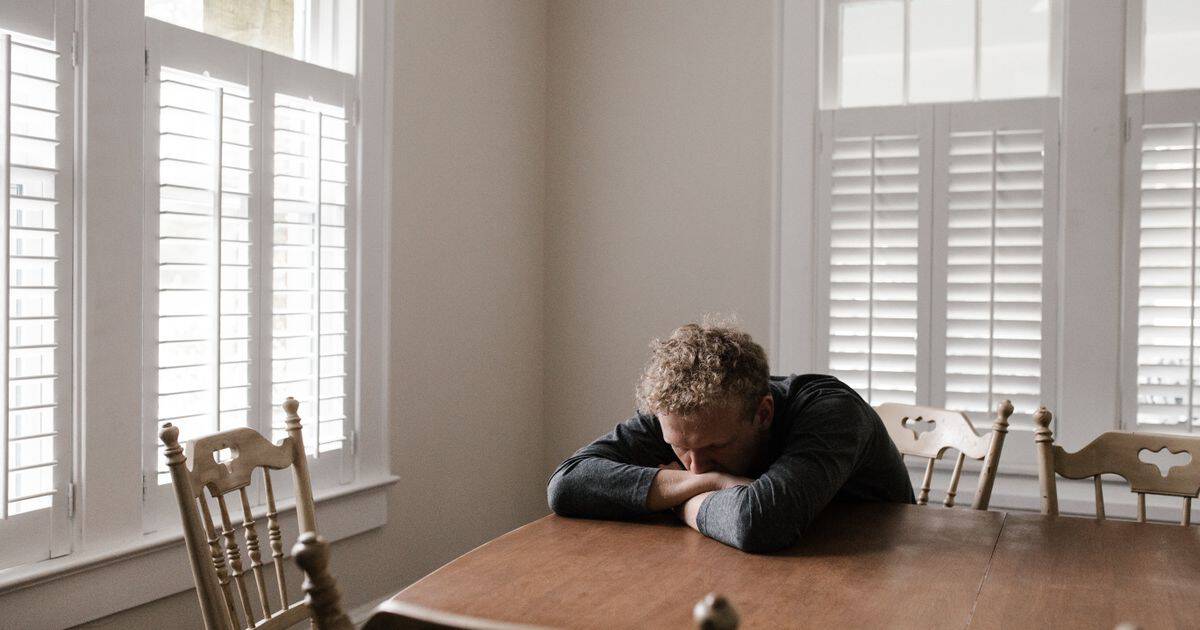
You are sitting in the car outside the office at eight fifteen on a Tuesday night. The engine is off. Your partner is already inside the house, walking the babysitter to her car. You are still holding the steering wheel with both hands because if you let go you might do something you cannot take back. Your therapist just said the sentence you have been dreading for weeks. You two are doing really well. Have you thought about wrapping up?
Your partner smiled. You said something polite. Inside, a cold wave hit the back of your throat and has not left since.
You have been searching ending couples therapy on your phone for the last twenty minutes. You are not sure whether you are looking for permission to keep going or permission to stop. You are not sure whether the panic in your chest means the work is not done, or whether it means you have gotten dangerously used to having a third person in the room whenever anything real gets said.
I want you to slow down before you close this tab and open another one.
I have been a licensed marriage and family therapist for over seventeen years. I have sat with hundreds of couples at exactly this threshold. And I can tell you, with the confidence mileage buys, that almost everything the internet tells you about knowing when to end couples therapy is pointed at the wrong problem. It hands you checklists about goals and communication skills. It does not tell you what your body is actually doing right now, which is grieving the loss of a floor that has been holding you both up.
That grief is clinical information. Let us work with it.
The Search Behind the Search

Which pattern is running your relationship?
Take the free three minute quiz and meet the creature behind the cycle you keep getting stuck in.
Nobody Googles ending couples therapy when things are going badly. When things are bad, people Google whether their partner is a narcissist, or whether they should leave.
You are searching this because something has gotten better, and now you have to decide what to do with the improvement. That is a completely different problem, and it needs a completely different frame.
Here is the first thing I want you to hold. The therapy room has functioned as a temporary external nervous system for the two of you. A floor so neither of you falls through. Walls so neither of you runs out the sides. A ceiling so nobody flies upward into panic or contempt. Grounded in attachment theory, that container is not a luxury. For a couple in real distress, it is the only reason certain conversations became possible at all.
When you talk about ending therapy, your body does not process a scheduling change. It processes the removal of the floor. Of course you are panicking. Of course your partner might be relieved. That asymmetry is not a sign you are broken or that they are avoidant. It is the exact pattern I want to walk you through.
If you want to know what a good ending looks like session by session, I wrote about the couples therapy termination process.
Sitting in the car after a session that felt like an ending?
Talk to Figlet about whether it is actually time to stop. AI relationship coaching grounded in Figs O’Sullivan’s work, LMFT. Free to start, no credit card.
What the data shows: in 58,221 completed relationship assessments, sad was the third most common deep feeling and hopeless the fifth, at 17,094 and 9,160 people.
The Two Questions Every Couple Asks at the End
I tell every couple I work with that the bonded body only ever asks two questions, and never in words.
Are you there for me? Am I enough for you?
Termination triggers both of them at once. Fast, hard, and usually without either of you noticing.
The partner who wants to keep going hears their body ask, are you there for me if this floor gets taken away? They reach. They want another six sessions, a check-in in a month, a bridging plan. To the other partner, that reach lands as evidence of failure. Because their body is asking, am I enough now? Have I finally done enough? And every argument for staying in therapy answers that question with a no.
This is the same Waltz of Pain you have been dancing the whole time, playing out one last time on the way out the door. Only now the fight is about the therapy itself.
I want you to notice something. If you are reading this and your partner is not, you are already back inside the dance. One partner researching, protesting, marshaling evidence. The other one, probably in the next room, quietly hoping you will let it go.
The Reluctant Lover in the Graduation Chair
In my clinical work, I call the withdrawing partner the Reluctant Lover. Not because they do not want love. Because the possibility of failing you feels unsurvivable, and everything that reminds them of that possibility feels like a threat to their heart.
Ongoing couples therapy is one of those reminders.
To a Reluctant Lover, every week you show back up on the therapist’s couch is another week they have not fixed it, not made you happy, not been enough. They put on what I call the Representative, the polished version, the one who has the tone right and the caveats loaded up front. The Representative shows up to sessions on time, does the homework, uses the vocabulary. The Representative is exhausted.
When the therapist says you two are ready to wrap up, the Representative hears absolution. Freedom. Proof of enoughness. Of course they want to leave. Staying feels like a life sentence of quiet failure.
And this is where couples fall off the cliff. Because the Relentless Lover, the one who has been reaching all along, cannot understand why their partner is so eager to walk out of the one room where the reaching finally got answered. So they reach harder. And the Reluctant Lover, hearing that reach as you still have not done enough, retreats faster.
Both of you are fighting for your lives. Neither of you is doing anything wrong. The system is just running its old code on a new topic.
The Actual Signs Therapy Is Ready to End
Now we can talk about the checklist part, which is what you came here for. But you have to hold it inside the frame above, or the checklist becomes another weapon.
Therapy is genuinely ready to end when several things are true at once, not when one of them is true and the other partner is tired.
You can name your cycle out loud, together, without a therapist prompting you. You know your Waltz. You can catch it in the kitchen at 7:14pm on a Wednesday and one of you can say I think we are in it right now and the other one does not scoff or double down. That is a skill. Not a mood. Not a good week. A repeatable skill.
You can repair without a referee. A rupture happens on Saturday. By Sunday afternoon, one of you has turned back toward the other and named what happened, and the other has received it without punishing. You do not need to bring it to Tuesday’s session to make it safe to touch. You can touch it in your own kitchen.
Those markers are easier to recognize when you set them at the start, which is why I write couples therapy goals with every couple in the first few sessions.
Both nervous systems can find the ground again after a hit. You had a fight that would have taken you three days to come back from a year ago, and this time it took ninety minutes. Not because the fight was smaller. Because your capacity to regulate got bigger. This is what secure functioning actually looks like day to day. Not the absence of conflict. The presence of return.
The therapist has stopped being the most interesting person in the room. Early on, both of you were performing for the therapist a little, or fighting for their allegiance a lot. Now sessions feel a bit boring. You are running out of things to bring in. That boredom is often the single clearest clinical signal that the work is done. The system has stabilized. There is nothing acute to metabolize.
You have new fights, not the same old ones. A couple ready to leave therapy is not a couple with no problems. It is a couple whose problems have moved. The old loop about her mother, his phone, and the way he sighs when she says her boss’s name has been replaced by fresh disagreements about actual current life. That is progress.
If you can honestly say yes to most of these, you are probably ready to graduate. If you can say yes to none of them and your partner still wants to leave, that is a different conversation, and we are about to have it.
The Actual Signs Therapy Is Not Ready to End
Here is where I lose people, but I am going to say it anyway.
Therapy is not ready to end if the loudest reason to stop is one partner’s discomfort with being in the room. Discomfort is often the exact reason the room is still doing its job. The Reluctant Lover’s shame at being on my couch is not a signal to leave the couch. It is the signal that we have finally reached the material that matters. Ending therapy at that moment is like walking out of surgery when the incision is open because the light is too bright.
Therapy is not ready to end if one of you is still using the sessions as the only place you tell the truth. If Tuesday at seven is the only hour of the week the real sentence gets said out loud, you have not moved the practice into your life yet. You have outsourced it.
Therapy is not ready to end if you cannot make it through a hard conversation at home without one of you saying let us just bring this to the therapist. That is not a bad instinct in the middle of the work. It is a red flag at the end of it. The point of therapy is to leave with the capacity, not the appointment.
Therapy is not ready to end if your therapist is the one initiating it, and the two of you look at each other and cannot say why. Sometimes therapists get bored, or full, or they misread stability for completion. A good therapist is willing to be asked why now? and answer without defensiveness.
And therapy is definitely not ready to end because you cannot afford it this month, though you might have to stop anyway. Financial pressure is real. It just is not a clinical signal. If you are stopping for money reasons, name it as that, and make a plan for what you will do with the harder moments in the meantime.
The Termination Conversation Nobody Teaches You How to Have
Most couples end therapy by drift. Sessions get rescheduled. Cancellations stack up. One day someone realizes it has been six weeks and nobody has booked a new one. The floor got pulled slowly enough that neither of you had to grieve it.
Do not do it this way.
The termination conversation is the last piece of clinical work, and it is one of the most important. It is also the one most couples skip.
Here is what I want you to do. In session, with your therapist in the room, both of you name what you are afraid of losing when you stop. Not what you are gaining. What you are losing. The Relentless Lover names the loss of the witnessed floor. The Reluctant Lover names, if they can find it, the loss of the one place they were required to stay in their body for a full hour.
Then you name what you are each going to do to keep the floor alive at home. Not aspirations. Not we will communicate better. Specific practices. A weekly thirty-minute conversation on Sunday nights with phones in the other room. A monthly check-in with the therapist for the first six months. A signal you can use in the middle of a fight to slow it down. If you want a real framework for what to practice, I have written more about that in how to communicate better in a relationship.
You will not do all of it. That is fine. But if you leave therapy with nothing specific, you will drift back into the old system inside of two months. I have watched it happen a thousand times.
One of you wants to stop and one of you does not?
Figlet is AI relationship coaching grounded in attachment science and Figs O’Sullivan’s clinical work, LMFT. First messages free, no signup.
When You Disagree About Whether to Stop
This is the part that brought you here.
When one partner wants to keep going and the other wants to stop, most couples treat it as a scheduling dispute. It is not. It is the last exam of the work you have been doing. Because right here, at this exact fork, the whole point of couples therapy gets tested. Can the two of you hold two different nervous system realities in the same room, with tenderness, without collapsing into the old dance?
If the answer is no, that is your answer about whether to stop.
If the Relentless Lover cannot say I am scared of losing the floor without weaponizing it, they are not ready. If the Reluctant Lover cannot say staying in therapy makes me feel like a permanent failure without going flat and rational, they are not ready. Either way, the work is not done. It is just refusing to come out from behind the Representative.
Here is what I want a couple in this spot to do. Do not decide in the car after the session. Do not decide over text. Sit down at your kitchen table on a Saturday morning with coffee. Set a timer for forty minutes. Each of you gets twenty. In your twenty, you do not argue for stopping or staying. You describe what the therapy room has meant to you, what you are afraid of on the other side of it, and what you would need from the other person to feel safe either way.
The partner listening does not respond, defend, or correct. They just listen. When the timer goes off, you switch.
You will learn more from that eighty minutes than from another three months of sessions. And whatever you decide, you will decide it as a team, not as two people running from opposite directions.
If you want to name your own pattern first before you have this conversation, you can take the free Figs Quiz.
The Real Fear Underneath Ending Couples Therapy
For most Relentless Lovers, the fear underneath is not really about therapy. It is about whether the version of your partner you have been getting inside the room is the real one, or whether it only lives inside those four walls.
If they are only that soft, that honest, that present when the therapist is watching, then leaving therapy means losing them.
This is worth naming out loud. Because if it is true, therapy has not finished its work. If your partner can only be regulated when they are being paid attention to by a third party, we have not built a Sovereign Us yet. We have built a supervised us. Those are not the same thing.
But if what you have actually built is a couple who can turn toward each other on a Tuesday night with no witnesses and repair something real, then the fear is grief, not evidence. Grief that the container is closing. Grief that you have to trust each other now. Grief that some kind of parenting figure you have both been leaning on will not be in the chair next week.
Grief is fine. Grief is not a reason to stay. It is a reason to say goodbye well.
For the Reluctant Lover, the fear underneath is usually different. It is the fear that if you stop and things get bad again, it will be proof you were never really okay. That the work did not take. That you failed twice, once by needing therapy and once by needing it again.
This is worth naming too. Because coming back to therapy later is not failure. It is maintenance. Couples come back for tune-ups the way you take a car in for tires. Nobody thinks the car failed because it needed tires. If you struggle here, I have written more about the fear of judgment from your partner, which sits underneath most Reluctant Lover shame.
Common Questions
How long should couples therapy last before ending it?
There is no single answer, but most of the couples I have worked with who did real, lasting work spent between six months and two years in weekly or biweekly sessions. Shorter than that and the nervous system rarely has time to re-pattern. Much longer than that without noticeable movement is usually a sign the therapy has become a container instead of a catalyst, and something needs to change.
Can we stop couples therapy if only one partner wants to?
Technically yes, but I would not. When one partner wants to stop and the other does not, that disagreement is the current work, not a scheduling issue. Bringing that exact split into a session and letting both nervous systems be heard by the therapist is often the most important hour you will have. Ending unilaterally in that moment usually re-injures the partner who wanted to stay.
Is it normal to feel worse before ending couples therapy?
Yes, and it often means you are close to real completion. As termination approaches, both nervous systems can flare because the floor is being removed. The Relentless Lover reaches harder, the Reluctant Lover retreats faster, and old material resurfaces. Good clinicians expect this. It is not a sign the work failed. It is a sign the attachment system is doing exactly what it was built to do around loss.
How do we know if we need a different therapist instead of ending therapy?
If you have been in therapy for more than a year and the same loop keeps repeating without either of you gaining any new capacity to interrupt it, the therapist may not be the right fit. A good sign of a mismatch is that sessions feel like refereed arguments rather than deepening work. Try naming that out loud with your current therapist first. If nothing shifts in a month, look for someone new.
What should we do the first month after ending couples therapy?
Protect the practice. Keep a weekly thirty-minute check-in on the calendar with no phones. Notice when your old loop tries to come back and name it out loud. Do not wait for a crisis. Book a check-in session with your therapist for six weeks out so you have a soft landing if something wobbles. Most relapses happen inside the first sixty days, when both nervous systems are still learning to hold the floor themselves.
This is not a you problem or a them problem
“Round and round they go. Escalating judgments. Reaffirming worst fears. Two people throwing emotional boomerangs, doing exactly what makes logical sense to survive their own pain, only to gut their partner and ensure their own continued suffering. The way you try to get out of feeling hurt and threatened usually hurts and threatens your partner.”
“The fight is never about the content. It is always about the bond.”
Figs O’Sullivan, LMFT
What to Do Next
Ending couples therapy well is its own piece of clinical work. It is not the paperwork at the end of the paperwork. It is the last real conversation, the one where you both find out whether the floor you built together is strong enough to hold the two of you without a third person in the room.
Do not decide it in the car. Do not decide it on Google. Have the conversation at your kitchen table, with a timer, with each other. Then bring your answer back to your therapist and let them help you land it.
You are not ready when you feel ready. You are ready when you can hold your partner’s opposite nervous system without collapsing your own.
Do not just close the tab on this.
Bring what surfaced here into a real conversation. Figlet coaches you through the actual decision about ending couples therapy, grounded in Figs O’Sullivan’s work, LMFT. Free to start.
Keep Reading



Every couple has a pattern they cannot see. Find yours.
In love, each of you is a Relentless or a Reluctant, which makes you one of three kinds of couple: Relentless and Reluctant, two Relentless, or two Reluctant. The free quiz reveals your creatures and the cycle they fall into together. About three minutes.
No signup needed to start.
The Relentless

The Reluctant