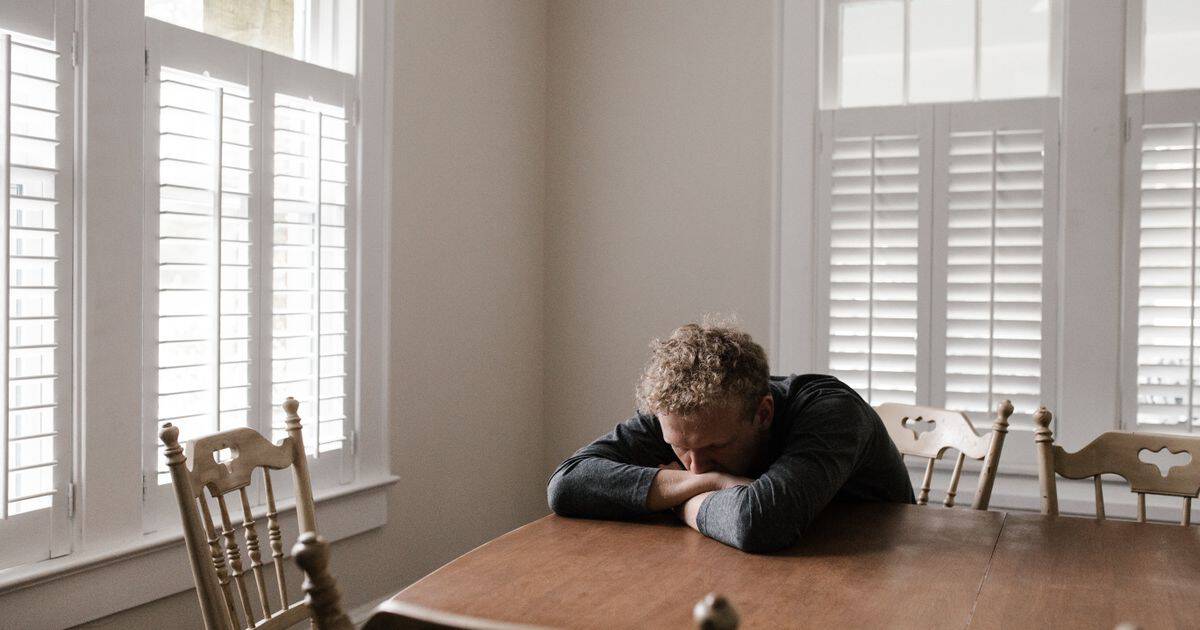
Long distance couples therapy is couples therapy done over video, with you and your partner joining from the same room during visits or from two different cities, states or countries. It works, and I have watched it work for years, as long as the therapist is aimed at the attachment pattern the distance is amplifying, not at your call schedule.
The practical pieces are simple: find someone trained in attachment-based work, check they can legally see both of you where you each live, pick a session time neither of you dreads, and meet weekly at the start.
If the distance is making you both feel lonelier after every call, Figlet can help you find words for what is happening between you, at 2 in the morning, or right now.
You are in one apartment. They are in another, in another city, another time zone, sometimes another country. You get off a video call and the room feels colder than it should. A text goes unanswered for six hours and your stomach does the thing. You lie in bed at night and try to remember what their body feels like next to yours, and the memory has started to sand down at the edges. You have already Googled “long distance couples therapy” twice this week. Once at work. Once at 1am.
I want to slow you down before you scroll another comparison list of virtual therapy platforms.
I have been a licensed marriage and family therapist for seventeen years. Roughly 36,000 hours across from real couples in real distress. And a good number of those couples were not in the same room. Some were not even in the same state. I have worked with couples who were already divorced, living in different states, doing sessions with three screens on. I have worked with couples where one partner was deployed. I have worked with couples where the distance was the presenting problem and couples where the distance had already done its damage before they came to me.
Here is what I want you to have before you pick a therapist, a platform, or a plan.
The miles are not the problem. The miles are the amplifier. What the distance is doing is turning up the volume on a nervous system dynamic that was already there, or was always going to be there, and now has nowhere to hide.
Why Distance Hits The Body So Hard

Which pattern is running your relationship?
Take the free three minute quiz and meet the creature behind the cycle you keep getting stuck in.
Adult love is not a nice idea. It is biology. We are built for attachment theory style bonding from the cradle to the grave, and your nervous system treats your partner the way an infant’s system treats a caregiver. When the person you depend on turns away, goes quiet, or vanishes across a delayed text, your body does not run the calculation intellectually. It runs it biologically. It says: I am in danger.
A million years ago on the savanna, if your caregiver was not there, a dingo could eat you. Your limbic system does not know you are an adult with a phone. It just knows it needs its person.
Distance makes this worse in a very specific way. In the same house, your body can pick up a hundred small signals per day that the bond is intact. The sound of them in the kitchen. A hand on your back as they pass the couch. The weight of them sleeping next to you. All of that is regulation happening below the level of conscious thought. Two nervous systems finding stable ground together.
Take those signals away and the body starts scanning for the answers to two ancient questions. Not consciously. Underneath.
Do I matter to you.
Am I enough for you.
Across the miles, every unanswered text is being read by your body as a possible no. Every flat FaceTime call. Every time they seem distracted. Every time the connection cuts out and it takes them twenty minutes to call back. Your rational brain knows the wifi is bad. Your survival brain has already filed a report.
Recognize yourself in this?
Talk to Figlet about what the distance is doing to you and your partner right now. AI relationship coaching grounded in Figs O’Sullivan’s work, LMFT. Free to start, no credit card.
From Empathi’s own research: in 58,221 completed relationship assessments, 74.1% of the 6,159 couples where both partners completed were in the pursue-withdraw cycle. Both partners typically describe the other as the one withdrawing.
The Waltz Distance Amplifies
When two nervous systems feel the threat of disconnection, they fall into a predictable choreography. I call it the Waltz of Pain. Two childhood survival strategies collide, and the relationship becomes a reenactment of wounds neither partner caused.
I do not use clinical labels like “pursuer” and “withdrawer” in the room. They flatten people. I call these two positions the Relentless Lover and the Reluctant Lover.
The Relentless Lover reaches when the bond feels shaky. Across the distance, this looks like tracking response times. Counting how many days it has been since a real call. Sending the follow-up text before the first one has had a chance to be answered. Bringing up the relationship in every conversation because it feels like the relationship is drifting. Underneath the reaching, their body is saying, please do not leave me. Please let me matter. It is not neediness. It is the fear of abandonment living in the tissue.
The Reluctant Lover retreats when things get intense. Across the distance, this looks like shorter calls. One-line texts. Getting suddenly very busy at work. Not initiating. Letting the phone die and forgetting to charge it. Underneath the retreat, their body is saying, please do not expose my not-enoughness. Please do not confirm what I already suspect about myself. It is not coldness. It is a fear of shame with its own gravity.
Distance is a hothouse for this waltz. In person, small repairs happen constantly and invisibly. A look, a touch, a joke. Across the miles, there are no small repairs. Every disconnection has to be repaired explicitly, over a screen, using words, at a scheduled time. Most couples I see have no idea how to do this. They try, badly, and end up worse off than before the call started.
If you want to understand this pattern more deeply from the reluctant side, I have written more about it in how to cope when your partner avoids closeness. What looks like distance is almost never distance. It is fear of failing you dressed up as distance.
Can Video Actually Do This Work
Yes. And I need you to hear this from someone who has done it for years.
At Empathi we work with couples all over America and beyond, most of our sessions over video conference. It works. It works especially well when both partners are in the same room with one camera, because we can use the live aliveness between you. But even when you cannot be in the same room, the profound work is entirely possible.
I once worked with a couple who were already divorced and living in separate states. Our first sessions had three screens. Me on one. Her on another. Him on a third. There was a real question of whether anything could happen at all across that much fragmentation. But by helping them see the system they were both stuck inside, rather than shaming either of them or demanding one take the fall, something started to shift. Eventually they were visiting each other and doing sessions in person. Eventually they moved back into their original home together. They were deeply grateful to be reconnected. This is not a fairytale. This is what happens when the work is aimed at the right target.
What I did not say above is where that couple started. They came to me after years of therapy with other providers. Individual therapy. Couples therapy. Retreats. Books. Online programs. One of their previous therapists had called one of them on the drive home after a session and said, “There is no hope for your marriage.” They could narrate the history of their conflict like historians. None of that knowledge helped, because the work had been aimed at the content: who said what, whose version was more accurate.
Her pattern was protest. She reached, she pursued, she demanded. His pattern was withdrawal. He shut down, and eventually he moved to another state. She reached. He retreated. She reached harder. Through marriage, through therapy, through divorce, through separate states. The loop never stopped. It just changed venues. The turn came when, for the first time, someone said to him: “You did not fail. You were in pain. And there is a difference.” I wrote the whole story of how they divorced, moved to separate states, and found their way back. I tell it here because it answers the question every long distance couple is really asking. The miles did not cause their loop, and the miles did not stop the repair.
So the video is not the problem. Here is what I need you to understand about picking a therapist across the distance, because this is where most people waste six months and a lot of money.
What Most Long Distance Couples Therapy Misses
If you look at the average online platform, the sales copy will tell you about communication skills, active listening, scheduling regular check-ins, using I-statements, learning your love styles, planning virtual date nights. Close every one of those tabs.
The parts of your brain that have learned communication skills, breathing techniques, or whatever else, will not be online when you are in a state of disconnection from your primary partner. You are not going to find a cognitive solution to what is a limbic problem.
Most of the hurt in your relationship right now is impact without intention. You say something small over the phone. They hear it through the ledger of their childhood. Their reaction hits your shame. Your shame activates your protector. Now you are both in it, on opposite sides of a country, with nothing but a screen to try to find your way back through. Communication skills training will not touch this. It will teach you to say your reactive things more politely.
The problem is never the problem. The problem is that you are trying to leap to a solution before you have emotionally connected.
If your prospective therapist’s intake form is mostly about scheduling and content, keep looking. If they are talking about your nervous systems, your survival strategies, the two questions running underneath every fight, sit down with them.
Ready to work on this?
Figlet is AI relationship coaching grounded in attachment science and Figs O’Sullivan’s clinical work, LMFT. First messages free, no signup.
The Shift That Actually Heals A Long Distance Rift
The work is to move from I-consciousness to We-consciousness. From the subjective story where you are hurting and they are doing it to you, to a shared seeing of the system you are both stuck inside.
I sometimes describe this with the image of suffering bubbles. When you are fighting across the miles, you are in two separate suffering bubbles. Your story of the fight, on your side of the screen. Their story of the fight, on theirs. Nothing can cross. Our goal is to bring the bubbles together so they form one shared suffering bubble. When a couple can look at their painful dynamic and finally see, look how we are both hurting when we are disconnected, the world changes. Your limbic system realizes it is no longer under existential threat. You are just in a fight with someone who loves you and is hurting too.
This is what a good long distance couples therapist is actually there to do. Not fix your call schedule. Not referee your content. Help you see the system, together, so the fight stops being about the villain across the screen and starts being about the two-person choreography you have both been trapped in.
Making A C From A Thousand Miles Away
If the Waltz of Pain is how you get stuck, this is how you get unstuck. I call it Making a C.
Picture the letter C.
The top tip is pure reactivity. Your protector is running the show and you are all the way inside the story of the other. They did this. They are like this. They never do that. This is where every long distance fight starts.
The first curve is awareness. A quiet moment where you notice. I am doing it. I am in the story of them right now.
The bottom of the C is the primary emotion underneath the protector. The vulnerability. The attachment longing. Not I am furious that you did not call. But underneath, I miss you and I am scared you are drifting away from me.
The final curve is enactment. You put words on the softer thing and send them across the miles to the person you love. I miss you. I am scared. I need to matter to you.
When two people each make a C, facing each other across a screen, those two Cs form a securely attached oval. That is the shape of a couple that can survive the distance and come out closer than they were before.
Almost no one arrives able to do this. That is what the therapy is for.
When Long Distance Couples Should Get Help
People often wait until the relationship is on the edge before they book anything. I would rather you came earlier. These are the signs I see most often in long distance couples who need more than a better call schedule.
- Your fights happen over text. Text strips away tone, pace and face, which are the exact signals your nervous system uses to calm down. We evolved to read faces. We did not evolve to read text bubbles.
- One of you goes dark. A message thread that has not moved in fourteen hours gives the body nothing. If one of you shuts down and the other floods the phone, you are in the loop I describe in stonewalling in long distance relationships.
- One of you wanted the distance and the other did not. If one partner took the job or the program and the other agreed only because the alternative was a breakup, that resentment will not go away because of sweet texts or a monthly flight. It needs a room where it can be heard.
- Something happened and you could not be there. A parent in hospital, a grief, an illness. An attachment injury is a moment when you desperately needed your partner and they were not there. Distance multiplies these moments.
- Visits go badly. You plan for weeks and then fight on day one, or the departure at the airport leaves a deposit of dread that makes every reunion more guarded.
- There is no end date. Your nervous system can tolerate extraordinary stress when it knows the stress is temporary. Without a shared plan, both of you live in a permanent state of low grade emergency.
And one sign that surprises people: you get along better at a distance than in person. Distance lets what I call the Representative, the polished version of each of you, stay indefinitely. Sometimes “we work better apart” means “we work better when we never have to be fully seen.” That is worth bringing to a therapist too.
Your Long Distance Couples Therapy Options
There is no single right format. These are the options I see couples use, and what each one is good for.
Joint video sessions from two locations
This is the most common setup. Each of you joins the same video session from wherever you are, so the therapist sees two faces on one screen and you see each other. It takes a therapist who can track two nervous systems through a screen and slow things down when one of you goes quiet. Done well, it is the full work.
Same room, one camera, during visits
When you are together, sit side by side in front of one camera. I love these sessions because we get the live aliveness between you: the hand that reaches, the shoulder that turns away. If you can, save your hardest conversations for the sessions that fall during a visit.
Individual sessions alongside the couples work
Some therapists will see each partner alone in the first few weeks. It gives each of you space to say what you are not ready to say with your partner listening. It is not a replacement for the joint work, it feeds it.
One partner starting alone
If your partner will not come yet, start anyway. The pattern is a two person system, and when one side of the dance changes, the whole dance changes. Coming in alone does not mean you are doing solo therapy forever.
Intensives and retreats when the distance closes
Some couples add a block of in person work when they are finally in the same city, or right before the move. The transition back to living together is often harder than the distance itself, and it is worth having support for it.
Whatever you pick, look past the label. You will see Emotionally Focused Therapy, Gottman and Imago on therapist profiles. What matters most is whether the therapist works with the cycle between you rather than the content of your fights.
How A Session Works When You Are In Different Places
The first session is an assessment, not a fix. The therapist is listening for three things: what brought you here, how you are with each other, and what is happening underneath. You do not need to prepare a speech. You do not even need to agree on what the problem is. Most couples do not.
Over video, the therapist is watching the same things they would watch in an office. Who speaks first. Who looks away. Whether you talk to each other or only to the therapist. By the end of the first session or two, a good therapist will name the cycle out loud: one of you reaching, one of you protecting, both of you alone. For a lot of couples, that is the first moment they both feel understood.
A few practical things make remote sessions work much better:
- Each of you needs a private, quiet space where nobody can overhear. A parked car works. A shared office does not.
- Use headphones, and use video, not phone, whenever you can. Faces carry most of the regulation.
- Join a few minutes early so a frozen screen does not eat the first ten minutes and set off both your alarms.
- Do not schedule a session right before one of you has to rush to work. The hour after a hard session matters as much as the session.
- If the connection drops mid conversation, name it when you are back: “I lost you there, and I felt it.” That small sentence is repair.
What To Look For In A Long Distance Couples Therapist
A few practical considerations, because you did type this into a search bar for a reason.
Look for someone trained in attachment-based work. Emotionally Focused Therapy is the gold standard research-wise for adult couple bonds. Ask them if they work with the cycle, not with the content. Ask them how they handle sessions when you and your partner are in different rooms.
Ask them if they can hold both of you without picking a side. This is the single most important skill. If your prospective therapist starts subtly agreeing with the partner who reached out first, or seems to want to name a villain, keep looking. The system is the enemy. Never the person.
Ask about licensure across state lines. Depending on where you and your partner live, this can be a real logistical constraint. Some therapists are licensed in multiple states. Some platforms handle this at the infrastructure level.
Ask about frequency. Long distance work often needs a slightly higher cadence at the start, not lower. Weekly is a minimum. Every other week is usually not enough for a couple who is not doing the small daily repair work in person.
I have written more about how to tell whether what you are dealing with is really a bad-enough problem to need this level of intervention in red flags versus your anxiety talking. Distance has a way of dressing normal disconnection up as catastrophe. Sometimes it is. Often it is not.
Different States, Different Countries: Licensure And Time Zones
Every long distance couple runs into this practical question, so I want to be specific.
In the US, a therapist is generally required to be licensed where the client is physically located during the session, not where the therapist sits. If you are in Oregon and your partner is in Texas, ask any therapist directly: can you legally see both of us where we each are? Some therapists hold licenses in more than one state, some states have agreements that make this easier, and some platforms handle it for you. The rules change, so ask rather than assume.
If one of you is in another country, it gets more complicated, and the answer depends on both countries. Ask about it in the first phone call, not the third session. If a therapist cannot see you both, they may still be able to work with one of you, or refer you to someone who can.
Time zones are less of a problem than people fear, but they matter more than people admit. A session at 7am for one of you and 10pm for the other means one of you shows up half awake and the other half gone. Look for a time when both nervous systems are reasonably resourced. If there is no fair time, rotate, so the cost of the distance is shared. That shared cost is itself a message: we are in this together.
What The Therapy Works On Between Sessions
The session is one hour a week. The relationship is the other 167. A good long distance couples therapist will help you build a few structures that hold the bond across the gaps. These are the ones I use most.
From fiat intimacy to real contact. Most long distance couples believe they are maintaining intimacy through their phones. I call this fiat intimacy. You both agree the nightly FaceTime is connection, so it feels like connection, but your bodies are not co-regulating the way they would on a couch together. Therapy helps you stop treating the volume of contact as proof of closeness, and start paying attention to whether either of you actually felt met.
Dispatches. A dispatch is a one way message that does not need a reply. A voice note saying “I just saw something that reminded me of you.” A photo of your lunch. It says: you exist in my mind even when we are apart. That is the message your partner’s nervous system actually needs.
A weekly State of the Union. Not a catch up call. A conversation where each of you answers three questions. What am I feeling right now that I have not said yet? What do I need from you that I have not asked for? What scares me about the distance right now? One partner told me, after six weeks of these, that they learned more about each other than in their first two years of dating.
Arrival and departure rituals. Build quiet time into the first few hours of a visit so your nervous systems can sync before the Important Conversations. And build a departure ritual that names the loss instead of shrinking it. Not “don’t be sad, we’ll see each other soon.” More like: “This is hard. I hate this part. And I’m choosing you anyway.”
An end date, or a plan for one. A long distance relationship without a plan for closing the distance is not a relationship in transition. It is a relationship in stasis. If circumstances truly prevent an end date, therapy is a good place to agree how you will decide, and when you will revisit it. I go deeper into the biology of all this in what your nervous system needs you to know about a long distance relationship.
Bringing This Home To Your Actual Life
Here is what I want you to walk away with.
The distance is not the enemy. The distance is the microscope. It is showing you, at high resolution, the exact places where your bond does not yet have the grounding to hold both of you. That information is a gift. Painful, but a gift. Couples who do this work while the miles are still real often come out with something rarer and stronger than couples who never had to face it at all.
You do not need a perfect call schedule. You do not need better communication tools. You need to see the system you are in, together, and learn how to reach for the softer truth underneath your protector. Over a screen. In real time. With a therapist who knows how to hold the space.
That is the work. That is what the good virtual therapy actually does.
What To Do Tonight, Before You Book Anything
You do not have to wait for a first session to change something. Pick one or two of these.
- Move one hard conversation off text. If something is sitting between you, ask for a video call instead of typing it out. Let them see your face.
- Send one dispatch. A voice note or photo that needs no reply. “Thought of you when I walked past the bakery.”
- Make a C before you hit send. Notice the protector (“you never call”), and find the softer thing underneath it (“I miss you and I am scared we are drifting”). Send the softer thing.
- Say the nervous system part out loud. Try: “Our bodies are built for closeness and we do not have it right now. That is biology, not a flaw in us.”
- Ask one question about help. “Would you be open to us talking to someone together, even over video?” Ask it as an invitation, not a verdict.
Common Questions
Does long distance couples therapy actually work if we are in different locations for sessions?
Yes. I have watched couples in separate states, and even couples already divorced, do genuine, life-altering repair over video. The work is aimed at the emotional system between you, not the physical room. Two screens on two nervous systems is enough, as long as the therapist knows how to help you see the cycle rather than chasing the content of your fights.
How often should long distance couples do therapy sessions?
At minimum weekly, at the start. Long distance couples do not get the small in-person repair moments in-person couples get. The therapy has to compensate for that missing regulation. Every other week is usually too thin to build momentum. Some couples I work with go to twice a week during acute phases and then step down as the pattern between them starts to soften.
Can virtual couples therapy help if one partner refuses to attend?
Yes, and this is more common than people realize. You can do meaningful individual work on the system you are in. Once you begin to shift your side of the choreography, the whole dance changes. This does not mean you carry the full weight of the repair alone, but the pattern is a two-person system, and changes to one side alter the whole.
What is the difference between long distance couples therapy and regular online couples counseling?
The clinical work is the same. The considerations are logistical and relational. A therapist doing long distance couples work needs to be comfortable with three-screen sessions, cross-state licensure, time zone coordination, and, most importantly, understanding how the physical distance amplifies attachment fears in ways an in-person cohabiting couple does not experience.
How long does it take to see progress in long distance couples therapy?
Most couples I work with feel some real shift in the first six to ten sessions once they begin to see the system between them. Deeper repair, the kind that changes how you experience each other in your body, tends to take six months to a year. The distance does not slow the work down as much as people fear. What slows the work down is trying to fix content instead of the cycle.
Can long distance couples do therapy together if we live in different states?
Yes. Each of you joins the same video session from wherever you are. The catch is licensure: in the US a therapist generally needs to be licensed where each client is located, so ask any therapist directly whether they can see both of you in your states.
Is online couples therapy as effective as in person therapy for long distance couples?
Yes, in my experience. The work is aimed at the emotional system between you, and that system shows up on a screen just as clearly as in an office. I have watched couples in separate states, and even couples already divorced, do real repair over video.
How do we handle time zones for sessions?
Choose a time when both of you are reasonably rested and can sit somewhere private, not squeezed between meetings. If no time is fair to both, rotate so the cost of the distance is shared.
Should we be in the same room or separate rooms for long distance sessions?
Both work. Same room with one camera, during visits, gives the therapist the live energy between you, so it is worth saving your hardest conversations for those sessions. From separate rooms, each of you needs privacy, headphones and a stable connection.
Can therapy help us decide whether to close the distance?
Yes, and it is one of the most useful things it can do. A plan for ending the distance is what lets both nervous systems rest. Therapy gives you a place to make that decision together, so neither of you is making a unilateral choice about a shared life.
This is not a you problem or a them problem
“When two insecurely attached people interact, their protector strategies collide to form a negative feedback loop I call the Waltz of Pain. Your protector meets your partner’s protector. Their protector meets yours. Two childhood strategies collide, and the relationship becomes a reenactment of wounds neither partner caused.”
“Neither partner is the villain. They are two younger selves inside adult bodies trying to stay safe in the only ways they once knew.”
Figs O’Sullivan, LMFT
What To Do Next
Do not just close the tab on this.
Bring what surfaced here into a real conversation. Figlet coaches you through it, grounded in Figs O’Sullivan’s work, LMFT. Free to start.
The miles are not the problem. The pattern is. Learn to see it, together, and the distance becomes something you crossed, not something that broke you.
Keep Reading



Every couple has a pattern they cannot see. Find yours.
In love, each of you is a Relentless or a Reluctant, which makes you one of three kinds of couple: Relentless and Reluctant, two Relentless, or two Reluctant. The free quiz reveals your creatures and the cycle they fall into together. About three minutes.
No signup needed to start.
The Relentless

The Reluctant