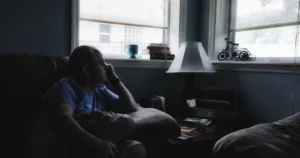
Photo by Womanizer Toys on Unsplash
You are sitting across from the person you used to love and there is nothing there. No warmth. No irritation. No pull toward them, no push away. Just flat. You watch them talk about their day and you notice the way their mouth moves and you notice that you notice, and somewhere underneath the noticing is a small, cold voice asking: is this over?
You are here because you are frightened by your own numbness. You used to feel things. You used to want them. Now you go through the motions, you kiss them on the head before bed, you say the words back when they say I love you, and you cannot find the feeling anywhere. Like a roommate. Or worse. Some days you catch yourself hoping they’ll cancel dinner so you don’t have to sit across from them and feel nothing again.
I have been a licensed marriage and family therapist for over seventeen years. I want to slow you down before you make any verdicts about your relationship, because what you are calling “falling out of love” is almost never what it looks like from the inside. It is one of the most misread signals the human nervous system produces.
The flatness is not the end of feeling. The flatness is a feeling. It is the specific, biological signature of a body that has been reaching for too long without being met, and has finally pulled the emergency brake to protect a still-beating attachment underneath.
That is what I want to explain to you. What the numbness actually is. What it is defending. And whether feeling can come back.
Numbness Is Not the Absence of Feeling. It Is a Feeling.

Feeling numb in a relationship is rarely the end of love. The flatness is a feeling: the biological signature of a body that has been reaching for too long without being met, and has pulled the emergency brake to protect a still-beating attachment underneath. You are not empty. You are defended.
What to do tonight: make no verdict about your relationship from inside the numbness. Sit with the flatness without trying to fix it, and ask yourself where you feel it in your body.
If you look at your partner and feel nothing, tell Figlet when the numbness started and what came before it, and it will help you see what your body is protecting.
Here is the first thing I want you to internalize, because it changes everything else.
You are not empty. You are defended.
Emotional numbness in a long relationship is not the flatline of a heart that has stopped caring. It is the state your nervous system enters when caring has cost more than it can afford to keep paying. It is the body pulling the plug on the emotional circuit board before the wiring catches fire.
Think of it as a circuit breaker. When too much current runs through a system for too long, the breaker trips. The lights go out. Not because the wiring is broken. Because the system was built to shut down before it burns down. Numbness is your body doing exactly that, on your behalf, without asking you first.
If the numbness has spread past your partner to everything, that can be depression, and I compared the best online therapy for depression options so you can get real help this week.
This is what emotional detachment actually looks like from the inside. Clients describe it to me the same way, over and over. The volume knob on their emotional life got turned all the way down. They can see their partner’s mouth moving. They know this moment matters. They cannot access themselves enough to show up for it. And the gap between the knowing and the feeling is where the shame lives.
The mistake people make is assuming the flatness means the love is gone. What the flatness usually means is the love got so painful the body had to store it somewhere you can’t easily reach.
From Empathi’s research: in 58,221 completed relationship assessments, 33% named alone as their deepest feeling when love isn’t working. 19,139 people, more than rejected, more than abandoned, more than hopeless.
Two Ancient Questions That Never Stopped Running
To understand what your numbness is protecting, you have to understand what the reaching was for in the first place.
Underneath every long relationship, two questions run silently in the background, all the time, forever. This is attachment theory as it plays out in adult love. Your nervous system installed your partner as your primary attachment figure, which is a clinical way of saying: your body treats their presence the way an infant’s body treats a caregiver. From the cradle to the grave, we are wired for one bonded person.
The two questions are these.
Can I count on you to be there when I need you?
Do I still matter to you, exactly as I am?
Every fight about the dishes, the schedule, the tone of a text, the way they said hi when they walked in, is a proxy war for one of those two questions. And every rupture that goes un-repaired is a small “no” logged in your body’s ledger.
Your rational brain does not run this ledger. Your limbic system does. And the limbic system is, in my favorite description, a naked mole rat. It does not do language. It does not do logic. It knows warmth, proximity, touch, tone. It is scanning your bond at all times for one thing: is my person there?
When the answer keeps coming back as “sort of,” or “not really,” or “I don’t know anymore,” the mole rat does not shrug and move on. It registers a slow-motion existential threat. And after enough of those, when there is no rescue coming and no repair on the other side, the body does the only thing left to do.
It stops asking.
The Burnt-Out Reacher
This is the pattern I see most in my office, and I want you to see if it fits.
For years, you were the one reaching. You were the Relentless Lover, the one who kept lobbing verbal carrier pigeons over the wall, hoping one of them would come back with an answer. You brought up the hard things. You asked for the connection. You cried during the fights. You said “we need to talk about this” more times than you can count.
And then, one day, you didn’t.
You stopped reaching, and at first it felt like relief. The house got quiet. The fights stopped. You told yourself you were finally being mature about it. You were “picking your battles.” You were “letting things go.”
What actually happened is that your alarm system burned out. After enough years of reaching without being met, your body ran out of adrenaline. It stopped throwing pigeons over the wall because the wall never answered, and pigeons are expensive, and your nervous system is not stupid.
The flat feeling you have now, the roommate feeling, is not you falling out of love. It is what happens when a Relentless Lover collapses into the freeze of exhaustion. The pursuer becomes the withdrawer. The one who was on fire becomes ice. And it is very easy, from inside that ice, to conclude that the fire is dead.
The fire is not dead. The fire went underground to survive.
I’ve written more about this collapse in the anxious-avoidant push-pull dynamic, because it is often the endgame of that loop. Two people who love each other, who scared each other for years, who ran out of ways to be met.
The Reluctant Lover’s Version of Numbness
The mirror image also shows up in my office, and it looks slightly different.
If you were the withdrawer for years, the one whose body registered every conversation as a performance review you were failing, your numbness has a different flavor. You went numb because the constant sense of being a disappointment became biologically unbearable. You could not sit inside the flood of shame that arrived every time your partner sighed at the door.
So you learned to leave without leaving. You stayed in the room and put your body on autopilot. You said the right words. You did the tasks. And you sealed off the part of you that felt anything at all, because feeling had become synonymous with failing.
Now you look at your partner and you cannot find the wanting. You cannot find the pull. You wonder if you ever loved them at all, or if the whole thing was performance. That question is the shame talking, not the truth. What actually happened is that you built such a thick armor against the pain of being seen as not enough, you can no longer feel anything through it. Including the love.
I wrote more about this shutdown in what emotional detachment feels like from the inside. The withdrawer’s numbness is not indifference. It is presence of shame so total it has swallowed the room.
The Desert of Apologies
I want to share a moment from my own marriage, because I think you need to know this happens to people who do this for a living.
There was a period where my wife Teale was completely unreachable to me. Not fighting. Not crying. Just gone. A desert. I would apologize, and my apologies were, if I say so myself, beautiful. Articulate. Well-crafted. Full of insight about what I had done and why it had hurt her.
They did nothing.
They landed on the sand and evaporated. She looked at me with a flatness that terrified me more than any of our worst fights ever had. And I understood, sitting there with my beautiful apologies dying in the air, that words could not reach what my behavior had built up in her body over years. Her numbness was not the absence of love. It was armor. And the armor had been earned. It was the accumulated ledger of every small “no” I had logged in her nervous system without knowing I was logging it.
The only thing that eventually reached her was not more words. It was my willingness to sit inside her flatness with her. To stop trying to fix it. To let it exist. To not need her to come back on my timeline.
That is the paradox of numbness. You cannot argue it out. You cannot apologize it away. You cannot logic your way through it. The only path back is through the somatic reality of the freeze itself, met with a presence that does not demand anything from it.
Ready to sit with what’s underneath the flat?
Figlet is AI relationship coaching grounded in attachment science and Figs O’Sullivan’s clinical work, LMFT. First messages free, no signup.
Signs the Numbness Is About the Relationship
Relationship numbness rarely arrives with a big fight. It shows up in small, ordinary ways that are easy to miss until the house has gone quiet.
- Your conversations have shrunk to logistics: the schedule, the kids, the bills.
- You go through the motions. You kiss them on the head before bed and say the words back, and you cannot find the feeling anywhere.
- You feel more alone sitting next to them than you do by yourself.
- Some days you catch yourself hoping they will cancel dinner.
- You stopped bringing up the hard things and told yourself you were picking your battles.
- Something in your chest still lurches when they talk about a future without you.
How to Tell Genuine Loss of Love from Protective Deadening
This is the question you actually came here for.
Here is the difference, clinically, between a bond that has genuinely completed and a bond that has gone into protective shutdown.
If it is genuine completion, there is a spaciousness underneath the flat. You can imagine your partner thriving without you and feel a clean kind of ache, not a panic. You can picture yourself in five years, alone or with someone else, and it does not feel like death. The numbness has a floor you can stand on. It is grief, and grief has weight and dignity to it.
If it is protective deadening, there is a coiled tension underneath the flat. When your partner talks about the future without you, even hypothetically, something in your chest lurches even though your face stays still. When they leave the room, you register the absence even though you told yourself you don’t care. If they were in a car accident tomorrow you know, in a way you cannot admit out loud, that you would come apart. The numbness is defending against something that is very much alive.
When that numbness starts to lift, the work becomes learning how to find joy again in small, ordinary moments.
The other tell is what happens when you get honest about your longing. If you write down, in a private notebook that no one will read, what you actually wanted from this person and did not get, and you feel a wave of grief or anger or ache rise up, the bond is still there. If you write it down and feel absolutely nothing, over multiple attempts, over weeks, then something else may be true.
Most of the time, in my office, it is the first one. The numbness is guarding a heart that is still beating and still hoping, even though the hoping got so painful it had to be hidden even from you.
I’ve written more about the difference between genuine disinvestment and protective shutdown in attachment styles inside painful relationships and in the signs a partner has actually checked out.
Is It Your Relationship, or Is It Numbness Everywhere?
Before you blame the bond, check where the flatness lives. The clearest tell is whether it lifts when you get real distance from your partner. Work trips, weekends alone, extended time with other safe people. If your baseline aliveness comes back in those windows and drops again on return, the relational field is a major driver.
If the grey is identical everywhere you go, you are looking at something that needs its own care, whether or not the relationship is also struggling. Clinical depression tends to travel with you. It is the weather inside you, not the weather in the room. If that is you, please talk to a licensed professional.
I would be negligent not to mention medication. Certain medications, particularly SSRIs, the most commonly prescribed antidepressants, can significantly blunt emotional and sexual responsiveness. If you started or changed a medication and noticed a shift in how connected you feel to your partner, raise it gently with your prescriber rather than with your partner in a hurt moment.
Chronic stress, trauma and accumulated shame can do the same thing, dropping your nervous system into a shutdown where its directive becomes very simple: disappear.
Can Feeling Come Back?
Yes. Usually. Not through cognitive tricks or communication workbooks. Through de-escalation of the loop that produced the numbness in the first place.
The nervous system does not thaw on command. It thaws when it registers, over sustained repetitions, that the environment has changed. That the reaching will be met. That the disappointment will be repaired. That the person on the other side is willing to sit with the flatness without demanding the feeling come back on their schedule.
This is why couples work. Not because two people talk more clearly to each other. Because two nervous systems, over time, learn to co-regulate in a way they had stopped believing was possible. The mole rat gets warm. The armor gets less necessary. The feeling that was stored underground begins to come back to the surface, first as pain, often as anger, eventually as tenderness.
You cannot force this. You can only create the conditions for it. And the first condition is that both people stop trying to argue with the numbness and start listening to what it has been trying to say for a long time now.
One place to start is the body. You are not asking the numb part of you to feel emotions, because that circuit is offline. You are asking it to notice physical sensations (tightness, heaviness, heat, cold, pressure), which use a different neural pathway. Ask yourself, or have your partner ask you: “Where do you feel that in your body?” Acknowledging physical distress is what breaks the numbness cycle.
Common Questions
Is it normal to feel numb in a long-term relationship?
Common, yes. It is one of the most misread signals the human nervous system produces. After years of small ruptures that never got repaired, many people stop feeling much of anything toward their partner. Common does not mean you should accept it. It means the numbness is telling you something about the loop between you, and that loop can change.
Can depression make you feel nothing for your partner?
Yes. Depression depletes the chemistry of wanting and of pleasure, and some antidepressants blunt feeling too. The tell is whether the flatness travels with you. If it lifts on a work trip or a weekend with safe friends and drops again when you come home, the relationship is a major driver. If the grey is the same everywhere, get that looked at on its own.
I feel nothing for my husband. Should I leave?
Not yet. Verdicts made from the freeze are almost always wrong, in one direction or the other. Some people leave and discover the feeling comes rushing back at the wrong moment. First ask what the numbness has been protecting, and whether something in you still lurches at the thought of losing him. Then decide, from a thawed place, not a frozen one.
Is emotional numbness a sign my relationship is over?
Not by itself. Numbness is a signal that the nervous system has been overwhelmed for a long time without repair. That can happen in relationships that end and in relationships that come back to life. The question is not whether you feel numb. The question is what is underneath the numbness when you get honest with yourself, and whether both people are willing to do the work of thawing.
How long does relationship numbness usually last?
It lasts as long as the conditions that produced it remain in place. If two people continue the same un-repaired loop, the numbness deepens. If the loop is interrupted, through therapy, honest conversation, or a change in one person’s nervous system, the thaw can begin within weeks, though full re-emergence of warmth often takes months. There is no fixed clock. Bodies come back on their own timeline.
Why do I feel nothing for my partner but cry when I imagine losing them?
Because you are not actually numb. You are defended. The tears when you imagine loss are the truth. The flatness in daily life is the armor. Your body has decided it is safer to feel nothing than to feel the disappointment of reaching without being met. The love is intact underneath. It is the reaching that has been shut down, not the caring.
Can you fall back in love with someone you feel numb toward?
Yes, but not through effort at feeling. You fall back in love through repeated experiences of being met by them in ways you had stopped expecting. The feeling returns as a byproduct of the safety, not as a project you assign yourself. Trying to force the feeling usually deepens the freeze. Creating conditions where the feeling can safely return is different work.
What is the difference between feeling numb and being avoidant?
Avoidance is a lifelong pattern of managing intimacy by keeping distance. Numbness inside a specific relationship is a state your nervous system entered after too much unmet longing. An avoidantly organized person can be highly connected inside their body; a person in relationship numbness can have been deeply available for years before the shutdown. One is a strategy. The other is a collapse.
This is not a you problem or a them problem
“Round and round they go. Escalating judgments. Reaffirming worst fears. Two people throwing emotional boomerangs, doing exactly what makes logical sense to survive their own pain, only to gut their partner and ensure their own continued suffering. The way you try to get out of feeling hurt and threatened usually hurts and threatens your partner.”
“The fight is never about the content. It is always about the bond.”
Figs O’Sullivan, LMFT
What To Do Next
Do not make a verdict about your relationship from inside the numbness. Verdicts made from the freeze are almost always wrong, in one direction or the other. Some people leave and discover the feeling comes rushing back at the wrong moment, when it is too late. Some people stay and never thaw because no one was willing to do the work.
The work is this. Sit with the flatness without trying to fix it. Ask what it has been protecting. Get honest about the reaching that stopped, or the shame that swallowed you, or the years of small “no” answers your body logged when no one was looking. Let the ledger speak.
Then decide, from a thawed place, not a frozen one.
Do not just close the tab on this.
Bring what surfaced here into a real conversation. Figlet coaches you through it, grounded in Figs O’Sullivan’s work, LMFT. Free to start.
The numbness is not the verdict. The numbness is the question. Answer it before you answer anything else.