Figs O'Sullivan

Figs O'Sullivan is a Licensed Marriage and Family Therapist (LMFT #79062) and the founder of Empathi. For 17 years he has helped couples move out of disconnection and back into secure, loving connection, drawing on Emotionally Focused Therapy and attachment science. With his wife Teale, he runs a San Francisco couples therapy practice, is a relationship expert to the Stars and Silicon Valley, and built Figlet, an AI relationship coach trained on their clinical work. His approach has guided more than 58,000 relationship assessments.

Man with bald head wearing black collared shirt, smiling at camera against white background
Signs of Emotional Abuse: A Therapist's Guide title card with blue circle graphic

Signs of Emotional Abuse: A Therapist’s Complete Guide to Recognizing What’s Really Happening

Watch: Figs O’Sullivan, LMFT explains this. The most common signs of emotional abuse are a partner who regularly denies or rewrites what happened, criticizes and humiliates you, controls your money, your movements or your friendships, punishes you with rage or days of silence, and threatens you when you try to set a boundary or leave.

Signs of Emotional Abuse: A Therapist’s Complete Guide to Recognizing What’s Really Happening Read More »

Title card: How to Stop Overthinking in a Relationship. A Therapist's Guide to Breaking the Mental Loop. By Figs O'Sullivan, LMFT, empathi.com.

How to Stop Overthinking in a Relationship: A Therapist’s Guide to Breaking the Loop

Overthinking in a relationship isn’t a thinking problem, it’s a nervous system event. Learn the clinical frameworks (including the 75/25 Somatic Boundary) that actually interrupt the loop of analyzing texts, replaying conversations, and catastrophizing.

How to Stop Overthinking in a Relationship: A Therapist’s Guide to Breaking the Loop Read More »

Title slide reading "How to Be More Empathetic" with subtitle "The Empathy Cubed Framework" and author credit to Figs O'Sullivan, LMFT, empathi.com

How to Be More Empathetic: The Empathy Cubed Framework for Deeper Connection

If you’ve ever Googled how to be more empathetic, you probably found some version of “listen more” or “put yourself in someone else’s shoes.” And while those aren’t wrong, they’re incomplete. Dangerously incomplete, actually. Because the version of empathy most people are taught, the version floating around in pop psychology and corporate training seminars, only

How to Be More Empathetic: The Empathy Cubed Framework for Deeper Connection Read More »

Text on dark blue background: Why Does My Partner Ignore Me? The Nervous System Truth Behind the Silence. Figs O'Sullivan, LMFT | empathi.com

Why Does My Partner Ignore Me? A Couples Therapist Explains the Nervous System Truth

Watch: Figs O’Sullivan, LMFT explains this. Start free with Figlet. The short answer: When your partner ignores you, it is almost never about you. Usually something landed on them as “I’m failing,” their nervous system flooded, and silence is how their body protects them from that shame. It is collapse, not cruelty, and reaching harder

Why Does My Partner Ignore Me? A Couples Therapist Explains the Nervous System Truth Read More »

Title card: How to Fix a Broken Relationship, A Therapist's Guide to Diagnosis, Repair, and Knowing When to Let Go

Is Your Relationship Broken or Depleted? A Therapist’s Guide to Repair, and Knowing When to Let Go

Watch: Figs O’Sullivan, LMFT explains this. Not every relationship that feels broken actually is, because many couples are suffering from depletion rather than a bond that is beyond repair. The fact that you are searching for answers means the relationship still matters to you and you have not fully given up. Understanding whether your relationship

Is Your Relationship Broken or Depleted? A Therapist’s Guide to Repair, and Knowing When to Let Go Read More »

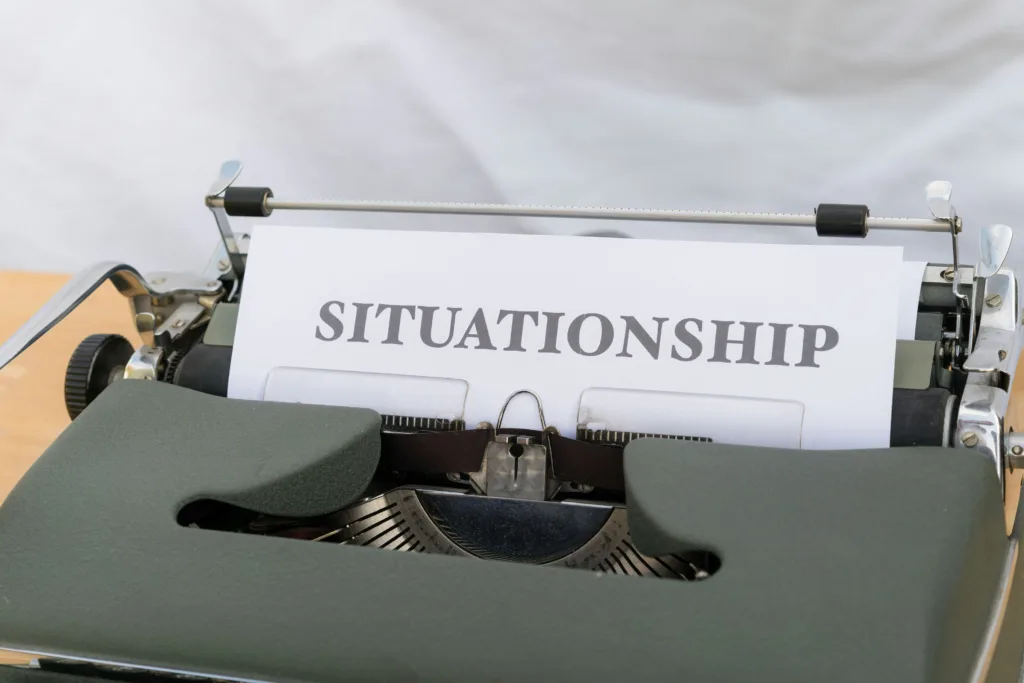
Typewriter with "SITUATIONSHIP" paper, symbolizing relationship challenges.

What Is a Situationship? A Therapist Explains the Attachment Trap You’re Probably In

Quick answer: A situationship is a romantic connection offering emotional and physical closeness without commitment, definition, or a future. In my office, I see two protector parts negotiating distance. One tolerates ambiguity hoping it converts to love. The other gets closeness without the terrifying threat of being fully chosen. Your body cannot accept what your

What Is a Situationship? A Therapist Explains the Attachment Trap You’re Probably In Read More »

Title card: Feeling Unappreciated in a Relationship, Why Your Nervous System Keeps Score, Figs O'Sullivan LMFT empathi.com

Feeling Unappreciated in a Relationship: Why Your Nervous System Keeps Score

Watch: Figs O’Sullivan, LMFT explains this. Feeling unappreciated in a relationship is not about hearing “thank you” enough. It is the slow, grinding experience of doing the work to hold the relationship together while your partner moves through life as if it all just happens by itself. Your nervous system keeps that ledger, so “I

Feeling Unappreciated in a Relationship: Why Your Nervous System Keeps Score Read More »

Emotional labor in relationships - the invisible work of partnership

Emotional Labor in Relationships: The Invisible Work That Can Make or Break Your Partnership

Emotional labor in relationships is the invisible work of monitoring, repairing, and maintaining connection. Learn what it is, who carries it, what happens when it becomes unbearable, and how to redistribute it before your relationship collapses under the imbalance.

Emotional Labor in Relationships: The Invisible Work That Can Make or Break Your Partnership Read More »

Title card: Narcissistic Personality Disorder in Relationships. Subtitle: What clinicians actually see vs. what the internet tells you. Blue geometric circles on dark background.

Narcissistic Personality Disorder in Relationships: What Clinicians Actually See (vs. What the Internet Tells You)

The internet has turned ‘narcissist’ into a catch-all for any painful relationship. As an LMFT with 16+ years of experience, I break down what NPD actually is clinically, why armchair diagnosis is dangerous, and what to actually do if your relationship is struggling.

Narcissistic Personality Disorder in Relationships: What Clinicians Actually See (vs. What the Internet Tells You) Read More »

Scroll to Top
Share "Narcissistic Personality Disorder in Relationships: What Clinicians Actually See (vs. What the Internet Tells You)"
Reading this from the Bay Area? Figs and Teale see couples in person at 999 Sutter Street in San Francisco, and online across California. Free 30-minute consult
Man smiling and meditating in a therapy session setting.
Figs, Teale & Figlet
● Available 24/7
You’re not alone.
Neither is your relationship. Talk to us right now, any time.
Start coaching with Figlet
First 10 messages free. No credit card required.
Request a Free Consultation
Figlet is Figs in an AI bottle
Not sure where to start? Take the 3-minute quiz ›
Man smiling and meditating in a therapy session setting.
Ask Figlet AI