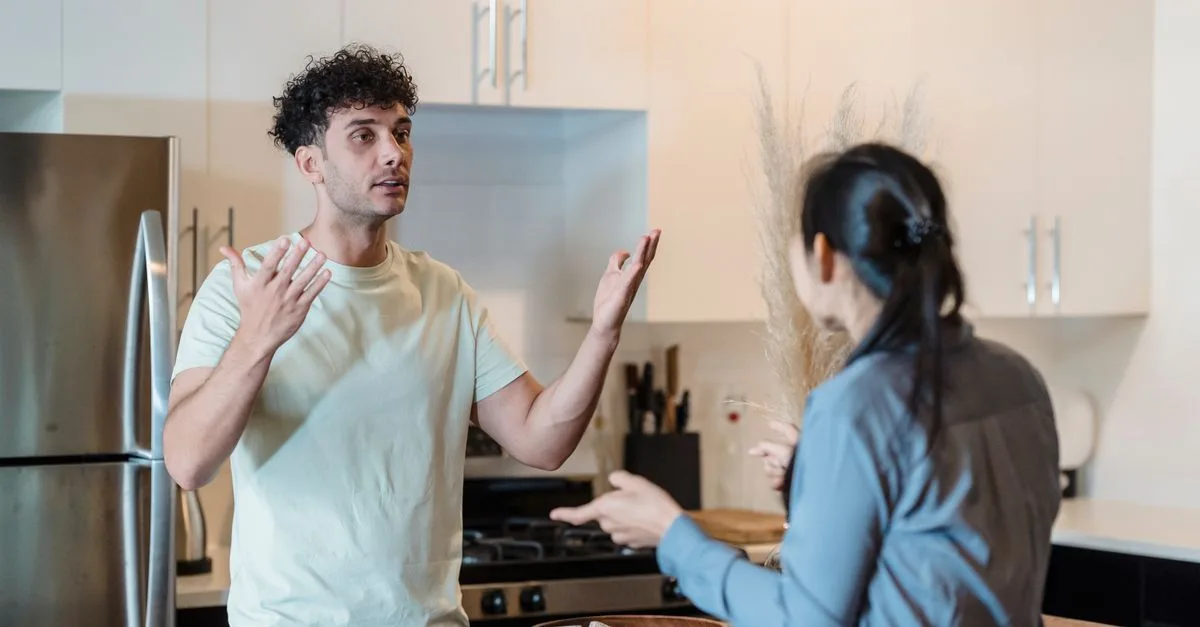
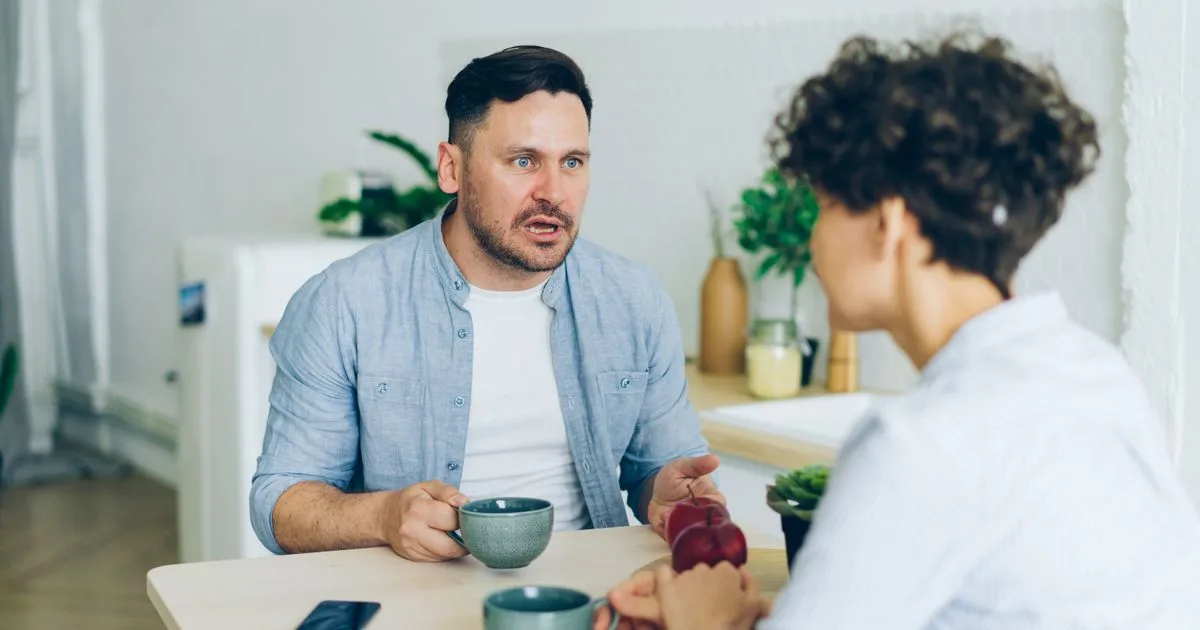
Online couples therapy is real couples therapy over a secure video call: a licensed therapist, the two of you on one screen or joining from two places, working on the pattern that keeps you stuck. Research on couples teletherapy finds it about as effective as sitting in an office, so the choice that matters is the therapist’s couples training and a license in the state where you live.
Below is every option I would actually consider, with prices I rechecked on November 19, 2026, and how to tell which one fits the two of you.
Online couples therapy is couples therapy with a licensed therapist over video, the two of you on one screen or logging in from two rooms. For most couples it works about as well as sitting in an office, and the therapist’s training in couples work matters far more than the format. Your real options are a private EFT or Gottman therapist licensed in your state who works by telehealth, a subscription platform like Talkspace, ReGain or OurRitual, or a self guided app or coaching tool, which are not therapy at all.
If you are in crisis or thinking about suicide, call or text 988 (the Suicide and Crisis Lifeline in the US) now.
It’s late. You’ve had the same fight again, the one you both could recite word for word, and now one of you is in bed and the other is on the couch with a phone, typing “online marriage counseling” and wondering which of these sites is real.
I’m Figs O’Sullivan, a Couples Therapist and Relationship Expert. I have been a couples therapist for seventeen years, in San Francisco and by video. I also built Figlet, an AI relationship coach, so keep my bias in mind. Where something else fits you better, I’ll say so. I checked every price below on October 19, 2026, and prices change often, so confirm on each site before you sign up. If your partner won’t come, or you just need help tonight before you’re ready to book anyone, you can start Figlet relationship coaching free. It’s there at 2 in the morning, and it works with just one of you.
Can I see you for couples therapy if we live in California?
When talking turns into the same fight
Talk it through with Figlet right now. Private, judgment free, built on 17 years of couples therapy.
Yes. A therapist has to be licensed in the state where you live, and I’m licensed in California, so I see California couples by telehealth through Empathi, and in person in San Francisco. You can read about how I work with couples, or go straight to Empathi’s online couples therapy in California, where we work with EFT.
How does online couples therapy work?
Most couples who ask me how it works are really asking what it will feel like. Here is the shape of it.
- A short first call. You say what is going on, the therapist says how they work, and you both check the one practical thing that trips people up online: can this therapist legally see you where you live?
- A secure video platform. Zoom or whatever HIPAA-compliant platform your therapist uses. The platform matters far less than people think. The work happens between people, not between pixels. You get a link, you click it, and that is the whole technical part.
- One screen or two. If you live together, sit side by side in front of one camera. I know separate rooms can feel safer when you are fighting, but learning to stay in the same space during a hard conversation is the skill we are building. If you live in different places, each of you joins the same session from wherever you are, with headphones and a private space.
- Weekly sessions at the start. Private therapists usually meet for 50 minutes or longer. Platforms are shorter: Talkspace couples sessions are 30 minutes and OurRitual’s are 40. Every other week is usually too thin to build momentum early on.
- The same work as the office. Over video I watch the same things I watch in a room. Who speaks first. Who looks away. Whether you talk to each other or only to me. By the first session or two I will name the cycle out loud: one of you reaching, one of you protecting, both of you alone.
If you and your partner live in different cities or countries, the attachment pattern the distance is amplifying needs its own plan, and I wrote a full guide to long distance couples therapy options.
What are the real options for online couples therapy?
I’ve ordered these by how much licensed, live clinical help you actually get, from most to least. That’s the only ranking that matters when you’re in real pain.
- A licensed EFT or Gottman couples therapist who works by telehealth. This is my first choice for couples in distress. Search the ICEEFT directory (everyone listed has at least completed an EFT Externship, though ICEEFT doesn’t verify licenses, so check your state board), the Gottman Referral Network (every listed therapist has at least Level 2 Gottman training), or Psychology Today, which lets you filter by state, insurance and online sessions. Licensed: yes, in your state. Private practice online sessions often run $100 to $250, more for experienced specialists in big cities. Both partners usually attend, though a good therapist will talk to one of you first.
- Talkspace couples. Licensed therapists. Its pricing page lists the couples plan at $109 a week, with up to four 30-minute video sessions a month plus unlimited messaging, extra live sessions at $69 each, and its FAQ calls it $436 a month. Talkspace says couples therapy is covered by many insurance plans and some employers, and only one partner needs to subscribe. Check your coverage first. Sessions are shorter than a typical office hour.
- ReGain. Licensed therapists, owned by BetterHelp. Published prices run about $70 to $100 a week, billed monthly, depending on where you live and therapist availability (HelpGuide’s March 2026 review), for one live session a week plus messaging. The price is the same whether you meet together, separately or both. It doesn’t take insurance, and it offers income-based financial aid.
- OurRitual. Weekly 40-minute video sessions with a relationship expert, plus an app between sessions. Its plans page lists couples pricing from $64 to $84 a week depending on how long you commit, and it doesn’t take insurance. The page says its experts have backgrounds in psychology, marriage and family therapy, and social work, but doesn’t spell out licensure, so ask who you’ll be matched with. Both partners attend.
- Ours. A guided relationship program, built mostly for couples before marriage. Its guides lead coaching sessions, and its program listing says it does not provide clinical or therapy services, so it isn’t therapy. Fine for a healthy couple planning a life together. Not for a couple in crisis.
- Lasting and Paired. Apps, not therapy. Lasting, owned by Talkspace, offers self-paced lessons one partner can do alone; its US App Store in-app purchases run from $11.99 to $89.99. Paired gives you one question a day to answer together, free, or Premium at $79.99 a year per couple on its FAQ, often discounted. Lovely if you’re basically OK. They won’t touch a cycle that has you sleeping in separate rooms.
- Figlet, which I built. An AI coach grounded in EFT, for the moment the fight happens. It isn’t licensed care, and no AI is a therapist, including mine. Figlet works even if only one of you is willing, and your first messages are free with no credit card, then $19.95 a month or $147 a year.
If you want the apps side by side, I reviewed them in the best couples therapy apps.
Which options give you a live session with both partners?
This is the question the sales pages bury. I rechecked each of these on November 19, 2026.
- Private EFT or Gottman therapist by telehealth: yes, usually 50 minutes or more, both of you together.
- Talkspace couples: yes, up to four 30-minute live video sessions a month with both of you.
- ReGain: one live session a week, which you can attend together or separately, plus a shared message room.
- OurRitual: one 40-minute virtual session a week for you and your partner.
- Ours: live sessions with a guide, but coaching, not clinical care.
- Lasting and Paired: no live sessions. They are apps.
- BetterHelp: individual therapy only. If you tell it you want couples work, it sends you to ReGain, its sister site.
Does online couples therapy actually work?
For most couples, yes. The research on video therapy, including couples work, has become solid, and EFT translates to the screen when the therapist knows what they’re doing. I compared the two formats in detail in online couples therapy vs in person, so I’ll keep this short.
What the research says
The largest study I know of, by Bradford and colleagues at Brigham Young University (Psychotherapy Research, 2024), followed 1,157 married clients in couple therapy and found teletherapy as effective as in-person therapy for couple satisfaction. One honest caveat from the same study: the bond with the therapist grew faster in person. A smaller randomized trial by Kysely and colleagues (Frontiers in Psychology, 2022) assigned 30 couples to the same six-session program face to face or by video, and relationship satisfaction and mental health improved in both groups, with no difference by format.
That fits what I have watched for years. When two nervous systems are in distress, the panic is exactly the same whether you are sitting three feet from me or staring at a laptop. So is the healing.
A couple once logged into our telehealth session from two separate rooms in their own house, because they were too angry to sit on the same couch. He leaned into his webcam, itemizing every time she had failed to prioritize him that week. She sat frozen, staring at her keyboard, and eventually turned her camera off. Their panic didn’t care that I was on a laptop. The dance came through the speakers perfectly.
Through a screen I lose the body below the shoulders. But some conversations go better online. When shame is running the show, some people find it easier to say hard things without direct eye contact, and when one partner dominates a room, those little boxes can level the field. A committed couple online will go further than an avoidant couple sitting three feet from me.
What should a good couples therapist actually do?
Early in my career I felt like a referee at a boxing match. I taught “I” statements and negotiated chore charts. Couples nodded, went home, and had the exact same fight with more polite vocabulary. Then I watched a master EFT therapist ignore the content of a fight entirely and help a silent husband touch his belief that he was a complete disappointment, and his critical wife touch her panic that she was alone. Their shoulders dropped. I never went back.
Underneath almost every fight, one of you is asking “Are you there for me?” and the other is asking “Am I enough?” One partner pursues, the Relentless Lover. The other withdraws, the Reluctant Lover. In our 58,221 relationship assessments, 74.1% of the 6,159 couples where both partners finished were caught in that pursue-withdraw cycle. A good therapist slows the fight down, refuses to pick a villain, and helps you see the cycle as the enemy instead of each other. If you are weighing the two main models, I compared them in Gottman Method vs EFT. In a 1999 meta-analysis of EFT by Johnson and colleagues, roughly 70 to 73 percent of distressed couples recovered.
What does it cost, and does insurance cover it?
Some private therapists charge a little less for video sessions, and many charge the same, so ask. Subscription platforms run roughly $64 to $109 a week in the prices above. Insurance rarely pays for couples work, because a relationship isn’t a billable patient. Some therapists bill under one partner’s diagnosis, which puts it on that partner’s record, so ask how they bill. HSA or FSA money, sliding scales and employer EAP sessions all help. The full numbers are in how much couples therapy costs, and if you want to use your plan, start with online therapy that takes insurance.
How do I choose, and what are the red flags?
When I started out, about 40% of my couples didn’t come back after the first session. A friend told me everyone comes back for a second. That humbled me enough to learn, and it’s why I say no couples therapy is better than bad couples therapy. On the consult call, ask what model they use, what percentage of their caseload is couples, and whether they’re licensed where you both live. “Eclectic” isn’t a model.
Red flags: a therapist who takes sides, who lets you argue for fifty minutes and calls it progress, who hands out communication worksheets without ever naming the cycle, or who mostly sees individuals and squeezes couples in. If you both leave the first session feeling more hopeless, that’s useful information.
Check the license where each of you sits
This is the practical question online couples miss most often. In the US, a therapist generally has to be licensed in the state where you are physically located during the session, not where the therapist sits. If you are in Oregon and your partner is in Texas, ask directly: can you legally see both of us where we each are? Some therapists hold more than one license, and psychologists in states that joined PSYPACT can see clients across those states, but the rules change, so ask in the first phone call, not the third session. Then look the license up on your state board’s website. Directories are not proof.
Ask how they work on video
Ask how they handle it when one of you shuts down on screen, or when you are in different rooms. Ask whether the platform is HIPAA-compliant. And notice the intake. If it is mostly about scheduling and content, keep looking. If they are talking about your nervous systems, your survival strategies and the questions running underneath every fight, sit down with them.
What happens in the first session?
I’m not there to find the bad guy. One of you is hoping someone will finally hear your side, and the other is braced to be found out. I call the first meeting an organizing session: three scientists working out the loop you’re both caught in. You’re each running around with a can you think holds water, and it’s gasoline. Don’t expect a breakthrough. I want you both to leave thinking, “That person gets what’s happening here.” The goal is to graduate you. Online, set up a laptop rather than a phone, close the door, and put the phones in another room.
How do we set up our space for an online session?
Find a room with a door that closes. Not the kitchen, where your kids might wander in asking about snacks while you are talking about your sex life. Not the bedroom, where your partner can feel interrogated in their safe space. Neutral territory.
- Use a laptop or tablet, not a phone, with the camera at eye level so you are not looking down on each other.
- Sit close enough that both faces are clear. I need to catch the eye roll and the moment when someone’s words don’t match their body.
- Put the light in front of you, not behind you, and test your internet and audio beforehand.
- Plan for privacy. Couples therapy isn’t quiet. Pick a time when the kids are out or asleep, put a white noise machine outside the door, and use headphones if you are in separate places. If home truly has no private corner, a parked car works. A shared office does not.
- Join a few minutes early, so a frozen screen doesn’t eat the first ten minutes and set off both your alarms.
And if the connection drops in the middle of something tender, name it when you are back: “I lost you there, and I felt it.” That small sentence is repair. Treat it like the important appointment it is. If you showed up to my office in pajamas with a beer, I’d wonder about your commitment to the work. Same on screen.
If weekly sessions keep resetting, because you close the laptop and are back in the cycle within hours, some couples do better with a few concentrated days. I wrote about whether an online couples therapy intensive actually works.
Is online couples therapy the same as coaching or an app?
No, and you deserve to know what you are buying. A licensed therapist needs a master’s degree, supervised clinical hours and a state license, and answers to a licensing board. Titles like relationship coach and life coach are not legally regulated. Anyone can print one on a website tonight. A coach does not diagnose or treat, and coaching clients don’t have the legal protections therapy clients have. Apps are lessons, questions and exercises, with no live clinician at all.
The plain test I use: if you’ve got some ground under you and the old stuff speaks in a voice you can work with, coaching or a good app can do a great deal. If the past is so loud you can’t stand on anything, or the fights are frightening, you need ground first, and that is therapy.
When is couples therapy the wrong room?
If someone is hitting you, threatening you, blocking the door, controlling your money or your phone, or following you, that is not a dance. Couples therapy is generally not recommended in actively abusive relationships, because it can keep the person being hurt engaged in a harmful system. Get help today: the National Domestic Violence Hotline is 1-800-799-7233. Active addiction, serious depression, or thoughts of not being here belong with a licensed clinician first, and 988 is there any hour.
Online has its own extra limits. If there is coercive control in the house, a video session at home may not be private, because the person you fear may be listening. Online may also not be the right first step if fights escalate so fast at home that you need the container of an office, or if there is truly nowhere private to sit. Sometimes the answer is in-person work, individual stabilization first, or a mix of both. If you are in immediate danger, call 911.
What can I say to my partner tonight?
Don’t send them a list of platforms. Say this, word for word: “I’m not trying to prove you wrong. I miss us, and I want help with the loop we keep getting stuck in. Will you do one consult with me this week?”
Then, before you sleep:
- Write down the last fight in one line, not who was right but what happened: “I reached, you went quiet, I got louder.”
- Look up one or two therapists licensed in your state on the ICEEFT directory, the Gottman Referral Network or Psychology Today, filtered for online sessions, and check each license on your state board.
- Write the three consult questions down: what model do you use, what share of your caseload is couples, and can you legally see both of us where we live?
- Pick the room you would use for sessions and check that its door closes.
- If the fight is still hot, don’t try to solve it tonight. Say, “I don’t want to lose you over this. Can we come back to it tomorrow?” and mean it.
Does needing couples therapy mean something is wrong with us?
I want to tell you something about my own marriage, because I think it takes some of the shame out of this. Teale and I still work with a couples therapist. Not because we are failing. Because we are committed to growth. We are both trained therapists. We both know this material inside and out. And we still misattune. We still cycle into reactivity. We still trigger each other. The difference is that we know the dance now. We can name it. We can interrupt it.
Booking a session isn’t proof the relationship is broken. Most of the time it is two people who love each other, scaring the living daylights out of each other, and finally asking for someone steady enough to help them see it.
If you’re the partner being dragged to this
The reluctant partner usually walks in expecting to be prosecuted. My first job is to make sure that moment never comes. You don’t have to believe in it. Just show up. Reluctant partners often make faster progress than the motivated ones, because once they stop playing the defendant, they start being present.
Where to go from here
If you’re torn on format, read online vs in-person couples therapy. If you live in California and want a licensed EFT couples therapist, I see couples by video across the state and in person in San Francisco through Empathi.
If you’re outside California, your partner won’t come yet, or it’s 2 in the morning and the fight just happened, I built Figlet for that moment. It’s relationship coaching, built on the same EFT lens as this page. Tell it what happened, it shows you the dance you’re caught in, and it gives you one line to say. Start Figlet relationship coaching free tonight.
Frequently asked questions
Does online couples therapy really work?
For most couples, yes. Studies of video therapy find outcomes comparable to in-person sessions, and EFT works on screen when the therapist is well trained. The therapist’s skill and your commitment matter more than the format.
How much does online couples therapy cost?
Private practice sessions by video often run $100 to $250, and specialists in big cities charge more. Platforms like ReGain, OurRitual and Talkspace listed $64 to $109 a week when I rechecked in November 2026. Prices change, so check each site.
Does insurance cover online couples therapy?
Rarely, because relationship distress isn’t a billable diagnosis. Talkspace says many plans and some employers cover its couples plan, and out-of-network benefits may reimburse part of a private therapist’s fee with a superbill.
Do we need to be in the same room?
No. Many couples join from one couch, and some log in from two rooms or two cities. Each of you needs a private space where you won’t be overheard.
Is online marriage counseling the same as couples therapy?
People use the terms interchangeably. Marriage counseling tends to be shorter and problem focused, while couples therapy goes after the emotional pattern underneath the problems. Ask any provider which one they actually do.
What if my partner won’t do couples therapy?
You can still change your step in the dance, and when one partner changes their part, the whole cycle shifts. Many couples therapists will see one partner first.
How does online couples therapy work?
You meet a licensed couples therapist on a secure video call, usually weekly, either side by side in front of one camera or from two locations in the same session. The therapist does the same work as in an office: slowing the fight down, naming the cycle, and helping you reach for each other. A short consult call first checks fit and licensing.
What is the best online couples therapy?
For a couple in real distress, a licensed EFT or Gottman trained therapist who works by telehealth and is licensed in your state is my first choice. If cost or access rules that out, Talkspace, ReGain and OurRitual offer live sessions on a subscription. Apps like Lasting and Paired are fine for couples who are basically OK, but they are not therapy.
Can we do online couples therapy from different states?
Often, but only if the therapist can legally practice where each of you is during the session. Some therapists hold more than one license, and psychologists can use PSYPACT between member states. Ask before you book, not after.
Does BetterHelp do couples therapy?
No. BetterHelp is individual therapy. Couples are directed to ReGain, which is operated by BetterHelp and runs on a separate subscription.
Is online couples therapy private?
Licensed therapists are bound by the same confidentiality rules online as in person, and they should use a HIPAA-compliant platform, which is a fair thing to ask. The weak spot is usually your home, so pick a room with a door, a time when nobody can overhear, and headphones if you are apart.
How long does online couples therapy take?
EFT is short term by design, usually somewhere between 8 and 20 sessions. By session 8 you should feel something shifting. If nothing has, raise it with your therapist.
Keep Reading



When talking turns into the same fight
Figlet is relationship coaching built on 17 years of couples therapy. Talk through what is happening the moment it matters, get a clear next step, and stop circling the same fight. Private, judgment free, ready whenever you are.
Free to start. No credit card needed.
Figs O'Sullivan
Founder · EFT couples therapist
“What I would tell you at 10pm, if I could.”