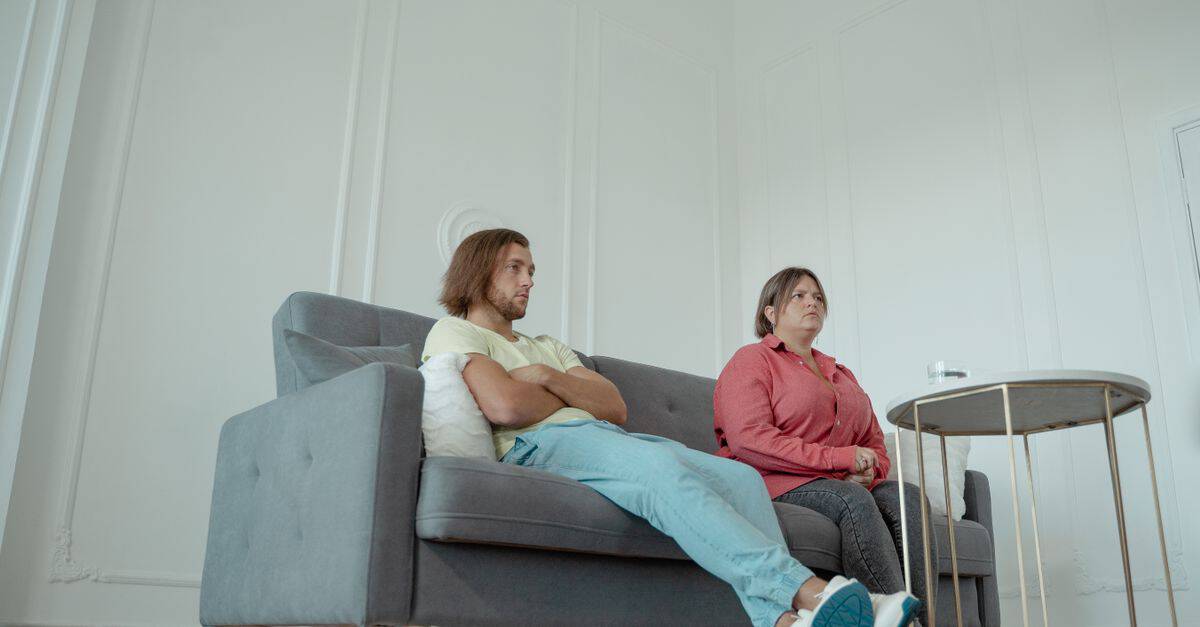
Zoom couples therapy is couples therapy done over a secure video call. You and your partner usually sit side by side in front of one camera at home, and a trained couples therapist works with the two of you the way they would in an office: slowing the fight down, naming the cycle you are caught in, and helping you reach for each other instead of defending.
It works. A 2022 randomized trial by Kysely and colleagues found couples improved just as much over video as face to face, and in my own practice the depth of the work holds through a screen. What matters is the therapist’s training, a private room with a door that closes, and both of you willing to show up for real.
If you are wondering whether video sessions could work for the two of you, Figlet, my AI relationship coach, can help you think it through, there at 2 in the morning, or right now. Talk it through with Figlet.
I Get It. You’re Skeptical.

Which pattern is running your relationship?
Take the free three minute quiz and meet the creature behind the cycle you keep getting stuck in.
You’re wondering if real, deep, life-changing therapeutic work can actually happen through a screen.
I was too.
When I first started offering an online couples therapy intensive, I had the same hesitation most couples have. Therapy feels like it should be in-person. The eye contact. The body language. The energy in a room when something important shifts between two people.
But here’s what I’ve learned after working with over 3,000 couples across 15 years of practice: the screen doesn’t limit the work. An online couples therapy intensive delivers the same emotional breakthroughs. And for some couples, doing the work from home is actually the better option.
Let me explain why an online couples therapy intensive works just as well.
What the data shows: in 58,221 completed relationship assessments, 74.1% of the 6,159 couples where both partners completed were in the pursue-withdraw cycle. Both partners typically describe the other as the one withdrawing.
The Skepticism Is Understandable
I hear it on almost every consult call. “Can we really do deep work over Zoom?” “Won’t it feel… less real?” “How do you even read body language through a screen?”
These are smart questions. Therapy is about connection. It’s about feeling safe enough to be completely vulnerable with your partner while someone holds the space. That sounds like it requires physical presence.
And I won’t pretend there’s zero difference between sitting across from someone and seeing them on a screen. There is a difference. But the difference isn’t what most people assume.
The assumption is that virtual therapy is somehow a watered-down version of the real thing. A compromise. The backup plan when you can’t get to the office.
That’s not what an online couples therapy intensive is. Not even close.
What the Research Actually Says
Telehealth therapy research has grown enormously over the past several years, and the findings are consistent: virtual couples therapy produces comparable outcomes to in-person therapy.
Let me say that more directly. The research shows that couples doing therapy over video achieve similar levels of improvement in relationship satisfaction, communication, and emotional connection as couples sitting in the same room as their therapist.
Emotionally Focused Therapy, which is what we practice at Empathi in San Francisco, has an 86% success rate for couples who complete the process. That number holds whether we’re working in person or through a screen. Because EFT works by helping couples access and share their deeper emotions with each other.
The mechanism of change is the emotional experience between the two of you. And that happens through your words, your tone, your facial expressions, your tears, your breath, your silence. All of which come through beautifully on a quality video connection. This is what makes an online couples therapy intensive so effective.
The therapy doesn’t happen because of the room you’re sitting in. It happens because of what moves between the two of you. And that movement doesn’t need a physical office.
Does Online Couples Therapy Work? What a Controlled Trial Found
The cleanest evidence I know of comes from a 2022 randomized controlled trial by Kysely and colleagues, published in Frontiers in Psychology. They randomly assigned 30 couples to the same six-session couples program, delivered either face to face or over videoconference. Relationship satisfaction and mental health improved in both groups, and the improvement did not depend on the format. The therapeutic alliance, the felt sense of trust between the couple and the therapist, did not differ either.
If you would rather start with structured learning at home, I compared the best online relationship courses for couples.
I want to be honest about what that study is and is not. It was small, and it tested a structured couples program, not months of deep emotional work. But it fits what I have watched in my own practice for years: when two nervous systems are in distress, the panic is exactly the same whether you are sitting three feet from me or staring at a laptop. And so is the healing.
How Zoom Couples Therapy Works, Step by Step
Most couples who ask me how online couples therapy works are really asking: what will it actually feel like? Here is the process, from the first call to the moment a hard session ends.
1. The First Call
Before anything else, you have a short call with the therapist. You tell them what is going on, they tell you how they work, and you both check the practical piece that trips people up: can this therapist legally see you where you live? I cover that below, because it matters more online than in person.
2. The Platform
The platform doesn’t matter nearly as much as people think. Zoom, or whatever secure platform your therapist uses. The magic happens between people, not between pixels. What you do want to know is that the platform is HIPAA-compliant, which is a fair question to ask on that first call. Your therapist sends you a link. You click it. That is the whole technical part.
3. One Screen or Two?
If you live together, sit next to each other in front of one camera. I know it can feel safer to be in separate rooms when you are fighting, but that is exactly why we don’t do it. You are learning to be in the same space while having hard conversations. That is the skill we are building. And one camera gives me the live aliveness between you: the hand that reaches, the shoulder that turns away.
If you live in different places, each of you joins the same session from wherever you are, so I see two faces on one screen and you see each other. Each of you needs a private, quiet space and headphones. Done well, it is the full work.
4. Setting Up the Room
Find a room with a door that closes. Not the kitchen, where your kids might wander in asking about snacks while you are talking about your sex life. Not the bedroom, where your partner can feel interrogated in their safe space. Neutral territory.
- Use a laptop or tablet, not a phone, and put the camera at eye level so you are not looking down on each other or up like supplicants.
- Sit close enough that I can see both faces clearly. I need to catch the micro-expressions, the eye rolls, the moments when someone’s words don’t match their body.
- Get light in front of you, not behind you, so you don’t look like you are in witness protection.
- Test your internet and audio beforehand. Nothing kills vulnerability faster than “Can you hear me now?” every five minutes.
- Put your phones in another room.
5. Privacy at Home
Some couples worry about the neighbors, or the kids, hearing. Couples therapy isn’t quiet. Real conversations aren’t whispered. So plan for it: a time when the kids are out or asleep, a white noise machine outside the door, headphones if you are in separate locations. If home truly has no private corner, a parked car works. A shared office does not.
6. What Happens in the Session
The first session is an assessment, not a fix. Over video I am watching the same things I watch in an office. Who speaks first. Who looks away. Whether you talk to each other or only to me. By the end of the first session or two, I will name the cycle out loud: one of you reaching, one of you protecting, both of you alone. For a lot of couples, that is the first moment they both feel understood.
7. When the Screen Freezes
It will happen at some point. Join a few minutes early so a frozen screen doesn’t eat the first ten minutes and set off both your alarms. And if the connection drops in the middle of something tender, name it when you are back: “I lost you there, and I felt it.” That small sentence is repair.
One more thing I tell every couple: treat it like the important appointment it is. If you showed up to my office in pajamas with a beer, I’d wonder about your commitment to the work. Same applies on screen. The couples who do well in video sessions create a ritual around it. They prepare the space, they show up fully, they don’t multitask.
How Empathi Structures a Virtual Intensive
Our online couples therapy intensive runs across 3 days. Here’s how it actually works.
The Setup
Every online couples therapy intensive at Empathi uses a HIPAA-compliant, high-quality video platform.
Before your online couples therapy intensive begins, we do a tech check to make sure your video and audio are solid, your internet connection is stable, and your camera is positioned well. This matters more than people realize. Good video quality means I can see the subtle shifts in your face, your posture, the way you hold your hands, the micro-moment when one of you looks away.
You’ll be in your own home, in a private, comfortable space. Door closed. Phones off. No interruptions. That’s your therapy room for three days.
The 3-Day Structure
Each day includes extended therapy sessions with breaks built in. This isn’t a marathon. It’s paced deliberately.
On Day 1, we map your system. I’m getting to know who you both are, what your dynamic looks like in motion, and what cycle you get stuck in together. By the end of this day, you’ll understand your pattern. Not intellectually. You’ll feel it. You’ll be able to see the dance, hear the music, and name your own steps.
Day 2 is where we go deeper. Once you both share a narrative of what’s happening between you, your defenses start to relax. This isn’t a you-versus-me problem. It’s an us problem. Through targeted emotional work, you’ll start to give and receive empathy in ways that might surprise you both.
Day 3 is where the real transformation lands. We help each of you access your deepest vulnerability and your deepest needs. You’ll learn to reach for each other. You’ll learn to take in the love that’s being offered. And we’ll integrate everything so you can actually repeat this process on your own for the rest of your lives.
Between sessions, you’ll have breaks, homework exercises, and time to process. Some couples take a walk together. Some sit in silence for a while. Some cry in the shower and come back refreshed. All of it is part of the process.
Why an Intensive Can Do What Weekly Video Sessions Cannot
In a weekly session, I can de-escalate a couple. I can get them to a place where they see each other again. But then they close the laptop, and within a few days, sometimes within hours, they are right back in their negative cycle. The space between sessions becomes the enemy.
An online relationship intensive solves this. When you spend three consecutive days in the work, there is no resetting. We build on yesterday’s breakthrough instead of starting over, and your nervous system gets enough sustained safety to actually change. Not every couple needs that. I wrote an honest piece on whether intensive couples therapy is worth it if you are weighing it up.
How I Read Body Language on Screen
This is the question I get the most. And the honest answer is: I’ve gotten really, really good at it.
You’re wondering if real, deep, life-changing therapeutic work can actually happen through a screen.
Do you know you can get personalized answers to all your questions from the same wisdom that wrote this article, right now?
Ask anything about your own situation and get an answer immediately. Keep asking, think it through, work out what to do next.
No credit card required. Your first 10 messages are free.

Ask Figlet about your relationship.
After hundreds of virtual sessions, I’ve learned to read things most people don’t even notice. A slight shift in posture when a partner says something painful. The way someone’s jaw tightens. The moment one person’s eyes get glassy but they blink it away before their partner notices. A hand that moves toward the other person and then pulls back.
I also listen for what most therapists see. Tone of voice carries an enormous amount of emotional data. The pace of someone’s breathing. The quality of a silence. Whether someone’s voice gets higher or drops lower when they’re activated.
And here’s something people don’t expect: video can actually help me see faces more clearly than sitting across a room. Your camera is usually two or three feet from your face. In an office, I might be eight feet away. I can see your micro-expressions in more detail on screen than I can in person.
Where Virtual Actually Works Better
This is the part that surprises people. There are real advantages to doing an online couples therapy intensive that you don’t get in an office.
The Comfort of Home Removes a Layer of Anxiety
Walking into a therapist’s office for the first time is nerve-wracking. The waiting room. The unfamiliar couch. The clinical feel of someone else’s space. For some couples, that anxiety takes up space that could be used for the actual work.
At home, you’re in your own environment. You’re comfortable. You’ve got your own couch, your own blankets, your own tea. One less barrier between you and vulnerability.
Your Real Environment Reveals Real Patterns
When couples are in their own home, I get to see how they actually operate. Where they sit in relation to each other. How they move in their space. Whether one person retreats to a corner and the other leans forward. This is gold for a therapist. I’m seeing you in your natural habitat, not performing in a clinical setting.
No Travel Stress
You don’t have to book flights. You don’t have to find a hotel. You don’t have to drive across the city in rush hour traffic and arrive frazzled with cortisol already running high. You close a door, sit down, and we begin. Your energy goes into the work, not the logistics.
Immediate Practice in Your Own Space
After a powerful session, you’re already home. You can immediately practice what you’ve learned in the environment where your real life happens. There’s no transition from “therapy world” back to “real world.” You’re already there. And that accelerates integration.
Access for Couples Outside California
I’m a Licensed Marriage and Family Therapist in California, so I see California couples for therapy. But through our coaching model, I work with couples from everywhere. The virtual format makes this possible. Couples who would never have access to this level of intensive work can now get it from wherever they are.
Online vs In-Person Couples Therapy: The Honest Comparison
Here is what I cannot fully reproduce through a screen. When two people are in the room with me, I can feel the temperature change after a hard thing gets said. I can see one partner’s body close down before they even speak. Online, some of that gets flattened. You are two faces in two boxes, and I lose a lot of the body below the shoulders.
And here is what goes better online, which surprises people. When shame is running the show, some people find it easier to say hard things when they are not making direct eye contact with their partner. When one person tends to dominate the physical space, those little boxes can level the playing field. And for some couples, online is the only way they will start at all: one partner travels constantly, childcare is impossible, or the nearest qualified couples therapist is two hours away.
You also do not have to choose forever. Some couples do most sessions on video and save the most charged conversations for in person, or for a visit when they are finally in the same city. I go deeper into the trade-offs in online vs in-person couples therapy.
But the most important variable is not the medium. A committed couple in an online session will go further than an avoidant couple sitting three feet away from me.
Who Online Couples Therapy Suits, and Who It Does Not
Online couples therapy tends to suit:
- Couples with demanding schedules who would cancel every third weekly drive across town.
- Parents who can get the kids to sleep but cannot get a babysitter.
- Couples living in different cities, states or countries. I wrote a full guide to long distance couples therapy options.
- Couples who live far from a therapist trained in the approach they want.
- Partners who feel more open in their own space than in a clinical office.
It is not the right room when someone is not safe. If there is physical violence, coercive control, or any threat of violence in your relationship, couples therapy in any format is not safe. It asks both people to be vulnerable, and when one partner’s vulnerability puts them at risk of harm, we cannot proceed. Individual support and safety come first. If you are in immediate danger, call 911. The National Domestic Violence Hotline is 1-800-799-7233, available 24/7. If you or your partner are having thoughts of suicide, call or text 988.
It may also not be the right first step if active addiction is running the relationship, if fights escalate so fast at home that you need the container of an office, or if there is truly nowhere private to sit. Sometimes the answer is in-person work, individual stabilization first, or a mix.
Licensing Across State Lines
This is the practical question online couples miss most often. In the US, a therapist is generally required to be licensed where the client is physically located during the session, not where the therapist sits. If you are in Oregon and your partner is in Texas, ask any therapist directly: can you legally see both of us where we each are?
Some therapists hold licenses in more than one state, some states have agreements that make this easier, and the rules change, so ask rather than assume. If one of you is in another country, it gets more complicated. Ask about it in the first phone call, not the third session. If a therapist cannot see you both, they may still be able to work with one of you or refer you to someone who can.
How to Choose an Online Couples Therapist
Search results will show you dozens of profiles. Here is what I would actually look for.
- Training in attachment-based couples work. Emotionally Focused Therapy is the approach I use. Gottman and Imago are common too. The label matters less than whether the therapist works with the cycle between you rather than the content of your fights.
- They can hold both of you. If a therapist starts subtly agreeing with the partner who reached out first, or seems to want to name a villain, keep looking. The system is the enemy. Never the person.
- They have a plan for video. Ask how they handle sessions when one of you shuts down on screen, or when you are in different rooms.
- Licensure where you are. Ask before you book.
- Frequency. Weekly is the minimum at the start. Every other week is usually too thin to build momentum.
And notice the intake. If it is mostly about scheduling and content, keep looking. If they are talking about your nervous systems, your survival strategies, the questions running underneath every fight, sit down with them.
Being Honest About the Limitations
I’m not going to sit here and tell you that virtual is better than in-person in every single way. That wouldn’t be honest, and you deserve honesty from your therapist before you even start working together.
For some couples, the 5-day in-person intensive on Oahu adds a layer of immersion that virtual can’t fully replicate. Being physically removed from your daily environment, your routines, your distractions, creates a container that’s uniquely powerful. You wake up in a beautiful place, you do deep work all day, and you fall asleep somewhere that has nothing to do with your regular life. That kind of full immersion has its own magic.
That’s why we offer both options.
But here’s what I want you to hear: the virtual intensive is not the lesser version. It’s not the backup plan. It’s a complete, powerful, transformative experience in its own right. The 3-day online intensive delivers the same 25 weeks of progress that our in-person work does. The same 4-stage process. The same depth. The same results.
If any of this is landing close to home, you can talk it through right now with Figlet, Figs’ AI relationship coach, and get an answer about your own situation in seconds. Ask Figlet about your relationship.
The couples who choose virtual aren’t settling. They’re choosing the format that fits their life.
Three Screens, Two States, One Marriage
I once worked with a couple who were already divorced and living in separate states. Our first sessions had three screens. Me on one. Her on another. Him on a third. There was a real question of whether anything could happen at all across that much fragmentation.
They had come to me after years of help elsewhere: individual therapy, couples therapy, retreats, books, online programs. One previous therapist had called one of them on the drive home after a session and said there was no hope for their marriage. Her pattern was protest. She reached, she pursued. His pattern was withdrawal. He shut down, and eventually he moved to another state. The loop never stopped. It just changed venues.
The turn came when, for the first time, someone said to him: “You did not fail. You were in pain. And there is a difference.” By helping them see the system they were both stuck inside, rather than shaming either of them, something started to shift. Eventually they were visiting each other and doing sessions in person. Eventually they moved back into their original home together.
The miles did not cause their loop, and the screen did not stop the repair.
What 3,000+ Couples Have Taught Me
After working with over 3,000 couples and seeing the 86% success rate of Emotionally Focused Therapy hold across both formats, I can tell you this with confidence: the quality of the therapeutic work is about the quality of the therapist and the willingness of the couple. Not the medium.
I’ve seen couples break through 17-year patterns on a Zoom call. I’ve watched people hold each other and cry after a virtual session in a way they hadn’t been able to in years. I’ve seen partners who were ready to walk out the door decide to stay and fight for their relationship, all through a screen.
The screen doesn’t get in the way of the love. The screen doesn’t block the vulnerability. The screen doesn’t limit the transformation.
What limits transformation is waiting. It’s telling yourself that the timing isn’t right, or that virtual won’t work, or that you’ll figure it out on your own. Those stories keep you stuck. The screen won’t.
What to Do Tonight, Before You Book Anything
You do not need to wait for a first session to change something. Pick one or two of these.
- Find the room. Walk through your home together and pick the one place with a door that closes, where neither of you feels cornered.
- Do a two-minute camera test. Open a video call on the laptop, sit side by side, and check that both faces are in the frame and lit from the front.
- Ask one question as an invitation, not a verdict. Try: “Would you be open to us talking to someone together, even over video?”
- Say the softer thing. Notice the protector (“you never make time for us”) and find what is underneath it (“I miss you and I am scared we are drifting”). Say that instead.
- Write down your one practical question. Licensing, schedule, cost. Bring it to the first call so the logistics don’t eat the session.
Common Questions About Zoom Couples Therapy
Does online couples therapy work?
Yes. A 2022 randomized trial by Kysely and colleagues found couples improved just as much over video as in person, with no difference in trust with the therapist. In my experience the emotional system between two people shows up on a screen just as clearly as in an office, as long as the therapist knows how to work with it.
How does online couples therapy work?
You join a secure video session, usually side by side in front of one camera at home, or from two locations if you live apart. The therapist assesses your cycle, slows the fights down, and helps each of you reach for the softer feelings underneath. It is the same work as in an office, on a screen.
Do we need to be in the same room for couples therapy over Zoom?
If you live together, yes, sit side by side in front of one camera, even when you are angry. Learning to stay in the same space during a hard conversation is part of the work. If you live in different places, each of you joins from a private space with headphones and it still works well.
Is Zoom safe and private enough for couples therapy?
Ask your therapist which platform they use and whether it is HIPAA-compliant. The bigger privacy risk is usually at home, so choose a room with a door that closes and a time when nobody can overhear.
Can a couples therapist see us online if we live in another state?
Only if they are licensed, or otherwise permitted, where each of you is physically located during the session. Some therapists hold several state licenses. Ask on the first call, before you book.
Who should not do couples therapy online?
Couples where there is physical violence, coercive control or threats should not do couples therapy in any format until safety comes first. Online may also not be the best start if fights escalate too fast to contain at home or there is no private space. In those cases, individual support or in-person work is often the better first step.
What is an online relationship intensive?
It is several days of extended couples work in a row, over video, instead of one hour a week. At Empathi it runs across three days, with breaks built in, so you build on each breakthrough instead of resetting between sessions.
How often should we have online couples therapy sessions?
Weekly is the minimum at the start. Every other week is usually too thin to build momentum, and some couples meet twice a week during a crisis before stepping down as the pattern softens.
Still Not Sure If Virtual Will Work for You?
That’s completely okay. Skepticism is healthy. I’d rather you ask questions than jump into something you’re not sure about.
Here’s what I suggest: book a free consult. It takes 15 minutes. We’ll talk about your situation, what you’re hoping to achieve, and I’ll tell you honestly which format fits. If virtual is right for you, great. If the in-person intensive or a couples therapy retreat makes more sense, I’ll say so.
No pressure. No sales pitch. Just an honest conversation about what your relationship needs.
Because the goal isn’t to sell you a format. The goal is to help you find each other again. And whether that happens through a screen or across a room on Oahu, the result is the same: you, your partner, and a love story that finally makes sense.
This is not a you problem or a them problem
“When two insecurely attached people interact, their protector strategies collide to form a negative feedback loop I call the Waltz of Pain. Your protector meets your partner’s protector. Their protector meets yours. Two childhood strategies collide, and the relationship becomes a reenactment of wounds neither partner caused.”
“Neither partner is the villain. They are two younger selves inside adult bodies trying to stay safe in the only ways they once knew.”
Figs O’Sullivan, LMFT
Watch the Video
Explore More Topics
Keep Reading


Every couple has a pattern they cannot see. Find yours.
In love, each of you is a Relentless or a Reluctant, which makes you one of three kinds of couple: Relentless and Reluctant, two Relentless, or two Reluctant. The free quiz reveals your creatures and the cycle they fall into together. About three minutes.
No signup needed to start.
The Relentless

The Reluctant