When your husband doesn’t listen to you, it is rarely because he doesn’t care. Much more often, the way your words arrive has started to land in his body as a threat or a verdict (I am failing her again), so he tunes out, fixes, defends or shuts down, and you get louder or go quiet. What helps is changing how the reach lands, naming the pattern instead of him, and asking plainly for the kind of listening you need.
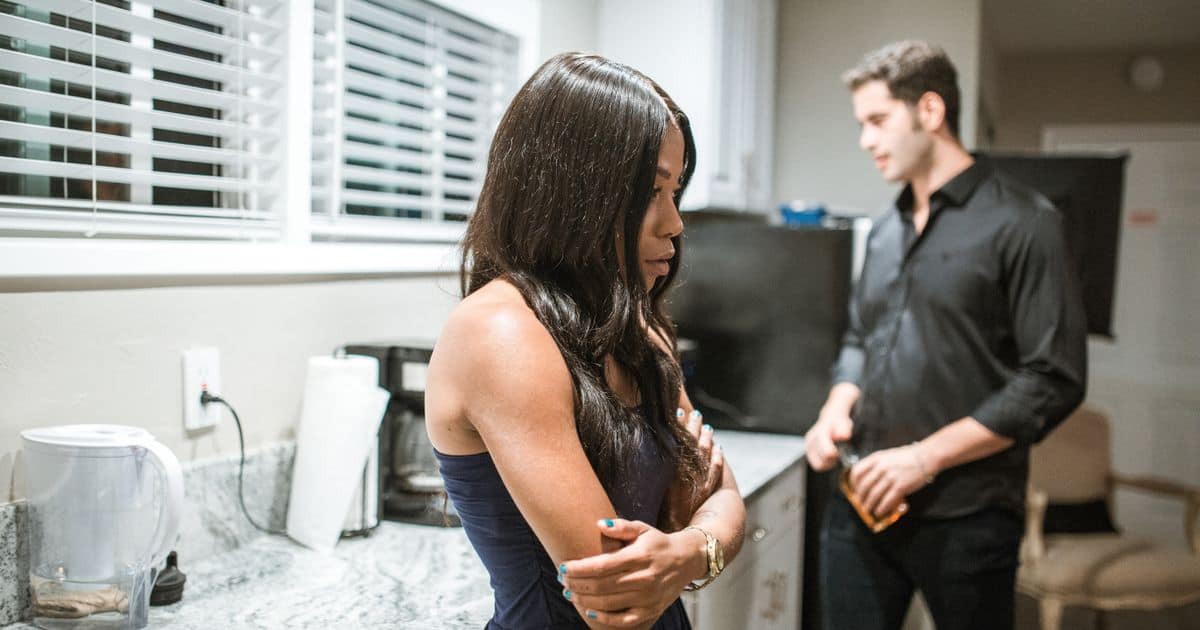
You told him about the thing with your sister while he was scrolling. He said “uh huh.” Two days later he asked a question that proved none of it went in. Tonight you tried again, he cut in with a solution before you had finished the second sentence, and when you said “you’re not even listening,” he said “here we go again” and went to the other room. Now it is late, and you are tired of repeating yourself and starting to wonder whether you should just stop talking. If you want to say what happened tonight somewhere private first, tell Figlet what keeps happening when you talk to him and it will show you the dance you two are caught in.
Why doesn’t my husband listen to me when I talk?
When talking turns into the same fight
Talk it through with Figlet right now. Private, judgment free, built on 17 years of couples therapy.
I have been a couples therapist for seventeen years, and most of the time I do not see a man who has stopped caring. I see a nervous system that has stopped feeling safe in the conversation. When the bond feels shaky, the amygdala fires before the thinking brain gets a vote. Logic goes offline. The part of him that would need to be present to listen has already left the building.
So what reaches him is often not a request. It is a report card. Quiet partners describe the translation to me in almost the same words: I have failed you before. I am failing you now. I will keep failing you into the future. Once that verdict lands, listening is over. He will either build a case (defend, correct, explain, cite the calendar) or flatten out and disappear (nod without hearing, look at the phone, wait for you to stop).
Some men fix, because fixing is how they know to care: “Okay, let’s look at the schedule. I’ll book the restaurant. Problem solved.” Problem not solved. You did not need him to fix it. You needed him to feel it with you. Some men are drained, and the phone becomes the place where nobody is disappointed in them. Some have quietly given up, because nothing they say is ever right. None of those are excuses, but you cannot change what you cannot read.
Is it defensiveness or does he just not care?
From the outside, defensiveness looks like not caring. From the inside, it is shame, a full body collapse. His “here we go again” is a nervous system saying please do not see my flaws. More in defensiveness in relationships. Every eye roll has a heartbeat under it.
What does it do to you when your husband doesn’t hear you?
It makes you feel alone, sitting right next to him. Underneath every marriage, the bonded body only ever runs two questions, and never in words. Are you there for me? Am I enough for you? When he says “uh huh” and keeps scrolling, your body hears the answer to the first one as no. In 58,221 completed relationship assessments at Empathi, 33% of people named “alone” as their deepest feeling when love isn’t working. More than rejected, more than abandoned.
The cruel part: when you protest that he isn’t hearing you, his body hears a no to the second question. So he defends, or goes somewhere behind his eyes you cannot follow, and that becomes more proof that you don’t matter.
Why does repeating myself louder not work?
Because volume and repetition read as threat to the other nervous system in the room. The more evidence you stack, the more he braces, and the less he can receive. Your survival strategy has activated his.
When we are hurting, we speak from the protector, the part of us that has been waiting too long and is exhausted from trying. The message comes out as an accusation: you never listen, you don’t care. That is the Story of Other, your flashlight pointed at him, gathering evidence. Not once in seventeen years have I seen it get anyone heard. Underneath the heat there is almost always something more tender: I miss you. I want to matter to you. That is the Experience of Self, and it lands completely differently.
The dance you two are caught in
I call it the Waltz of Pain. You are the Relentless Lover: when the bond wobbles, you reach, sharper each time. He is the Reluctant Lover: when the bond wobbles, he retreats into logic, the phone, silence. You reach louder, he retreats further. Neither of you is the villain. The enemy is the loop.
I sat with a couple, a surgeon and a founder, both brilliant, both stuck. She was fuming because he kept explaining his work schedule in precise paragraphs while she went hoarse trying to be heard. He was sitting flat and cold, believing she just did not understand how much pressure he was under. When we finally got the flashlight turned around, he admitted his chest went freezing cold whenever she started to speak. His throat closed. Slinking away to explain the calendar was his wobbly way of trying to keep some dignity without having to sit inside the burning shame of feeling like he was failing her again. Her sharp posture softened as she watched the frightened boy inside her husband come to the surface. Then she said, quietly, that she got loud because she felt completely alone in the dark, and getting loud was the only way she knew how to find him. In that moment, they were listening.
My husband listens to everyone but me. Why?
He can be patient with his friends, his mother, his coworkers, because strangers cannot make him feel inadequate. You can, without meaning to, just by looking disappointed. Your face is the one that carries the most weight in his nervous system. That does not make it fair. It means his tuning out is a distorted measure of how much you matter, not how little.
How to get your husband to listen (without shouting louder)
Not by finding better words to win the case. By changing how the reach lands.
Start soft. A harsh startup trips his alarm before you have finished your first sentence, and then you lose the person you need to talk to. Pick your moment, and ask for his attention first rather than ambushing him in the doorway.
Say what kind of listening you need. “I don’t need you to fix anything right now. I just need you to hear me.”
Bring one thing, not the whole file. Then let him say back what he heard (“what I heard you say is…”) before you add anything.
Take the elevator down. From the Penthouse you say “you’re so checked out.” From the Basement you say “I feel completely alone right now, and part of me is scared I don’t matter to you. When I feel that, I get sharp.” When he is not being attacked, he does not need to defend, and what is left is usually the tenderness that was under his withdrawal all along. More on this in how to stop feeling unheard in your relationship.
Name the pattern instead of him. “I think we’re doing our thing again, where I push and you disappear.” The cycle becomes the third thing in the room, and you can stand on the same side of it.
My partner does not listen to me, and he is my boyfriend, not my husband
The wiring does not care whether you are married or dating. If your boyfriend doesn’t listen to you, the same two questions are running in both of you. Earlier on, the dance has had less time to harden. Watch whether small reaches get met, and whether repair happens after the bad nights.
When is it more than not listening?
Watch the calm hours. If you still enjoy each other when nobody is triggered, you are almost certainly in a loop. If the calm moments are cold too, if there is contempt, or he refuses to ever look at his own part, that is different information. I wrote about that in what an emotionally unavailable husband really needs you to know.
If not being listened to comes with threats, violence, control of your money or phone, blocking you from leaving a room, or being told what you are allowed to say, that is not a listening problem and it is not yours to fix by communicating better. The National Domestic Violence Hotline is 1-800-799-7233. If you are feeling hopeless, call or text 988.
My husband doesn’t listen to me: what should I do tonight?
Not the case. Not “you never listen.” Turn the flashlight onto your own chest and say this, word for word:
“I’m not trying to fight. When I talk and it doesn’t land, I feel really alone, and I miss you. Can you just hear me for five minutes, no fixing?”
Then stop. Do not add the evidence. If you want help finding your version of that line, Figlet, a coaching tool I built, can walk you through it using what happened this week.
If you are the husband reading this
I do not think you are cold. I think her talking to you started to feel like stepping onto a scale, and part of you stopped stepping on it. That leaves her alone in the house with you. You do not need to fix anything. Put the phone face down. Say back what you heard, and ask one more question: “What was that like?” If your chest goes cold, say it: “My chest just went cold. Give me a minute. I want to hear you, but I am not here yet.” Then come back. That sentence, shaky and imperfect, is worth more than a thousand perfect active listening scripts. More in how to listen better during arguments.
Where to go from here
If the bigger feeling is the loneliness itself, start with the piece on feeling unheard. If he gets defensive every time, the defensiveness piece will help you read his shield. The way out is not louder. It is lower.
Frequently asked questions
Why doesn’t my husband listen to me?
Usually because your words have started to land in his body as a verdict that he is failing you. Shame takes his listening offline, so he defends, fixes or withdraws. It is rarely indifference, though it can feel exactly like it.
My husband won’t listen to me. What should I do?
Stop stacking evidence and lower the temperature. Start soft, bring one thing, ask for listening without fixing, and speak from the hurt under the heat. Name the pattern you two are in rather than his character.
Why does my husband tune me out?
Tuning out is often a flooded nervous system protecting itself. If conversations have come to mean “here comes another thing I did wrong,” his body learns to leave before the words arrive. The phone is just where he goes.
Why does my husband interrupt me to fix things?
Fixing is how many men try to care, and a way out of sitting with your pain. Tell him up front: “I don’t need you to fix it. I need you to hear me.”
When you are ready, Figlet is a coaching tool I built. Tell it what keeps happening when you talk to him, it shows you the pattern, and it gives you one line to say tonight so he can actually hear it. It is free to start tonight.
Keep Reading



When talking turns into the same fight
Figlet is relationship coaching built on 17 years of couples therapy. Talk through what is happening the moment it matters, get a clear next step, and stop circling the same fight. Private, judgment free, ready whenever you are.
Free to start. No credit card needed.
Figs O'Sullivan
Founder · EFT couples therapist
“What I would tell you at 10pm, if I could.”