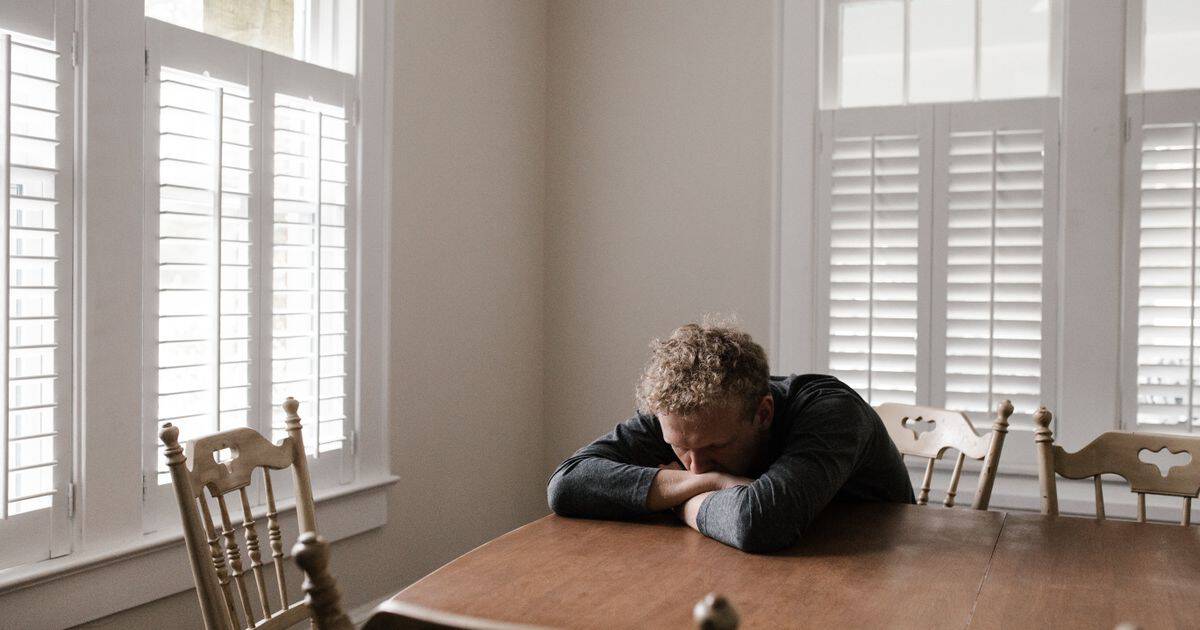
To make your wife feel emotionally safe, you have to become predictable in the moments that matter most to her: when she is hurt, when she complains, when she reaches for you. That means staying present instead of defending, fixing or disappearing, owning your part without a “but,” and repairing quickly after every rupture.
Emotional safety in a marriage is not something you can say into existence. It is something her body learns about you, one response at a time, and it can be rebuilt even after it has been badly broken.
If you want help finding the words for your own marriage, Figlet, my AI relationship coach, is there at 2 in the morning, or right now. Ask Figlet how to help your wife feel safe with you.
You know, this is the question underneath almost every question I get asked. Because when people come to me saying “we fight too much” or “we’ve lost our spark” or “I don’t feel heard,” what they’re really describing is a marriage that doesn’t feel safe.
Here’s the thing I want you to sit with first. There are really only two questions being asked in your marriage, underneath all the fights and the distance and the frustration. Your partner is asking some version of “Are you really there for me?” And you are asking some version of “Am I enough for you?” Those two questions are running constantly, mostly silently, and when neither person feels answered, safety collapses. The whole system goes into threat mode.
And when two nervous systems are in threat mode, you cannot feel safe. It’s physiological. Your body records relational stress before your mind even understands what’s happening. Tight chest, clenched jaw, that stomach that won’t settle. That’s not you being dramatic. That’s your body telling you the bond feels at risk.
What Emotional Safety in a Marriage Actually Is

Which pattern is running your relationship?
Take the free three minute quiz and meet the creature behind the cycle you keep getting stuck in.
Emotional safety is the felt sense that you can be yourself with your spouse without fear of punishment, rejection, or abandonment. It’s knowing, in your body and not just your head, that your partner will meet your vulnerability with care rather than contempt.
Notice I said felt sense. You can’t think your way into it. It lives in your nervous system, not your prefrontal cortex. This is why a husband and wife can look at each other across the dinner table and say “I know you love me,” while both of them feel terrified to bring up anything real. The intellectual knowledge is there. The felt safety is not.
Sue Johnson, who created Emotionally Focused Therapy (the model I’m trained in), boiled it down to three questions every partner is quietly asking:
- Are you accessible? Can I reach you when I need you?
- Are you responsive? Will you respond to what I actually feel?
- Are you engaged? Are you really here with me, or just in the room?
And I want to be clear about one thing, because it matters. Emotional safety is not the same as comfort. It is not the absence of conflict. Some of the safest marriages I’ve seen are also the most honest ones. Safety means you can be challenged without being destroyed. It’s the marriages where nobody can say a hard thing that worry me, because the silence tells me safety has already been lost.
Signs Emotional Safety Is Missing in Your Marriage
Safety rarely disappears overnight. It erodes through repeated moments of reaching out and not being met. Here is what that tends to look like in my office:
- She has stopped bringing things up, or she only brings them up as a prosecution, with dates and evidence.
- Your conversations have shrunk to logistics: kids, calendars, money, who is picking up what.
- One of you braces before a hard conversation, sometimes before saying a word.
- A small complaint turns into a fight about who you are as people within seconds.
- Somebody goes quiet, leaves the room, or stares at a phone when things get tense.
- Something vulnerable that was shared in a tender moment gets thrown back during a fight.
- She steps away from your touch, or physical affection has quietly dried up.
- You walk on eggshells, or you can tell she does.
If you recognize several of these, you don’t have a communication problem. You have a safety problem, and it deserves to be treated as one. And if you’re reading this as the partner who feels unsafe, I wrote a separate piece for you on what to do when you don’t feel emotionally safe with your partner.
What Destroys Emotional Safety
If safety is the foundation, it helps to know exactly what cracks it. In my clinical experience these are the most destructive patterns.
Contempt
Eye rolling, sarcasm, mockery, name calling. Contempt doesn’t just say “I disagree with you.” It says “you are beneath me.” Nothing destroys safety faster.
Stonewalling and withdrawal
For the partner who leans toward anxiety, nothing is more destabilizing than silence. When one of you goes quiet or walks out, the other’s nervous system reads it as abandonment. Most of the time the withdrawing partner is actually overwhelmed and trying to calm down. The impact on safety is devastating regardless of intent.
Criticism as the default
A complaint addresses a behavior: “I was upset when you forgot our dinner plans.” A criticism attacks the person: “You always forget everything. You’re so selfish.” Always and never are the words to watch. When criticism becomes the default, the other person learns that bringing up problems means being attacked, so they stop bringing them up at all, and resentment goes underground.
Betraying a vulnerability
One of you shares a fear, an insecurity, a painful memory, and later it gets used as a weapon, shared with friends, or minimized. The lesson lands fast: it is not safe to be vulnerable with this person. Unlearning that takes a lot of work.
Unpredictability
Safety requires predictability. Not rigidity, but the reliable sense that you know how your partner will respond to your core needs. Warm one day and cold the next, engaged one week and absent the next, and the other nervous system can never fully relax. The same goes for small promises. Every “I’ll call you at lunch” that doesn’t happen is a tiny piece of evidence about whether you can be counted on.
Threatening the marriage in a fight
“Maybe we should just get divorced.” “I don’t know why I stay.” Said in anger, these sentences tell your spouse that the bond itself is on the table every time you disagree. The couples who stay together can fight hard precisely because underneath it both of them know: we’re okay, this fight won’t destroy us, you’re not going anywhere.
You brace your body before you even say a word.
Do you know you can get personalized answers to all your questions from the same wisdom that wrote this article, right now?
Ask anything about your own situation and get an answer immediately. Keep asking, think it through, work out what to do next.
No credit card required. Your first 10 messages are free.

Ask Figlet about why marriage feels unsafe.
How to Create Emotional Safety in Your Marriage: What I Know Works
So how do you create safety? Here’s what I actually know works.
First, you have to stop fighting the person and start fighting the system.
The problem in your marriage is not your partner. It’s the emotional cycle you two have built together, often without even realizing it. The moment you can both look at that cycle and say “that thing is the enemy, not each other,” that is the beginning of safety. What I call the Sovereign Us starts to emerge right there. That’s when you stop being two people protecting yourselves from each other and start being two people protecting something together.
Second, you need daily micro-practices. Not grand gestures. Small ones.
I’ll give you a concrete one. Every night, take turns sharing one appreciation. And here’s the crucial part: don’t just say the compliment. Say what it touches inside you. What it makes you feel about yourself. Then the person receiving it reflects on what it’s like to actually take that in. It sounds simple. It is simple. My wife Teale and I did this every single night during COVID when we were tense and disappointed in each other. It works not because it’s clever but because it’s building the muscle memory of turning toward each other instead of away.
Third, learn to share your vulnerability without putting a request on the end of it.
This one is hard and it flies in the face of a lot of advice you’ve probably been given. But when you describe what’s happening inside you, without immediately asking your partner to fix it or do something different, you stop triggering their alarm system. The moment your partner suspects they’re about to be told they’re not enough, they contract. They can’t hear you anymore. But when you just show them your hurt (just the honest, raw feeling underneath), their nervous system can actually stay present with you. That is emotional safety. That moment of being truly seen without a verdict being handed down.
Fourth (and this is the one people skip), you have to learn to repair.
Not avoid fights. Repair after them. Because what I call the Proof of Work of Love is not about having a perfect relationship. It’s about what you do after things go wrong. Did you show up for each other through the hard thing? Did you choose connection over being right? That repair, that showing up, that’s the visible evidence that this relationship is worth trusting. It’s what tells both nervous systems (at a level deeper than words) that we are safe here.
If any of this is landing close to home, you can talk it through right now with Figlet, Figs’ AI relationship coach, and get an answer about your own situation in seconds. Ask Figlet about why marriage feels unsafe.
Fifth, connection first, problem solving later.
This is the one almost every distressed couple gets backwards. One of you raises an issue, the other feels attacked, both nervous systems fire, and now you’re trying to solve a logistical problem with two hijacked brains. The nervous system doesn’t care who’s right. It cares about one thing: am I safe? So before you try to solve anything, settle the bond. And here’s the remarkable part: once both of you feel safe again, the original problem usually solves itself in about five minutes. The problem was never the problem. The disconnection was.
How to Make Your Wife Feel Emotionally Safe (for Husbands)
I sit with a lot of capable, successful men who are quietly gutted because their wife has gone somewhere they can’t follow. Founders, engineers, executives. Men who built their careers by spotting a problem and executing a solution. And they bring that same tool home.
Here is what I tell them: the Fixer cannot fix this. Your wife does not want your project management. She wants your presence. And presence requires you to be a little vulnerable and, frankly, a little incompetent. It requires you to not know what to do and to stay anyway.
A story from my office: “I can literally watch you leave”
I worked with a couple where the husband was doing everything the communication books tell you to do. Eye contact. Nodding. Phone face down on the table. And his wife finally put words to what she had been feeling for years, in a way that stopped the room: “When I talk to you about something hard, I can literally watch you leave. Your eyes are on me but you’re gone. You’re up in your head somewhere figuring out what to say. And by the time you respond, I feel like I’m talking to a customer service representative, not my husband.”
He was devastated, because he thought he was doing it right. But he was listening from what I call the Penthouse, the strategic, analytical floor of himself, already drafting the response. His wife needed him in the Basement, the messy, unscripted place where real connection lives. I call what he was doing performative listening. It looks like connection from the outside. Her nervous system knew it wasn’t.
That is the heart of making your wife feel emotionally safe. She doesn’t need you to be perfect. She needs to feel that you are actually there.
What that looks like day to day
- Feel it before you fix it. When she shares something painful, the instinct to solve it can land as dismissal. Start with “That sounds really hard. I’m glad you told me.”
- Catch your own defensiveness. When her complaint lands, your body may hear “you are failing.” That is the moment to slow down, not to argue the facts. If this is your pattern, here is how to stop being defensive when it counts.
- Own it without a “but.” “I was wrong. I see how that hurt you. I’m sorry.” No qualifications, no redirecting to what she did first.
- Respond to her bids. “Look at this.” “I had a hard day.” Every time you turn toward those small reaches, you make a deposit. Every time you miss them, you make a withdrawal.
- Come back to what she told you. If she shared something important last month, raise it again. It tells her you know who she is.
- Offer touch that asks for nothing back. A hand on her shoulder that doesn’t lead anywhere reminds her body that closeness is safe in this house.
- Be steady. Keep small promises. Manage your own mood instead of bringing it in the door for her to absorb.
And if she has pulled away physically, please hear this: her body is almost never saying “I don’t want you.” It is saying “I don’t feel safe enough with you emotionally right now to give you access to me physically.” That is a completely different sentence, and it changes what you do next.
What to Say to Help Your Wife Feel Safe
Scripts are not magic. Said from the Penthouse, they fall flat. Said from the heart, they open doors. Here are some sentences I see work:
- “That breaks my heart to hear. Tell me more about what that’s been like for you.”
- “I hear you, and I want to talk about this. Can we come back to it in an hour when I’m done with work?”
- “That went sideways. I think what happened was I got scared and I shut down. That’s not what I wanted.”
- “I notice we’ve gotten into a pattern where I get more hurt, you get more distant, and neither of us knows how to stop it.”
- “I’m not trying to attack you. I’m scared. I’m scared we’re growing apart.”
- “I miss you. I’m scared I don’t matter to you anymore, and I’m not handing you that as a debt to pay.”
And here is the conversation I’ve watched play out hundreds of times, the one to avoid. She says, “I feel so disconnected from you lately.” He hears a problem and offers to book dinner on Friday. She says, “That’s not what I’m asking for.” He says, “Then what do you want? I just offered you exactly what you said you wanted.” And she says, “I wanted you to care that I’m lonely. Not to fix it.” He genuinely believes solving equals caring. She needs something that has nothing to do with solutions.
Also leave out “calm down,” “you always,” “you never,” and “I’m sorry you feel that way.” Each of them hands down a verdict instead of making contact.
If You’re the Wife: Helping Your Husband Feel Safe Too
Safety runs both ways. In most marriages one partner is more sensitive to “Are you there for me?” and the other to “Am I enough for you?” I call them the Relentless Lover and the Reluctant Lover. Often (not always) the husband is the one who goes quiet.
If that’s your husband, here is what I want you to know. When you raise a complaint, even a reasonable one, it may not land as information. It may land as definitive evidence that he is failing you. The shutdown that follows looks like he doesn’t care. Inside, he’s usually flooded and drowning in shame. The more he retreats, the more alone you feel, and the harder you reach. That loop has a name, the demand withdraw pattern, and neither of you is the villain in it.
What helps:
- Lead with your hurt, not your verdict. “I felt lonely last night” lands very differently from “You never pay attention to me.”
- Name your fear without a demand attached, the same way I described above.
- Notice his reaches. Fixing the sink, sending a link, asking about your day are often his bids, even if they aren’t the ones you wanted.
- When he does show up, let it land. Tell him what it touched in you.
How to Make Your Wife Feel Emotionally Safe Again After It’s Been Broken
Sometimes safety hasn’t just worn thin. It’s been broken: an affair, a lie, years of criticism, a moment when she reached for you in a crisis and you weren’t there. When that happens, it isn’t just one event that needs forgiving. Her nervous system’s whole evidence base about you has been invalidated.
The path back is not about forgetting what happened. It’s about creating new experiences that gradually rewrite the story her nervous system tells about you. A few things matter most:
- Go back to the wound instead of around it. Repair means revisiting painful moments with honesty, not sweeping them under the rug. When she brings it up again, that is often the healing trying to happen, not a step backward.
- Radical accountability, repeated. Not one big apology. Ownership, every time it surfaces, with no defense.
- Consistency over intensity. A sustained, daily demonstration of safety does more than any grand gesture.
- Don’t grade her pace. Her softness comes back slowly, as she learns it won’t be judged.
- Get help when it’s deep. When safety has been severely damaged, EFT based couples therapy gives you a room where someone else can hold the safety while the two of you can’t.
One important line: everything here assumes the problem is emotional distance and hurt. If anyone in the marriage is afraid of the other person, physically or otherwise, safety comes first and that is a different conversation.
How Long Does It Take to Rebuild Emotional Safety?
Longer than you want, and shorter than you fear. There is no shortcut, because safety is built through thousands of micro-moments where one of you takes a risk and the other responds with care. Trust is really just the accumulated evidence of emotional safety over time.
The good news is that each individual repair can be quick. You don’t have to wait months to feel a shift in a single evening. What takes time is for her body to believe the shift will last.
What to Do Tonight
- Put the phone in another room for one conversation. Ask her how she is, and listen from the Basement. No solving.
- Share one appreciation and what it touches in you. Then let her tell you what it’s like to take that in.
- Repair one small thing. Pick a recent moment that went sideways and say, “I think I got scared and shut down. I’m sorry.”
- Name the cycle, not her. “I think we get caught in a loop where I pull back and you push harder. I don’t want that thing to win.”
- Offer one touch that asks for nothing. A hand on her back. Then let it be enough.
Common Questions About Emotional Safety in Marriage
How do I make my wife feel emotionally safe?
Be reliably present when she is hurt, complaining, or reaching for you. Listen to feel rather than to fix, own your part without a “but,” keep small promises, and repair quickly after conflict. Over time her body learns that you are safe to be vulnerable with.
What does emotional safety look like in a marriage?
It looks like being able to say a hard thing without bracing for punishment. Both partners can disagree, get frustrated, and still know the bond isn’t at risk. Vulnerability is met with care, and ruptures get repaired.
What are the signs there is no emotional safety in a marriage?
Conversations stay on the surface, one or both of you walk on eggshells, complaints escalate into attacks or silence, and physical affection fades. Often one partner has simply stopped bringing things up.
Can emotional safety be rebuilt after it has been broken?
Yes. It takes accountability, consistency, and a willingness to revisit the wound instead of avoiding it. When the injury is deep, like an affair, couples therapy that focuses on the attachment bond helps a great deal.
What destroys emotional safety in a marriage?
Contempt, stonewalling, criticism as a default, using a partner’s vulnerability against them, unpredictability, and threatening the relationship during fights. Each one teaches the other person that opening up is dangerous.
How can I be an emotionally safe partner?
Know your own pattern first: whether you tend to pursue or withdraw when you feel threatened. Then practice responding to bids, validating before problem solving, and coming back to repair. You don’t have to be perfect, just reliably there.
Does emotional safety mean we never fight?
No. Safe couples still argue and still hurt each other. The difference is that the fight doesn’t threaten the bond, and they find their way back to each other afterward.
The magic isn’t in never getting it wrong. The magic is in finding each other again after you do.
Figs is a licensed marriage and family therapist with 16+ years of experience working with couples. He’s the co-founder of Empathi, host of the “Come Here to Me” podcast, and author of an upcoming book on relationships and the systems that shape how we love.
Read more: Feeling Disconnected from Spouse? What It Means and What to Do
Explore More Topics
Keep Reading



Every couple has a pattern they cannot see. Find yours.
In love, each of you is a Relentless or a Reluctant, which makes you one of three kinds of couple: Relentless and Reluctant, two Relentless, or two Reluctant. The free quiz reveals your creatures and the cycle they fall into together. About three minutes.
No signup needed to start.
The Relentless

The Reluctant