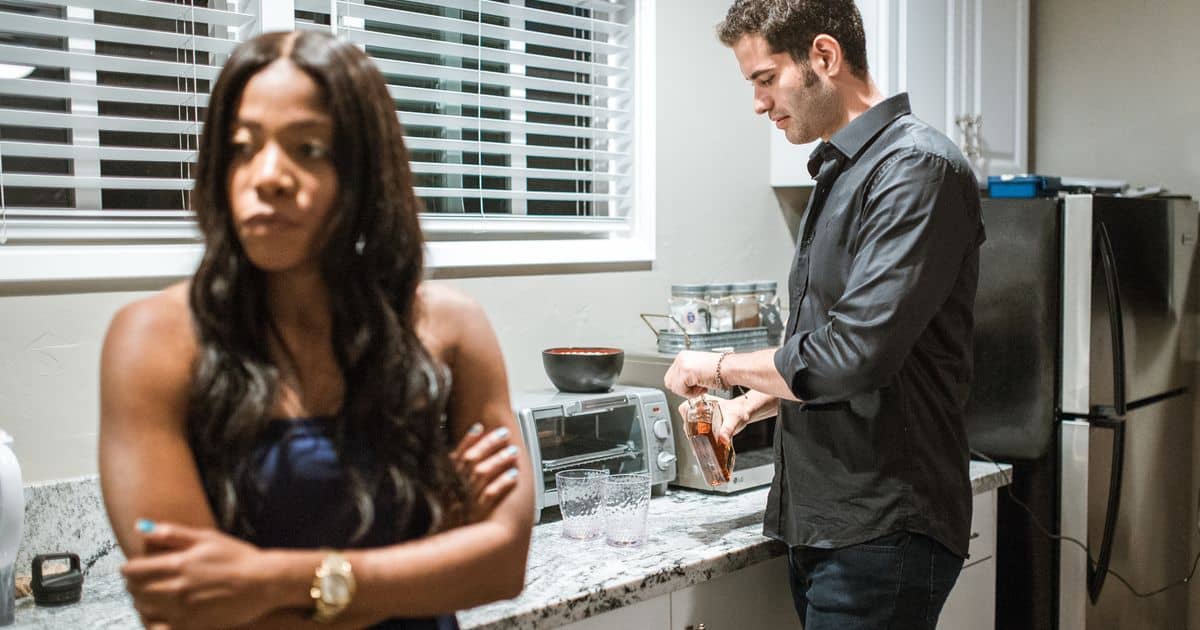
Recognize yourself in this?
Talk to Figlet about feeling anxious around your boyfriend right now. AI relationship coaching grounded in Figs O’Sullivan’s work, LMFT. Free to start, no credit card.
You are sitting three feet away from him on the couch. He is scrolling. The TV is on. Nothing is technically wrong. And yet your chest is tight, your throat feels clamped, and there is a low hum of dread running underneath your skin that you cannot name out loud. You have already rehearsed a sentence in your head six times and edited it down to nothing. You have scanned his face twice for a micro-expression that would tell you where you stand. You have typed “anxious around boyfriend” into your phone with the screen tilted away from him.
I want you to take a slow breath and let your feet find the floor.
The thing you are feeling is not evidence that you are broken, too much, or with the wrong person. It is not proof that you have anxious attachment and should therefore hand yourself a diagnosis and a self-help book and be done with it. In seventeen years of sitting across from couples in exactly this pain, I can tell you the truth almost nobody online will name: your body is doing something intelligent. It is registering the state of a bond that your survival depends on, and it is firing an alarm because something about the attunement between the two of you has gone quiet.
That is the doorway. Let me take you through it.
Your Body Is Not Overreacting. It Is Reading a Bond.

Which pattern is running your relationship?
Take the free three minute quiz and meet the creature behind the cycle you keep getting stuck in.
Here is the piece the listicles skip. Adult romantic partners regulate each other the way a caregiver regulates an infant. That is not a metaphor. That is attachment theory as a piece of mammalian biology. From the moment you meet someone and your nervous system files them as your person, your body starts reading them constantly for one answer: are you there, or are you not.
When the answer feels like “not quite,” even for a moment, your amygdala fires before your thinking brain has time to speak. Cortisol lifts. Your heart rate climbs. The rational part of you, the part that could reassure you it is fine, he is just tired, runs behind the survival brain. So by the time you are trying to talk yourself down, your body has already lit the fire.
If your body keeps sounding that alarm, the chest band, the stomach drop, the 3 a.m. jolt, I mapped out the physical symptoms of relationship anxiety and what each one is telling you.
This is why the standard advice fails you. “Just communicate.” “Use I statements.” “Give him space.” You cannot apply a cognitive fix to a biological event. You are not being dramatic. You are a bonded animal reading a bond that feels wobbly.
The question is not how to stop feeling anxious around your boyfriend by sheer willpower. The question is what your body is actually reading, what you are doing with that reading, and how the two of you together can make the ground steadier.
From Empathi’s research: in 58,221 completed relationship assessments, sad was the third most common deep feeling and hopeless the fifth, at 17,094 and 9,160 people.
The Two Questions Underneath Every Wobble
I tell every couple who walks into my office that the bonded body only ever runs two questions, and never in words.
Are you there for me?
Am I enough for you?
If you are the one feeling anxious around your boyfriend, you feel the second one loudest. You are scanning him for a verdict. Every sigh, every delayed text, every distracted look becomes data in a case you are building about whether you are still worth staying for. You cannot help it. The scanner runs whether you consent to it or not.
And here is the thing that will change how you see your own reaching. When your body reads the answer as “maybe not,” you do not calmly ask for reassurance. You protest. You reach harder. You get sharper. You send the follow-up text. You bring up the thing you said you were not going to bring up. Or you go the other way and manage yourself so tightly that you barely say anything real, because you are terrified of being too much.
Either way, the vulnerable, wobbly, frightened child inside you does not get to be seen. Because you do not send her into the room. You send someone else.
The Representative: The Polished Version You Send In Instead
There is a version of you that gets deployed in these moments. I call her the Representative. She is polished. She is calm on the outside. She scans his face and adjusts her volume. She over-regulates her breath. She laughs when she is not really amused. She types a light, breezy text when her chest is on fire. She performs okayness because she is quietly certain that if she showed him the actual wobble, the actual need, the actual fear, he would leave.
The Representative is trying to save you. She is not a character flaw. She is a survival strategy your nervous system built early, probably long before this boyfriend, in some environment where being fully yourself was not quite safe enough. She kept you loved. She kept you close. She kept you out of the worst of the shame.
But a Representative cannot receive love. She can only manage the room. So every hour she is deployed, you get more anxious, not less, because the actual you, the one who wants to be held, remains hidden behind her. And your boyfriend, meanwhile, is left in a strange position. He knows something is off. He can feel the tension in the room. But he cannot find the actual you to attune to. He is trying to read a mask.
This is the specific loneliness of feeling anxious around your boyfriend. It is not just that you are afraid. It is that the person who could soothe you cannot reach you, because you have not let him near the part that is actually scared.
The Story of Other: The Case You Build in Your Head
When the anxiety cannot be soothed inside the connection, it goes upstairs. It moves into the strategy room of your intellect and starts building a legal brief. I call this the Story of Other.
You begin compiling evidence. He did not text back until 4:47pm. He looked at his phone during dinner. He said “sure” instead of “yes.” He forgot the thing you mentioned on Tuesday. Each item goes into a mental notebook, and the notebook grows. The Story of Other is seductive because it makes you feel righteous instead of frightened. It lets you sit in the penthouse of your head and litigate his conversational crimes instead of feeling the tight, cold panic in your chest that started this whole thing.
But the courtroom of your mind is a dead end. The harder you prosecute, the more his nervous system reads threat, and the more he throws up a rigid wall of denial or explanation or silence. You are now in what I have long called the Waltz of Pain. One of you reaches with a sharpened point. The other retreats behind a flat wall. Both of you catch fire in the same moment. And neither of you is actually being cruel. You are both just terrified, running the two questions in opposite directions.
The move out of the courtroom is not to prove your case harder. It is to turn the flashlight of your attention around. Away from what he did. Toward what is actually happening inside your own chest.
Turning the Flashlight Around: From Story of Other to Experience of Self
Here is the actual clinical move, and it will feel counterintuitive. The way through the anxiety is not to figure him out. It is to feel yourself.
Put the notebook down. Close the case file. Ask your body a different question: what is actually happening inside my chest right now. Not what did he do. Not what does it mean. What is the sensation, in this body, in this moment.
Most of the women I sit with who describe feeling anxious around their boyfriend can name the story instantly. He is pulling away. He is losing interest. He is disappointed in me. What they cannot name, at first, is the sensation. The tight band under the collarbone. The cold hollow in the belly. The way the breath got shallow. The heat crawling up the neck.
That sensation is the thing. Not the story. The story is a translation your Penthouse made because the sensation is unbearable. And as long as you keep translating, you cannot metabolize what is actually happening in your body.
When you can name the sensation, and stay with it for even thirty seconds without running to build the case, something shifts. The wobbly, frightened part of you gets to be present in the room. She is not being sent upstairs to build a legal brief. She is not being replaced by the Representative. She is here.
And now, only now, can something real happen with him.
Ready to work on this?
Figlet is AI relationship coaching grounded in attachment science and Figs O’Sullivan’s clinical work, LMFT. First messages free, no signup.
What He Is Actually Doing While You Are Anxious
Almost every woman I work with who describes feeling anxious around her boyfriend has a story running about what he is thinking. He is bored. He is checked out. He is disappointed. He is judging her. He wishes she would relax.
I want to gently take that story apart. Because in my clinical experience, when the partner on the other side of this dynamic finally drops his armor and speaks from underneath it, what comes out is almost never what you feared. What comes out, again and again, is this: I feel like I am failing her. I feel like whatever I do is going to be wrong. My chest goes cold. My throat closes. I go quiet because I do not know how to be enough.
The man across from you is not calm. He looks calm. The flat face, the shrug, the “I don’t know what you want from me” is not indifference. It is his nervous system going into collapse. His question, remember, is the loudest of the two: am I enough for you. And when he reads your anxiety, he does not read it as your fear. He reads it as a verdict. That he is failing you. That he will keep failing you.
So he retreats. Not because he does not love you. Because he loves you and cannot stand being the reason you hurt.
You are both scared. You are both running the same threat with opposite moves. And the only way out is for one of you to name what is actually underneath the moves. To say, out loud, the thing the Representative and the Withdrawer have been hiding.
You can read more about what is happening on his side in why does my partner ignore me and, if you want to help him find his own words, how to get your partner to open up emotionally.
The Move That Actually Changes the Room
Here is what I coach couples toward, and it is the hardest sentence in relational work. When you feel that tight band across your chest and your body wants to protest or manage or scan, you slow down instead, and you speak from the wobble.
Not the story. The wobble.
Not “you always look at your phone during dinner and I feel like you don’t care.” That is the Representative filing suit.
Something more like: “There is a tight fear in my chest right now. I do not fully know what it is about. I think I feel far from you. I would like to come closer, but I am scared to.”
That sentence lands differently in his nervous system. It does not read as a verdict. It reads as a hand reaching. His question, am I enough for you, gets a different answer. Not “you are failing me.” Something more like “I am scared and I want you.” Almost every man I have worked with, when they receive that kind of sentence, softens. Not because they are weak. Because their body finally gets to stop bracing for the guilty verdict.
This is the shift. The anxiety does not disappear because you learn to hide it better. It settles because you finally let it be seen by the person your body is asking to see it.
The Deeper Question: Is This Anxiety, or Is Something Actually Wrong
I want to be honest with you, because you deserve honesty. Sometimes the anxiety you feel around your boyfriend is your old wound being touched by a good enough partner. Sometimes it is your nervous system reading, accurately, that the person in front of you is not safe, not honest, not capable of showing up.
The difference matters. If you have been asking whether what you feel is your history or your reality, this diagnostic frame on whether a relationship is genuinely toxic is worth reading slowly. The short version: an old wound gets touched by ordinary human moments and floods you with catastrophic stories. A genuinely unsafe partner shows a pattern of contempt, dishonesty, or coercion that does not respond to your softest, most vulnerable reaching. Those are two different problems. Do not conflate them.
But in the vast majority of cases I sit with, the woman searching “anxious around boyfriend” at 11pm is not with an unsafe man. She is with a scared one, and she is a scared woman, and neither of them has learned yet how to speak from the wobble instead of the armor. That is fixable. That is the work.
Common Questions
Why do I feel anxious around my boyfriend for no reason?
There is always a reason, but it is usually not the one your Penthouse is telling you. Your body is reading something in the bond, a micro-disconnection, a flat tone, a distracted look, and firing your attachment alarm. The “no reason” feeling comes from the gap between your body’s read and your mind’s ability to name it. Turn the flashlight inward and name the sensation, not the story.
Is feeling anxious around my boyfriend a sign we should break up?
Almost never on its own. Anxiety is data about the bond and about your history, not a verdict on the relationship. The real question is whether he can meet you when you speak from the wobble instead of the armor. If you have never actually let him see the frightened part, you do not yet know what he is capable of. If you have, repeatedly, and he consistently mocks or dismisses it, that is different information.
How do I calm my nervous system around my partner in the moment?
Stop trying to solve the story. Put your feet on the floor. Name three sensations in your body without judgment. Breathe out longer than you breathe in. Then, if you can, tell him one true sentence about the sensation, not the accusation. “My chest is tight” lands differently than “you never listen.” The first invites him closer. The second sends his nervous system into collapse.
Why do I feel calm alone but anxious when he is around?
Because he is your primary attachment figure, and your nervous system reads him constantly for the two questions. Alone, there is no bond to read, so the alarm goes quiet. Around him, the scanner is on. This is not proof that he is bad for you. It is proof that he matters to your body. The work is learning to speak from that scan instead of hiding it or acting it out.
Can anxious attachment go away in a relationship?
Yes, but not through willpower or self-help in a cave. What the research and my clinical experience both point to is called earned security, and it is built inside a bond, not outside of one. You need a partner willing to meet the wobbly part of you consistently enough that your body starts to file a new pattern. That is secure functioning, and it is a two-person job.
This is not a you problem or a them problem
“When two insecurely attached people interact, their protector strategies collide to form a negative feedback loop I call the Waltz of Pain. Your protector meets your partner’s protector. Their protector meets yours. Two childhood strategies collide, and the relationship becomes a reenactment of wounds neither partner caused.”
“Neither partner is the villain. They are two younger selves inside adult bodies trying to stay safe in the only ways they once knew.”
Figs O’Sullivan, LMFT
What to Do Next
Do not just close the tab on this.
Bring what surfaced here into a real conversation. Figlet coaches you through it, grounded in Figs O’Sullivan’s work, LMFT. Free to start.
The next time you feel that tight band across your chest three feet from him on the couch, you have a choice. Send in the Representative and build the case. Or turn the flashlight around and let the wobbly part of you into the room. One of those keeps you safe and alone. The other is the beginning of actually being met.
Speak from the wobble. That is the whole game.
Keep Reading



Every couple has a pattern they cannot see. Find yours.
In love, each of you is a Relentless or a Reluctant, which makes you one of three kinds of couple: Relentless and Reluctant, two Relentless, or two Reluctant. The free quiz reveals your creatures and the cycle they fall into together. About three minutes.
No signup needed to start.
The Relentless

The Reluctant