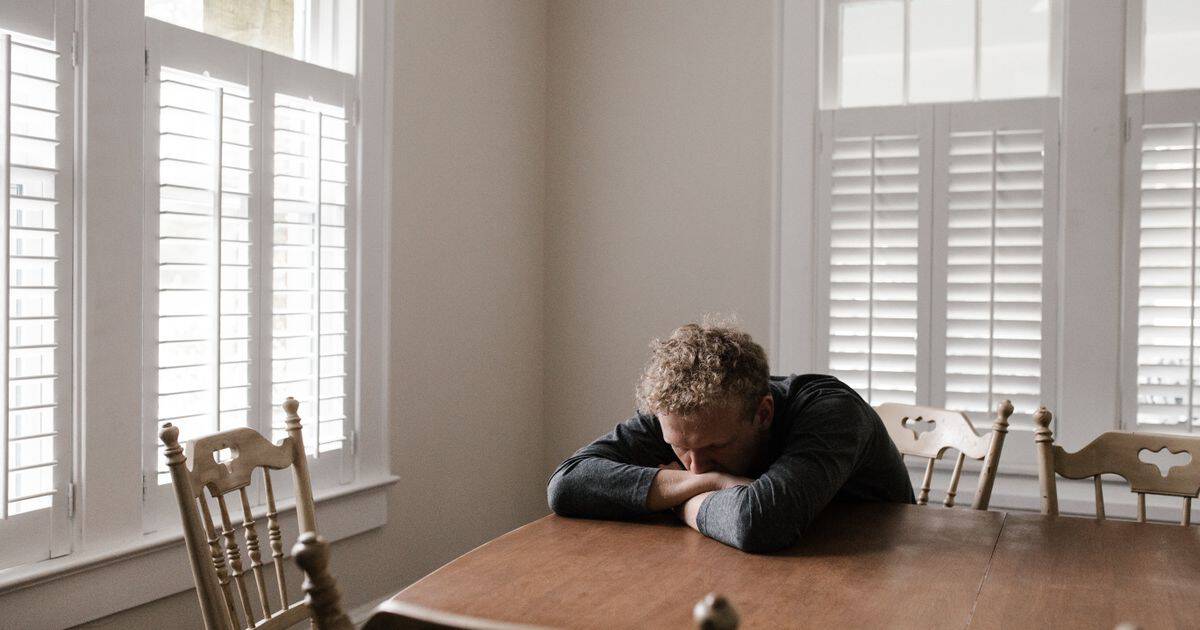
A marriage can technically last for decades without intimacy, but there is a profound difference between a relationship that endures and one that actually lives. When connection disappears, couples often end up running an efficient household together while surviving on obligation and routine. Over time, that quiet hollowness grows as both partners protect themselves and stop risking vulnerability.
As soon as you are ready, tell Figlet when the intimacy faded and how long you have been living like roommates so your coach can help you see how to rebuild genuine connection.
You know, I get asked some version of this question a lot. And I want to answer it honestly, not just reassuringly.
The technical answer is: a long time. People stay in marriages without intimacy for decades. I have sat with couples married thirty, forty years who could not remember the last time they felt genuinely close. The marriage lasted. But here is the real question underneath yours, and I think you already know it: lasted how, exactly?
Because there is a difference between a marriage that endures and a marriage that lives.
When intimacy goes missing for a long stretch, what you often end up with is two people running a very efficient household together. They coordinate schedules. They parent. They show up at family dinners. Everything looks fine from the outside. But inside, both people feel a quiet ache they have stopped even naming because naming it feels dangerous, or hopeless, or just exhausting.
That is a marriage surviving on obligation and routine rather than genuine choice and connection. It functions, but it feels hollow. Both partners are performing the relationship more than living it.
And here is what seventeen years of sitting with couples has taught me: that hollowness does not stay neutral. It moves in a direction. Slowly, people start protecting themselves more. They stop risking vulnerability. They become roommates, or polite strangers, or eventually adversaries.
I have seen marriages where the lack of intimacy becomes a kind of slow poison. One partner starts an affair. The other retreats into work or parenting or hobbies. They develop separate lives that barely intersect. The marriage certificate still exists, but the actual marriage died years ago.
Long before it gets there, it usually starts with touch quietly disappearing, which is why I wrote a whole piece on no physical affection in marriage and what your bodies are protecting each other from.
You share a house and a bed, but nothing else.
Do you know you can get personalized answers to all your questions from the same wisdom that wrote this article, right now?
Ask anything about your own situation and get an answer immediately. Keep asking, think it through, work out what to do next.
No credit card required. Your first 10 messages are free.

Ask Figlet about a marriage without intimacy.
But I have also seen couples who recognized the warning signs and decided to fight for something different. They got uncomfortable. They had hard conversations. They rebuilt intimacy from the ground up, sometimes after years of distance.
So instead of asking how long it can last, I would gently turn the question back to you. What brought you to this question today? Is intimacy missing right now? Because that tells me something much more important than any timeline I could give you.
The absence of intimacy is not a verdict. It is a signal. And signals are worth listening to.
The real question underneath “will this marriage survive”

Which pattern is running your relationship?
Take the free three minute quiz and meet the creature behind the cycle you keep getting stuck in.
When couples ask how long a marriage can last without sex, they are usually asking a deeper question: is something broken that cannot be fixed? Here is what I have learned after years in the therapy room. There is only one relationship problem. One. It is not communication. It is not money. It is not sex. It is not the kids. It is not the in-laws. The one relationship problem is: do I feel safe enough to be myself with you? When the answer is yes, everything becomes workable. Money stress is stressful but manageable. Parenting disagreements are frustrating but navigable. Sexual disconnection is painful but addressable.
Desire does not die. It gets buried under safety.
Desire does not die in long-term relationships. It gets buried under safety. When a relationship first forms, everything is uncertain. Your nervous system is activated. Will they call? Do they like me? Where is this going? That activation feels like passion. As the relationship stabilizes, the uncertainty drops. Your nervous system calms down. The bond becomes secure. And something that felt like fireworks starts to feel like a warm blanket. Most people interpret this as “we lost the spark.” But the spark was never the relationship. The spark was the uncertainty.
Can you create desire from within security instead of threat?
So the real question is not how do we get the spark back. The real question is: can we create desire from within security instead of from within threat. The answer is yes. But it requires a different kind of risk. Not the risk of a new relationship. The risk of being fully known by someone who already knows you. Showing the parts of yourself you have been hiding even from your partner. That is the deepest form of intimacy. And it only becomes available after the fireworks settle.
Why real intimacy feels so hard: competency is the enemy of intimacy
Here is the part almost no one tells you. Intimacy is really, really vulnerable. I always say competency is the enemy of intimacy. For people to be truly intimate, they are going to have to feel really incompetent, and they are going to feel really vulnerable.
Early on, that is not what is happening. As Chris Rock says, that is just your representatives getting together. At some point, after six months of the representatives getting together, there are two real people. One is saying, I am actually kind of vulnerable and I am not sure I am fully chosen by you. The other is saying, I am a little worried that if you really knew who I am, I might be unacceptable. Can they stay down there, being incompetent and vulnerable, and still connect with each other? That is the whole game.
This is not a you problem or a them problem
“Relationship distress is a feature, not a bug, of loving someone so much that their emotional distance feels terrifying. It is the predictable dance of two nervous systems desperately trying to survive the perceived loss of one another.”
“The fight is never about the content. It is always about the bond.”
Figs O’Sullivan, LMFT
When one partner goes emotionally unavailable
Emotional unavailability is not a personality trait. It is a protector. It is a part of you that learned a long time ago that being fully present was dangerous. Maybe your feelings got dismissed as a kid. Maybe you learned that being “too much” pushed people away. Maybe you figured out early that the safest thing to do was stay busy, stay productive, stay in your head. High achievers are particularly good at this, because the world rewards emotional unavailability. It calls it focus. Drive. Resilience. Hustle. But your partner does not experience your focus as admirable. Your partner experiences your emotional unavailability as abandonment.
Then the cycle sets in. She pursues. He withdraws, goes silent, needs space, walls off. Both of them are doing exactly what their nervous system told them to do, and both of them are making it worse. Her pursuit is a protest. She is saying: are you there? Do I matter? Please do not leave me. His withdrawal is a protest too. He is saying: I am failing, nothing I do is right, I need to stop before I make it worse.
So, how long can a marriage last without intimacy?
Longer than you think, and that is exactly the danger. A marriage can run for years on logistics and shared history with the intimacy switched off. The real question is not how long it can survive. It is whether both people are willing to do the one thing that brings desire back inside safety: stand in the fire and be vulnerable, be incompetent, get to know yourself, and try to share that vulnerable self with the person who is already there. Eventually, hopefully, people want a real relationship, not a this did not work, it is too hard, I am out. At some point I hope people will stand in the fire.
From Empathi’s own research: in 58,221 completed relationship assessments, 33% named alone as their deepest feeling when love isn’t working. 19,139 people, more than rejected, more than abandoned, more than hopeless.
Frequently asked questions
Can a marriage survive without sex?
It can last for years, even decades, on logistics and shared history with the intimacy switched off. Lasting is not the same as living. That hollowness does not stay neutral: people protect themselves more, stop risking vulnerability, and drift toward roommates, polite strangers, or eventually adversaries.
How long will a man stay in a sexless marriage?
Often far longer than his partner expects, because his withdrawal is its own protest: I am failing, nothing I do is right, I need to stop before I make it worse. Many people retreat into work, parenting or hobbies and build separate lives rather than leave, and sometimes one partner starts an affair. The length tells you little. Whether he is willing to stand in the fire and be vulnerable tells you almost everything.
How long can you be in a relationship without sex?
Longer than you think, and that is exactly the danger. The absence of intimacy is not a verdict. It is a signal. The real question is not how long it can survive, but whether both people are willing to bring desire back inside safety by risking being fully known.
Can a marriage survive without emotional intimacy?
It can function, but it feels hollow. There is only one relationship problem: do I feel safe enough to be myself with you? Desire does not die in long-term relationships. It gets buried under safety, and it comes back when two people risk being fully known by someone who already knows them.

If your marriage has been running without intimacy for longer than you want to admit, talk it through with Figlet, an AI coach that’s there at 2 in the morning, or right now.
Figs is a licensed marriage and family therapist with 16+ years of experience working with couples. He’s the co-founder of Empathi, host of the “Come Here to Me” podcast, and author of an upcoming book on relationships and the systems that shape how we love.
Read more: Feeling Disconnected from Spouse? What It Means and What to Do
Explore More Topics


Related reading: Marriage Without Physical Intimacy: Is Divorce the Answer?
Before you accept a marriage that only functions on obligation, tell Figlet what quiet ache you have stopped naming with your partner so your coach can guide you toward real connection.
Keep Reading



Every couple has a pattern they cannot see. Find yours.
In love, each of you is a Relentless or a Reluctant, which makes you one of three kinds of couple: Relentless and Reluctant, two Relentless, or two Reluctant. The free quiz reveals your creatures and the cycle they fall into together. About three minutes.
No signup needed to start.
The Relentless

The Reluctant