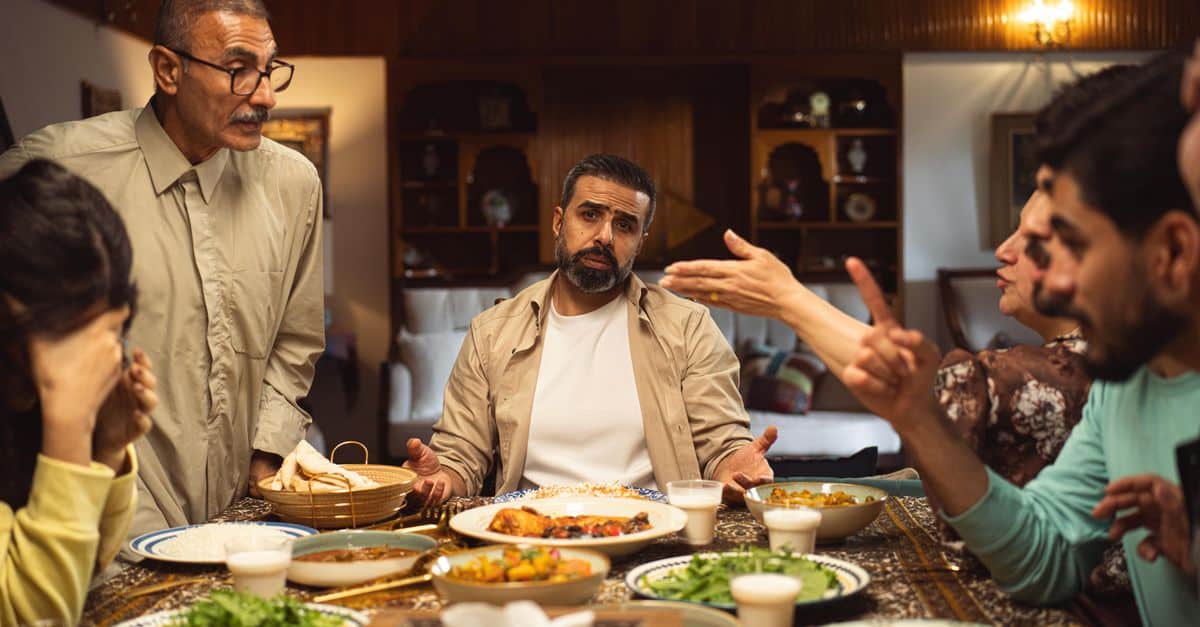
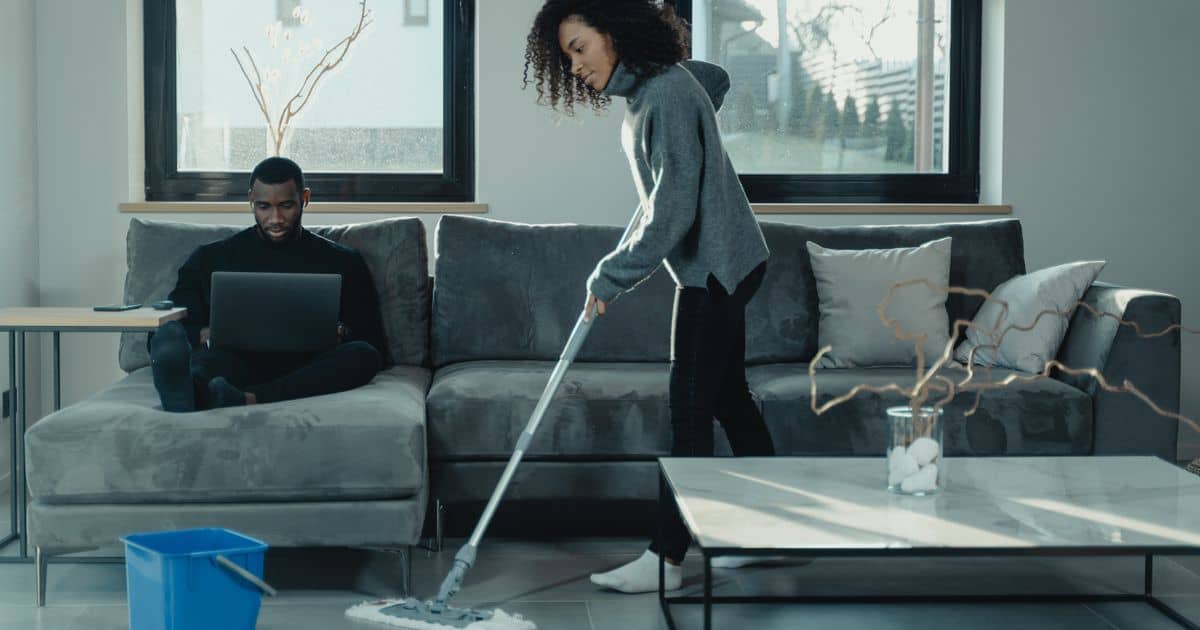
When your husband doesn’t like your friends, it is usually less about the friends than about what your time with them means to him. Either he feels judged, left out or talked about, or he feels you are lighter, funnier and more available with them than you are with him. Sometimes he has a real point, and sometimes it is control, and the way you tell the difference is by what he does, not what he says.
It is 11pm. You got home from dinner with the girls, still warm from laughing, and he is on the sofa with the television on and his jaw set. “Have fun with your fan club?” Two sentences later you are defending a woman you have known since you were nineteen, and you go to bed feeling like you have to pick a side. If you want to think it through before you say anything to him, tell Figlet what happened tonight and find the one line to say.
Why doesn’t my husband like my friends?
Stuck in the same fight again?
Talk it through with Figlet right now. Private, judgment free, built on 17 years of couples therapy.
I have sat with couples for seventeen years, and the fight about friends is almost never actually about friends. The problem is never the problem. Underneath every interaction in a bonded pair, all day, every day, two questions are running in the background like an operating system: Are you there for me? Am I enough for you? When your friends come up, one of those questions is coming back as no in his body.
The first version is Am I enough? He sits at a table of your friends and feels sized up: they knew you before him, and he suspects they hear about every fight. Shame is a body event: the chest goes cold, the throat closes, and a grown man feels like a child failing a test with invisible questions. When it gets too hot to hold, people move to one of four points on the Compass of Shame: withdraw, attack self, avoid, or attack other. Criticizing your friends is attack other. “She’s fake.” “They’re a bad influence.” It is easier for him to find them wanting than to sit in feeling found wanting by them.
The second version is Are you there for me? He watches you come alive with them. Funny, loud and opinionated over a glass of wine. Pleasant and careful at home. It comes out as contempt for them, but what his body registers is that someone else gets the best of you. I call this the replacement function: when you have a hard day, who do you call first? If the honest answer has quietly shifted from him to your friends, his alarm is not crazy. A friendship is additive to a marriage. When it starts to feel extractive, he notices.
There are plainer reasons too: values and lifestyle differences, or an introvert wrung out after three hours of a group. In 58,221 completed relationship assessments, 33% named “alone.” A husband at the edge of your circle can feel exactly that, alone in a room full of people who love his wife.
Does he have a point? Check honestly, without blaming yourself
Before you defend your friends, ask three questions. Does any friend disrespect him openly? Does anyone push you toward leaving, so every venting session ends with “you deserve better”? Are you telling them things about him you have not told him? The test is transparency: could you tell him, without significant anxiety, the full contents of what you talk about? If yes, your friendships live in the open air of your life together, and his dislike is pointing at something in him that deserves care. If no, part of his complaint is real, and you can repair that part without giving anybody up.
Why does every conversation about my friends turn into a fight?
Because the two of you fall into a dance I call the Waltz of Pain. You are both doing exactly the thing that makes the other one feel worse.
He becomes the Relentless Lover: the sarcastic comment, the cold silence when you walk in. From the outside it looks like control. From the inside it is protest. You become the Reluctant Lover: you hear his criticism as an accusation, so you defend, minimize, or stop telling him your plans. That looks to him like hiding, which turns his alarm up, which makes you pull further away.
What does a husband who resents my friends actually feel?
I have heard the withdrawing husband speak for himself, usually somewhere around the third or fourth session, when the room has softened enough that he can drop the armor. “I feel like I can’t get it right at home. Whatever I do, it’s not enough.” Once the armor cracks further, the shutting down partner says it plainly: “No. I failed you before. I am failing you now. I will keep failing you.” That is the man on the sofa at 11pm. Then you walk in glowing from a night where nobody graded you, and it lands right on the bruise.
Boyfriend doesn’t like my friends, or is jealous of my guy friend or best friend
Jealousy is a biological event, not a thinking problem about trust. A boyfriend jealous of a guy friend, or of a best friend who gets your first phone call, is usually asking whether that person occupies the same emotional real estate he does. Do not argue the facts; answer the question underneath: you are my priority, and here is how you are included. If it has become monitoring or restrictions on who you see, I wrote about that line in how to deal with a jealous partner.
Is it a red flag if he doesn’t like my friends?
Not by itself. Disliking a person is not controlling a person. But it is worth taking seriously: a study that followed newlywed couples for 16 years found that a husband’s early disapproval of his wife’s friends was linked to higher odds of divorce (in White couples), while wives’ disapproval of husbands’ friends was not. That is an association, not a verdict, and a reason to deal with this now.
The red flag is not the dislike. It is the trend line. What started as questioning your friendships becomes isolating you from family. He does not forbid you from seeing friends. He just always has a reason why tonight is not a good night.
A note on safety. When he forbids friends, checks who you see, punishes you for going out, or you are slowly losing everyone, that is isolation. It is a form of coercive control, not a dance. One honest check: can you call a friend afterward, or make a plan, without asking permission? If not, please reach out today: the National Domestic Violence Hotline is 1-800-799-7233, or text START to 88788. I go deeper on telling fear from domination in what a controlling partner is actually telling you.
Should I choose my husband or my friends?
You should not have to. Relationships thrive when both people feel chosen and free. Him cutting off your friends is a false solution, and so is you learning to live without them. What I ask for instead is the couple bubble: two people agreeing to be each other’s primary safe base, and everyone else adapting to that. Us as primary, not him versus them. The only time the question becomes real is when it is control, and then it is not about friends at all.
What do I say to him tonight?
Do not lead with a defense of your friends, and do not criticize him back. “You hate everyone I love” is a Story of Other. He will defend against it every time. Speak from the Experience of Self, when you are both calm, and then ask what your time with them means to him. Say this, word for word:
“I’m not asking you to like them. When I go out and you go quiet, I feel like I have to choose, and I don’t want to. What happens for you when I’m with them?”
Then listen without defending anyone. If he says he feels judged or left out, that is the real conversation. Stay on it. If you want help finding your own version of that line before your next night out, Figlet can show you the dance you two are in.
After that, agree on the rhythm, not the rules: which nights are yours, which are his, which are protected for the two of you. Give a real goodbye when you leave and a real hello when you come back. Build some shared time where your friends get to know him; it is much harder to feel ranked below a group you belong to. No ultimatums in either direction.
What do I tell my friends?
Less than you think. Do not relay what he said about them, and do not bring their verdict on him home. Carrying messages between camps is triangulation, and it turns a couple problem into a war with sides. If a friend cannot respect your husband in front of you, tell her directly: “I love you. I need you to be kind about him around me.”
If you are the husband reading this
Standing outside her circle hurts. The jokes are older than you, and you feel assessed. That is real. But “I don’t like them” lands on her as an attack on people she loves, and she will defend them every time. Say the thing underneath instead: “I miss you. When you come home from them you seem lighter than you are with me, and I want some of that.” Impact is bigger than intention: you may mean to protect the marriage, and she may still feel asked to shrink. There are no angry people, only people hurting. Tell her where it hurts.
Where to go from here
If the friends fight is really about hours and nights out, start with fighting about spending time with friends. If it is the reverse in your house, read my husband puts his friends before me. The fight is never about the content. It is always about the bond.
Frequently asked questions
Why does my husband not want me to have friends?
Usually because your time with them answers one of his two questions with no: am I enough, or are you there for me. Criticizing them is easier than saying he feels left out. If he actively stops you from having friends, that is isolation, not the dance.
My husband doesn’t like any of my friends. What does that mean?
When it is every friend, the problem is rarely the friends. It points at something in him (shame, overload, fear of being talked about) or at control. Watch the trend line: a mood that comes and goes, or a slow narrowing of your world?
Why does my husband get mad when I go out with friends?
When you leave, something in him panics: am I still chosen, am I still important? That is an attachment response, love expressed in a clumsy, frightened way. Agree on the rhythm together, and come home warm and present instead of braced for a fight.
My husband hates my best friend. What should I do?
Ask what specifically bothers him, and listen without defending her. A best friend often holds the replacement function: she gets your first call. If she disrespects him, deal with that. If not, include him more and keep the friendship in the open.
Is it normal for my partner not to like my friends?
Yes. Your partner and your friends do not have to mesh. Disliking them is normal. Punishing you for seeing them is not.
Figlet is a coaching tool I built. Tell it what happened tonight, it shows you the pattern between you two and gives you one line to say to him before your next night out. It is free to start tonight.
Keep Reading


Stuck in the same fight again?
Figlet is relationship coaching built on 17 years of couples therapy. Talk through what is happening the moment it matters, get a clear next step, and stop circling the same fight. Private, judgment free, ready whenever you are.
Free to start. No credit card needed.
Figs O'Sullivan
Founder · EFT couples therapist
“What I would tell you at 10pm, if I could.”